
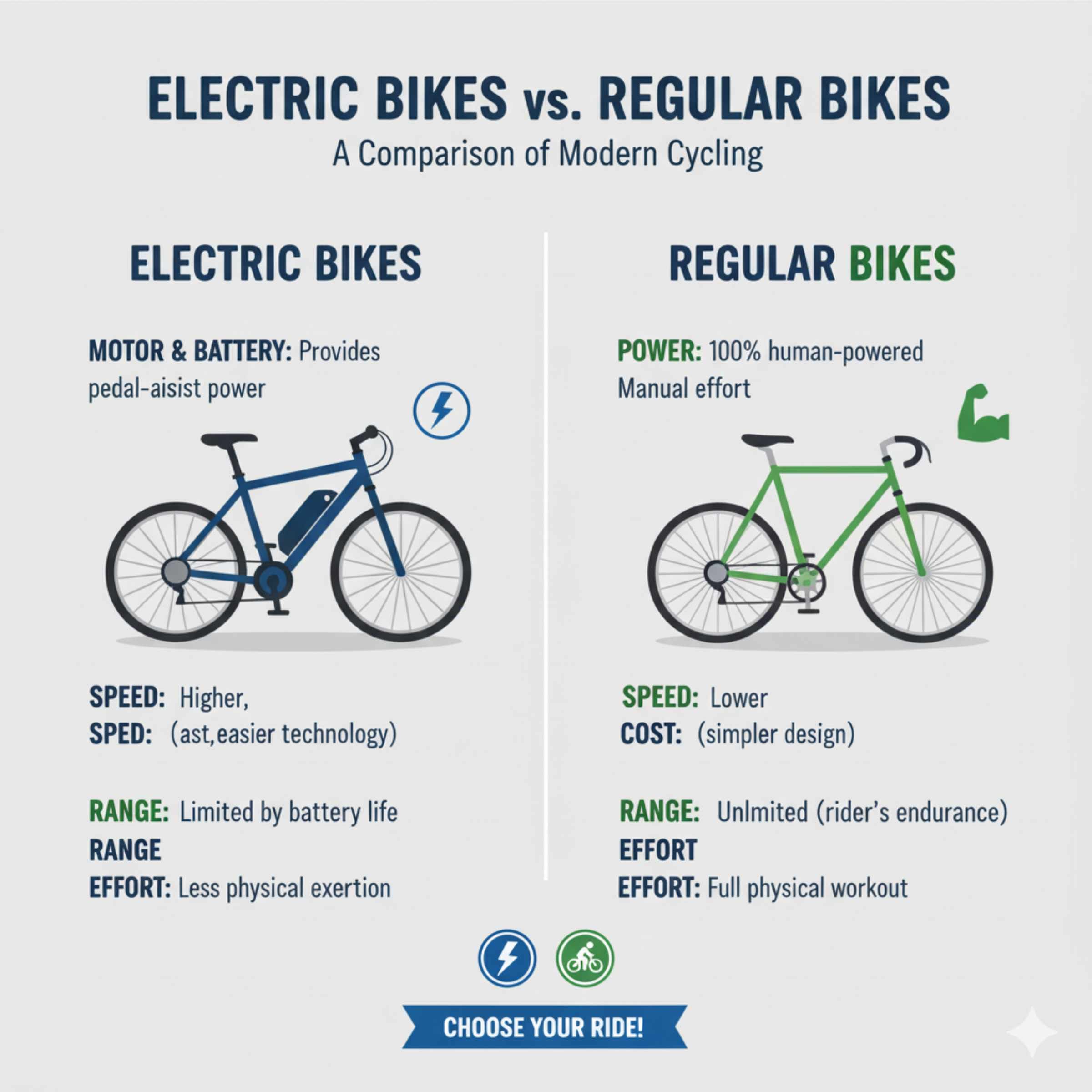
The main difference between electric bikes (e-bikes) and regular bikes is the electric motor and battery that provide powered assistance, which can either be throttle-controlled or based on how hard you pedal (Pedal Assist). Understanding these systems—and classifying e-bikes by speed and power—is key to choosing the right ride for you.
Welcome! If you’re looking at e-bikes, you’ve probably noticed there are tons of different types, power levels, and confusing terms. It can make picking the right one feel like trying to read a manual written in a foreign language. Don’t worry; this is very common! We need simple answers, not complicated specs.
The biggest confusion often centers around how the electric power actually kicks in. Should it help only when you pedal, or should it work like a scooter? We are going to break down exactly what sets these electric machines apart from your trusty traditional bicycle, making the choice clear and easy.
We’ll cover the main systems—Pedal Assist vs. Throttle—and what all those confusing speed classes (Class 1, 2, 3) really mean for your daily ride. Let’s gain some confidence in understanding e-bikes today!
What Exactly Makes an E-Bike an E-Bike?
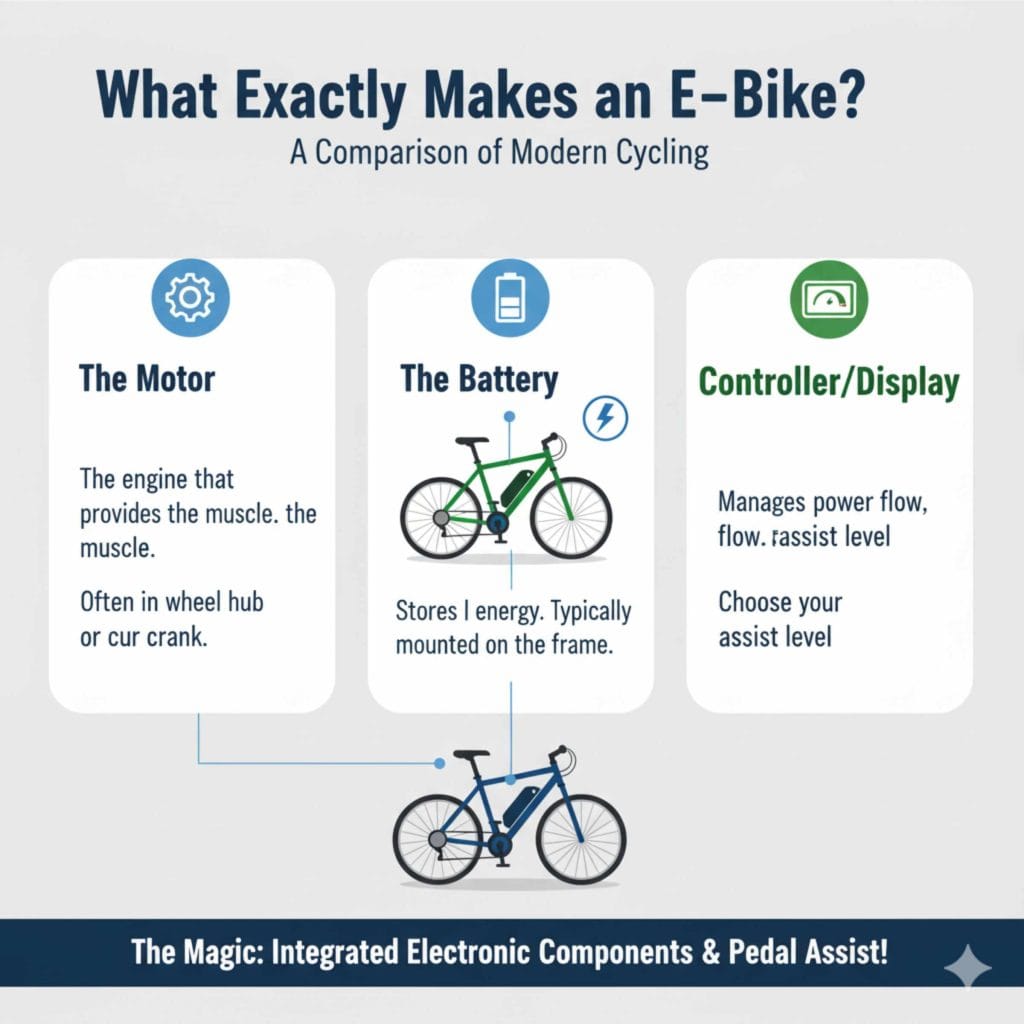
At its heart, an e-bike is still a bicycle. You can always pedal it like normal. The magic ingredient is the integration of three key electronic components:
- The Motor: This is the engine that provides the muscle.
- The Battery: This stores the energy needed to run the motor.
- The Controller/Display: This unit manages the power flow and lets you choose how much help you want.
These parts work together to give you a boost when you need it—whether climbing a hill, fighting a headwind, or just cruising without breaking a sweat. But this boost comes in fundamentally different ways. This leads us directly to the core of what you need to know: how the power is delivered.
The Big Divide: Understanding Power Delivery Systems
When people ask “what is the difference between pedal assist and electric bike,” they are usually talking about the two primary ways an e-bike delivers that electric assistance. Understanding these two methods is crucial for choosing a bike that matches how and where you plan to ride.
Pedal Assist (PAS) Systems Explained
Pedal Assist, often called PAS, is the most common and bike-like feeling system. Think of it less like a scooter and more like having super-strong legs when you ride.
With PAS, the motor only engages (turns on) when you are actively pedaling. The system uses sensors to detect how hard and fast you are pushing the pedals. The harder you push, the more power the motor adds, up to the level you have selected on the display (usually settings 1 through 5).
Pros of Pedal Assist
- More Natural Ride: It feels like a traditional bike ride, just easier.
- Better Exercise: Because you must pedal, PAS bikes ensure you still get a workout.
- Longer Range: Using less power overall often means you can ride further on one charge.
- Legal Clarity: In many areas, only PAS bikes qualify for certain types of cycling paths.
Cons of Pedal Assist
- Requires Effort: If you stop pedaling (like waiting at a light), the assistance stops immediately.
- Slight Delay: There can be a very brief delay between pressing the pedal and the motor kicking in.
Throttle Systems Explained
The throttle is exactly what it sounds like—it functions just like the accelerator on a motorcycle or scooter. You don’t have to pedal at all for the bike to move using electric power.
Throttles usually come in two forms: sometimes a twist-grip (like a motorcycle) or, more commonly, a small thumb lever near your handlebar grip. Pressing the throttle gives you immediate power, regardless of what your feet are doing. Many throttle-equipped e-bikes also offer Pedal Assist modes as a backup or alternative.
Pros of Throttle
- Instant Power: Great for getting started from a dead stop or when you are tired.
- No Pedaling Required: Perfect if you have knee pain or just want a pure electric ride for a short distance.
- Quick Bursts: Excellent for quickly getting up to speed when merging with traffic.
Cons of Throttle
- Less Exercise: You can effectively cheat and never pedal, reducing the health benefit.
- Shorter Range: Relying heavily on 100% motor power drains the battery much faster.
- Legal Confusion: Some jurisdictions strictly regulate or ban throttle use on bike paths.
What Is the Difference Between Pedal Assist and Electric Bike? (Clarified)
To answer the core question simply: A “Pedal Assist” system is a feature found on most electric bikes.
When someone says “electric bike,” they are describing the whole machine—a bicycle with a motor and battery. When someone says “Pedal Assist,” they are describing how the motor is activated (only when you pedal).
For example, an e-bike can have:
- Pedal Assist ONLY (True bicycle feel).
- Throttle ONLY (Scooter feel, generally rarer for legal reasons).
- Pedal Assist AND Throttle (The most versatile option).
So, the entire “electric bike” category is the vehicle; Pedal Assist is one of the primary driving modes available within that category. Knowing this helps when reading specifications!
E-Bike Classes: Understanding Speed and Power Regulations
If the motor delivery wasn’t enough, the government and local trail systems classify e-bikes based on how fast they can go with electric assistance. This is not about the top speed your bike can physically reach by pedaling hard; it’s about the maximum speed the motor is allowed to help you reach before it cuts out.
These classes are widely adopted across the United States, though always check your local city or state laws, as they can vary. According to the U.S. Department of Transportation, these classifications help ensure safety across mixed-use paths.
The Three Primary E-Bike Classes
Here is a straightforward breakdown of the three main classes:
| E-Bike Class | Maximum Assisted Speed | Throttle Allowed? | Where You Can Ride (Generally) |
|---|---|---|---|
| Class 1 | 20 mph (32 km/h) | No (Pedal Assist Only) | Bike paths, roads, trails where regular bikes are often allowed. |
| Class 2 | 20 mph (32 km/h) | Yes (Can use throttle up to 20 mph) | Roads, some shared-use paths (check local rules). |
| Class 3 (Speed Pedelec) | 28 mph (45 km/h) | No (Pedal Assist Only) | Roads only; usually banned from bike paths due to high speed. |
Why does this matter? If you plan to ride mostly on paved multi-use paths shared with walkers and slower cyclists, a Class 1 bike is often the safest bet because it limits the top speed and usually bans the throttle. If you are commuting on the road and want to keep up with city traffic, a Class 3 bike might be necessary.
The Subtlety of Motor Power (Watts)
While speed classifications are governed by law, motor power is measured in Watts (W). This tells you the strength of the motor.
- 250W to 500W: Very common for commuter and leisure bikes. Great for flattening hills gently.
- 750W or Higher: Found on cargo bikes, off-road models, or powerful Class 2 bikes. These offer serious torque (pulling power).
Remember: Even a 250W motor can feel strong if it’s teamed up with a great, lightweight Class 1 pedal-assist system!
Key Components That Define Your E-Bike Experience
Beyond the motor type, several other parts significantly affect how your e-bike performs and feels. Thinking about these details will help you match the hardware to your needs.
1. Battery Placement and Capacity (Range Anxiety Solved)
The battery dictates how far you can go (your range). Capacity is measured in Watt-hours (Wh).
Common Battery Locations:
- Frame Integrated: The battery slides cleanly into the down tube of the frame. This looks best and achieves great weight balance.
- Downtube Mounted: The battery is attached externally to the downtube. Easier to remove for charging.
- Rear Rack Mounted: Common on utility or older/budget models. This placement can make the rear end feel heavier.
Practical Tip: For a beginner, look for a battery rated at least 400Wh if you plan to ride more than 15 miles in one go, especially if you live somewhere hilly. Always check if the battery can be easily removed for indoor charging.
2. Sensor Type: Cadence vs. Torque
This is a more technical difference, but it greatly impacts the “feel” of the Pedal Assist mode. Both detect pedaling, but they do it differently.
Cadence Sensors
This sensor only detects if your pedals are moving and how fast they are spinning (cadence). It provides a consistent level of assistance based on the selected power level.
Analogy: Like cruise control—once you reach a certain speed, it keeps applying the same power, whether you are leaning into a headwind or coasting downhill.
Torque Sensors
This sensor measures how much physical force (torque) you are applying to the pedals. The harder you push, the more the motor assists. It mirrors your natural effort.
Analogy: Like having an invisible super-strong training partner pushing you forward exactly as hard as you are pushing yourself.
Most quality e-bikes now feature torque sensors because they provide a smoother, more intuitive riding experience, especially for hill climbing. Cadence sensors are usually found on more budget-friendly models.
3. Motor Location: Hub vs Mid-Drive
The placement of the motor has a huge impact on handling, hill-climbing ability, and maintenance.
Hub Drive Motors (Usually in the wheel hub)
The motor sits inside the hub of either the front or, more commonly, the rear wheel. This is generally simpler and cheaper to manufacture.
- Pros: Easy to service (you can replace the wheel easily), lower cost.
- Cons: Can affect weight distribution, making the bike feel rear-heavy. Harder to move the bike manually when the battery is dead.
Mid-Drive Motors (Near the pedals/crankset)
The motor is located in the center of the frame, driving the chainring directly. This configuration works with the bike’s existing gears.
- Pros: Excellent for climbing steep hills because the motor utilizes the bike’s gearing system. Better weight centralization leads to better handling.
- Cons: More expensive; puts more stress on the chain and drivetrain components, potentially requiring more frequent replacement of those parts.
If you plan on tackling serious inclines or rough terrain, a mid-drive motor is generally the superior choice. For flat commuting, a hub motor is perfectly fine and often more cost-effective.
When Do I Need Throttle vs Pure Pedal Assist? (Scenario Planning)
Deciding between throttle and pure PAS often comes down to your physical condition and the terrain you tackle. Here are some practical scenarios to help you decide which system difference matters most to you.
Scenario 1: Commuting on Flat City Streets
Best Fit: Class 1 or Class 3, Pedal Assist (PAS) preferred.
You want a smooth ride that feels energetic but still involves pedaling for exercise. Since you aren’t fighting massive hills, you don’t need the immediate blast of a throttle.
Scenario 2: Carrying Heavy Cargo or Children
Best Fit: Class 2 (with Throttle) or High-Torque Mid-Drive.
When starting from a standstill while already loaded down with groceries or kids, the extra boost from a throttle (Class 2) can save your knees and back from strain. You need instant, hassle-free power to get moving.
Scenario 3: Riding with Stronger Cyclists or Road Traffic
Best Fit: Class 3 (28 mph PAS).
If you are sticking to main roads where the speed limit is 35 mph, keeping up safely requires the higher assisted speed of a Class 3 bike. Since Class 3 legally prohibits throttles, the focus is purely on high-speed pedaling assistance.
Scenario 4: Trail Riding/Mountain Biking
Best Fit: Mid-Drive Motor with strong Torque Sensor PAS.
Off-road riding demands precise power modulation. A torque sensor lets you feather the power smoothly as you navigate obstacles, offering better control than a simple on/off throttle.
When looking at local rules for trails, remember that many parks and national forests have strict regulations regarding e-bikes. Always consult the managing body’s website, such as the guidance found on many Forest Service lands, before riding.
Maintenance Differences: What You Need to Know
While e-bike maintenance shares much with traditional bikes (tires, brakes, chain), the electronic components add a few new considerations. Keeping these simple checks in mind ensures reliability.
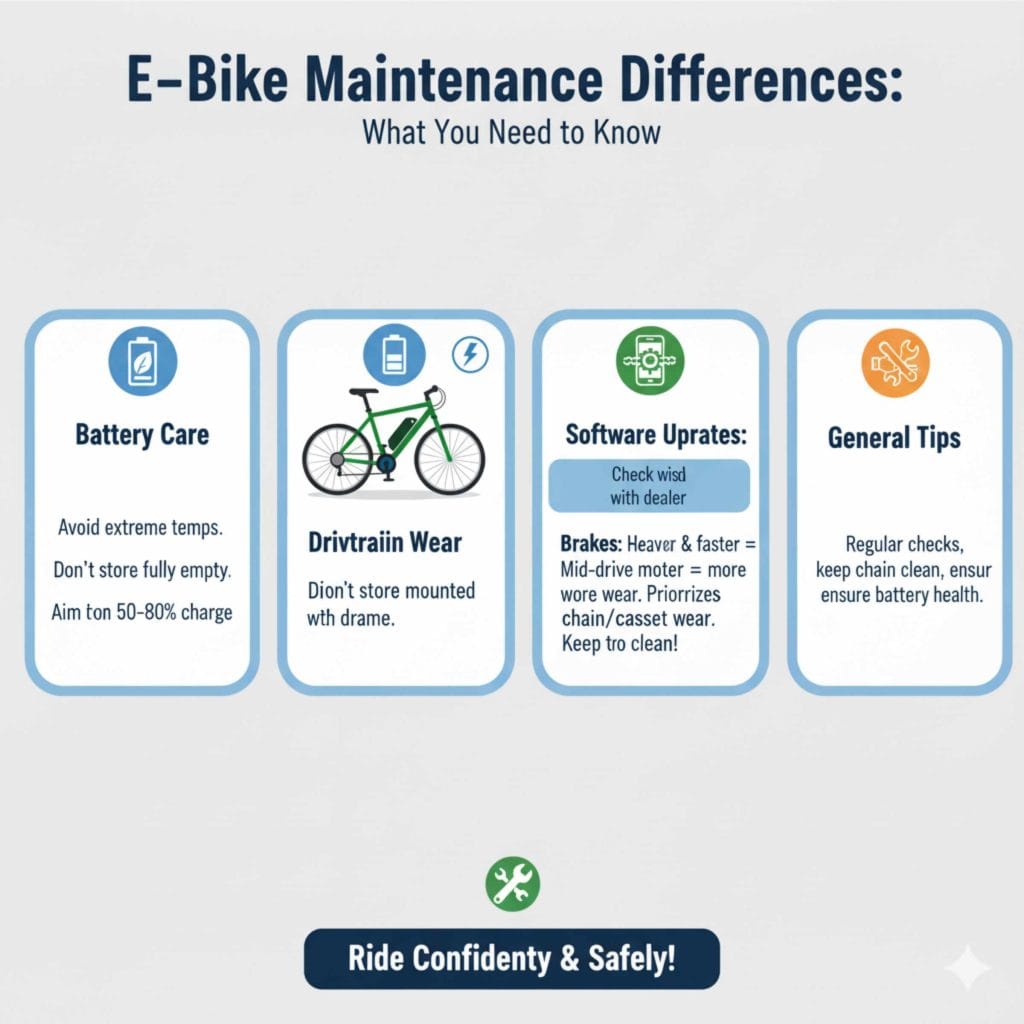
- Battery Care is Priority One: Batteries hate extreme cold or extreme heat. Never let the battery sit fully depleted for long periods. Aim to store it between 50% and 80% charge if you won’t use the bike for several weeks.
- Software Updates: Check with your dealer regularly to ensure the controller software is up to date, much like updating your smartphone.
- Brakes Pay Extra Attention: E-bikes are heavier and faster than standard bikes. This means you need more stopping power. Regularly inspect brake pads for wear. Hydraulic disc brakes are highly recommended for safety.
- Drivetrain Wear (Especially Mid-Drives): Since mid-drive motors put more torque through the chain and cassette, these parts will wear out faster than on a non-electric bike.
Don’t let this scare you! Basic maintenance is easy. Keeping the chain clean and ensuring full battery health are the two biggest confidence boosters for a new e-bike owner.
Comparing E-Bikes to Traditional Bicycles
Why go electric at all? The difference is significant, especially for those returning to cycling or facing physical limitations.
| Feature | Traditional Bicycle | Electric Bike (E-Bike) |
|---|---|---|
| Effort Required | 100% rider power. | Rider power supplemented by motor (from 10% assistance up to 100% via throttle). |
| Speed Potential | Limited by fitness and terrain. | Assisted up to 20 mph or 28 mph depending on the class. |
| Cost | Generally lower initial purchase price. | Higher initial purchase price due to motor and battery technology. |
| Maintenance | Simple mechanical checks. | Mechanical checks plus battery monitoring and electronic troubleshooting. |
| Fitness Benefit | Very high aerobic benefit. | Moderate to low aerobic benefit, depending on the assistance level used. |
Frequently Asked Questions (FAQ) for Beginners
Here are quick answers to the common sticking points new riders have:
Q1: Do I have to pedal an electric bike?
A: Not necessarily. If your e-bike is a Class 2 model or has a throttle installed, you can use the throttle to propel the bike without pedaling at all, acting like a small scooter.
Q2: Is riding an e-bike considered “cheating”?
A: No. E-bikes simply allow you to control how much assistance you use. You can still get a great workout by lowering the assist level, and many riders pedal farther and more often because hills, wind, and long distances feel more manageable.
Q3: Which is better for beginners: pedal assist or throttle?
A: Pedal assist is usually better for beginners because it feels more like a traditional bicycle and encourages steady riding habits. A throttle can be helpful for riders with knee pain, mobility challenges, or when starting on hills, but it’s not necessary for most casual riders.
Q4: Can I ride an e-bike anywhere I ride a normal bike?
A: It depends on the e-bike class and local laws.
- Class 1 e-bikes are allowed in most places regular bikes are permitted.
- Class 2 and Class 3 may be restricted on bike paths or trails.
Always check local regulations before riding.
Conclusion: Choosing the Right E-Bike with Confidence
Understanding the difference between electric bikes, pedal assist systems, and throttle control makes choosing the right e-bike much easier. At the core, an e-bike is still a bicycle—but how the motor delivers power changes the riding experience dramatically.
Pedal assist offers a natural, exercise-friendly ride that works with your effort, while throttles provide instant power when you need it most. Add in e-bike classes, motor types, and sensor technology, and it becomes clear that no single e-bike is “best” for everyone—only the one that best fits your lifestyle, terrain, and comfort level.
By knowing how these systems work, you can confidently select an e-bike that supports your goals, whether that’s commuting, recreation, fitness, or carrying cargo. With the right knowledge, the confusion fades—and the ride becomes something to truly enjoy!