
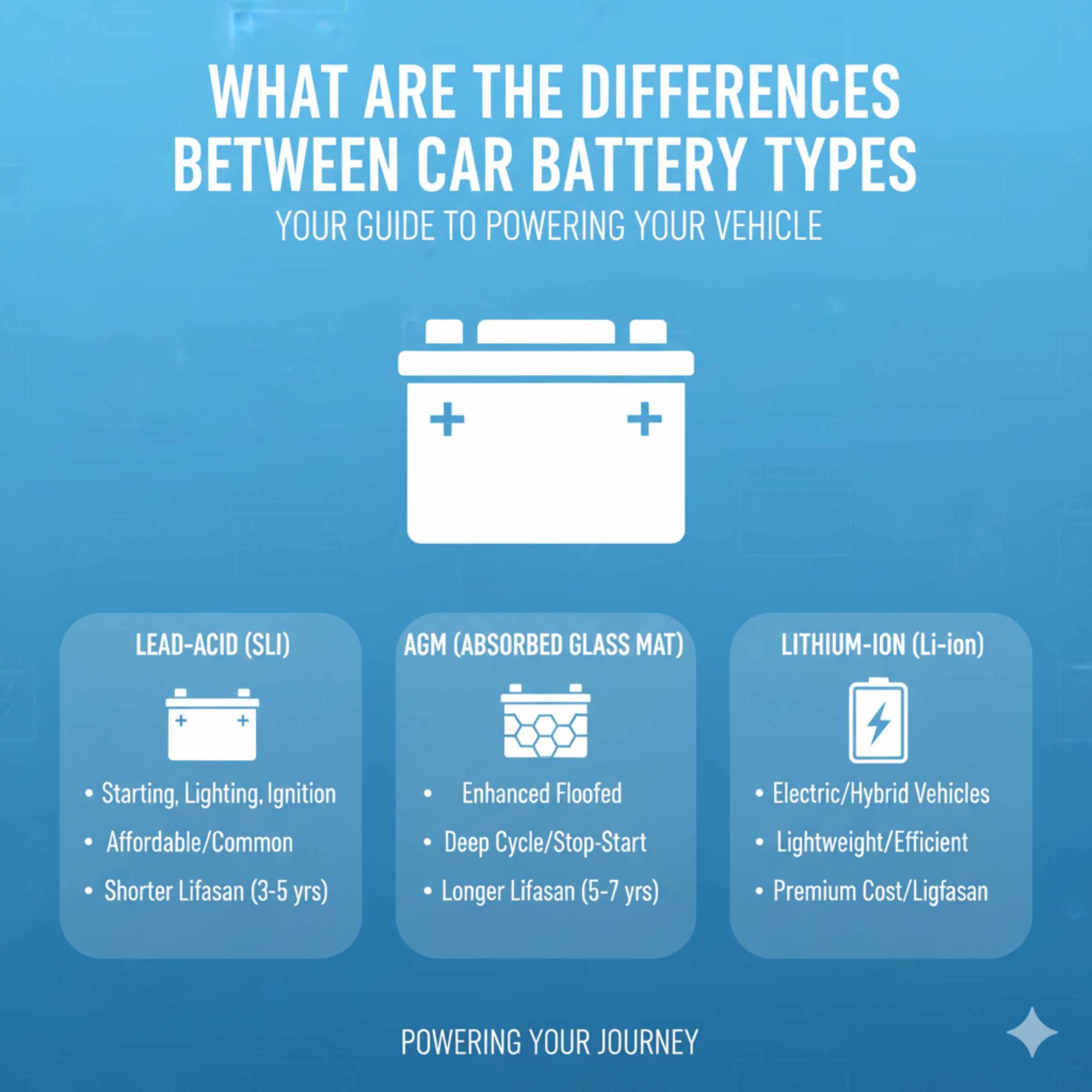
The main difference between car battery types lies in their internal construction—primarily Lead-Acid (Flooded), Enhanced Flooded Battery (EFB), and Absorbed Glass Mat (AGM). Knowing these differences helps you choose the right power source for your vehicle’s needs, ensuring reliable starting and longevity.
Ever stood in an auto parts store dizzy from all the battery choices? You see labels like “Standard,” “AGM,” and “Calcium,” and it all sounds like complicated mechanic talk. Don’t worry! Choosing the right battery for your car doesn’t need to be a headache. A dead battery is one of the most frustrating car problems, but picking the right replacement is much easier than you think.
I’m Dustin Hall, and I’m here to break down the mystery. We will explore what makes each battery unique, why your car might need a specific type, and how to choose the best one without spending too much money. By the end of this guide, you’ll understand car batteries like a pro. Let’s shine a light on what’s under your hood!
Why Battery Types Even Matter for Your Car
Your car battery is more than just a box that lets your engine turn over. In modern vehicles, the battery manages power for essential electronics, like the navigation system, advanced safety sensors, and that fancy stop/start system you might have. Using the wrong type can lead to premature failure, poor performance, or even damage expensive electronics.
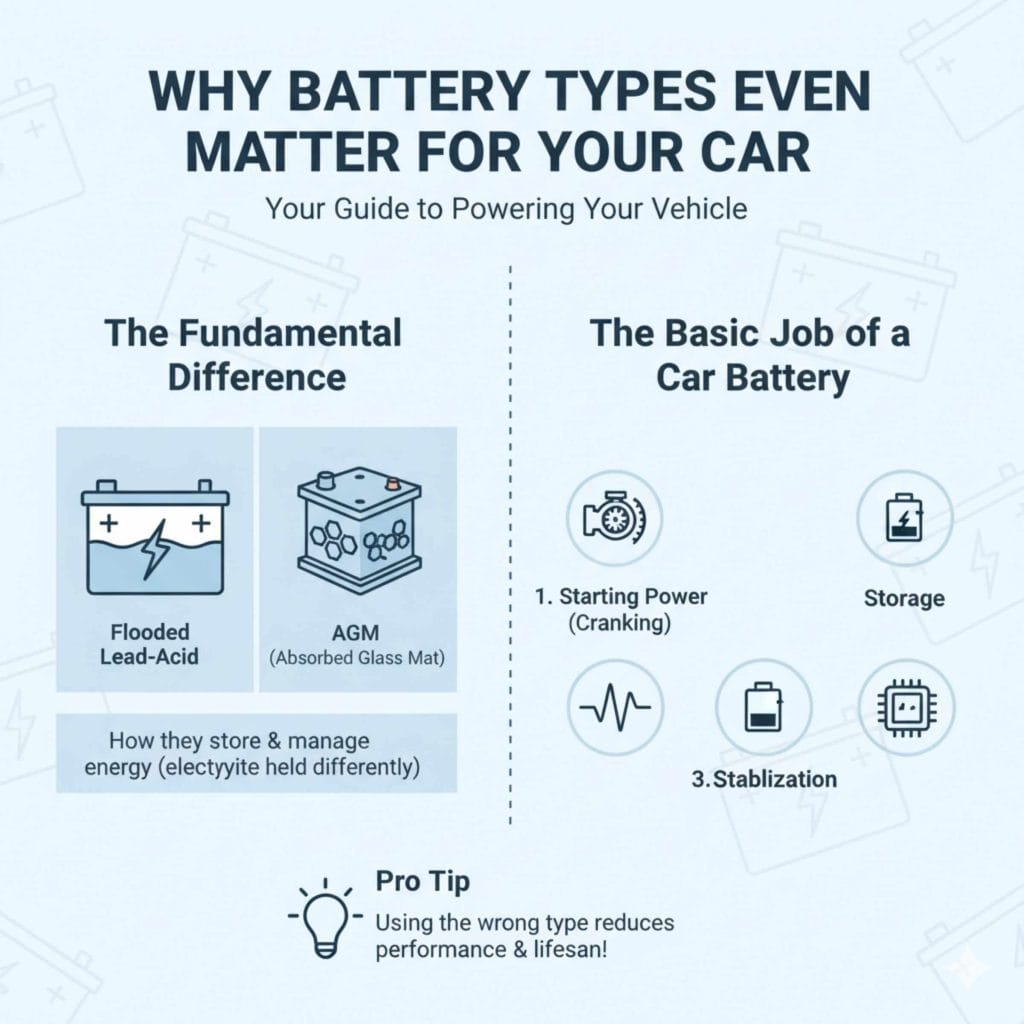
The fundamental difference between battery types boils down to how they store and manage the energy, specifically how the sulfuric acid electrolyte inside the battery is held. This small difference has huge implications for performance, maintenance, and cost.
The Basic Job of a Car Battery
No matter the type, every car battery performs three vital functions:
- Starting Power (Cranking): It delivers a huge burst of energy to the starter motor to get the engine running.
- Storage: It stores electrical energy when the engine is off.
- Stabilization: It helps smooth out the voltage spikes produced by the alternator while driving, protecting sensitive electronics.
The Big Three Car Battery Types Explained
When shopping for a replacement, you will almost always encounter three main categories of traditional lead-acid batteries. Each has a specific design that makes it suitable for different driving conditions and vehicles.
1. Flooded Lead-Acid (SLA) – The Traditional Workhorse
This is the oldest, most common, and usually the most affordable battery type available. Think of this as the standard battery your grandpa likely used.
In a Flooded Lead-Acid (or Standard Flooded) battery, the internal plates are bathed in a liquid sulfuric acid solution. This solution can move around freely—hence the name “flooded.” Because the liquid can move, you might occasionally need to check the fluid levels and top them off with distilled water on some models.
Pros and Cons of Flooded Batteries:
- Pros: Very affordable, widely available, and easy to recharge.
- Cons: Sensitive to aggressive deep discharges, prone to leaking if tipped, and requires occasional watering (maintenance required).
2. Enhanced Flooded Battery (EFB)
The EFB category is a newer evolution designed specifically for vehicles equipped with start-stop technology, but they are also great for drivers who have a mix of highway and short city trips.
EFBs are essentially stronger versions of flooded batteries. They incorporate features—like thicker plates or special coatings—that allow them to handle the frequent starting and stopping cycles better than a standard battery. However, they still use liquid electrolyte.
Why Choose EFB?
If your car automatically shuts off the engine at stoplights and restarts when you lift your foot off the brake, you need an EFB or an AGM. An EFB offers a budget-friendly bridge between the standard battery and the high-performance AGM.
Pros and Cons of EFB Batteries:
- Pros: Better cycling performance than standard flooded, handles frequent start-stop operation well, and is relatively inexpensive.
- Cons: Not as vibration-resistant as AGM, and may not last as long as AGM batteries under heavy load.
3. Absorbed Glass Mat (AGM)
AGM batteries are the premium choice for modern vehicles requiring high performance, especially those loaded with technology. AGM stands for Absorbed Glass Mat. Instead of liquid acid, the electrolyte is absorbed and held in thin, highly compressed fiberglass mats placed between the lead plates.
This mat structure makes the AGM battery spill-proof, extremely resistant to vibration, and capable of delivering strong bursts of power for a long time. They recharge faster and handle deep discharges much better than standard flooded batteries.
Pros and Cons of AGM Batteries:
- Pros: Excellent vibration resistance (great for rough roads), spill-proof, fast recharging, superior lifespan, and handles high energy demands (like running accessories while the engine is off) very well.
- Cons: Significantly more expensive than standard batteries, and you must use the correct charging profile recommended by the manufacturer; improper charging can damage them quickly.
Specialty Battery Enhancements and Additives
Beyond the core construction methods (Flooded, EFB, AGM), you will see other terms used by manufacturers. These usually relate to the materials used to improve performance or maintenance requirements.
Calcium-Enhanced Batteries
You will often find calcium added to the lead alloy in modern batteries, even standard flooded ones. The addition of calcium lowers the battery’s water loss, meaning they require less maintenance (less topping off with distilled water). These are often called “Maintenance-Free” batteries, though this usually applies more strictly to sealed units.
Deep Cycle vs Starting Batteries
It is crucial to understand that batteries are designed for specific jobs. Most car batteries are “Starting Batteries” designed to crank the engine with a huge surge of power one time, then immediately be recharged by the alternator.
Deep cycle batteries (often used in boats, RVs, or off-roading vehicles) are built to provide steady, lower amounts of power for extended periods and can survive being drained deeply multiple times. Using a deep cycle battery as your main car starting battery is generally inefficient, though some hybrid batteries blur this line.
Comparison Table: Which Battery Is Right for You?
To help you visualize the differences quickly, here is a side-by-side comparison of the three main types you’ll encounter:
| Feature | Flooded (SLA) | Enhanced Flooded (EFB) | Absorbed Glass Mat (AGM) |
|---|---|---|---|
| Internal Design | Liquid acid flows freely | Liquid acid, thicker plates | Acid held in glass mats |
| Cost | Lowest | Medium | Highest |
| Start/Stop Systems? | No (Will fail quickly) | Yes (Recommended minimum) | Yes (Optimal performance) |
| Vibration Resistance | Lowest | Good | Excellent |
| Maintenance (Watering) | Often required | Rarely required | Never required |
| Spill Protection | No | Low to Moderate | Yes (Spill-proof) |
Choosing the Right Battery for Your Vehicle: A Step-by-Step Guide
Making the right choice requires looking at what your car demands, not just what looks cheapest. Follow these steps to ensure you select a reliable replacement. Remember, always consult your owner’s manual first, as some manufacturers specifically require a certain battery technology due to electronic management systems.
Step 1: Check the Manual for Required Technology
This is the non-negotiable starting point. If your car came from the factory with an AGM battery (especially common in luxury vehicles or those with advanced regenerative braking systems), you must replace it with an AGM. Electronic systems in these cars are precisely calibrated to the AGM’s specific charging profile.
If you replace an original AGM with a standard flooded battery, you risk computer errors, reduced lifespan for the new battery, and poor system efficiency. For more information on maintaining modern battery systems, you can refer to resources detailing best practices for automotive charging systems, like those often found through engineering societies or national automotive service organizations.
Step 2: Assess Your Driving Habits
Be honest about how you drive. This helps determine if you need the extra durability of an AGM or if a cheaper option will suffice.
- Heavy City/Stop-and-Go Driver: If your engine frequently cycles on and off, you need a battery designed for high cycling, like EFB or AGM. A standard battery will wear out fast.
- Long Highway Driver: If you drive long distances without stopping, the alternator has plenty of time to keep the battery fully topped up. A standard Flooded battery may work well here, provided you live in a moderate climate.
- Extreme Climates: In very cold winters or extremely hot summers, the extra cranking power provided by AGM batteries is often worth the investment for guaranteed starts in harsh weather.
- Accessory Use: Do you often run the radio, lights, or power inverters with the engine off? If so, AGM is superior because it can handle being drained slightly without immediate damage.
Step 3: Verify Physical Specs and Fitment
Even if you know the type (say, AGM), you must confirm the battery physically fits and meets the power requirements.
- Group Size: This is the physical dimension (Length x Width x Height) of the battery. Ensure the new battery matches the old one’s group size (e.g., Group Size 35, Group Size 65). It must fit securely in the mounting tray.
- Cold Cranking Amps (CCA): This measures the battery’s ability to start an engine in the cold. Always replace your battery with one that meets or exceeds the CCA rating specified in your manual. Higher CCA is always safer in cold climates.
- Reserve Capacity (RC) and Ampere-Hour (Ah): These relate to deep cycle performance. While less critical for a standard starting battery, a higher RC means your car can run accessories for a bit longer if the alternator fails.
Step 4: Buying and Installation Considerations
When you purchase the battery, especially if it is an EFB or AGM, confirm the seller or installer uses the correct charging voltage when conditioning or installing it. Modern cars often use smart alternators that charge differently based on the battery type detected by the onboard computer.
Never leave a new battery sitting unused. Batteries begin to self-discharge the moment they are manufactured. Ensure the battery you buy has been recently manufactured (look for a date code stamped on the case) and is fully charged before installation.
Are There Other Battery Technologies I Should Know About?
While Flooded, EFB, and AGM cover about 98% of conventional vehicles, technology is always advancing. You might read about these types in specialty vehicle contexts.
Lithium-Ion (Li-ion) / Lithium Iron Phosphate (LiFePO4)
These are making their way into the performance and aftermarket world. They are incredibly light, offer phenomenal power density, and last for a very long time. However, they come with significant caveats for everyday drivers:
- Cost: They are substantially more expensive than lead-acid variants.
- Temperature Sensitivity: They often perform poorly in extreme cold and require careful charging management systems (Battery Management Systems or BMS).
- Vehicle Compatibility: Most stock alternators might not charge them efficiently or safely without specific modifications. They are usually reserved for race cars or custom setups.
The Role of the Alternator in Battery Health
Understanding the battery type also means understanding what charges it. The alternator is your battery’s best friend. If your alternator fails, your battery will quickly drain, regardless of its type.
Modern alternators are “smart” alternators that adjust their output voltage based on the car’s computer needs and the surrounding temperature. For example, a car may charge the battery differently in a hot climate versus a cold one. This is another key reason why substituting a cheap, standard battery into a system that expects an AGM can sometimes confuse the computer and lead to charging issues.
Common Myths About Car Batteries, Busted!
Let’s clear up a few things you might have heard around the garage:
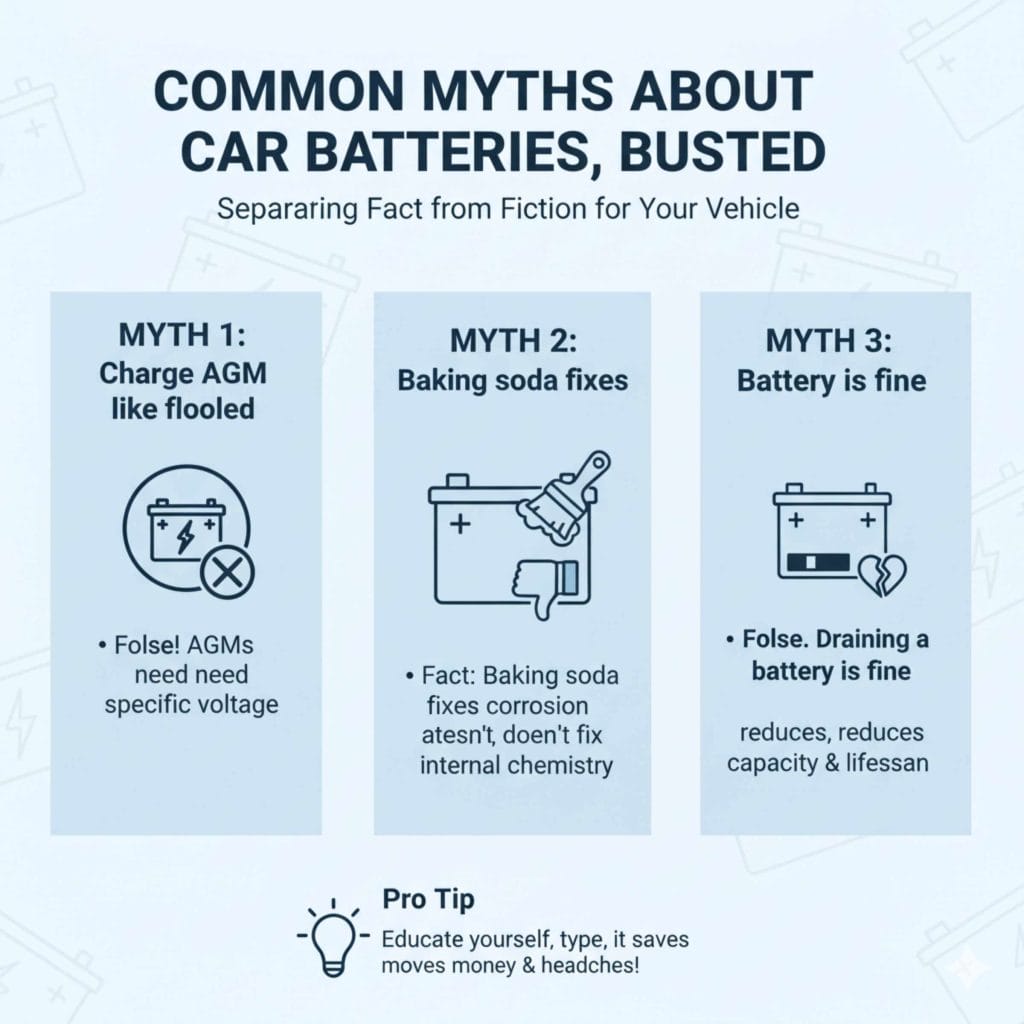
- Myth: You can charge an AGM battery just like a flooded battery. Fact: False! AGMs require a specific voltage ceiling (they charge faster but can be damaged if overcharged with the wrong settings). Always use a charger designated as AGM-compatible or an intelligent multi-stage charger.
- Myth: Adding baking soda to a standard battery fixes the corrosion. Fact: Baking soda (Sodium Bicarbonate) neutralizes acid—it cleans the corrosion off the terminals, but it does nothing to fix the internal chemistry or charge level of the battery itself. Always use a dedicated battery terminal cleaner.
- Myth: Letting a standard battery go completely dead won’t hurt it. Fact: False. Draining a standard flooded battery too low can cause sulfation—a hard buildup on the plates that reduces future capacity and shortens its overall life. This is why AGM batteries handle accidental drain much better—they resist sulfation due to their captive electrolyte.
Frequently Asked Questions (FAQ) for Beginner Drivers
Q1: If my car has a standard battery, can I upgrade to AGM?
A: Usually, yes, if it physically fits. Upgrading from Flooded to AGM often gives you better reliability, especially in extreme weather. Just ensure the AGM physically fits the tray and that your car can handle the charging demands. It’s generally a safe upgrade unless your car is very old or has very simple charging electronics.
Q2: How long should a car battery last?
A: On average, standard flooded batteries last 3 to 5 years. Higher-quality batteries like EFB or AGM, especially in vehicles with Start-Stop systems, should last 4 to 7 years. Driving habits and climate play huge roles.
Q3: What is the best way to clean battery terminals?
A: Disconnect the negative cable first! Mix baking soda and water to create a paste, scrub the posts and terminals with a wire brush, and then rinse lightly with water. Always apply a thin layer of anti-corrosion grease or spray afterward.
Q4: Does extreme heat hurt batteries more than cold?
A: Yes. While cold weather makes starting hard because the engine oil is thicker and the battery output is temporarily reduced, extreme heat (over 90°F/32°C) actually causes the internal chemical reactions to accelerate, breaking down the battery plates faster. Heat shortens a battery’s overall lifespan significantly more than cold does.
Conclusion:
Choosing the right car battery isn’t about guessing or buying the cheapest option—it’s about matching the battery’s internal design to your vehicle’s technology, driving habits, and environment. Understanding the core differences between Flooded Lead-Acid, Enhanced Flooded Battery (EFB), and Absorbed Glass Mat (AGM) batteries empowers you to avoid premature failures, electrical issues, and unnecessary replacements.
Modern vehicles place far greater demands on their batteries than ever before. Features like start-stop systems, advanced electronics, and smart alternators require batteries that can handle frequent cycling, vibration, and precise charging profiles. Whether you stick with a traditional flooded battery for simple driving needs, choose an EFB for reliable start-stop performance, or invest in an AGM for maximum durability and power, the right choice ensures longer battery life and dependable starts in any condition.
By checking your owner’s manual, considering how and where you drive, and verifying proper fitment and power ratings, you can confidently select a battery that works with your vehicle—not against it. A well-matched battery isn’t just a replacement part; it’s a key component of your car’s reliability, safety, and long-term performance!