
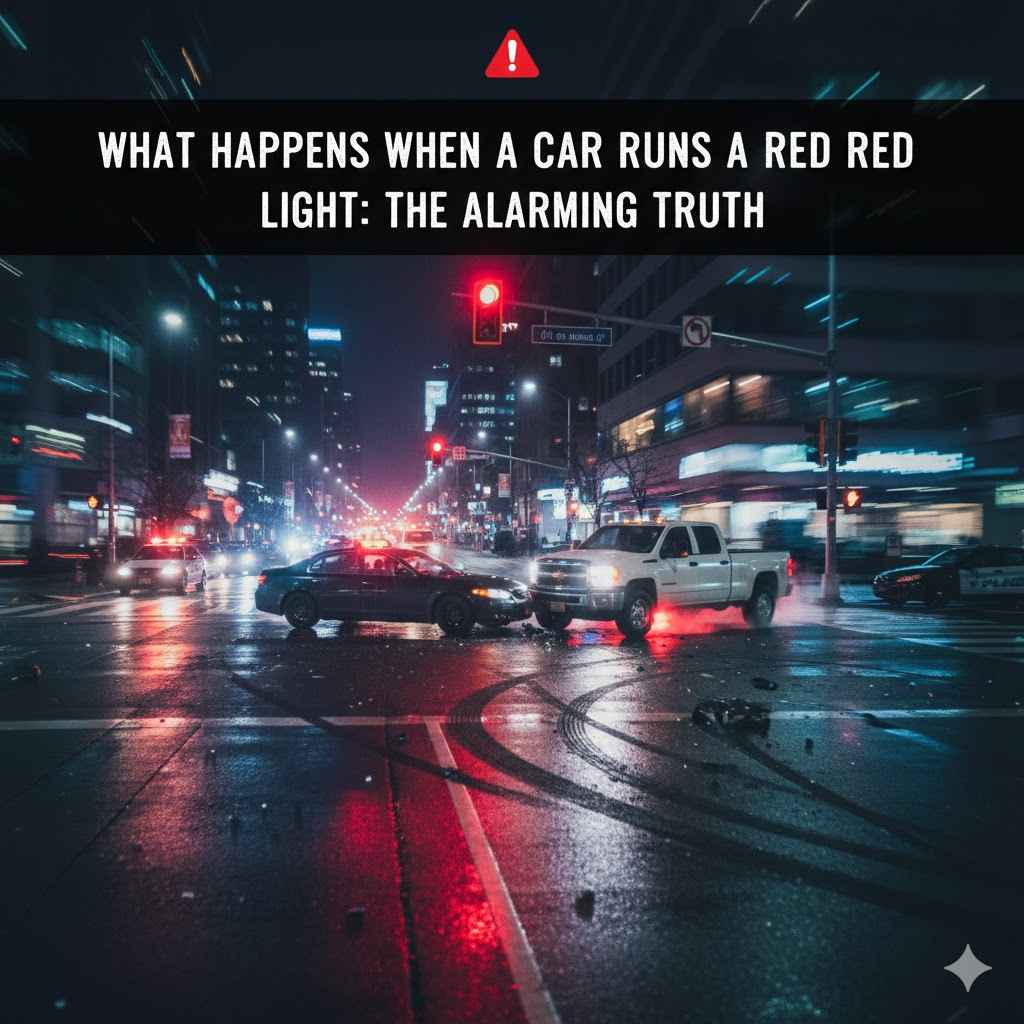
When a car runs a red light, the driver faces serious consequences. These include a high risk of causing a severe T-bone collision, receiving a costly traffic ticket, getting demerit points on their license, and facing a significant increase in car insurance rates. In the worst cases, it can lead to criminal charges and tragic accidents.
Seeing a car blast through a red light is a scary sight. Maybe you’ve done it by accident yourself. Your heart pounds, and you wonder what could have happened. It feels like a simple mistake, but it’s one of the most dangerous things a driver can do. So, what really happens when a car runs a red light? It’s more than just a quick scare.
You might worry about getting a ticket or if a camera caught you. But the real story is much bigger. It involves your safety, your money, and your driving future. Don’t worry, though. I’m here to walk you through it all. We’ll look at the immediate dangers, the legal troubles, and the hidden costs. By the end, you’ll understand why stopping at red is so important and feel more confident about driving safely.
The Immediate Danger: Why Intersections Are So Risky
When you run a red light, you are rolling the dice with your life and the lives of others. The most immediate and terrifying outcome is a collision. Intersections are already hotspots for accidents, and ignoring a traffic signal turns that risk up to the maximum level.
The Anatomy of a T-Bone Collision
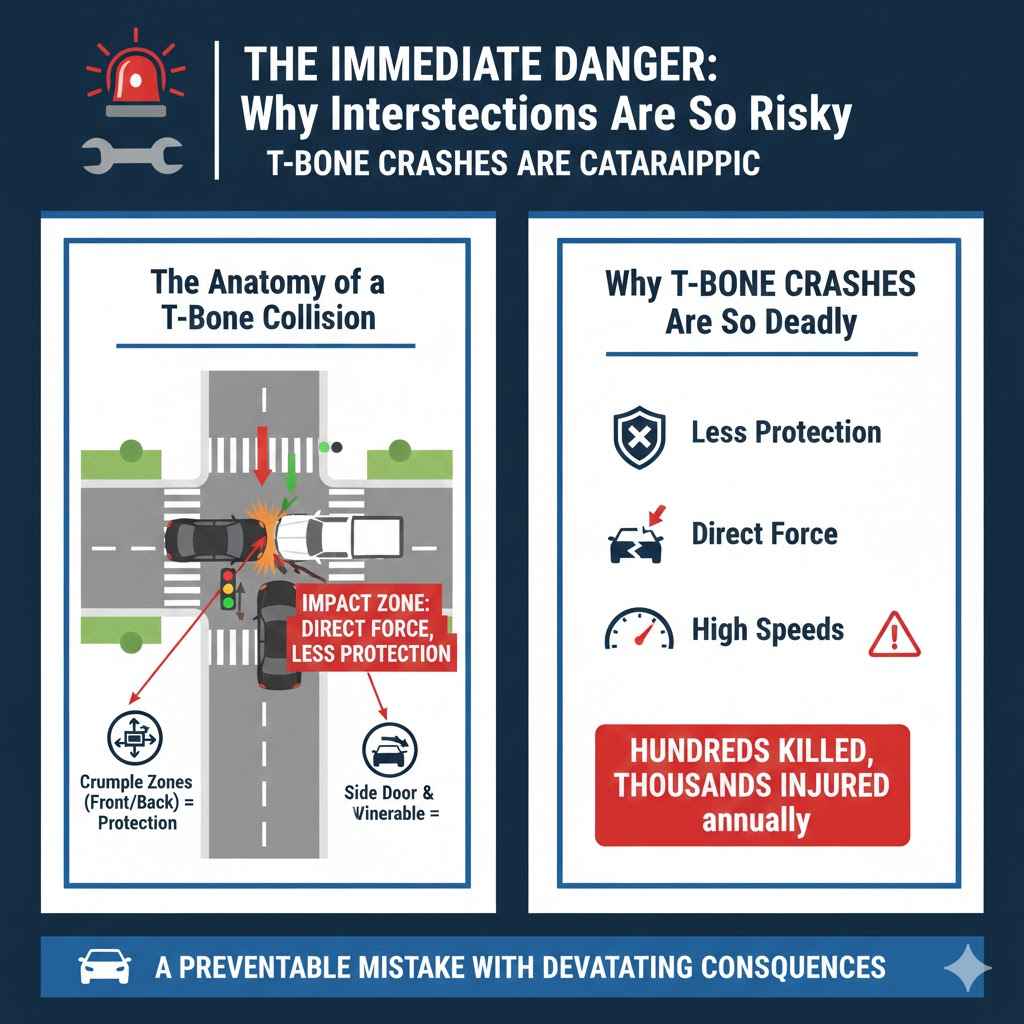
The most common type of crash from running a red light is the T-bone, or side-impact, collision. This is when the front of one car crashes directly into the side of another. Think about it: the cars with the green light are moving into the intersection at full speed. They don’t expect another vehicle to suddenly appear in their path.
Why are T-bone crashes so deadly? It’s simple physics.
- Less Protection: Cars are designed with major safety features in the front and back, like crumple zones that absorb impact. The sides of a car have very little to protect you—just a door and a window.
- Direct Force: The force of the striking car is transferred directly to the occupants. There is almost no space to absorb the energy of the crash.
- High Speeds: Intersection crashes often happen at higher speeds, as drivers are accelerating to get through the light.
According to the Insurance Institute for Highway Safety (IIHS), hundreds of people are killed and thousands are injured each year in crashes caused by drivers running red lights. These aren’t just statistics; they are families and communities torn apart by a preventable mistake.
The Legal Hammer: Fines, Points, and More
Even if you are lucky enough to avoid a crash, running a red light brings a host of legal problems. The moment those red lights flash in your rearview mirror or a ticket arrives in the mail, your wallet and your driving record are in for a hit.
Traffic Tickets and Hefty Fines
The most immediate legal consequence is a traffic citation. This isn’t like a small parking ticket. Fines for running a red light can be surprisingly expensive, and they vary a lot from state to state and even city to city. Some jurisdictions also add extra fees for court costs or traffic school.
Here’s a look at how much fines can differ across the country. Remember, these are just estimates and can change.
| State | Estimated Fine for Running a Red Light |
|---|---|
| California | $490+ |
| New York | $200 – $450 |
| Florida | $158+ |
| Texas | Up to $200 |
| Illinois | $120 |
As you can see, a simple mistake can cost you hundreds of dollars right away. For many people, that’s a major and unexpected expense.
Points on Your Driving Record
Beyond the fine, you will likely receive demerit points on your driving record. State DMVs use a point system to track driving infractions. Think of it like a report card for your driving. Too many points in a certain period can lead to serious consequences.
Here’s how it typically works:
- You get a ticket: A red light violation usually adds 2 to 4 points to your license.
- Points add up: If you collect too many points within a 12, 18, or 24-month period, your license could be suspended or revoked.
- Long-term impact: These points stay on your record for several years (often 3 to 5), affecting you long after you’ve paid the fine.
Having a suspended license means you can’t legally drive, which can affect your ability to get to work, school, or take care of your family. It’s a major disruption to your life.
When It Becomes a Criminal Offense
In most cases, running a red light is a civil traffic infraction. However, it can escalate to a criminal charge in more serious situations. This could happen if:
- You cause an accident with injuries: If your actions lead to someone getting hurt, you could face charges like reckless driving causing bodily harm.
- You cause a fatality: Tragically, if someone dies as a result of the accident, you could be charged with vehicular manslaughter.
- You were driving under the influence (DUI): Combining a red light violation with drinking and driving is a recipe for severe criminal penalties, including jail time.
These charges come with life-altering consequences, including a criminal record, prison, and thousands of dollars in legal fees. It shows just how serious a “simple” red light violation can become.
The Financial Fallout: How Your Insurance Takes a Hit
The costs don’t stop with the ticket. One of the longest-lasting financial pains of running a red light comes from your car insurance company. To them, a red light ticket is a big red flag. It tells them you are a riskier driver, and they will adjust your premium accordingly.
Your Insurance Rates Will Go Up
After a moving violation like running a red light, you can expect your insurance rates to increase at your next renewal. The increase can be substantial and will stick around for as long as the violation is on your record—usually three to five years.
Let’s break down the potential long-term cost:
| Violation Cost Component | Estimated Cost | Notes |
|---|---|---|
| Initial Ticket/Fine | $150 – $500 | Varies greatly by location. |
| Insurance Increase (Annual) | $200 – $600 | Based on a 15-25% increase on an average premium. |
| Total Cost Over 3 Years | $750 – $2,300+ | This combines the initial fine with three years of higher insurance premiums. |
Suddenly, a single mistake that took two seconds to make can cost you thousands of dollars over the next few years. If you cause an accident, the financial damage is even worse. You’ll have to pay your deductible, and your rates will skyrocket even more. If you are found at fault, you could also be sued for damages, which can be financially devastating.
The Eye in the Sky: Understanding Red Light Cameras
Sometimes, you run a red light and there isn’t a police officer in sight. You breathe a sigh of relief, but then a few weeks later, an official-looking envelope arrives in your mail. You’ve been caught by a red light camera.
How Do Red Light Cameras Work?
Red light cameras are automated systems designed to catch violators without a police officer present. They are not as simple as a camera just snapping pictures. Here’s the tech behind them:
- Sensors: The system uses sensors embedded in the road or poles to detect when a vehicle crosses the stop line after the light has turned red.
- Two Photos: To prove the violation, the camera takes two photos. The first shows your car just over the white line while the light is red. The second shows your car in the middle of the intersection, still with the red light visible.
- Data Capture: The photos are time-stamped and include data like your speed and how long the light had been red.
- Human Review: Before a ticket is sent, a law enforcement officer reviews the evidence to confirm that a violation actually occurred. This helps prevent errors, like ticketing a car that was making a legal right turn on red.
It’s a high-tech way of enforcing traffic laws, and it’s becoming more common in cities across the country. The goal is to reduce the dangerous accidents that red light running causes.
What to Do if You Run a Red Light
It happens. A moment of distraction, a misjudged yellow light, and you find yourself in the middle of an intersection when you shouldn’t be. The key is to handle the situation calmly and correctly.
If You Don’t Cause an Accident
If you made it through safely without a collision, here are the steps to take:
- Pull Over Safely: Don’t slam on your brakes in the intersection. Continue through and pull over to a safe spot on the side of the road to collect yourself. Your adrenaline will be pumping.
- Check Your Surroundings: Look to see if a police officer saw you. Also, make a mental note of whether you saw a camera flash.
- Wait for the Mail: If you suspect a camera caught you, you’ll just have to wait. Tickets usually arrive within 30 to 60 days.
- Handle the Ticket: If you receive a ticket, either from an officer or by mail, you have a few options. You can pay the fine, which is an admission of guilt. You can attend traffic school to potentially keep points off your record. Or you can contest the ticket in court if you believe you were not at fault.
If You Cause an Accident
This is a much more serious situation that requires a calm and methodical response. Your priority is everyone’s safety.
- Stop and Check for Injuries: The very first step is to stop your vehicle and check if anyone involved is hurt. Your safety and theirs is the number one concern.
- Call 911 Immediately: Report the accident and any injuries. The police and emergency medical services need to be on their way.
- Move to Safety: If the vehicles are drivable and it’s safe to do so, move them out of the flow of traffic to prevent further accidents. Turn on your hazard lights.
- Exchange Information: Get the name, address, phone number, license plate number, and insurance information of the other driver(s). Provide them with your information as well.
- Do Not Admit Fault: Even if you feel you are to blame, do not apologize or admit fault. Stick to the facts of what happened. Let the police and insurance companies determine fault later.
- Document Everything: Use your phone to take pictures of the accident scene, the damage to all vehicles, and any visible injuries. If there are witnesses, ask for their contact information.
- File a Police Report: An official police report is crucial for insurance claims. Make sure the responding officer gets your side of the story.
- Contact Your Insurance Company: Report the accident to your insurer as soon as possible. They will guide you through the claims process.
How to Avoid Running a Red Light
The best way to deal with the consequences of running a red light is to never do it in the first place. This comes down to developing safe and defensive driving habits.
Tips for Safer Driving at Intersections
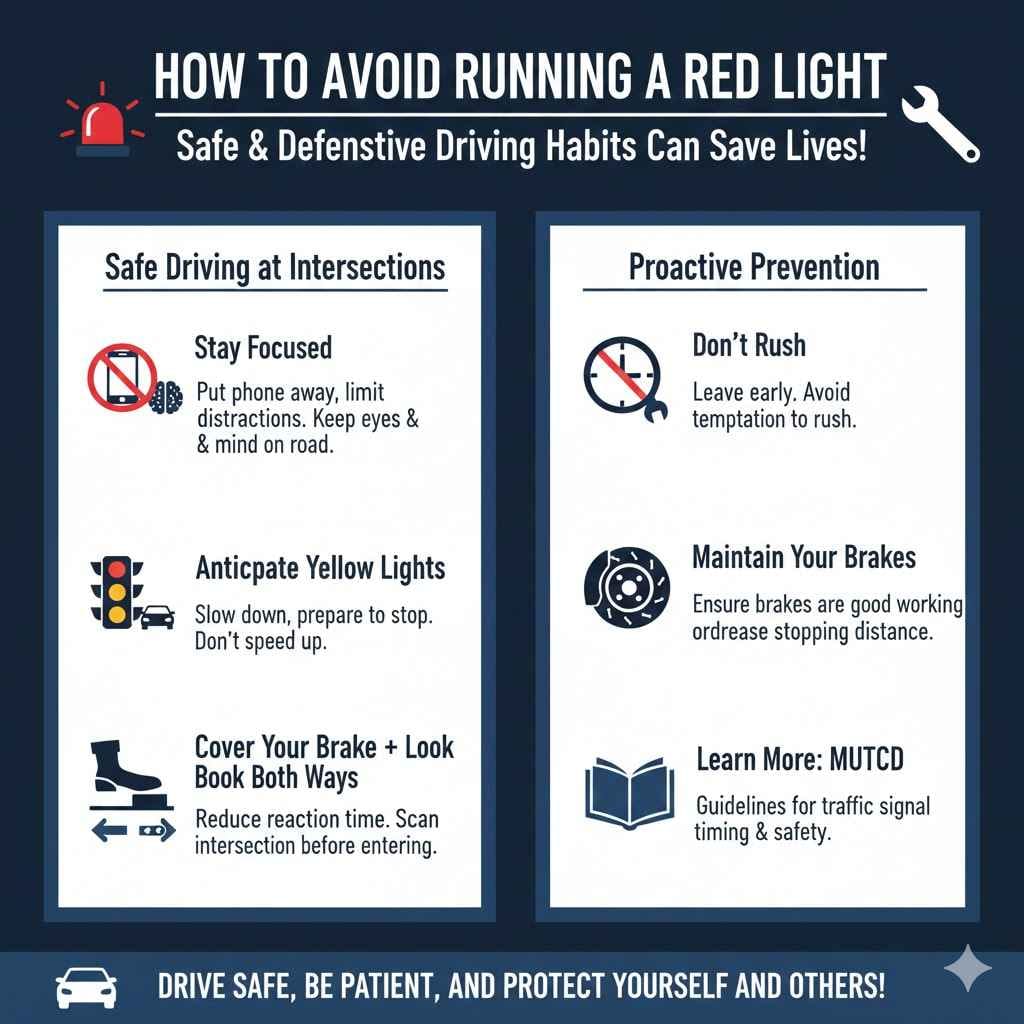
- Stay Focused: Distracted driving is a leading cause of red light violations. Put your phone away, limit conversations, and keep your eyes and mind on the road.
- Anticipate Yellow Lights: A yellow light doesn’t mean “speed up.” It means “prepare to stop.” If you are a safe distance from the intersection, slow down and stop smoothly. The Manual on Uniform Traffic Control Devices (MUTCD) provides guidelines on traffic signal timing that are designed to give drivers enough time to stop.
- Cover Your Brake: As you approach an intersection, even on a green light, take your foot off the accelerator and “cover” the brake pedal. This reduces your reaction time if you need to stop suddenly.
- Look Both Ways: Before entering an intersection on a green light, quickly scan left and right to make sure no one is running their red light.
- Don’t Rush: Being late is frustrating, but it’s not worth risking a terrible accident. Leave a few minutes early to avoid the temptation to push through a yellow light.
- Maintain Your Brakes: Make sure your car’s brakes are in good working order. Worn brakes can increase your stopping distance, making it harder to stop in time.
Frequently Asked Questions (FAQ)
1. What happens if I ignore a red light camera ticket?
Ignoring a red light camera ticket is a bad idea. The fine will increase with late fees. The debt may be sent to a collection agency, which will damage your credit score. In some states, the DMV can refuse to renew your vehicle registration or even suspend your driver’s license until you pay.
2. How long do points from a red light ticket stay on my record?
This varies by state, but points from a red light violation typically stay on your driving record for 3 to 5 years. During this time, they can be used by your insurance company to set your rates and by the DMV to track you for potential license suspension.
3. Can I get a ticket for running a red light in a rental car?
Yes. Red light camera systems capture the license plate of the vehicle. The ticket will be sent to the rental car company. The company will then identify who was renting the car at that time and forward the ticket to you, often with an additional administrative fee.
4. Is it ever legal to run a red light?
There are very few situations where it might be considered legal, and they are rare. The most common example is when you must clear an intersection to make way for an emergency vehicle (like an ambulance or fire truck) with its sirens and lights on. Even then, you must proceed with extreme caution.
5. How much will my insurance really go up after a red light ticket?
The exact amount varies based on your insurance company, your driving history, and where you live. However, drivers can generally expect a rate increase of 15% to 25% after a red light violation. This increase will typically last for the three to five years the ticket is on your record.
6. What’s the difference between a red light ticket from an officer and a camera?
A ticket from an officer is a standard moving violation that almost always comes with points on your license. In some states, red light camera tickets are treated more like parking tickets—they come with a fine but may not add points to your record. However, this is not true everywhere, so it’s important to check your local laws.
Conclusion: Drive Smart, Drive Safe
Running a red light is far more than a simple traffic mistake. It’s a gamble that puts lives at risk and comes with a cascade of serious consequences. From the immediate danger of a devastating T-bone crash to the long-term financial pain of fines and insurance hikes, the fallout is severe. It can damage your driving record, lead to a suspended license, and, in the worst cases, result in criminal charges.
But the good news is that it’s almost always preventable. By staying focused, driving defensively, and making a conscious decision to value safety over speed, you can protect yourself and everyone else on the road. Remember, a few seconds saved by rushing through a light is never worth the potential cost. Stop at red, stay safe, and drive with confidence knowing you’re making the right choice.