
Vehicle Type Approval N1 means your vehicle is classified as a light commercial vehicle designed for carrying goods, with a total weight under 3.5 tonnes. This official certification ensures vans, pickups, and chassis cabs meet strict safety, environmental, and security standards set by regulators before they can be sold or registered.
Have you ever looked at a vehicle’s documents and seen the code “N1”? It might seem like confusing jargon. Many drivers feel a little lost when they see these technical terms. You might wonder if it affects your insurance, speed limits, or how you use your vehicle. Don’t worry, it’s much simpler than it looks. We are here to help you understand it all. This guide will break down exactly what N1 Type Approval means, why it matters, and how it affects you as a driver. Let’s make sense of it together.
What is Vehicle Type Approval? A Simple Breakdown
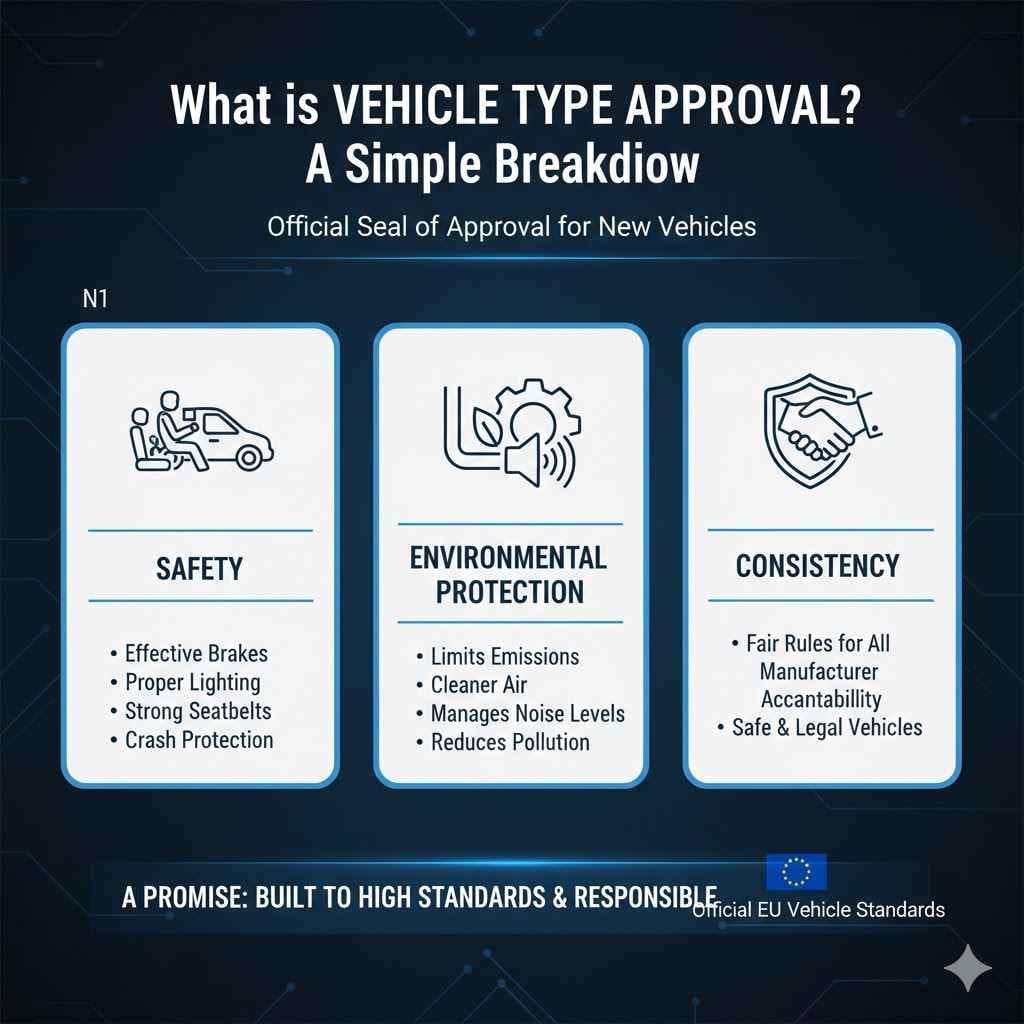
Before we dive into the “N1” part, let’s talk about “Vehicle Type Approval” itself. Think of it as a vehicle’s official seal of approval from the authorities. Before a car, van, or truck manufacturer can sell a new model, they must prove that it meets a long list of standards. It’s like a building needing to pass a code inspection before people can live in it.
This process is incredibly important for a few key reasons:
- Safety: It ensures every vehicle on the road has effective brakes, proper lighting, strong seatbelts, and can protect you in a crash.
- Environmental Protection: Type approval sets limits on vehicle emissions to keep our air cleaner and manages noise levels to reduce pollution.
- Consistency: It creates a level playing field, so all manufacturers have to follow the same rules. This means you can trust that any new vehicle you buy is fundamentally safe and legal.
Essentially, type approval is a promise. It’s the government and the manufacturer telling you that your vehicle is built to a high standard, is safe for the road, and is environmentally responsible. Without it, a new vehicle cannot be legally registered or sold.
Unpacking the “N1” Category
Now, let’s get to the main event: the N1 code. Vehicle categories are like a library’s filing system, helping to classify every type of vehicle. The letter and number tell you exactly what the vehicle was designed to do.
Here’s how to decode “N1”:
- The “N”: This letter stands for vehicles designed and constructed primarily for the carriage of goods. In simple terms, it means a commercial vehicle, not a passenger car.
- The “1”: This number refers to the vehicle’s weight. Category “1” means the vehicle has a maximum mass (also known as Gross Vehicle Weight or GVW) that does not exceed 3.5 tonnes (3,500 kg).
So, putting it all together, an N1 vehicle is a light-duty goods vehicle. These are the workhorses you see on the road every day. Common examples of N1 vehicles include:
- Panel vans (like a Ford Transit Custom or a Mercedes-Benz Sprinter)
- Pickup trucks (like a Ford Ranger or Toyota Hilux)
- Chassis cab vehicles (the front cab and chassis, ready for a custom body to be fitted)
- Car-derived vans (a car with the back seats removed and windows paneled over for carrying goods)
If you drive a van or a pickup for work or personal use, there’s a very high chance it falls into the N1 category.
How N1 Differs from Other Vehicle Categories
Understanding the N1 category is easier when you see how it compares to others. The rules for tax, speed limits, and testing can be very different depending on the category. This is why it’s so important to know which one your vehicle belongs to.
Here is a simple table to show the most common categories you might encounter:
| Category Code | Vehicle Type | Simple Description |
|---|---|---|
| M1 | Passenger Car | Designed for carrying people. Has no more than eight seats in addition to the driver’s seat. This includes most cars, SUVs, and people carriers. |
| N1 | Light Goods Vehicle | Designed for carrying goods, with a maximum mass of 3.5 tonnes or less. This covers most vans and pickup trucks. |
| N2 | Medium Goods Vehicle | Designed for carrying goods, with a maximum mass between 3.5 and 12 tonnes. These are larger commercial trucks. |
| L | Two or Three-Wheeled Vehicles | This category covers everything from mopeds and scooters to motorcycles and tricycles. |
The distinction is critical. An M1 vehicle (a car) and an N1 vehicle (a van) might look similar in size, but they are treated differently by the law. This affects everything from how fast you can legally drive to what kind of driver’s license you might need.
The Key Requirements for N1 Type Approval
For a vehicle to earn its N1 classification, it has to pass a series of tough tests. These tests cover almost every part of the vehicle, ensuring it’s ready for the demands of carrying goods safely and efficiently. The regulations are managed by official bodies like the UK’s Vehicle Certification Agency (VCA).
Here are the main areas that are checked:
Safety Standards
This is the most critical part of type approval. The vehicle must prove it can protect its driver, passengers, and other road users.
- Braking Systems: The brakes must be powerful enough to stop a fully loaded vehicle within a safe distance.
- Steering and Handling: The vehicle must be stable and predictable to drive, even with a heavy load.
- Lighting and Visibility: Headlights, brake lights, and indicators must be bright and correctly positioned. It also includes standards for mirrors to minimize blind spots.
- Seat Belts and Anchorages: The seat belts and the points where they attach to the vehicle’s frame must be strong enough to withstand crash forces.
- Crashworthiness: The vehicle’s structure is tested to see how it holds up in frontal and side impacts, ensuring the cabin remains as intact as possible to protect occupants.
Environmental Standards
Modern vehicles have to be as clean and quiet as possible. N1 vehicles are no exception.
- Exhaust Emissions: Vehicles must meet strict “Euro” standards (like Euro 6) that limit the amount of harmful pollutants like nitrogen oxides (NOx) and particulate matter (soot) they can emit.
- Noise Levels: There are limits on how much noise the engine and tyres can make, both when stationary and when driving.
- CO2 and Fuel Consumption: Manufacturers must officially declare the vehicle’s carbon dioxide emissions and fuel economy, which helps inform buyers and is often used for taxation.
Security and Construction
These rules focus on the vehicle’s basic build and security features.
-
- Anti-Theft Devices: Most vehicles are required to have an immobiliser fitted as standard to prevent theft.
– Weights and Dimensions: The vehicle must be built to safely handle its maximum declared weight (GVW). This includes having the right tyres and suspension.
- General Construction: This covers hundreds of smaller details, from the type of glass used in the windows to the design of the driver’s controls.
Why Does N1 Type Approval Matter to You?
This all might seem like technical background information for engineers, but the N1 classification has a direct impact on your daily life as a vehicle owner and driver.
For New Vehicle Buyers
When you buy a brand-new van or pickup, the N1 type approval is your guarantee of quality. It tells you that the vehicle is not only legal to register and drive but has also been thoroughly vetted for safety and environmental impact. It gives you peace of mind that you’re buying a vehicle that is fit for purpose.
For Owners and Modifiers
Once you own the vehicle, its N1 classification continues to be important. Here’s why:
- Taxation: In many countries, N1 commercial vehicles are taxed differently from M1 passenger cars. This can affect your annual road tax (Vehicle Excise Duty or VED) and company car tax if it’s a work vehicle.
- Insurance: When you get an insurance quote, the insurer needs to know the exact category of your vehicle. Insuring an N1 van is different from insuring an M1 car, as the risks and usage patterns are not the same.
- Speed Limits: This is one of the most overlooked but crucial points. N1 vehicles often have lower speed limits on certain roads compared to cars. Driving your van at car speeds could land you with a speeding ticket.
A Quick Look at N1 Speed Limits (UK Example)
In the UK, if your N1 vehicle is a car-derived van or dual-purpose vehicle, car speed limits apply. However, for most other panel vans and pickups under 3.5 tonnes, the limits are different. Always check the specific rules for your vehicle type, but here is a general guide:
| Road Type | Car (M1) Speed Limit | Van (N1) Speed Limit |
|---|---|---|
| Built-up Areas | 30 mph | 30 mph |
| Single Carriageways | 60 mph | 50 mph |
| Dual Carriageways | 70 mph | 60 mph |
| Motorways | 70 mph | 70 mph |
Note: These are national speed limits. Always follow the posted speed limit signs on any given road.
How to Find Your Vehicle’s Type Approval Information
Wondering if your vehicle is an N1? It’s easy to check. You don’t have to guess. This information is listed in a few key places.
- The VIN or Statutory Plate: Every vehicle has a small metal plate or sticker, usually located in the driver’s side door jamb, under the hood, or near the front of the chassis. This plate contains vital information, including the vehicle’s weight limits, manufacturer details, and often the vehicle category (e.g., N1).
- The V5C Logbook: In the UK, your V5C registration document (the logbook) has a section dedicated to vehicle details. Look for section ‘J’, which is for “Vehicle category.” It will clearly state “N1” if that’s its classification.
- Certificate of Conformity (CoC): If you bought your vehicle new, it came with a document called a Certificate of Conformity. This is the manufacturer’s formal declaration that the vehicle conforms to all type approval standards. It lists the vehicle category prominently.
What About Van Conversions? From N1 to Campervan
The DIY van conversion scene is hugely popular, with many people turning N1 panel vans into campervans or motor caravans. This is where type approval becomes very important again. When you significantly modify a vehicle, you can change its fundamental characteristics.
If you add features like a bed, cooking facilities, and a table to a van, you may be able to have it reclassified from an N1 goods vehicle to a “motor caravan.” In the UK, the DVLA has specific requirements for what constitutes a motor caravan. According to the official guidance on converting a vehicle, your van must have certain features visible in photographs you send them.
Why would you want to do this? There are a few key benefits:
- Speed Limits: A reclassified motor caravan may be subject to the same speed limits as a passenger car, which means you can drive faster on single and dual carriageways.
- Insurance: You can get specialized campervan insurance, which can sometimes be cheaper and better suited to how you use the vehicle.
- Ferry and Toll Costs: Some operators charge different rates for commercial vans versus motor caravans.
However, the process requires you to meet the criteria and submit the correct paperwork. Simply putting a mattress in the back of your van doesn’t automatically change its legal classification.
Common Misconceptions About N1 Vehicles
Because it’s a technical topic, there are a few myths and misunderstandings floating around about N1 vehicles. Let’s clear some of them up.
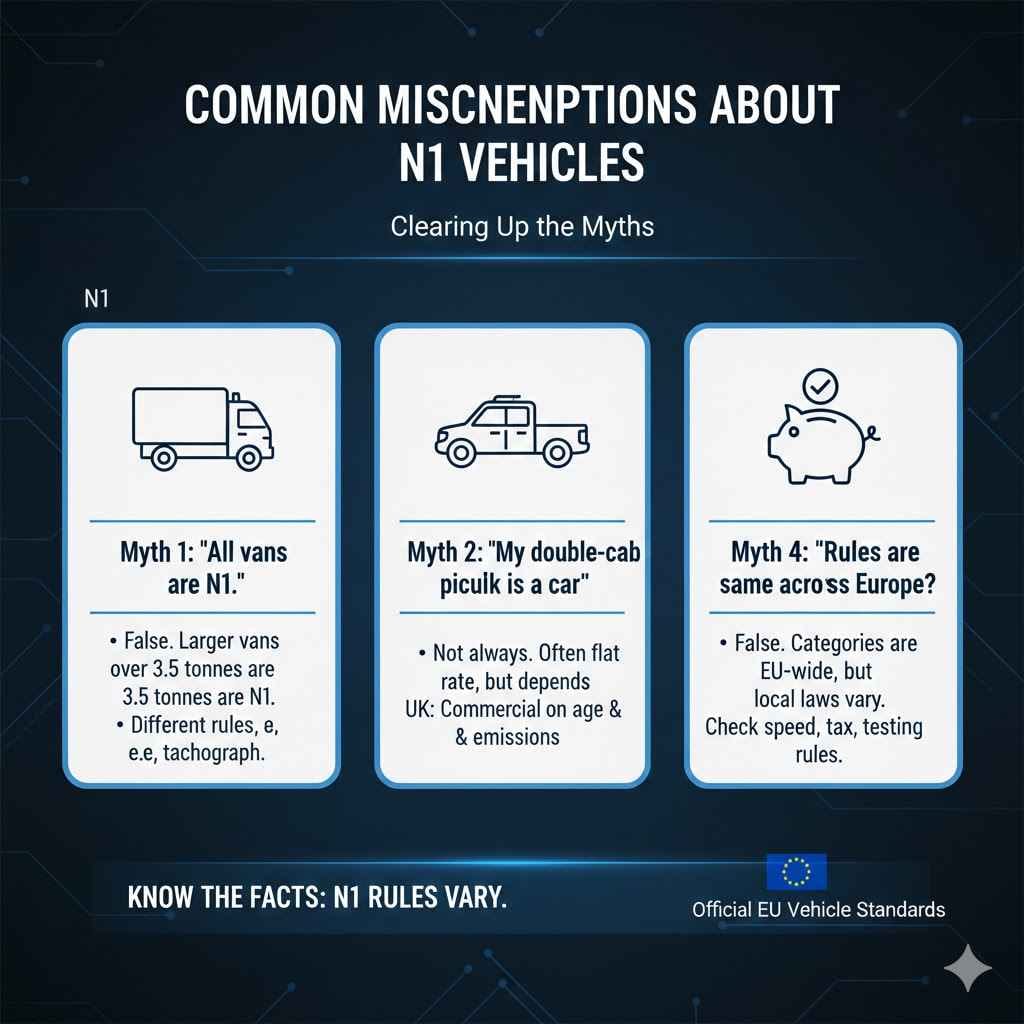
- “All vans are N1.” This isn’t true. While most common vans are N1, larger models that weigh over 3.5 tonnes fall into the N2 (up to 12 tonnes) or N3 (over 12 tonnes) categories, which come with entirely different rules for licensing and operation (like needing a tachograph).
- “My pickup truck is a car.” Most double-cab pickup trucks are actually classified as N1. In the UK, for tax purposes, they are considered commercial vehicles if their payload capacity is 1 tonne (1,000 kg) or more. This surprises many owners who use them as family vehicles.
- “N1 means it’s cheap to tax.” This can be true, as many N1 vehicles fall under a flat rate for commercial vehicle road tax. However, the rules can be complex and depend on the vehicle’s age and emissions, so it’s not a universal guarantee.
- “The rules are the same across Europe.” While the M1, N1, etc., categories are based on EU-wide directives, individual countries can have their own specific laws for things like speed limits, taxation, and annual testing. Always check the local rules if you’re driving abroad.
Conclusion: Your N1 Knowledge in the Driver’s Seat
The term “Vehicle Type Approval N1” may sound intimidating, but as you’ve seen, it’s a straightforward system designed to keep us all safe. It’s the official label for our hardworking light commercial vehicles, from the delivery van that brings your packages to the pickup truck heading to a job site.
Understanding that your vehicle is an N1 empowers you. It helps you make sense of your logbook, choose the right insurance, and stay on the right side of the law when it comes to speed limits. It’s a small piece of information that has a big impact on your responsibilities as a driver. So next time you see “N1,” you won’t see confusing jargon. You’ll see a clear definition that helps you know your vehicle better, drive it safer, and manage it smarter.
Frequently Asked Questions (FAQ)
1. What is the main difference between M1 and N1 vehicles?
The main difference is their primary purpose. M1 vehicles are designed to carry people (like a standard car or SUV), while N1 vehicles are designed to carry goods (like a van or pickup truck). This distinction affects their tax, insurance, and the speed limits they must follow.
2. Is my double-cab pickup truck an N1 vehicle?
Most likely, yes. In the UK and many other regions, double-cab pickup trucks are classified as N1 commercial vehicles if they have a payload capacity of over one tonne (1,000 kg). You can confirm this by checking the ‘J’ section of your V5C logbook.
3. Do N1 vehicles have different MOT requirements?
In the UK, the annual test for vehicles up to 3.5 tonnes is the standard MOT test. However, the class of MOT test can differ. Cars (M1) are typically Class 4, while goods vehicles (N1) can be Class 4 or Class 7 depending on their weight, so it’s important to book the correct test for your vehicle.
4. Can I change a vehicle’s category from N1 to M1?
This is extremely difficult and rare. Changing a goods vehicle (N1) to a passenger vehicle (M1) would require extensive modifications (like adding certified seats and windows) and would need to be inspected and approved through a process like Individual Vehicle Approval (IVA). It is generally not a practical or cost-effective process.
5. Why is the N1 speed limit lower on some roads?
The speed limits for N1 vans are often lower on single and dual carriageways because these vehicles are heavier than cars and can have different handling and braking characteristics, especially when loaded. The lower limits are a safety measure to account for this.
6. What is a “Certificate of Conformity” (CoC)?
A Certificate of Conformity is a document issued by the vehicle manufacturer that officially declares the vehicle complies with all relevant type approval standards and regulations. It contains key details about the vehicle, including its type approval category (like N1).
7. Does Brexit affect UK vehicle type approval?
Yes. Since leaving the EU, the UK has established its own type approval schemes. New models now require either GB Type Approval for sale in Great Britain or UK(NI) Type Approval for Northern Ireland. However, the underlying technical standards have remained very similar to the EU’s for now.