
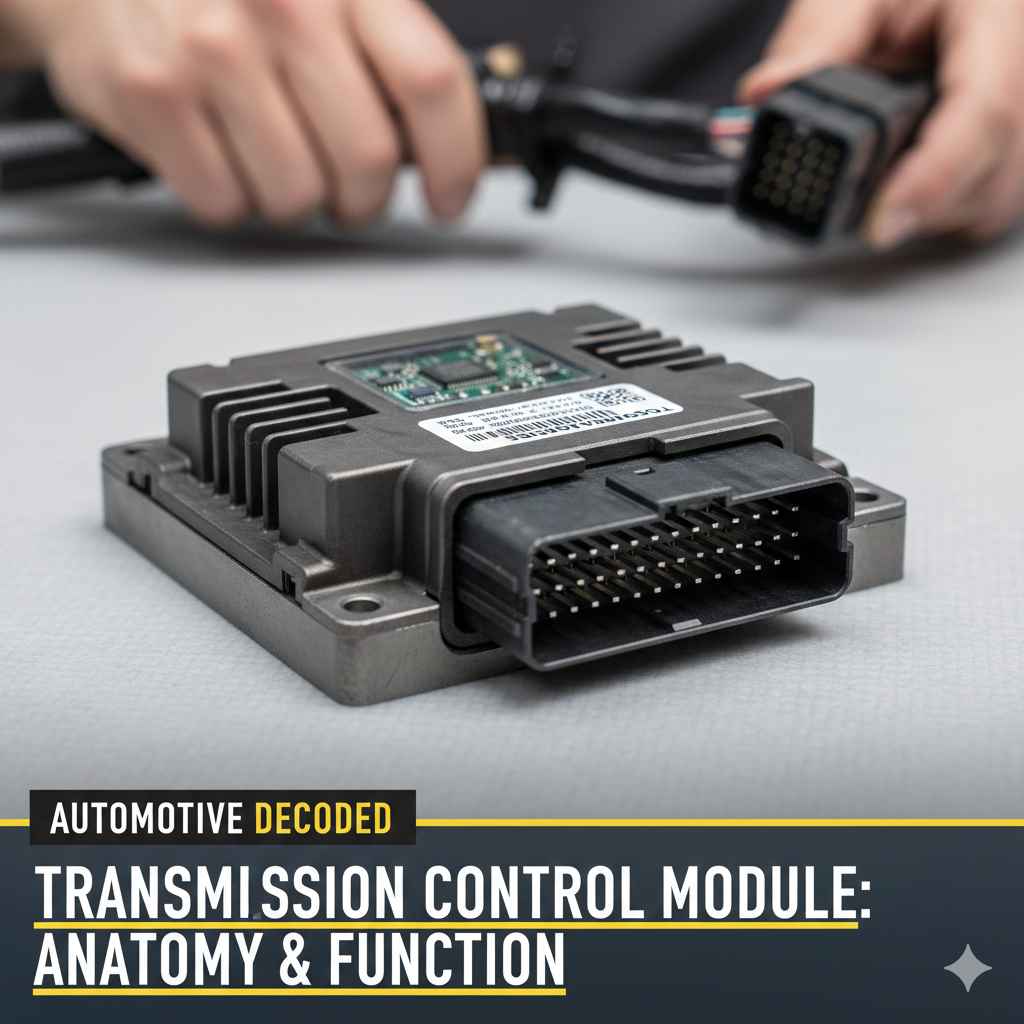
Figuring out What Does a Transmission Control Module Look Like? can be tricky, especially if you’re just starting with car repair. You might find yourself staring at wires and metal, wondering where to even begin. Don’t worry, many people feel the same way! This post is made to help you learn exactly what to look for. We’ll break it down step-by-step so you can easily spot it. Let’s start by exploring the basics of this important car part.
Locating the Transmission Computer
The transmission computer, also known as the Transmission Control Module (TCM), is an essential part of your vehicle’s systems. It manages how the transmission operates, ensuring smooth gear changes and overall vehicle performance. Knowing where to find the TCM is the first step in identifying and working with it. The location can vary by car make and model, but it’s usually inside the car or close to the transmission itself. It’s often tucked away in a place that’s protected from the elements and potential damage.
The precise location is important when troubleshooting transmission issues or when you’re looking to upgrade it. The TCM communicates with several other vehicle systems, including the engine control unit (ECU), allowing it to synchronize various components for optimal operation.
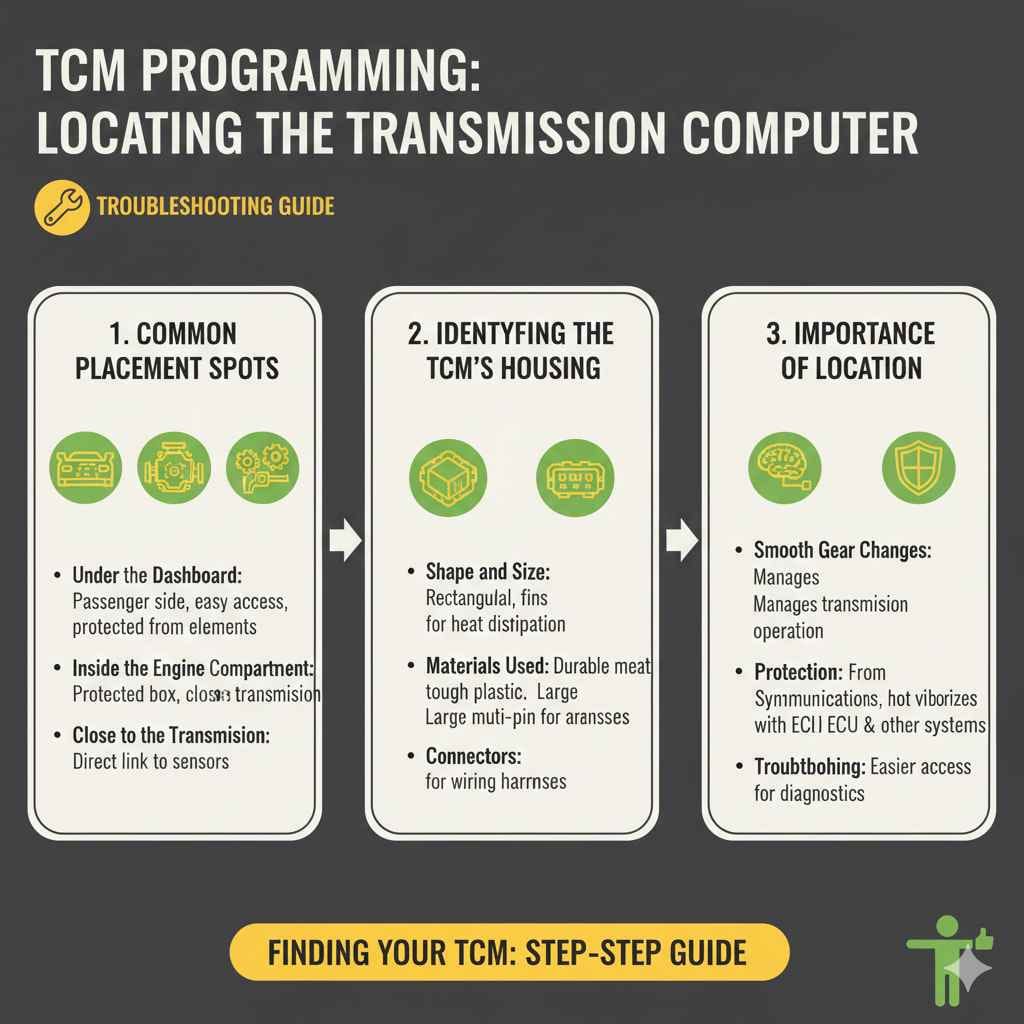
Common Placement Spots
The placement of a TCM varies, but some spots are more common than others. These locations are generally selected for protection and accessibility. Understanding these common locations will help you quickly find the TCM when you need to. Remember, the exact location is still car-dependent, and consulting your vehicle’s manual is always the best way to get accurate information. The TCM’s placement is strategic, ensuring it functions correctly and is protected from harm. This placement also allows it to communicate effectively with other vehicle components.
- Under the Dashboard: Many vehicles place the TCM under the dashboard, often on the passenger’s side or near the center console. This location is easily accessible from inside the car and protected from external elements.
This is a convenient location, as it allows technicians to access the TCM for diagnostics and repair without needing to go under the car or into the engine compartment. It’s also generally away from moisture and extreme temperatures, factors that can negatively affect electronic components. If you’re looking for the TCM, check the area below the glove compartment or the space near the center console first.
- Inside the Engine Compartment: Some cars have the TCM within the engine bay, usually in a protected box or enclosure. This placement allows for a closer connection to the transmission.
In this location, the TCM may be easier to access for certain procedures, such as sensor checks or wiring inspections. However, because the engine compartment can get extremely hot and be exposed to moisture, manufacturers often design protective enclosures to shield the TCM from potential damage. If the TCM is here, it might be in a sealed box or secured to a frame member to protect it from heat, water, and road debris.
- Close to the Transmission: Other cars locate the TCM directly on or near the transmission itself. This setup provides a direct link to the transmission’s sensors and actuators.
Having the TCM close to the transmission reduces the length of wiring and can make troubleshooting transmission problems a bit simpler. Because this location is prone to heat and vibration, TCMs designed for this setup are often built to withstand these conditions. When trying to locate the TCM, search for a metal box or housing that’s directly attached to the transmission or very close to it.
Identifying the TCM’s Housing
Once you’ve narrowed down the general location, recognizing the physical appearance of the TCM is important. The TCM typically comes in a sturdy housing to protect its electronic components. The shape, size, and materials used can vary, but there are certain common features that can help you identify it. Knowing these features will make it simpler to pinpoint the TCM among other vehicle parts. The design of the TCM’s housing is to keep its internal components safe from environmental hazards such as moisture, dust, and temperature changes. It will also help the TCM withstand the mechanical stresses from vibrations.
- Shape and Size: TCMs come in a variety of shapes and sizes, from small, rectangular boxes to larger, more complex shapes. They are often made to fit into a specific space.
Some TCMs are a simple, metal or plastic box, while others have fins or heat sinks to dissipate heat. The size can vary based on the car model and the amount of processing power needed. If you’re exploring the engine compartment or under the dashboard, expect to find it among other electronic components like the ECU and other modules.
- Materials Used: The housing material is usually durable to protect the delicate electronics within. Commonly used materials are metal or tough plastic.
Metal housings offer excellent protection from physical damage and heat dissipation. Plastic housings, on the other hand, are lighter and can be designed in more complex shapes. The choice of material often depends on the TCM’s location and the environmental conditions it is subjected to. Look for components made of materials that suggest resilience against the elements.
- Connectors: TCMs have connectors for wiring harnesses, allowing them to communicate with other vehicle systems. These connectors can be large and have many pins.
These connectors are what link the TCM to the sensors, actuators, and other modules in the vehicle. The connectors are carefully designed to keep a secure connection and to resist corrosion. If you see a large, multi-pin connector going into a box, that’s often a key sign that you’ve found the TCM.
Visual Characteristics of the TCM
Knowing what the TCM looks like visually will make it simpler to identify. The TCM’s appearance includes certain common elements. Recognizing these features will quickly help you find the TCM among the vehicle’s many components. The features are designed to facilitate communication with other components and protect the internal electronics from the environment.
Exterior Features to Recognize
The exterior of the TCM has characteristics that distinguish it from other car parts. These characteristics are mainly designed to provide physical protection and facilitate connectivity. The appearance may vary based on the vehicle manufacturer and model, but some common elements remain consistent. Identifying these external features will greatly increase your chances of finding the TCM quickly and easily. Some of these features are there to provide durability, while others facilitate communication with other car components. The outside features are designed to keep the inside components protected from damage.
- The Housing: As we discussed earlier, the housing can be metal or plastic and comes in various shapes.
The design of the housing is usually rugged, with a focus on shielding the electronic components from the environment. Metal housings often have cooling fins to help dissipate heat. Plastic housings can be molded into various forms, helping the TCM fit into tight spaces. The housing is designed to protect from dust, moisture, and physical damage.
- Connectors and Wiring Harnesses: Large connectors and wiring harnesses attach to the TCM, enabling it to communicate with other systems.
The size and shape of the connector will vary, but they often have a latching mechanism to keep them securely attached. Wiring harnesses consist of many wires, usually wrapped in protective sheathing. These wiring harnesses carry signals and power to and from the TCM. The presence of these connectors and harnesses is a strong clue that you’ve found a TCM.
- Mounting Points: TCMs have mounting points, such as brackets or tabs, which are designed to secure the module in place.
These mounting points ensure that the TCM doesn’t move around, which could cause damage or disconnect the connectors. The mounting points vary depending on the location of the TCM. They’re usually designed to make sure the TCM is firmly mounted and protected from vibration. Look for screws, bolts, or clips that hold the TCM in place.
Internal Components
While you won’t always open the TCM, knowing some of the internal components provides better context. The internal structure includes several electronic parts that work together to manage the transmission. The components are placed carefully inside the housing to ensure optimal operation and to protect against external interference. Knowing the general layout will help you grasp how a TCM functions. The components inside are designed to ensure the transmission works smoothly and efficiently. This section is all about what goes on inside.
- Circuit Board: The main component inside the TCM is the circuit board, which houses all the electronics.
The circuit board is where all the logic and processing happens. It’s usually made of a non-conductive material, with various components such as microprocessors, capacitors, and resistors. The design of the circuit board is complex, with numerous traces and connections to enable the TCM to function properly.
- Microprocessor: The microprocessor is the “brain” of the TCM, carrying out instructions and calculations.
The microprocessor processes data from sensors and controls the actuators. It receives inputs from various sensors, like the speed sensor, throttle position sensor, and others. Based on this information, the microprocessor then sends signals to control solenoids and other components within the transmission. This is where all the action happens.
- Sensors and Actuators: While not always inside the TCM itself, sensors and actuators are critical to its function.
Sensors provide the TCM with information about the transmission’s state, such as gear position, speed, and fluid temperature. Actuators, on the other hand, are components that the TCM controls, such as solenoids that control gear shifts. These components work together to ensure that the transmission functions smoothly.
Real-World Examples of TCMs
Looking at real-world examples helps put all this information into context. By seeing examples, you can get a better sense of how the TCM looks in different vehicles and understand its function. These examples highlight the variety in design and placement. This gives you a better grasp of the real thing. Seeing these examples gives you a practical feel for this car component.
Let’s check out a couple of examples:
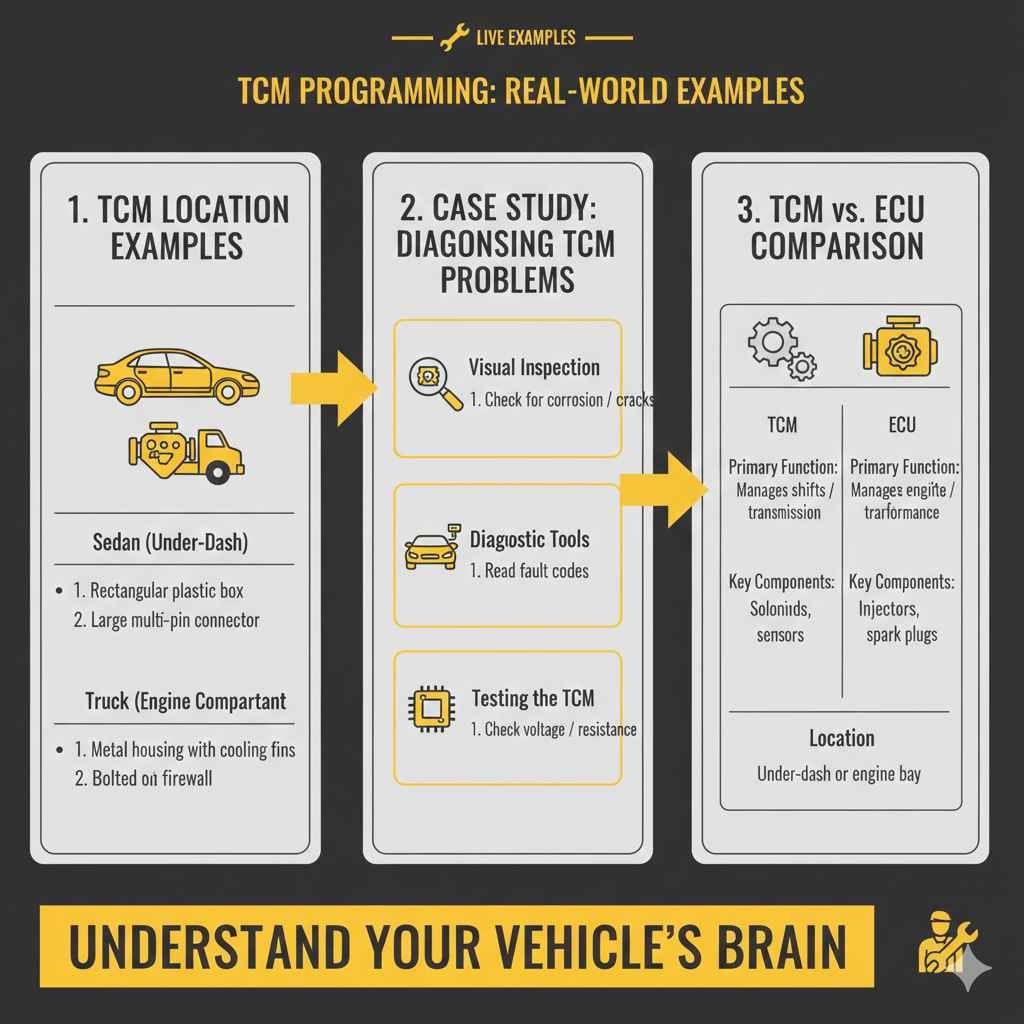
- Example 1: Sedan with Under-Dash TCM: A typical sedan has its TCM located under the dashboard on the passenger side. This TCM is a rectangular, plastic box with a large multi-pin connector. The housing has several mounting tabs to secure it to a metal bracket. The wires leading into the connector are bundled and protected with a plastic sleeve.
Imagine you’re inspecting the vehicle’s interior, and you remove the glove compartment. You’d find the TCM secured to the frame behind the glove box. The location is sheltered from road conditions, and the sturdy plastic housing helps protect its sensitive electronic components. You can see the connector and wiring harness that link it to the vehicle’s electrical system.
- Example 2: Truck with Engine Compartment TCM: A truck’s TCM is found in the engine compartment, mounted on the firewall. The housing is made of metal and has cooling fins to dissipate heat. A series of wiring harnesses feed into the module through heavy-duty connectors, and the unit is bolted firmly to the body.
When you lift the hood, the TCM is near the engine, protected inside a black metal box. The design accounts for exposure to heat, moisture, and road debris. You’d see the wiring harnesses that connect to it, including the wires which go to the engine and transmission. The mounting is built to withstand vibrations.
Case Study: Identifying TCM Problems
Consider a practical example of how you might use this information when faced with a car problem. This case study shows how you can apply the knowledge. It demonstrates the importance of knowing what a TCM looks like and where it’s located. This case will help you solve problems.
A driver is experiencing problems with gear shifting in their car. The car is shifting roughly, sometimes failing to change gears at all. The driver takes the car to a mechanic, and a diagnostic check reveals a fault code related to the transmission. The mechanic knows the TCM could be at fault. So, the mechanic begins the process of checking the TCM. Knowing the common locations, the mechanic examines the area under the dashboard first. The mechanic removes the glove compartment and finds the TCM. The TCM looks like a plastic box with a large connector.
- Visual Inspection: The mechanic examines the TCM for signs of damage, such as corrosion on the connectors or cracks in the housing. The mechanic also checks the wiring harnesses and looks for loose connections.
The mechanic looks for any obvious signs of damage or wear that might suggest a problem. The presence of corrosion, for example, could indicate that moisture has gotten into the system, which can cause failure. The mechanic inspects the wiring and connectors to ensure they are connected properly.
- Diagnostic Tools: The mechanic connects a diagnostic tool to the vehicle’s diagnostic port to read data from the TCM and test its functionality. The tool allows the mechanic to view the current status of the sensors.
The mechanic connects a scanner to the vehicle’s OBD-II port, which enables the mechanic to get detailed information about the TCM’s operation. This data will tell the mechanic the cause of the shifting problems, such as a faulty sensor or solenoid. The mechanic can then see if the TCM is responding to the sensor data.
- Testing the TCM: Based on the diagnostic data, the mechanic can perform specific tests, such as checking the voltage at various pins on the TCM connector. The mechanic may test the resistance in the circuits or activate the transmission solenoids.
The mechanic will use a multimeter and other tools to run tests. These tests can help narrow down the cause of the problem. If a specific circuit has failed, it will help the mechanic understand whether it is a problem with the TCM, the wiring, or another component. This helps the mechanic make an accurate diagnosis.
Comparison Table: TCM vs. ECU
It’s easy to get confused between the TCM and the ECU, as they’re both computer modules that manage critical functions. However, they perform different tasks and have distinct appearances. Here’s a side-by-side comparison to help you understand the differences. This table will clarify the unique roles each module plays in your car. This makes it easier to tell the difference.
| Feature | Transmission Control Module (TCM) | Engine Control Unit (ECU) |
|---|---|---|
| Primary Function | Controls the transmission, managing gear shifts and overall transmission operation. | Manages the engine’s performance, including fuel injection, ignition timing, and emissions control. |
| Location | Often near the transmission or under the dashboard. | Typically found in the engine compartment or under the dashboard. |
| Appearance | Often in a rectangular box with large connectors. | Can be similar in shape to the TCM, but often a bit larger. |
| Key Components Controlled | Solenoids, gear position sensors, transmission temperature sensors. | Fuel injectors, spark plugs, oxygen sensors, and throttle body. |
Frequently Asked Questions
Question: Can I replace the TCM myself?
Answer: It depends on your car and your repair skills. Some TCMs are easy to access and replace. Others may require specialized tools or programming. Make sure to consult your car’s manual and be sure about your ability before you begin.
Question: What causes a TCM to fail?
Answer: TCMs can fail due to several factors, including electrical surges, moisture, extreme temperatures, and general wear and tear. Problems with the car’s wiring can also harm a TCM.
Question: How do I know if my TCM is faulty?
Answer: Signs of a bad TCM can include erratic gear shifts, failure to shift, warning lights on the dashboard, and diagnostic trouble codes related to the transmission. If you experience these, a mechanic can check the TCM.
Question: Does the TCM store information?
Answer: Yes, the TCM stores information about the transmission’s operation, including fault codes and learned driving behaviors. This is helpful for diagnostics and vehicle performance.
Question: Can I upgrade my TCM for better performance?
Answer: In some cases, you can upgrade the TCM with a performance chip or a modified unit to improve shift times and performance. This depends on your vehicle and the availability of performance upgrades.
Final Thoughts
Now you know much more about what a Transmission Control Module looks like. You’ve explored common locations and seen the key features of the TCM. You’ve also seen how to distinguish it from other car components. This information is key whether you’re diagnosing transmission problems, doing a repair, or just learning about your vehicle. The next time you’re working on your car, you’ll be able to quickly find and identify the TCM, ready to tackle any challenge. Go out there and start exploring your car! You are now equipped with knowledge and understanding, so you can diagnose problems yourself.