
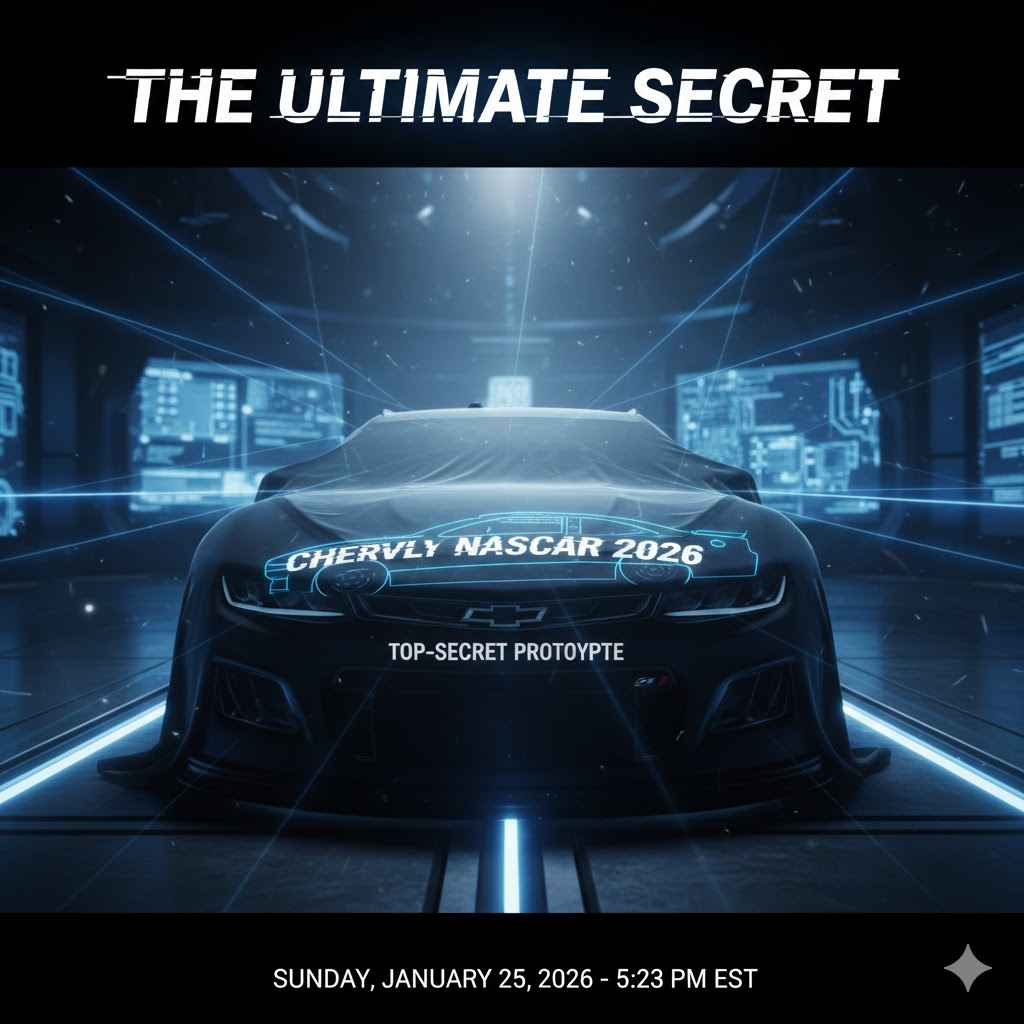
The most likely replacement for the Chevrolet Camaro in NASCAR for 2026 is still a secret, but top contenders include a version of the iconic Corvette or a return to a four-door sedan like the Malibu. The final decision will depend on Chevrolet’s marketing strategy and branding for its future performance vehicles.
Have you heard the news? Chevrolet’s mighty Camaro is taking its final bow in NASCAR. For years, the Camaro has been a familiar sight, roaring around the track and battling for the checkered flag. But with the street version of the Camaro ending production, everyone is asking the same big question: what car will Chevy race next?
It can feel confusing when a car you love disappears from the track. You might wonder why it’s happening and what it means for your favorite race team. Don’t worry, you’re not alone! This is a common shift in the racing world, and we’re here to break it down for you.
In this guide, we’ll explore the top secret contenders for Chevy’s next NASCAR champion, explain why the change is happening, and give you the inside scoop on what to expect. Let’s solve this mystery together!
The End of an Era: Why the Camaro is Leaving NASCAR
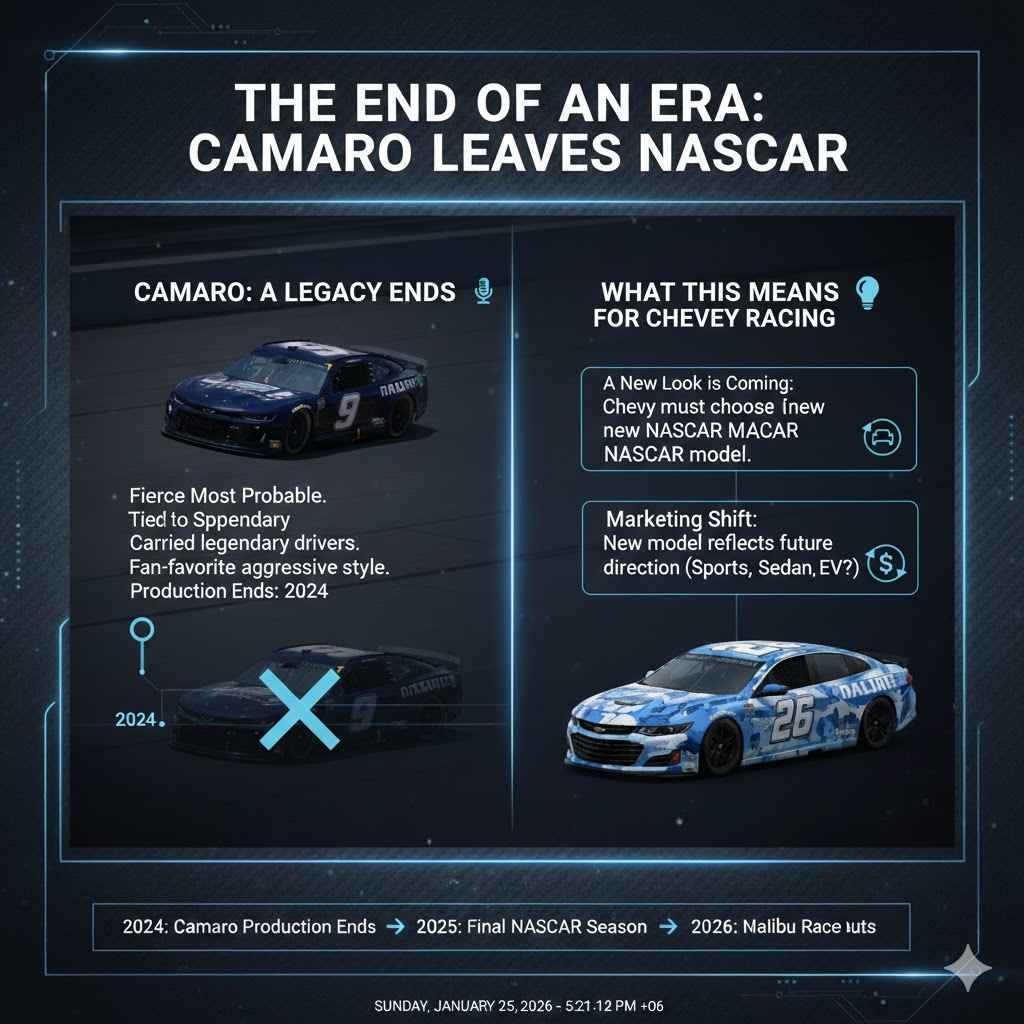
Before we look to the future, let’s understand the present. The Chevrolet Camaro ZL1 has been a fierce competitor for Team Chevy, but its time on the track is tied to the car you see on the street. In the world of auto manufacturing, things are always changing.
Chevrolet announced that it will stop making the current generation of the Camaro after the 2024 model year. Since NASCAR rules require manufacturers to race models that are based on cars available to the public, the Camaro’s racing days are numbered. It’s a simple case of “what’s on the street is what’s on the track.”
What This Means for Chevy Racing
- A New Look is Coming: Chevrolet must choose a new model to represent them in the NASCAR Cup Series.
- Marketing Shift: The car they choose will reflect the company’s future direction, whether that’s towards high-performance sports cars, sedans, or even new technology.
- An Exciting Unveiling: Fans can look forward to a big announcement and a brand-new car design hitting the track soon.
This isn’t a bad thing! It’s an exciting opportunity for a fresh start. Think of it like a favorite player retiring and a new star rookie taking their place. The team is the same, but the face of the game is about to change.
Understanding the “Next Gen” Car Platform
To really understand what’s happening, we need to talk about the car itself. You might think the race car is just a souped-up version of the street car, but it’s a bit different. Since 2022, NASCAR has used a platform called the “Next Gen” car.
Think of the Next Gen car like a standard skeleton. Every team, whether they are Chevy, Ford, or Toyota, gets the same basic chassis, suspension, and engine parts. What makes them different is the “body” or shell they put on top. This body is designed to look like a specific model from the manufacturer.
Key Features of the Next Gen Car:
- Standard Parts: Many components are the same across all teams to make racing closer and more competitive.
- Manufacturer Identity: The car’s body is unique. This is where Chevrolet gets to make their car look like a Corvette, a Malibu, or another model.
- Safety First: The platform was designed with major safety improvements to better protect drivers.
So, when we ask “what car will Chevy use,” we are really asking, “what body will Chevrolet design to fit on the Next Gen chassis?” This gives Chevy a lot of flexibility. They don’t need to completely re-engineer a car from the ground up; they just need to design a new shell that fits the NASCAR rulebook and represents a car from their lineup.
The Top Secret Contenders for Chevy’s 2026 Ride
Now for the exciting part! Chevrolet has been very quiet about their plans, but we can look at the clues and make some educated guesses. The choice will come down to performance image, marketing, and brand identity. Here are the most likely candidates.
Candidate #1: The Chevrolet Corvette
The Corvette is America’s sports car. It’s a name synonymous with speed, power, and performance. Putting a Corvette body on a NASCAR stock car would be a huge statement.
Pros of Choosing the Corvette:
- Performance Heritage: The Corvette has a long and successful history in other forms of racing, like the IMSA series. It already has a “racing pedigree.”
- Fan Excitement: A Corvette in NASCAR would generate a massive amount of buzz and excitement among fans.
- Brand Icon: It’s Chevrolet’s flagship performance car, making it a natural fit for America’s top racing series.
Potential Challenges:
- Two-Seater vs. “Stock Car”: NASCAR has traditionally featured cars with a back seat, even if the race car doesn’t. A two-seater like the Corvette would be a break from tradition.
- Mid-Engine Confusion: The modern Corvette is mid-engine (the engine is behind the driver), while a NASCAR car is front-engine. While the race car would still be front-engine, this could confuse some buyers. However, the body is just a shell, so this is mostly a marketing hurdle.
Despite the challenges, many believe the Corvette is the front-runner. It’s a bold, exciting choice that aligns perfectly with the high-octane image of NASCAR.
Candidate #2: The Chevrolet Malibu
Another strong possibility is a return to a classic four-door sedan. The Chevrolet Malibu has a history in racing and represents a more traditional “stock car” choice.
Pros of Choosing the Malibu:
- Traditional Roots: NASCAR’s history is built on family sedans. A Malibu would honor that “win on Sunday, sell on Monday” heritage.
- Relatable for Consumers: Many fans drive sedans, making the Malibu a car they can connect with directly.
- A Safe, Proven Choice: It wouldn’t be as radical as the Corvette, making it an easy transition for the brand and the fans.
Potential Challenges:
- Less Exciting: Compared to a Corvette or a Mustang, a family sedan might not generate the same level of fan enthusiasm.
- Future of Sedans: With the auto industry shifting towards SUVs and electric vehicles, is a sedan the best model to promote for the future?
The Malibu would be a solid, respectable choice that keeps Chevrolet firmly planted in NASCAR’s classic identity. It would be a direct competitor to the Toyota Camry on the track.
Candidate #3: A Future Electric or Performance Model (The Wild Card)
This is where things get really interesting. General Motors, Chevy’s parent company, is investing billions into electric vehicles (EVs). While NASCAR isn’t ready for electric race cars just yet, Chevrolet could use the track to promote a future performance model, perhaps one with an electric or hybrid connection.
Why This Could Happen:
- Forward-Thinking: It would show that Chevrolet is a modern, innovative brand looking toward the future.
- Building Hype: Racing a car model that is “coming soon” is a great way to build anticipation for a new vehicle launch.
- Brand New Identity: It allows Chevy to define a new era of performance without being tied to the past.
This is the ultimate secret. Chevy could surprise everyone with a car that isn’t even in showrooms yet. It would be a bold marketing move designed to link their racing program directly to their future products. For more on the auto industry’s shift, you can check out resources from government agencies like the U.S. Department of Energy’s Vehicle Technologies Office, which tracks these trends.
How Chevy Will Make the Final Decision
Choosing a new NASCAR model isn’t as simple as picking a car from a lineup. A team of engineers, marketers, and executives will weigh several key factors. The final choice has to work on the track, in the showroom, and in TV commercials.
Key Decision-Making Factors:
- Brand Image: Does the car reflect the powerful, winning image of Team Chevy?
- Marketing Appeal: Will this car get fans excited? Will it help sell cars to the public?
- Aerodynamic Profile: Can the street car’s shape be adapted into a competitive race car body that meets NASCAR’s strict rules?
- Future Relevance: Does the model align with where Chevrolet and the auto industry are headed in the next 5-10 years?
Let’s compare our top contenders based on these factors in a simple table.
| Factor | Chevrolet Corvette | Chevrolet Malibu | Future/EV Model |
|---|---|---|---|
| Brand Image | Excellent (High-Performance) | Good (Reliable, Traditional) | Excellent (Innovative, Modern) |
| Marketing Appeal | Very High | Moderate | High (but depends on the model) |
| Aerodynamic Profile | Excellent (Sleek, low-profile) | Good (Classic sedan shape) | Unknown |
| Future Relevance | Good (Iconic flagship) | Moderate (Sedan market is shrinking) | Very High (Aligns with EV push) |
As you can see, each option has its own strengths. The Corvette wins on pure excitement, the Malibu on tradition, and a future model wins on innovation. The ultimate decision will reveal what Chevrolet values most right now.
Clues from Chevy’s Winning History in NASCAR
To guess where Chevy is going, it helps to look at where they’ve been. Chevrolet has a rich history of racing different types of cars in NASCAR, often reflecting the popular models of the day. Their past choices can give us clues about their strategy.
Iconic Chevy Models in NASCAR History:
- Chevrolet Monte Carlo: This car was a dominant force for decades, winning championships with legends like Dale Earnhardt and Jeff Gordon. It was a stylish personal luxury coupe.
- Chevrolet Impala: A four-door sedan that carried the torch for Chevy, winning multiple championships with Jimmie Johnson.
- Chevrolet Lumina: Famous from the movie Days of Thunder, the Lumina was another successful coupe that defined an era of racing.
- Chevrolet SS: A performance sedan that was essentially a rebadged Australian Holden Commodore. It was a four-door V8 powerhouse that bridged the gap to the Camaro.
What does this history tell us? It shows that Chevrolet is not afraid to race either two-door coupes or four-door sedans. Their choice has always been about picking a model that represents performance and resonates with the fans of that era. Both the Corvette and Malibu fit this pattern in different ways.
What the Racing Experts are Saying
While Chevrolet is keeping its official plans under wraps, that hasn’t stopped racing journalists and insiders from speculating. The general feeling in the NASCAR community is that a major change is coming.
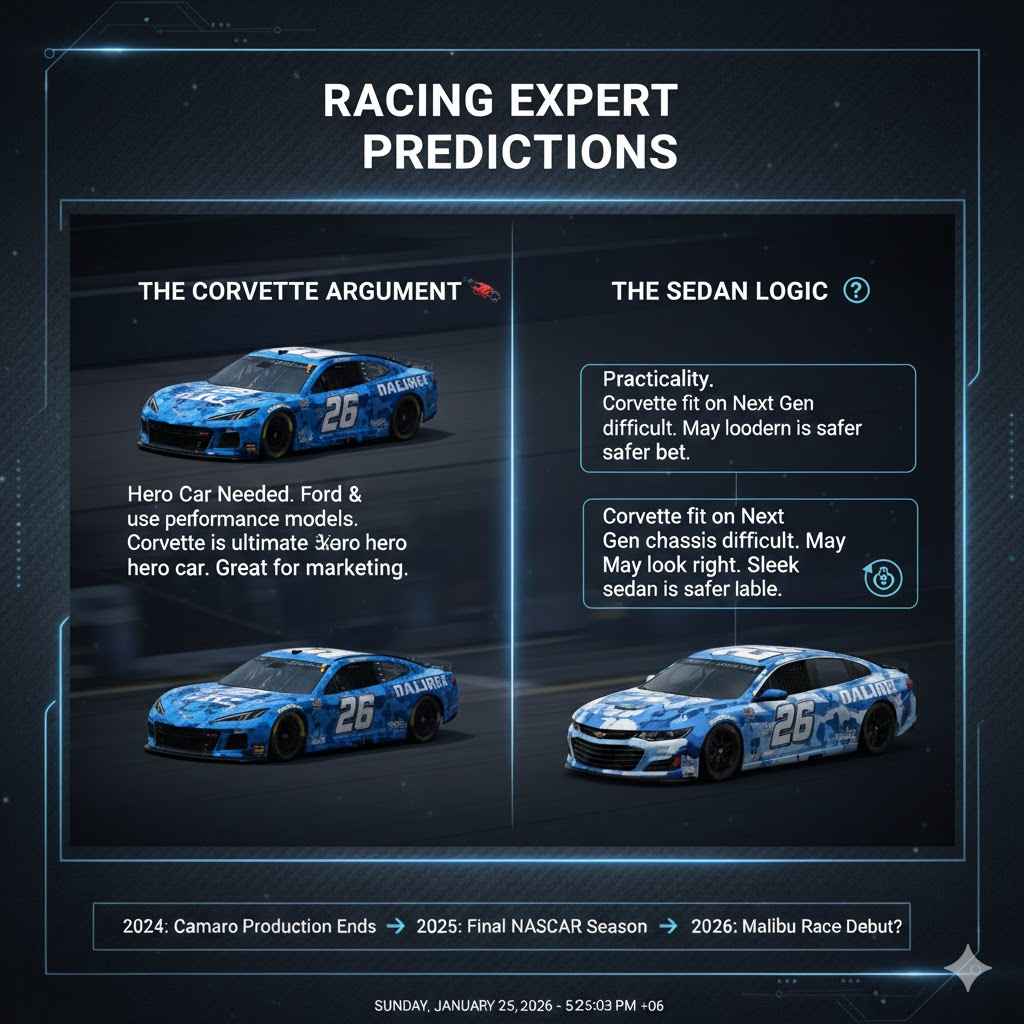
Many experts, like those you might read on sites like MotorTrend or other leading automotive news outlets, lean towards the Corvette. They argue that Ford’s move to the aggressive Mustang Dark Horse and Toyota’s stylish Camry XSE means Chevy needs a “hero car” to compete visually and in marketing. The Corvette is the ultimate hero car in Chevy’s lineup.
However, others point to practicality. They argue that designing a Corvette body to fit the proportions of a Next Gen stock car could be challenging and might not look quite right. They suggest a sleek, modern sedan is a safer and more logical path. For now, the debate rages on, and we’ll have to wait for the official word from Team Chevy.
Frequently Asked Questions (FAQ)
1. When will Chevrolet officially announce the new car for 2026?
There is no official date yet, but announcements like this typically happen about a year before the car hits the track. We will likely hear something definitive sometime in 2025. This gives teams time to prepare the new bodies for the season.
2. Is the NASCAR Camaro the same as the one I can buy?
No, they are very different. The street Camaro and the NASCAR Camaro share a name and a similar look, but that’s about it. The race car is a purpose-built machine built on the NASCAR Next Gen chassis. The body is a lightweight composite shell designed to resemble the street car.
3. Why can’t they just keep using the Camaro body in NASCAR?
NASCAR’s rules are built around the idea of manufacturers racing models that they currently sell to the public. Once the Camaro is no longer in production, it becomes ineligible for competition in the Cup Series after a certain grace period. This keeps the “stock car” connection alive.
4. Will the new car be faster than the Camaro?
Not necessarily. Because all cars use the same Next Gen chassis and have to meet the same aerodynamic rules, performance is very closely matched. The new car will be engineered to be just as competitive as the Camaro, but it won’t have an inherent speed advantage due to the model change alone.
5. Could Chevy use an SUV like the Blazer or Trailblazer?
This is highly unlikely. While SUVs are very popular, their tall, boxy shape is not suited for high-speed oval racing. NASCAR is a sport of sleek, low-slung cars, and an SUV body would not be aerodynamically competitive or fit the series’ image.
6. Will the driver lineups for Team Chevy change with the new car?
The car model change will not directly affect driver contracts. Teams like Hendrick Motorsports and Richard Childress Racing will continue to field their drivers, who will simply be driving the new model once it is introduced.
7. Does this mean the Camaro is gone forever?
Chevrolet has stated that “this is not the end of Camaro’s story.” While the current generation is ending, the name is too iconic to disappear forever. It is very possible the Camaro could return in the future, perhaps as an electric performance car, and maybe even return to NASCAR one day.
Conclusion: The Exciting Road Ahead
The mystery of what car Chevy will use in NASCAR for 2026 is one of the biggest stories in motorsports right now. While the legendary Camaro is driving off into the sunset, an exciting new chapter is about to begin for Team Chevy. Whether it’s the breathtaking Corvette, the classic Malibu, or a futuristic surprise, one thing is certain: the competition will be as fierce as ever.
For now, all we can do is watch for clues and enjoy the final seasons of the Camaro ZL1 on the track. Change can be bittersweet, but it also brings new energy and new rivalries. Keep your eyes peeled for the official announcement, because when it drops, it will mark the beginning of a new era for Chevrolet in NASCAR. The ultimate secret will soon be revealed, and we’ll be here to see it happen.