
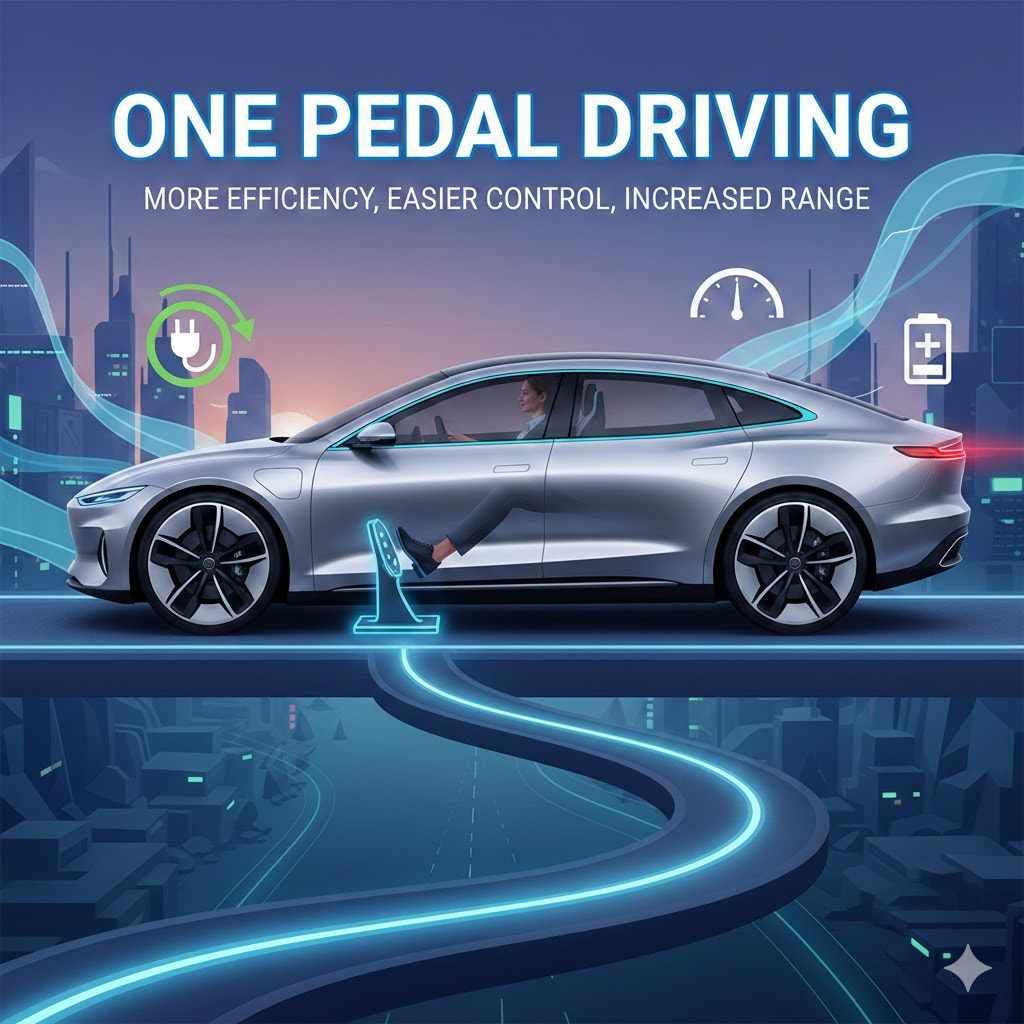
Some drivers find one-pedal driving a bit tricky at first. You might wonder, What Are the Benefits of One Pedal Driving? It feels different from how you’ve always driven. But don’t worry!
We’ll break it down simply. We’ll show you how it works step-by-step. Get ready to learn about smoother driving and saving energy.
Understanding One Pedal Driving
One-pedal driving is a way to control your electric vehicle (EV) more smoothly. Instead of using a separate brake pedal, you use the accelerator pedal to both speed up and slow down. When you lift your foot off the accelerator, the car’s motor starts to slow it down.
This braking action also recharges the battery. It feels like magic to some, but it’s just smart engineering. Many new EV drivers are curious about how this system works and how it can make their driving better.
How Does One Pedal Driving Work
One-pedal driving relies on the electric motor’s ability to act as a generator. When you take your foot off the accelerator pedal, the motor’s role reverses. Instead of drawing power from the battery to turn the wheels, the wheels’ motion now turns the motor.
This turning action creates electricity. This electricity is then sent back to the battery, a process called regenerative braking. The intensity of this slowing effect can often be adjusted by the car’s settings, allowing drivers to choose how much braking they experience when lifting off the pedal.
It’s a sophisticated system that simplifies the driving experience by combining two primary controls into one.
The feeling of the car slowing down when you release the accelerator is the key. It’s not just coasting; it’s active braking. This regenerative braking is usually strong enough to bring the car to a complete stop.
You might find yourself using the actual brake pedal very little, if at all, during typical driving. This can take some getting used to, especially if you’re accustomed to traditional gasoline cars. Learning to feather the accelerator pedal becomes a new skill, allowing for precise control over speed and deceleration.
Many EVs offer different levels of regenerative braking. Some allow you to set it to a high setting, where lifting off the pedal causes significant slowing, almost like applying the brakes. Others offer a more gentle deceleration, closer to what you’d expect from coasting.
This customization means you can find a setting that feels comfortable and natural for your driving style. The car’s computer manages the transition between acceleration and regenerative braking seamlessly. This makes the overall driving experience feel very fluid and connected.
Regenerative Braking Explained
Regenerative braking is a core technology in electric vehicles and hybrids. It’s the system that allows your car to recapture energy that would otherwise be lost as heat during braking. Think of it like this: when a regular car brakes, the brake pads rub against the rotors, creating friction and heat.
This energy is gone. Regenerative braking turns this process around. Instead of friction, the electric motor is used in reverse.
The momentum of the moving car forces the motor to spin. This spinning action generates electricity.
This generated electricity is then sent back to the car’s battery pack. It’s like getting a little bit of free charge every time you slow down or stop. The amount of energy recaptured depends on how quickly you slow down.
Harder braking or faster deceleration from lifting the accelerator pedal generally results in more energy being sent back to the battery. This is a major reason why EVs can be so efficient. They’re constantly reclaiming some of the energy they use.
The impact of regenerative braking goes beyond just battery charging. It also reduces wear and tear on the traditional friction brakes. Since the electric motor is doing a lot of the slowing down, your physical brake pads and rotors don’t need to work as hard.
This can mean longer intervals between brake replacements, saving you money on maintenance over time. It’s a dual benefit: better efficiency and lower running costs. The technology makes driving feel more responsive, too, as the deceleration is directly linked to your foot’s position.
Benefits of One Pedal Driving
One of the most appealing aspects of one-pedal driving is increased driving efficiency. By capturing energy through regenerative braking every time you ease off the accelerator, you are essentially recharging your battery as you drive. This means you can travel further on a single charge.
It’s like getting a little extra range every time you slow down. For daily commutes or longer trips, this ability to recoup energy can make a noticeable difference in how often you need to stop and charge.
Beyond efficiency, one-pedal driving leads to a smoother driving experience. The deceleration is often more gradual and controlled than abrupt braking with a traditional pedal. This means fewer sudden jolts for passengers and a more comfortable ride.
You can anticipate stops and turns more easily, gliding to a halt with precision. This smooth control can also reduce stress for the driver, as they are constantly engaged with the car’s motion in a more intuitive way.
Reduced wear on brake components is another significant advantage. With regenerative braking handling a large portion of the deceleration, the physical brake pads and rotors are used less frequently and less intensely. This can extend their lifespan considerably, leading to lower maintenance costs over the ownership of the vehicle.
Drivers often find they need to
Enhancing Driving Experience With One Pedal
The shift to one-pedal driving is more than just a technological change; it’s an evolution in how we interact with our vehicles. It fosters a more connected and intuitive driving style. By consolidating acceleration and braking into a single pedal, drivers develop a deeper sense of control and anticipation.
This can transform the daily commute from a series of stop-and-go actions into a fluid, almost dance-like motion. The car responds more directly to subtle inputs, making the driving experience feel more personal and engaging.
Smoother Acceleration and Deceleration
When you drive with one pedal, you learn to modulate your accelerator foot with greater precision. Instead of stomping on a brake pedal, you simply lift your foot to slow down. This gradual reduction in speed is often much smoother than traditional braking.
It means fewer jerky movements and a more comfortable ride for everyone in the car. Passengers will appreciate the absence of sudden lurches, making long drives much more pleasant. This refined control is a hallmark of modern electric vehicle technology.
The ability to gently lift off the accelerator to control speed is especially useful in traffic. You can maintain a safe distance from the car ahead by simply easing off the pedal, rather than constantly switching between gas and brake. This makes stop-and-go traffic less stressful and more fluid.
You can often ‘drive’ the car using only the accelerator pedal, making it feel like the car is almost reading your mind. This intuitive connection between driver intention and vehicle response is a key benefit.
This smooth deceleration also helps in maintaining momentum. Instead of braking hard and then accelerating again, you can often glide through curves or down gentle slopes using just the right amount of lift on the accelerator. This not only feels more natural but can also contribute to better energy efficiency.
The car is always trying to maintain a steady pace with minimal wasted energy. This careful control over speed makes for a more serene and efficient driving experience overall.
Reduced Driver Fatigue
Driving with one pedal can significantly reduce driver fatigue. In traditional cars, drivers constantly move their foot between the accelerator and the brake pedal. This constant shifting can be tiring, especially on longer drives or in heavy traffic.
With one-pedal driving, your foot remains mostly on the accelerator. You use variations in pressure and lift-off to control speed. This reduces the physical strain on your leg and foot.
The reduced need to constantly switch pedals also means your brain is less occupied with the mechanics of driving. You can focus more on the road, traffic conditions, and your surroundings. This heightened awareness can lead to a safer and less stressful driving experience.
The smooth nature of one-pedal driving also contributes to a calmer mindset. Fewer abrupt actions mean fewer moments of surprise or stress, allowing you to relax more behind the wheel.
Furthermore, the predictive nature of one-pedal driving encourages drivers to anticipate traffic flow. You learn to read the road and traffic ahead, using your accelerator pedal to manage speed proactively. This anticipatory driving style is inherently less taxing than reactive driving, where you’re constantly responding to immediate situations.
It’s like becoming one with the car and the road, creating a more harmonious driving rhythm. This ease of control makes even long journeys feel less demanding.
Improved Car Control and Predictability
One-pedal driving offers a higher level of car control. The accelerator pedal becomes a highly sensitive instrument, allowing for very fine adjustments to speed. You can creep forward at a snail’s pace or slow down with precision simply by adjusting your foot’s position.
This granular control is particularly useful in situations requiring careful maneuvering, such as parking in tight spaces or navigating busy, unpredictable environments.
The predictability of the deceleration is another major benefit. When you lift your foot off the accelerator, you know exactly how the car will react. It will slow down smoothly and consistently, based on the regenerative braking settings.
This consistency removes much of the guesswork associated with traditional braking. You don’t have to worry about over-braking or under-braking; the car’s response is directly tied to your input. This predictability builds confidence and makes driving feel more secure.
This enhanced control also means better management of vehicle dynamics. In slippery conditions, for example, the gentle application of regenerative braking can be less likely to cause a skid than slamming on traditional brakes. The motor’s ability to smoothly apply slowing force can help maintain traction.
This makes one-pedal driving not just convenient but also a potentially safer way to drive, especially for those who master its nuances. The responsiveness of the system means the car feels like an extension of the driver’s will.
Maximizing Energy Efficiency
The primary draw for many drivers considering one-pedal driving is its significant impact on energy efficiency. Electric vehicles are designed to be eco-friendly, and one-pedal driving is a key technology that maximizes this advantage. By harnessing the power of regenerative braking, you are not just driving; you are actively participating in the energy cycle of your vehicle, turning wasted motion into usable power.
Recharging the Battery While Driving
The most direct benefit of one-pedal driving for efficiency is its battery-recharging capability. Every time you lift your foot off the accelerator, the electric motor acts as a generator. It uses the car’s momentum to create electricity.
This electricity is then fed back into the battery pack. This process happens continuously as you drive, especially in varied terrain or stop-and-go traffic. It’s like having a small power plant built into your car, constantly topping up the energy reserves.
Consider a scenario where you’re driving down a hill. Instead of using your brakes and wasting that potential energy as heat, one-pedal driving allows the car to slow itself down naturally while generating power. This recovered energy can then be used for acceleration later, or to power the car’s systems.
Over the course of a day, the cumulative effect of this energy regeneration can be substantial, leading to longer driving ranges and fewer charging stops. It makes driving feel more like a continuous energy loop.
This ability to recharge while driving is particularly effective in urban environments. City driving often involves frequent acceleration and deceleration. Each time you brake or lift off the accelerator, energy is recaptured.
A study by the U.S. Department of Energy found that regenerative braking can recover between 10% and 50% of the energy that would typically be lost in conventional braking, depending on driving style and road conditions. This means your electric vehicle is working to extend its range with every stop and slowdown.
Reducing Energy Consumption
Beyond recapturing energy, one-pedal driving also encourages a driving style that consumes less energy overall. Because the car slows down more effectively when you lift off the accelerator, you tend to anticipate stops and turns further in advance. This means you can often lift off the pedal earlier, allowing the car to coast or decelerate naturally, rather than needing to brake hard.
This smoother, more anticipatory driving style minimizes hard acceleration and braking, which are the biggest energy drains in any vehicle.
By minimizing the need for abrupt braking, you also reduce the reliance on friction brakes. The energy used to overcome rolling resistance and air resistance is better managed when you drive smoothly. The car is kept in motion more efficiently.
This gentle approach to driving, facilitated by the responsive nature of one-pedal controls, leads to a more efficient use of the battery’s stored energy. It’s about working with the car’s capabilities rather than against them.
Imagine approaching a red light. With traditional driving, you might accelerate, then brake hard. With one-pedal driving, you lift off the accelerator much earlier, allowing the car to slow itself down smoothly as you get closer.
This gentle deceleration uses less energy than aggressive braking. Studies have shown that drivers who utilize one-pedal driving effectively can see significant improvements in their vehicle’s energy consumption. Some estimates suggest efficiency gains of up to 10-15% are possible for adept drivers in mixed driving conditions.
Extending Driving Range
The combined effect of recapturing energy and reducing overall consumption directly translates to an extended driving range. When your EV is more efficient, it can travel further on a single charge. This is a critical factor for many potential EV buyers, as range anxiety is a common concern.
One-pedal driving helps alleviate this worry by maximizing the utility of every kilowatt-hour of energy stored in the battery.
For example, a driver who frequently uses one-pedal driving on their daily commute might find they can go an entire week without needing to charge, whereas a driver who doesn’t might need to charge every few days. The difference comes down to how effectively energy is managed. The continuous regeneration and smoother driving style mean less energy is wasted, allowing the car to cover more miles before the battery is depleted.
This makes EVs more practical for a wider range of needs.
Consider this: if your car’s stated range is 300 miles, but through efficient one-pedal driving you consistently recapture enough energy to add an extra 20-30 miles worth of charge over several days of driving, that’s a significant boost. It means you have more flexibility with your charging schedule and less pressure to find charging stations. This practical extension of range makes the ownership experience of an electric vehicle much more convenient and reassuring.
Driving with One Pedal A Practical Guide
Transitioning to one-pedal driving is an accessible skill that most drivers can learn with a little practice. The key is to adjust your driving habits and embrace the new responsiveness of your electric vehicle. It’s about developing a feel for how the car reacts to subtle changes in accelerator pedal pressure.
Once you get used to it, many drivers find it hard to go back to traditional two-pedal driving.
Getting Started
The best way to start with one-pedal driving is in a safe, open area with minimal traffic, like an empty parking lot or a quiet residential street. Begin by gently accelerating to a slow speed. Then, slowly lift your foot off the accelerator pedal.
Notice how the car begins to slow down. Try lifting your foot completely off the pedal and see how strong the braking effect is. Most cars allow you to adjust the strength of this regenerative braking, so start with a medium setting if available.
As you get more comfortable, practice applying different amounts of pressure and lift-off. You’ll start to feel the nuances. A slight lift will cause gentle deceleration, while a more significant lift will brake more assertively.
The goal is to be able to control your speed and come to a complete stop using only the accelerator pedal. You might still use the brake pedal for emergency stops or when you need to brake very quickly, but for normal driving, the accelerator will do most of the work.
Pay attention to how the car behaves. You’ll notice that the deceleration is smooth and consistent. This predictability is what makes it so easy to master.
It’s less about sudden actions and more about continuous, subtle adjustments. Many drivers find that after a few hours of practice, they are already comfortable using one-pedal driving for most of their journeys. It truly becomes second nature.
Tips for Optimal Use
To get the most out of one-pedal driving, focus on smooth, anticipatory driving. Look well ahead on the road to see traffic lights, stop signs, and other vehicles. This allows you to lift off the accelerator early, letting the car slow down gradually.
Avoid sudden acceleration or abrupt lifting of the foot, as this can be jarring and less efficient.
Experiment with the different regenerative braking settings if your car offers them. Some drivers prefer a strong setting for maximum regeneration and a more aggressive deceleration, while others like a milder setting for a smoother feel. Finding the setting that best suits your driving style and preferences is key to enjoying the experience.
What works for one driver might not be ideal for another.
Practice makes perfect. The more you drive using one pedal, the better you’ll become at modulating the accelerator. You’ll develop a sixth sense for how much lift is needed to achieve the desired speed reduction.
Many drivers report that once they adapt to one-pedal driving, they prefer it over traditional two-pedal driving due to its smoothness and efficiency. It feels more connected and less effortful.
When to Use Traditional Brakes
While one-pedal driving is highly effective for most driving situations, there are times when you’ll still need to use your traditional brake pedal. The most obvious situation is an emergency stop. If you need to brake suddenly and with maximum force to avoid an accident, the physical brake pedal is designed for that purpose and will provide the strongest stopping power.
The car’s system will engage both regenerative and friction braking in such a scenario.
You might also find yourself using the brake pedal for very precise low-speed maneuvers. For instance, when parking in a very tight spot or inching forward in a crowded parking lot, you may prefer the immediate and direct control of the brake pedal. While one-pedal driving can be very precise, some drivers feel more confident using the brake pedal for these extremely slow, delicate movements.
It’s a matter of personal preference and comfort level.
Additionally, if you need to come to a very quick halt from a relatively high speed, and the regenerative braking alone isn’t sufficient or immediate enough, you’ll use the brake pedal. The car’s brake system is designed to work in conjunction with regenerative braking. When you press the brake pedal, the car’s computer will determine how much regenerative braking to apply and how much friction braking is needed to stop effectively and safely.
So, the brake pedal is always there as a reliable backup and enhancement.
Comparison of Driving Styles
Understanding the differences between one-pedal driving and traditional two-pedal driving highlights the unique advantages of electric vehicles. While both methods get you from point A to point B, the journey itself can be vastly different in terms of efficiency, comfort, and driver engagement. The electric vehicle’s technology allows for a fundamentally different approach to controlling the car’s motion.
One Pedal vs. Two Pedals
| Feature | One Pedal Driving | Traditional Two Pedal Driving |
|---|---|---|
| Accelerator Pedal Function | Controls both acceleration and deceleration. Lifting foot slows the car. | Primarily controls acceleration. Deceleration requires a separate brake pedal. |
| Brake Pedal Usage | Used for emergency stops or very fine, slow maneuvers. Minimal for daily driving. | Used frequently for slowing down and stopping. Essential for speed control. |
| Energy Efficiency | High. Recaptures energy via regenerative braking, reducing consumption. | Lower. Energy lost as heat during braking. No energy recapture. |
| Driving Experience | Smoother, more intuitive, less driver fatigue, more predictable. | Familiar, requires constant foot movement, can be more abrupt. |
| Brake Wear | Significantly reduced. Regenerative braking handles most slowing. | Higher. Friction brakes used more often, leading to faster wear. |
The table above clearly illustrates the core differences. In traditional driving, the brake pedal is an active participant in almost every change of speed. You accelerate with one foot, then move it to the brake to slow down.
This constant motion, while familiar, is less efficient. Energy is converted to heat through friction and then lost forever. It’s a system designed for a different era of automotive technology.
One-pedal driving flips this paradigm. It leverages the electric motor’s ability to do more than just push the car forward. It can also act as a brake and a generator.
This dual functionality means the accelerator pedal becomes a much more versatile control. You are essentially “driving with your foot,” sensing the road and the car’s momentum through the single pedal. This creates a more integrated and mindful driving experience.
The benefits for energy efficiency and reduced brake wear are substantial. For drivers looking to maximize their EV’s range and minimize maintenance costs, one-pedal driving is an essential skill to develop. It’s not just a feature; it’s a fundamental aspect of how electric vehicles can offer a superior driving and ownership experience.
It represents a significant advancement in how we interact with and benefit from our vehicles.
Frequently Asked Questions
Question: Is one-pedal driving safe?
Answer: Yes, one-pedal driving is very safe. The system is designed with safety as a top priority. While it can take some getting used to, the deceleration is predictable.
The traditional brake pedal is always available for emergency stops, and the car’s systems ensure you can stop effectively when needed.
Question: Will I use the brake pedal at all with one-pedal driving?
Answer: You will likely use the brake pedal much less, but it’s still important. It’s primarily used for emergency braking or when you need to stop very quickly. For most routine slowdowns and stops, the accelerator pedal handles the task.
Question: Can I turn off one-pedal driving?
Answer: Most electric vehicles allow you to adjust or turn off one-pedal driving. You can often choose different levels of regenerative braking, from very strong to almost like coasting. This allows you to customize the driving experience to your preference.
Question: How long does it take to get used to one-pedal driving?
Answer: Most people adapt to one-pedal driving within a few hours of practice. It might feel strange at first, but the intuitive nature of the system means you’ll quickly develop a feel for it. It becomes second nature for many drivers.
Question: Does one-pedal driving improve my car’s range?
Answer: Yes, absolutely. By recapturing energy through regenerative braking and promoting smoother driving, one-pedal driving significantly improves energy efficiency, which in turn extends your car’s driving range on a single charge.
Summary
One-pedal driving offers a more efficient, smoother, and engaging way to drive electric cars. It uses regenerative braking to recharge the battery while slowing down. This reduces energy consumption, extends range, and lessens brake wear.
Mastering it allows for better control and a more relaxing driving experience.