
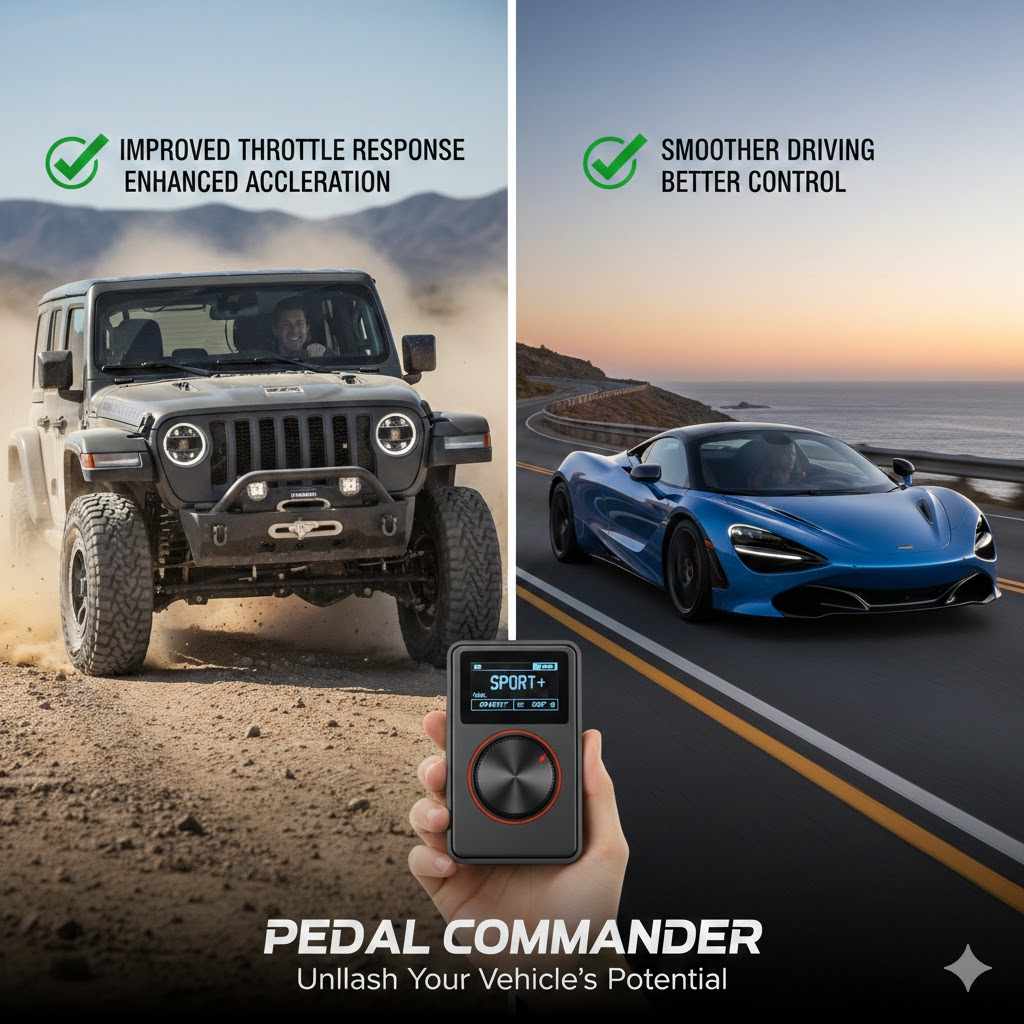
Sometimes you might wonder about What Are the Benefits of a Pedal Commander?. It can seem a bit confusing when you first hear about it, especially if you’re new to car upgrades. This post is here to make it super simple.
We’ll break down everything you need to know, step by step, so you can understand it all easily. Get ready to learn about how this handy device can change your driving experience.
Understanding What a Pedal Commander Is
A Pedal Commander is a small electronic device that connects to your vehicle’s throttle pedal. Its main job is to change how the gas pedal responds to your input. Think of it like a translator for your foot and the engine.
Instead of the engine’s direct response, the Pedal Commander modifies the signal, allowing for a quicker or more sensitive reaction. This can make your car feel more responsive and powerful, especially in situations where you need a quick burst of acceleration. It’s a popular modification for drivers looking to improve their vehicle’s performance without making major engine changes.
How Throttle Response Works
In modern cars, the gas pedal doesn’t physically open a throttle body. Instead, it’s an electronic sensor. When you press the pedal, it sends a signal to the car’s computer, known as the Engine Control Unit (ECU).
The ECU then interprets this signal and tells the throttle body how much to open. This system, called drive-by-wire, replaced older mechanical cable systems for better control and efficiency.
The default setting in most cars is designed for comfort and fuel economy. This often means there’s a slight delay or a less aggressive response when you first press the pedal. This delay is programmed to smooth out acceleration and prevent jerky movements, which is great for everyday driving.
However, it can also make the car feel sluggish when you need to accelerate quickly, like when merging onto a highway or overtaking another vehicle.
The Pedal Commander intervenes in this process. It intercepts the signal from the gas pedal sensor before it reaches the ECU. It then modifies this signal, often amplifying it or changing its timing.
This modified signal is then sent to the ECU. The result is that the throttle body opens more quickly or more dramatically in response to your pedal input. This makes the car feel much more responsive.
It’s like telling the engine to react faster to your commands.
The Role of the Accelerator Pedal Sensor
The accelerator pedal sensor is a crucial part of your car’s electronic throttle system. It’s essentially a potentiometer that measures the position of your gas pedal. When you press the pedal, the sensor detects how far down it is and sends this information as an electrical signal to the car’s computer.
This signal tells the computer how much power the driver is requesting.
This sensor is designed for precision. It allows the car’s computer to have a very accurate reading of your pedal input. This accuracy is important for many of the car’s systems, including cruise control, traction control, and stability control.
These systems rely on the pedal sensor’s data to function correctly.
The Pedal Commander works by “tricking” this sensor or, more accurately, by altering the signal that the sensor sends. It doesn’t change the sensor itself. Instead, it adds a module between the sensor and the car’s computer.
This module can adjust the signal’s voltage or timing. For example, it can make the computer think you’ve pressed the pedal further than you actually have, or it can make the signal reach the computer faster.
This manipulation of the accelerator pedal sensor signal is what leads to the noticeable changes in throttle response. The Pedal Commander essentially bypasses the factory’s conservative programming. It allows for a more direct and immediate connection between your foot’s action and the engine’s output.
This makes the car feel much livelier.
Electronic vs. Mechanical Throttle Systems
Older vehicles used a mechanical system to control the throttle. In these cars, a physical cable connected the gas pedal directly to the throttle plate. When you pressed the pedal, the cable would pull the throttle plate open.
This provided a very direct and immediate connection between the driver’s foot and the engine’s air intake. There was no electronic signal processing or delay involved.
In contrast, modern vehicles overwhelmingly use electronic throttle control, also known as drive-by-wire. Here, the gas pedal contains sensors that send an electronic signal to the car’s computer. The computer then electronically controls a motor that opens or closes the throttle plate.
This system offers several advantages, including better fuel efficiency, improved emissions control, and the ability to integrate with advanced driver-assistance systems like adaptive cruise control and electronic stability control.
However, drive-by-wire systems can sometimes introduce a slight delay in throttle response. This is because the signal has to travel from the pedal sensor to the computer, be processed, and then sent to the throttle motor. The factory programming often prioritizes smooth acceleration and fuel economy over instantaneous responsiveness.
A Pedal Commander is specifically designed to enhance the performance of electronic throttle systems. It modifies the electronic signal from the pedal sensor before it reaches the car’s computer. This allows drivers to regain some of the immediate responsiveness that was characteristic of older mechanical throttle systems, but with the benefits and integration of modern electronics.
It’s a way to get the best of both worlds.
What Are the Benefits of a Pedal Commander for Your Vehicle
The core appeal of a Pedal Commander lies in its ability to transform your driving experience. By adjusting throttle response, it offers tangible improvements that many drivers find highly desirable. These benefits range from a sportier feel to enhanced usability in specific driving conditions.
Let’s explore these advantages in detail.
Improved Throttle Responsiveness
One of the most significant benefits of a Pedal Commander is its ability to eliminate the frustrating lag often associated with modern electronic throttle systems. You know that feeling when you press the gas pedal, and nothing happens for a split second? That’s the lag.
A Pedal Commander significantly reduces or eliminates this delay.
When you press the accelerator, the Pedal Commander sends a stronger, faster signal to your car’s computer. This tells the engine to respond much more quickly. The result is a car that feels more agile and eager.
It’s like the car is more willing to accelerate when you ask it to. This makes everyday driving more enjoyable and can give you more confidence when you need to merge into traffic or make a quick maneuver.
This enhanced responsiveness can make your car feel brand new again. Even if your car isn’t old, the factory settings can sometimes feel a bit sluggish. A Pedal Commander can give you that sporty, connected feel that many drivers crave.
It’s a simple upgrade that can make a big difference in how your car feels to drive on a daily basis.
For example, imagine you’re at a stop sign and need to turn left across traffic. You need to accelerate quickly to get through the gap. With a stock throttle, you might hesitate, waiting for the car to catch up.
With a Pedal Commander, the acceleration is almost instantaneous, allowing you to make the turn with greater ease and safety. This improved reaction time is invaluable.
Enhanced Driving Modes and Customization
Most Pedal Commander units come with multiple driving modes. These modes allow you to adjust the throttle sensitivity to suit different driving situations. You can often choose from modes like Economy, City, Sport, and even Super Sport or Track.
Each mode offers a different level of throttle response.
The Economy mode is designed to help you save fuel. It makes the throttle less sensitive, so you have to press the pedal further to get the same acceleration. This encourages smoother driving and less aggressive acceleration.
The City mode offers a good balance between responsiveness and comfort, making it ideal for daily commutes in urban environments. Sport modes provide progressively sharper acceleration, making the car feel much more lively and performance-oriented.
This customization is a key benefit because it allows you to tailor your car’s performance to your needs. If you’re stuck in slow traffic, you can use a less sensitive mode to avoid jerky movements. When you’re out on the open road and want to have some fun, you can switch to a Sport mode for exhilarating acceleration.
This flexibility means you don’t have to sacrifice comfort for performance, or vice-versa. You get to choose.
For instance, on a long road trip, you might use the Economy mode for most of the journey to maximize fuel efficiency. Then, when you encounter a stretch of highway with no traffic and feel like enjoying the drive, you can easily switch to a Sport mode for a more dynamic experience. This adaptability makes the Pedal Commander a versatile upgrade.
Here’s a quick look at typical modes:
- Stock: This is your car’s original factory setting. It’s there for comparison and to return your car to its normal state.
- Eco Mode: This mode reduces throttle sensitivity. It helps you save fuel by making acceleration less abrupt. It’s great for long highway drives or when fuel economy is a priority.
- City Mode: This offers a nice balance. It’s more responsive than stock but not overly aggressive. It’s perfect for everyday driving in town.
- Sport Mode: This mode significantly increases throttle response. The car feels much quicker and more agile. It’s ideal for spirited driving or when you need quick acceleration.
- Super Sport/Track Mode: These are the most aggressive settings. They provide near-instantaneous throttle response, making the car feel very powerful and race-ready.
Improved Performance During Towing and Hauling
When towing a trailer or hauling heavy loads, the added weight can make your vehicle feel sluggish. The engine has to work harder, and the throttle response can become even more muted. A Pedal Commander can significantly improve performance in these situations.
By increasing throttle sensitivity, the Pedal Commander allows your engine to react more readily to your inputs. This means you can get the power you need more easily when starting from a stop or accelerating up an incline. This can make the experience of towing or hauling much less stressful and more controlled.
You’ll find it easier to maintain speed and get up to speed safely.
For example, if you’re towing a boat and need to back it down a slippery ramp, precise throttle control is essential. A sensitive throttle response allows for very fine adjustments. You can inch the vehicle forward or backward with minimal pedal pressure.
This level of control is difficult to achieve with a factory throttle setting when under load.
Another scenario is merging onto a highway while towing a camper. The extra weight makes it harder for the vehicle to accelerate. A Pedal Commander can provide the quicker response needed to merge safely and efficiently, reducing the time spent in a vulnerable position on the ramp.
Many users who tow trailers report that their vehicles feel more capable and less strained when using a Pedal Commander. The ability to get up to speed faster is not just about performance; it’s also about safety. It reduces the time your vehicle spends in situations where acceleration is critical.
Easier Overtaking and Merging
The benefits of quicker throttle response become particularly apparent when you need to overtake other vehicles or merge into traffic. These maneuvers require a rapid surge of power. With a standard throttle setup, you might find yourself pressing the pedal deeply and waiting for the engine to respond.
A Pedal Commander shortens this waiting period dramatically. When you need to overtake, a slight press of the pedal results in immediate acceleration. This allows you to complete the maneuver more quickly and safely, reducing the time you spend in the oncoming lane.
It gives you more confidence and control in these critical situations.
Similarly, merging onto a busy highway can be a challenge. You need to match the speed of the traffic already moving at high velocity. A more responsive throttle makes it easier to accelerate smoothly and effectively to integrate with the flow of traffic.
This can reduce the stress associated with merging.
Consider this scenario: You’re driving on a two-lane road and see an opportunity to overtake a slower vehicle. You glance at your mirrors, check oncoming traffic, and then press the accelerator. With a Pedal Commander, the car surges forward instantly.
You can complete the overtake in a shorter distance and with greater confidence. Without it, you might be waiting for that fraction of a second, making the maneuver feel more risky.
Statistics on vehicle performance can highlight the impact. While specific numbers for Pedal Commanders vary by vehicle, studies on throttle response show that reducing pedal lag can improve acceleration times significantly. For instance, a vehicle might shave off 0.2 to 0.5 seconds from its 0-60 mph time with improved throttle response, a critical difference when overtaking.
Here is a comparison of typical acceleration scenarios:
| Scenario | Stock Throttle Response | Pedal Commander (Sport Mode) |
|---|---|---|
| Merging onto Highway | Slight delay before significant acceleration, requires deep pedal press. | Immediate acceleration, feels more powerful and confident. |
| Overtaking Slow Vehicle | Noticeable lag, longer time spent in oncoming lane. | Quick surge of power, shorter and safer overtake. |
| Accelerating from Stop Sign | Gentle initial acceleration, can feel underpowered. | Snappy and immediate acceleration, feels more engaging. |
No Impact on Engine Longevity or Fuel Economy (When Used Wisely)
A common concern with performance modifications is whether they negatively impact the engine’s lifespan or fuel economy. With a Pedal Commander, these concerns are largely unfounded, provided it’s used appropriately.
The Pedal Commander does not increase engine power or torque. It only changes the response of the throttle pedal. It doesn’t remap the engine’s computer or alter its fundamental performance capabilities.
Therefore, it doesn’t put extra strain on the engine that would shorten its life. The engine is still operating within its designed parameters.
Regarding fuel economy, the impact depends entirely on how you drive. If you use the more aggressive Sport modes frequently and accelerate hard, you will likely use more fuel. However, if you use the Economy or City modes, or if you drive the same way you always have, your fuel economy can remain the same or even improve slightly due to smoother acceleration in certain situations.
For example, in stop-and-go traffic, using a less sensitive mode can prevent accidental aggressive acceleration when you only meant to tap the pedal lightly. This can lead to smoother driving and potentially better fuel efficiency in such conditions. The key is to use the different modes to your advantage.
You can select the mode that best fits your current driving needs and style.
Many manufacturers of these devices emphasize that they are plug-and-play and do not require any permanent modifications to the vehicle. This means you can easily remove the Pedal Commander and return your car to its original state without any adverse effects. This plug-and-play nature is a significant factor in why it’s a popular choice for drivers who want an immediate performance feel without long-term commitment or risk.
How Pedal Commanders Are Installed and Operated
One of the major advantages of a Pedal Commander is its user-friendly nature, from installation to daily operation. This accessibility makes it an appealing upgrade for a wide range of vehicle owners.
Simple Plug-and-Play Installation
Installing a Pedal Commander is remarkably straightforward and typically requires no specialized tools or mechanical knowledge. The device is designed to be a direct replacement in the signal path between the accelerator pedal sensor and the vehicle’s ECU. This means it simply plugs into the existing wiring harness.
The process usually involves locating the accelerator pedal sensor, which is commonly found near the top of the pedal assembly under the dashboard. You then disconnect the factory connector and plug in the Pedal Commander’s corresponding connectors. The module itself is typically small and can be discreetly mounted out of sight using the included adhesive pads or zip ties.
The entire installation process can often be completed in under 30 minutes. There’s no need to cut wires, splice into the electrical system, or reflash the vehicle’s computer. This plug-and-play design ensures that the installation is reversible, meaning you can easily remove the Pedal Commander and restore your vehicle to its original factory settings without leaving any trace.
Here’s a general outline of the installation steps:
- Locate the Accelerator Pedal Sensor: This is usually a small electrical connector attached to the top of your gas pedal assembly.
- Disconnect the Factory Connector: Gently press the release tab on the existing connector and pull it away from the pedal sensor.
- Connect the Pedal Commander Harness: Plug one end of the Pedal Commander’s wiring harness into the accelerator pedal sensor, and the other end into the Pedal Commander module.
- Mount the Control Module: Find a suitable location under the dashboard to securely mount the control module using the provided hardware.
- Test the System: Start your vehicle and test the pedal response in different modes to ensure everything is working correctly.
This ease of installation is a major selling point. It makes performance enhancement accessible to almost anyone with a vehicle equipped with electronic throttle control.
Intuitive Control Module Operation
Once installed, operating a Pedal Commander is equally simple and intuitive. The device typically comes with a compact control module that allows the driver to select different driving modes and fine-tune throttle response on the fly.
The control module usually features buttons or a dial that cycle through the various pre-programmed modes. For example, there might be buttons labeled “Mode” to change between settings like Eco, City, and Sport, and “Adjust” buttons to fine-tune the sensitivity within each mode. The selected mode is often indicated by LED lights or a small digital display on the module itself.
Drivers can change modes while the vehicle is stationary or even while driving, although it’s recommended to do so when it’s safe. This allows for immediate adjustments based on driving conditions. For example, you might switch to a more responsive mode when entering a highway or back to a milder mode when navigating a parking lot.
The ease of use means that drivers can quickly adapt their vehicle’s performance to their immediate needs without any complicated procedures. It’s designed to be user-friendly for everyone, from automotive enthusiasts to casual drivers who simply want a more engaging driving experience.
A user might be driving in City mode on their way to work. When they get to a stretch of open road, they can press a button on the control module to switch to Sport mode for a more exhilarating drive. Later, when they arrive home and need to park, they can switch back to Eco mode for smooth, fuel-efficient maneuvering.
Compatibility with Most Vehicles
Pedal Commanders are generally designed to be compatible with a vast range of modern vehicles. Manufacturers typically produce specific versions of the device for different makes, models, and years of cars, trucks, and SUVs that utilize electronic throttle control.
This broad compatibility means that if your vehicle was manufactured in the last 15-20 years (approximately), there’s a high chance a Pedal Commander is available for it. The specific connector and signal processing required can vary between manufacturers, so it’s important to purchase a unit that is specifically designed for your vehicle’s make and model.
Before purchasing, users should always verify the compatibility of the Pedal Commander with their specific vehicle. This usually involves checking a compatibility list provided by the manufacturer or retailer. Most manufacturers offer a wide selection covering popular brands like Ford, Chevrolet, Toyota, Honda, BMW, Mercedes-Benz, and many others.
The widespread availability ensures that a large number of drivers can experience the benefits of improved throttle response without needing to modify their vehicle extensively. This makes it a popular aftermarket accessory for a diverse automotive market.
No Effect on Engine Error Codes
A significant advantage of using a reputable Pedal Commander is that it does not typically interfere with your vehicle’s onboard diagnostic system. This means it should not trigger any check engine lights or other fault codes.
The device works by modifying the signal between the existing sensors and the ECU. It doesn’t alter the sensors themselves or send illogical data that the ECU would interpret as a malfunction. The ECU still receives a valid signal, albeit one that has been adjusted.
This means the vehicle’s computer continues to function normally, monitoring all systems as it should.
This is crucial because triggering error codes can lead to costly diagnostic checks and repairs, and it can also affect your vehicle’s warranty. Since Pedal Commanders are designed to be non-intrusive and work within the acceptable parameters of the factory system, they generally avoid causing these issues. It allows drivers to enjoy the performance enhancement without the worry of unexpected warning lights.
However, it’s always wise to ensure you are purchasing from a reputable brand that designs its products to be compatible with modern vehicle electronics. Inferior or poorly designed devices could potentially cause issues. Sticking to well-known brands usually guarantees that the product is engineered to avoid triggering error codes.
Are There Any Downsides to a Pedal Commander
While Pedal Commanders offer exciting improvements, it’s wise to consider any potential drawbacks. Understanding these can help you make a more informed decision about whether it’s the right upgrade for you.
Potential for Aggressive Driving
The most significant potential downside is that the greatly improved throttle response can encourage more aggressive driving habits. When your car feels more responsive, it’s easy to get tempted to accelerate harder and more often. This can lead to:
- Increased Fuel Consumption: If you’re constantly using Sport or Super Sport modes and accelerating quickly, you will naturally use more fuel. The Pedal Commander doesn’t magically improve fuel efficiency; it only changes how your foot’s input translates to engine output.
- Increased Wear and Tear: More aggressive acceleration and braking cycles can put slightly more stress on your vehicle’s components over time. This includes the tires, brakes, and potentially the drivetrain.
- Reduced Driver Focus: The exhilarating feeling of a highly responsive car can sometimes distract drivers, leading to less attention on the road and surrounding traffic.
It’s important for drivers to be mindful of their driving habits. The Pedal Commander is a tool, and like any tool, its impact depends on how it’s used. Using the different modes appropriately and maintaining a responsible driving style are key to mitigating these potential downsides.
Not a True Power Upgrade
It’s crucial to understand that a Pedal Commander does not actually add horsepower or torque to your engine. It only alters the way the engine responds to your throttle input. The engine’s maximum power output remains the same.
Drivers seeking a significant increase in raw engine power will need to look at other modifications like performance tuners, exhaust systems, or intake upgrades. A Pedal Commander enhances the feeling of power and responsiveness, making the car feel faster and more engaging, but it doesn’t change the engine’s fundamental capabilities.
For example, if your car has 200 horsepower stock, a Pedal Commander will still have 200 horsepower available. What it does is make you access that 200 horsepower much more quickly and easily with less pedal travel. The ultimate performance limit of the engine remains unchanged.
This distinction is important for managing expectations.
Cost Can Be a Factor
While generally considered an affordable modification compared to major engine upgrades, Pedal Commanders still represent an investment. Prices can range from around $100 to $400 or more, depending on the brand and specific features offered.
For some budget-conscious individuals, this cost might be prohibitive, especially if they are only looking for minor improvements. It’s important to weigh the cost against the perceived benefits. For many drivers, the improvement in driving enjoyment and responsiveness is well worth the price, but for others, it might not be a top priority.
Potential for Over-Sensitivity
In some cases, especially with the most aggressive modes, the throttle response can become almost too sensitive for some drivers. This can lead to jerky acceleration, especially at low speeds or in tight spaces.
For instance, trying to inch forward in a parking lot can become a challenge if the throttle is set to its highest sensitivity. The slightest touch of the pedal can cause a sudden lurch. While the control modules usually offer fine-tuning within modes, some drivers might find it difficult to achieve the perfect balance for all situations, particularly if they frequently switch between very different driving environments.
However, most reputable Pedal Commanders offer a wide range of settings and modes. With a little experimentation, most drivers can find a setting that provides enhanced responsiveness without becoming unmanageable. The ability to switch back to stock or milder modes offers a safety net.
Frequently Asked Questions
Question: Is a Pedal Commander legal to use on public roads?
Answer: Yes, a Pedal Commander is generally legal to use on public roads. It modifies throttle response, not engine emissions or safety systems. It does not alter your vehicle’s fundamental performance in a way that would violate road regulations.
Question: Will a Pedal Commander void my car’s warranty?
Answer: Reputable Pedal Commanders are designed to be plug-and-play and easily removable. They do not alter your vehicle’s ECU software. Therefore, they typically do not void your warranty.
However, if you experience an issue with your vehicle and the dealership suspects the Pedal Commander contributed to it (which is unlikely), they might investigate.
Question: Can I use a Pedal Commander on a manual transmission car?
Answer: Yes, Pedal Commanders work with both automatic and manual transmissions. The device affects the electronic signal from the accelerator pedal, which is present in both types of vehicles equipped with electronic throttle control.
Question: How does a Pedal Commander compare to a performance chip or tune?
Answer: A Pedal Commander only changes throttle pedal sensitivity. A performance chip or tune modifies your car’s ECU software to alter engine parameters like fuel delivery and ignition timing, directly increasing horsepower and torque. A Pedal Commander makes the car feel faster by improving responsiveness.
Question: Can I leave the Pedal Commander installed all the time?
Answer: Yes, you can leave a Pedal Commander installed all the time. It’s designed for continuous use. You can switch between modes as needed, or leave it on a preferred setting.
Most users leave it installed permanently and switch modes based on driving conditions.
Conclusion
Exploring What Are the Benefits of a Pedal Commander? reveals a clear picture. This device offers improved throttle response, customization through various driving modes, and enhanced performance for towing and everyday driving. Its simple installation and intuitive operation make it a popular choice.
While it doesn’t add raw power, it makes your car feel more alive and responsive.