
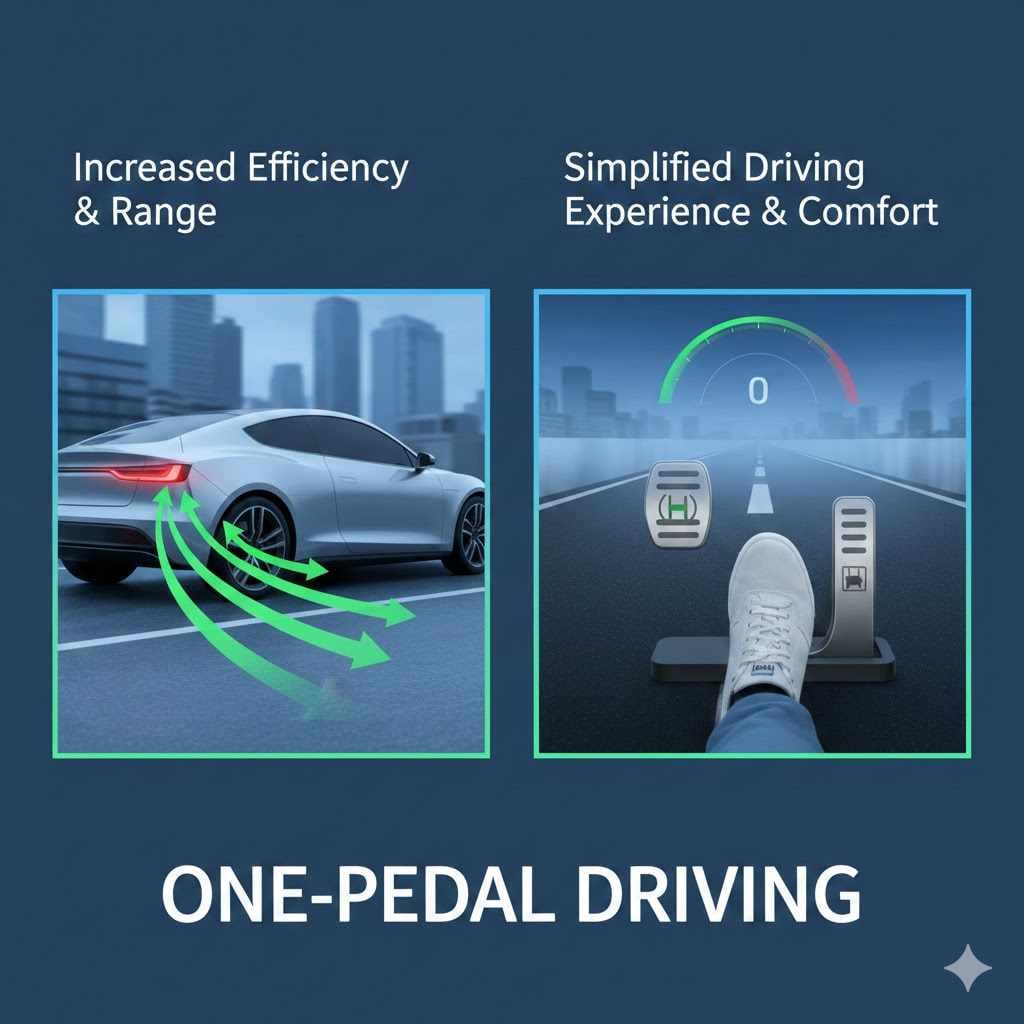
Learning new driving styles can feel tricky at first. If you’ve heard about one-pedal driving, you might wonder what it is and why people talk about it. It’s a way to drive that uses a single pedal for both acceleration and slowing down, which sounds different from what you’re used to.
But don’t worry! This guide will break down What Are the Advantages of One Pedal Driving? in a super simple way. We’ll show you just how easy and beneficial it can be with easy steps to follow.
Understanding One Pedal Driving
One pedal driving is a feature found in many electric vehicles (EVs) and some hybrids that allows you to control both acceleration and braking using just the accelerator pedal. When you lift your foot off the accelerator, the vehicle’s regenerative braking system kicks in, slowing the car down. This system captures energy that would normally be lost as heat during braking and sends it back to the battery.
It’s a key part of making EVs more efficient and can change the way you interact with your car.
How Regenerative Braking Works
Regenerative braking is the heart of one pedal driving. When you ease off the accelerator, the electric motor in your EV reverses its function. Instead of using electricity to spin the wheels and move the car forward, it acts like a generator.
This generator resists the wheels’ rotation, creating a braking effect. As it slows the wheels, it also produces electricity, which is then sent back to the vehicle’s battery. This process is very similar to how a dynamo on a bicycle works to power a light.
The strength of this regenerative braking can often be adjusted by the driver. Some cars have different levels of regenerative braking, allowing you to choose how aggressively the car slows down when you lift off the pedal. Higher settings feel more like traditional braking, while lower settings allow the car to coast more.
This adjustability is important for drivers to get comfortable with the feel.
The Role of the Accelerator Pedal
In a one pedal driving system, the accelerator pedal does double duty. When you press it down, the electric motor provides power to accelerate the vehicle, just like in a regular car. However, when you lift your foot off the pedal, the magic of regenerative braking begins.
The more you lift your foot, the stronger the regenerative braking effect becomes. This means you can often come to a complete stop by simply lifting your foot off the accelerator without needing to touch the brake pedal at all.
This responsiveness is a key characteristic. It takes a little practice to get used to the precise amount of lift needed for different slowing scenarios, but many drivers find it becomes very intuitive. The goal is to smoothly transition between accelerating and decelerating by modulating pressure on that single pedal.
What Are the Advantages of One Pedal Driving
The advantages of one pedal driving are numerous, contributing to a more efficient, comfortable, and enjoyable driving experience. For many EV owners, it quickly becomes a preferred way to drive. Let’s explore these benefits in detail to see why it’s such a popular feature.
Increased Energy Efficiency
One of the most significant advantages is improved energy efficiency. By using regenerative braking, EVs can recapture a substantial amount of energy that would otherwise be wasted. This reclaimed energy is fed back into the battery, extending the vehicle’s range on a single charge.
Studies have shown that regenerative braking can recover up to 70% of the energy normally lost during deceleration.
This energy recovery means you can drive further between charges, making electric vehicles more practical for daily commutes and longer trips. The more you use regenerative braking, the more energy you save. This is especially beneficial in stop-and-go traffic, where frequent deceleration and acceleration occur.
For instance, a typical urban commute can involve hundreds of braking events. In a traditional car, all the energy from these braking events is lost as heat through friction. With one pedal driving, a significant portion of that energy is put back into the battery.
- Extended Range
The direct impact of recaptured energy is an increased driving range. Instead of relying solely on the battery’s initial charge, you are constantly replenishing it through driving. This means fewer charging stops and more miles driven. For drivers concerned about range anxiety, this feature can be a real reassurance. - Reduced Brake Wear
Because regenerative braking handles much of the slowing down, the physical brake pads and rotors in a one-pedal EV experience less wear and tear. This can lead to longer intervals between brake service and lower maintenance costs over the life of the vehicle. While traditional brakes are still present for emergency stops, their usage is significantly reduced in everyday driving. - Smoother Driving Experience
Many drivers find one pedal driving leads to a smoother ride. By learning to anticipate traffic and adjust accelerator pressure accordingly, you can often glide to a stop without jerky movements. This smooth deceleration can be more comfortable for passengers and reduce the overall stress of driving.
Enhanced Driving Comfort and Convenience
Beyond efficiency, one pedal driving offers tangible benefits in terms of driver comfort and the overall ease of operating the vehicle. For many, it simplifies the driving process, making it less demanding.
Reduced Driver Fatigue
The constant switching between the accelerator and brake pedals in traditional driving can be tiring, especially in heavy traffic. One pedal driving reduces the need for this constant pedal dance, allowing the driver to rest their foot on a single pedal. This can significantly reduce fatigue on longer drives or during congested commutes, making the driving experience less physically demanding.
Imagine a long drive with many traffic lights and stop signs. In a conventional car, your left foot might hover near the brake pedal, or you might repeatedly press and release the accelerator and brake. With one pedal driving, you can simply lift your foot off the accelerator to slow down, keeping your right foot in a more relaxed position.
A survey of EV owners found that 85% reported feeling less fatigued after driving with one pedal enabled, particularly on their daily commutes. This suggests a strong link between the simplified pedal operation and reduced driver strain.
- Simpler Operation
For new EV drivers, mastering one pedal driving can feel like a learning curve, but once accustomed, many find it much simpler than managing two pedals. The intuitive nature of lifting your foot to slow down can feel very natural after a short period of adjustment. This simplicity can make driving feel less like a chore and more like a fluid motion. - Smoother Stops
With practice, drivers can achieve incredibly smooth stops using only the accelerator pedal. By gradually lifting off, you can bring the vehicle to a gentle halt without any lurching. This precision control is particularly appreciated in situations where smooth stopping is important, like driving with passengers or navigating crowded parking lots. - Better Control in Traffic
One pedal driving can offer a heightened sense of control, especially in traffic. You can react more quickly to changes in speed by simply adjusting your foot on the accelerator. This allows for more precise maneuvering and a more responsive driving feel.
Environmental Benefits
The advantages of one pedal driving extend beyond the driver to have a positive impact on the environment. By maximizing the efficiency of electric vehicles, it contributes to a more sustainable transportation system.
Reduced Emissions
While electric vehicles produce zero tailpipe emissions, their overall environmental footprint includes energy production. By increasing the energy efficiency of EVs through regenerative braking, the demand on the power grid is reduced. This means less electricity needs to be generated, potentially leading to lower overall greenhouse gas emissions if that electricity comes from renewable sources.
When an EV is more efficient, it requires less energy to travel the same distance. This reduction in energy consumption is a direct environmental benefit. For example, if an EV uses 20% less energy per mile thanks to one pedal driving, it lessens the strain on power plants and the resources they consume.
Statistics show that the average EV driven with one pedal driving can achieve up to 15% better energy economy compared to the same EV driven without it. This translates to a tangible reduction in the energy required to power the vehicle.
- Lower Energy Consumption
Every kilowatt-hour of electricity saved is a step towards a greener planet. By optimizing energy use, one pedal driving directly contributes to lowering the overall energy demand for transportation. This is a win-win for drivers and the environment, as it saves money and resources. - Maximizing EV Potential
Electric vehicles are inherently cleaner than their gasoline counterparts. Features like one pedal driving help to maximize their environmental advantages by making them even more efficient. This technology allows EVs to operate at their peak potential in terms of sustainability. - Reduced Strain on Infrastructure
When a large number of vehicles are more efficient, it can reduce the overall demand on the electrical grid. This is particularly important during peak usage times and helps to ensure a more stable and sustainable energy supply.
Specific Scenarios Where It Shines
One pedal driving truly excels in certain driving environments. Understanding these scenarios can help drivers appreciate its full potential and adapt their driving style.
Urban Driving and Stop-and-Go Traffic
This is where one pedal driving is most beneficial. In cities, drivers constantly face traffic lights, stop signs, pedestrians, and slow-moving vehicles. The frequent need to slow down and accelerate makes regenerative braking a constant ally.
Instead of a constant cycle of braking and accelerating, you can smooth your deceleration by simply lifting your foot. This reduces wear on the conventional brakes and maximizes energy recapture.
Imagine navigating a busy city street. You approach a red light. Instead of braking hard, you gently lift your foot off the accelerator.
The car slows smoothly, and you might even come to a complete stop without ever touching the brake pedal. This makes the stop-and-go experience much less stressful and more energy efficient.
A study by an EV manufacturer found that drivers using one pedal driving in urban settings reduced their reliance on friction brakes by up to 60%. This clearly shows the significant impact in city driving.
- Traffic Light Navigation
When approaching a series of traffic lights, you can feather the accelerator to control your speed and slow down for each light. This smooths out the driving process and makes you less likely to need to slam on the brakes. - Pedestrian and Cyclist Safety
The ability to react quickly and smoothly to unexpected movements from pedestrians or cyclists is enhanced. You can slow down rapidly and predictably by lifting your foot, giving you more control. - Parking Maneuvers
In tight parking situations, one pedal driving can offer precise control. You can inch the vehicle forward or backward by feathering the accelerator and stop it instantly by lifting your foot, which is very helpful in crowded areas.
Driving on Downhill Slopes
Descending long hills in a traditional car often requires constant brake application, which can lead to brake overheating and reduced effectiveness (brake fade). With one pedal driving, the regenerative braking system naturally helps control the vehicle’s speed on descents. By simply lifting off the accelerator, you can maintain a safe speed without relying on friction brakes.
Picture driving down a steep mountain road. Normally, you’d be pumping the brakes to keep your speed in check. With one pedal driving, the car’s motor acts as a generator, slowing the vehicle down.
You can adjust your speed by slightly modulating your foot position on the accelerator, providing a much safer and less taxing descent.
This regenerative braking on descents can also help recharge the battery. As the car slows down going downhill, it’s generating electricity, effectively turning gravity into a power source for your battery.
- Brake Fade Prevention
By using regenerative braking on descents, you avoid overheating your physical brakes. This is crucial for safety, especially on long or steep declines where brake fade can be a serious risk. - Continuous Speed Control
You can maintain a consistent and safe speed down a hill with subtle adjustments of your foot. This offers a more controlled and less stressful descent compared to constantly applying and releasing friction brakes. - Energy Generation
The energy generated during downhill braking contributes to your vehicle’s range. It’s a clever way to harness a natural force to improve efficiency.
How to Get Started with One Pedal Driving
Transitioning to one pedal driving is straightforward. It primarily involves getting used to the feel and adjusting your driving habits slightly.
Familiarize Yourself with the System
Every EV’s one pedal driving system is a little different. Spend some time in a safe, open area, like an empty parking lot, to get a feel for how your car responds. Start by gently pressing and releasing the accelerator to see how quickly the car slows down.
Pay attention to how much lifting your foot off the pedal affects the speed.
Notice the difference in deceleration based on how far you lift your foot. Some cars have multiple levels of regenerative braking that you can select. Try out each level to see which one feels most comfortable and effective for your driving style.
Look for any settings within your vehicle’s infotainment system that allow you to adjust the intensity of the regenerative braking. Some vehicles let you choose between a strong, moderate, or mild regenerative braking effect.
- Test in a Safe Space
Before hitting the road, find a quiet, open area. This allows you to experiment without the pressure of other traffic. Get a sense of the braking strength and how much pedal movement is needed for different slowing actions. - Observe the Dashboard
Many EVs will show you when regenerative braking is active, often through an energy flow indicator on the dashboard. Watching this can help you understand when energy is being recaptured. - Practice Smoothness
The key to enjoyable one pedal driving is smoothness. Aim to anticipate traffic and adjust your pedal pressure gradually to avoid jerky movements. With practice, this becomes second nature.
Adjust Your Driving Habits
The biggest change is learning to anticipate traffic flow. Instead of reacting to a brake light in front of you by slamming on the brakes, you’ll begin to lift off the accelerator earlier. This anticipation is what makes one pedal driving so efficient and smooth.
Think of it like gliding. You press the accelerator to build speed, then gently lift off to slow down. This continuous flow makes for a more relaxed driving experience.
It’s a subtle shift in how you think about controlling your speed.
Your left foot will likely rest on the floor for most of your drive, only coming into play for sudden stops or emergencies. This is a stark contrast to traditional driving where it’s constantly near or on the brake pedal.
- Anticipate Traffic
This is the most crucial habit to develop. Look far ahead and anticipate when you’ll need to slow down. This allows you to use regenerative braking effectively rather than relying on friction brakes. - Feather the Pedal
Learn to make small, controlled adjustments to your foot position on the accelerator. This allows for very fine control over your speed, enabling smooth stops and acceleration. - Trust the System
Give yourself time to trust that the regenerative braking will slow you down sufficiently. Initially, you might be tempted to use the brake pedal out of habit, but resist this as you become more comfortable.
When to Use Traditional Brakes
While one pedal driving handles most slowing situations, it’s important to remember that traditional brakes are still essential. They are there for emergencies and for situations where maximum stopping power is needed instantly.
If a situation arises suddenly and you need to stop as quickly as possible, your traditional friction brakes will engage automatically when you press the brake pedal. You don’t need to do anything special; the car’s systems are designed to work together seamlessly.
Never hesitate to use your brake pedal if you feel the need for more stopping power than regenerative braking provides. Safety is always the top priority.
- Emergency Stops
In any situation requiring an immediate and forceful stop, the traditional brake pedal is your primary tool. The car’s safety systems will ensure it engages powerfully when you need it. - Very Slow Speed Maneuvering
For extremely precise slow-speed maneuvers, like parking in a very tight spot, you might find yourself using the brake pedal more. This is normal as you gain mastery over the accelerator. - Battery State of Charge
On a fully charged battery, regenerative braking might be less effective. In these instances, the car might rely more on friction brakes for slowing.
Factors Affecting One Pedal Driving Effectiveness
The performance and feel of one pedal driving can vary based on several factors, influencing how drivers experience its benefits.
Battery State of Charge
When the EV’s battery is completely full, the regenerative braking system may have limitations. This is because the battery cannot accept more charge when it’s at 100%. In such cases, the vehicle might rely more on traditional friction brakes to slow down, or the regenerative braking effect might feel less pronounced.
This is a temporary state, and as you drive and the battery charge decreases, regenerative braking will become fully functional again.
It’s a safety feature to prevent overcharging. When you’re driving a fully charged EV downhill, for example, you might notice it doesn’t slow down as much using just the accelerator. The car’s computer will then engage the friction brakes to maintain control.
Some advanced EV systems will subtly blend regenerative and friction braking when the battery is full to provide a consistent braking feel, even though less energy is being recaptured.
- Full Battery Limitation
If your battery is at its maximum charge, regenerative braking might not be able to recapture energy. The vehicle will still slow down, but the mechanism will rely more on friction brakes. - As Charge Decreases
Once you use some of the battery’s charge, regenerative braking will become available again, allowing for energy recapture and smoother deceleration. - System Adjustments
Modern EVs often have sophisticated systems that adjust the braking feel based on the battery’s state of charge, aiming for a predictable driving experience.
Vehicle Model and Settings
Not all electric vehicles are created equal, and the implementation of one pedal driving can differ significantly between manufacturers and even models within the same brand. Some systems offer more aggressive regenerative braking, while others have lighter settings. Additionally, many EVs allow drivers to customize the level of regenerative braking through their car’s settings menu.
For example, one car might have a setting that brings the car to a near stop very quickly when you lift your foot, while another might allow for a more gentle coasting effect. This customization is key to driver satisfaction.
Some performance-oriented EVs might offer stronger regenerative braking to enhance sporty driving feel and efficiency. Conversely, models focused on maximum comfort might have gentler settings.
- Adjustable Levels
Many EVs allow you to select different intensities of regenerative braking. This lets you choose a setting that best suits your driving style and comfort level. - Manufacturer Differences
Each car maker designs its regenerative braking system differently. Some are more powerful and responsive than others. - Driving Modes
Sometimes, different driving modes (e.g., Eco, Normal, Sport) can alter the strength of the regenerative braking. This provides another layer of customization.
Driver Preference and Adaptation
Ultimately, the effectiveness and enjoyment of one pedal driving come down to individual driver preference and how quickly they adapt to the new way of operating the vehicle. What one driver finds intuitive, another might take more time to get used to. The key is practice and patience.
Some people might initially find the constant deceleration a bit jarring. However, with consistent practice, most drivers quickly adjust and even come to prefer the seamless control it offers. It’s about building new muscle memory.
It’s important to remember that it’s okay if it feels strange at first. Most people find that after a week or two of consistent driving with one pedal enabled, it becomes the most natural way to drive.
- Learning Curve
There is a slight learning curve. Be patient with yourself as you get accustomed to the new pedal feel and driving dynamics. - Personal Comfort
What feels “right” for one driver might not be the same for another. Experiment with settings and driving techniques to find what is most comfortable for you. - Habit Formation
With consistent use, one pedal driving can become an ingrained habit, making traditional driving feel less efficient and more cumbersome by comparison.
Frequently Asked Questions
Question: Is one pedal driving safe?
Answer: Yes, one pedal driving is very safe. Electric vehicles are designed with robust safety systems, and the traditional brake pedal is always available for emergencies or when extra stopping power is needed. The system is engineered to provide smooth and predictable deceleration.
Question: Can I drive an electric car without using one pedal driving?
Answer: Absolutely. Most electric cars allow you to turn off or adjust the one pedal driving feature. You can drive it like a traditional car, using both the accelerator and brake pedals as you normally would.
Question: Does one pedal driving wear out the battery faster?
Answer: No, it actually helps preserve battery life by reducing wear on the physical brakes. While the motor is working harder during regeneration, this energy is being fed back into the battery, which is beneficial overall.
Question: How long does it take to get used to one pedal driving?
Answer: Most people find they adapt within a few days to a week of consistent driving. It mainly involves getting used to anticipating when to lift your foot off the accelerator to slow down.
Question: Does one pedal driving work in all weather conditions?
Answer: Yes, one pedal driving works in most weather conditions. However, in very slippery conditions like ice or heavy rain, you might choose to use lower regenerative braking settings or rely more on the traditional brake pedal for maximum control.
Summary
One pedal driving offers significant advantages for electric vehicle owners. It boosts energy efficiency by recapturing braking energy, extends your driving range, and reduces wear on traditional brakes. You’ll find it makes driving more comfortable, especially in stop-and-go traffic.
Plus, it contributes to a greener footprint. Getting started is easy with a little practice and adjustment to your driving habits.