

For the most accurate reading, check your engine oil when the engine is cold—ideally after it has been sitting for several hours or overnight. This allows all the oil to settle back into the oil pan. If you must check it warm, turn off the engine and wait at least 5-10 minutes first.
Hi, I’m Dustin Hall. It’s one of the first things every car owner learns to do, but it’s also one of the most confusing: checking the engine oil. You’ve probably heard different advice from different people. One friend says to check it hot, right after a drive. Another insists you have to do it first thing in the morning when the engine is cold. So, who’s right?
This simple question causes a lot of confusion, and getting it wrong can lead to adding too much or too little oil—both of which are bad for your engine. Don’t worry, though. I’m here to clear it all up for you. We’re going to walk through the why, the when, and the how of checking your oil. By the end, you’ll have the confidence to get a perfect reading every time.
Why Engine Temperature Matters for Checking Oil
To understand whether to check your oil hot or cold, we need to talk about two things: where the oil is and what heat does to it. Think of it like this: your engine is a complex machine with lots of moving parts, and oil is the lifeblood that keeps everything lubricated and cool.
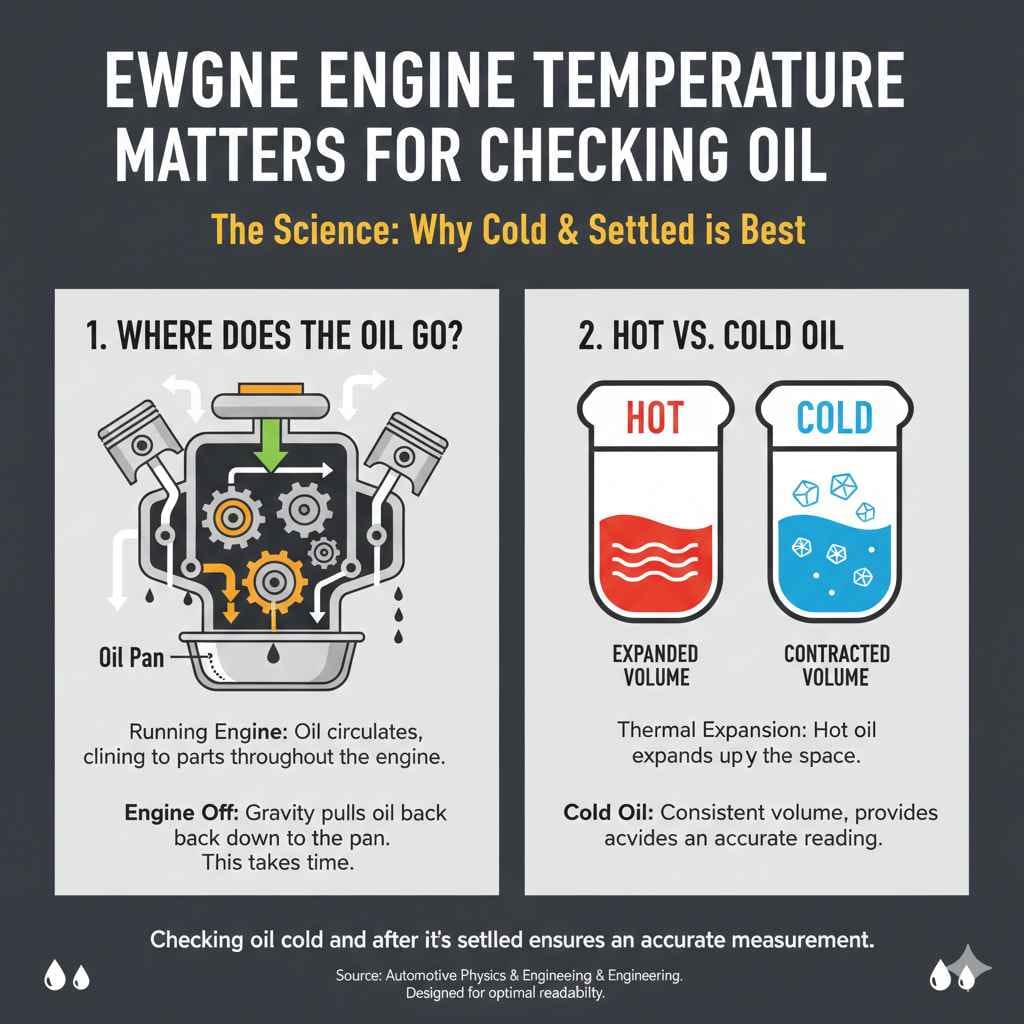
Where Does the Oil Go?
When your engine is running, an oil pump sends oil from a reservoir at the bottom, called the oil pan, up through the engine. It coats the pistons, crankshaft, and all the other fast-moving components. This means a good amount of your oil is constantly circulating and clinging to parts all over the engine’s interior.
When you turn the engine off, gravity takes over. The oil slowly starts to drip back down into the oil pan. This process takes time. If you try to check the level right after shutting the engine off, a lot of oil will still be up in the engine, and you’ll get a false low reading on your dipstick.
The Science of Hot vs. Cold Oil
The second piece of the puzzle is something called thermal expansion. It’s a simple rule of physics: when things get hot, they expand. When they get cold, they contract. This applies to liquids, too, including your engine oil.
When your engine is at operating temperature, the oil is hot and has expanded in volume. It takes up more space than it does when it’s cold. While the difference isn’t massive, it can be enough to affect the reading on your dipstick, sometimes by a noticeable amount. Checking it cold gives you a consistent baseline because the oil is at a stable temperature and volume.
The Best Way: Checking Your Engine Oil When It’s Cold
For consistency and accuracy, the gold standard is checking your oil when the engine is cold. This method eliminates the two biggest variables: circulating oil and expanded oil. It gives you the truest measurement of how much oil is resting in your pan, ready to be used.
What “Cold” Really Means for Your Engine
When we say “cold,” we don’t mean the outside temperature is freezing. A “cold engine” is simply one that has not been run for a while. The ideal time is first thing in the morning before you start your car for the day. Alternatively, letting the car sit for at least a few hours is usually sufficient. This ensures two things have happened:
- All the oil has had plenty of time to drain from the engine components and settle in the oil pan.
- The oil has cooled down to the ambient air temperature, so thermal expansion is not a factor.
Step-by-Step Guide to Checking Cold Engine Oil
Checking your oil is a simple, 2-minute task that can save you from major headaches down the road. Follow these steps for a perfect cold reading.
- Park on Level Ground: This is the most important first step. If your car is on a slope, the oil in the pan will tilt to one side, giving you an inaccurate reading. Find the flattest spot in your driveway or garage.
- Open the Hood and Locate the Dipstick: Secure your hood with its prop rod. The engine oil dipstick usually has a brightly colored handle (often yellow or orange) with an icon of an oil can on it. If you’re not sure, your owner’s manual will show you exactly where it is.
- Pull the Dipstick Out: Firmly grip the handle and pull the dipstick all the way out. Have a clean paper towel or a rag ready.
- Wipe the Dipstick Clean: Use your paper towel to wipe the entire metal part of the dipstick, from the handle down to the tip. This removes the old oil that was splashed around while the engine was last running.
- Fully Re-insert the Dipstick: Push the dipstick all the way back into its tube. Make sure it goes in completely until the handle is seated properly. This is crucial for getting an accurate measurement.
- Pull It Out Again to Read the Level: Pull the dipstick out one more time, but this time, be careful not to turn it or wipe it. Look at the very end of the dipstick. You will see two marks, which could be lines, holes, or a cross-hatched area. The oil level is the highest point where you see a solid film of oil.
- Check the Level and Oil Condition: A healthy oil level is between the two marks. It should not be above the top mark or below the bottom one. Also, look at the oil itself. Healthy oil is typically amber or brownish. If it’s black, gritty, or looks milky, it’s time for an oil change.
- Put the Dipstick Back: Once you’re done, push the dipstick firmly back into its tube. Close the hood, and you’re all set!
Pros and Cons of the Cold Check Method
Like any method, there are upsides and downsides. Here’s a quick breakdown to help you understand why the cold check is preferred.
| Aspect | Pros (Advantages) | Cons (Disadvantages) |
|---|---|---|
| Accuracy | This is the most accurate and consistent method. The oil is settled and not expanded by heat, giving you a true measurement. | None. In terms of accuracy, this is the best way. |
| Convenience | It’s easy to build into a morning routine before you start your day. | It’s inconvenient if you’re at a gas station or just finished a drive and suddenly remember to check your oil. You have to wait. |
| Safety | The engine components are cool, so there is zero risk of burning yourself on a hot manifold or engine block. | None. This is the safest method. |
The Practical Way: Checking Your Engine Oil When It’s Warm
Let’s be realistic. You won’t always be able to check your oil first thing in the morning. Sometimes you’re on a road trip, filling up at a gas station, and you want to check your levels. In these cases, checking the oil with a warm engine is perfectly fine, as long as you do it correctly.
When a Warm Check is Necessary or Convenient
A warm check is the go-to method for situations like:
- During a fuel stop on a long trip.
- After an oil change, when a mechanic needs to verify the new oil level.
- If you suspect an oil leak and need to check the level immediately after driving.
The key to a successful warm check is patience. You cannot do it the second you turn the car off.
Step-by-Step Guide to Checking Warm Engine Oil
The process is nearly identical to a cold check, with one critical extra step at the beginning. Get this right, and your reading will be reliable.
- Park on Level Ground and Turn Off the Engine: Just like before, find a flat surface. This is even more important at gas stations, which often have a slight slope for drainage.
- WAIT 5 to 10 MINUTES: This is the most important step! Set a timer on your phone. This waiting period gives most of the oil circulating in the engine enough time to drain back down into the oil pan. If you skip this wait, you are guaranteed to get a false low reading.
- Open the Hood and Be Cautious: Remember, the engine is hot. Be careful not to touch the exhaust manifold or other metal parts. Locate the dipstick.
- Pull, Wipe, Re-insert, and Pull Again: Follow the exact same procedure as the cold check. Pull the dipstick out, wipe it clean with a rag, push it all the way back in, and then pull it out a final time to get your reading.
- Read the Level: The oil level should still be between the two marks. Keep in mind that due to thermal expansion, the level might be slightly higher on the dipstick than it would be during a cold check. This is normal. As long as it’s below the “Full” line, you are good.
Pros and Cons of the Warm Check Method
Knowing when and why to use this method helps you make the right call.
| Aspect | Pros (Advantages) | Cons (Disadvantages) |
|---|---|---|
| Accuracy | It can be reasonably accurate if you wait the required 5-10 minutes for the oil to drain back into the pan. | It’s inherently less accurate than a cold check. Some oil will still be clinging to engine parts, and thermal expansion will make the oil level appear slightly higher. |
| Convenience | Very convenient. You can do it anytime you stop the car for a few minutes, like at a gas station. | The required waiting period can feel like a long time if you’re in a hurry. |
| Safety | You can get the job done when needed. | The engine bay is hot. You must be careful to avoid touching hot components, which can cause serious burns. |
The Big Mistake to Avoid: Checking Oil When the Engine is Hot and Running
There is one scenario that you must always avoid: checking your oil while the engine is running or immediately after shutting it off. This will give you completely wrong information and can be dangerous.
Why It’s a Bad Idea
- Extremely Inaccurate Reading: When the engine is running, the oil pump is actively circulating oil throughout the system. The oil pan is far from full. Checking the dipstick at this time will show a very low oil level, which might trick you into adding more oil. Overfilling the engine is very damaging.
- Serious Safety Risk: The engine bay contains moving parts like belts and fans. Reaching in while the engine is on can lead to severe injury. Furthermore, the engine is at its hottest, and oil can splash out of the dipstick tube, causing burns.
In short: Never check your engine oil while the engine is running. Always turn the car off first.
What About Your Car’s Owner’s Manual? The Final Authority
While the “cold is best, warm is okay” rule applies to the vast majority of vehicles on the road, the single most important source of information is your car’s owner’s manual. Car manufacturers spend millions on research and development, and they know their engines better than anyone.
Always check your manual for the specific procedure they recommend. Some manufacturers, particularly for certain European or high-performance models, may instruct you to check the oil when the engine is warm and at operating temperature. These engines are designed differently, and the dipstick markings are calibrated for warm, expanded oil.
If your manual says to check it warm, follow those instructions. If it doesn’t specify, the cold check method is your most reliable bet. You can often find a digital copy of your car’s manual online or through resources like the National Highway Traffic Safety Administration (NHTSA) website, which provides vehicle information by VIN.
What to Do If Your Oil Level is Low
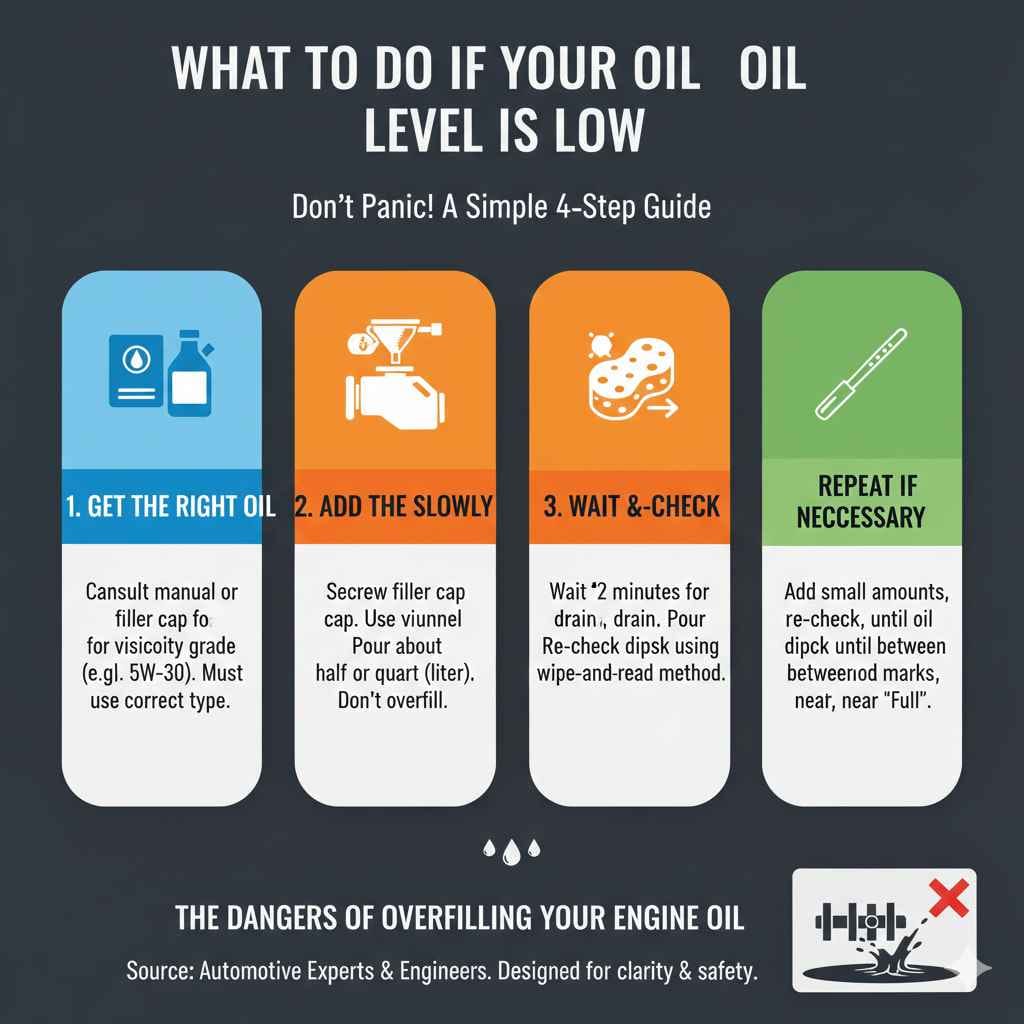
So you’ve checked your oil and the level is at or below the “Add” or “Low” mark. Don’t panic! Topping it off is easy.
- Get the Right Oil: This is critical. Look in your owner’s manual or on the oil filler cap on your engine. You will see a code like “5W-30” or “0W-20.” You must use oil with the correct viscosity (weight). Using the wrong type can harm your engine.
- Add Oil Slowly: Unscrew the oil filler cap. Using a funnel to prevent spills, pour in about a half-quart (or half a liter) of oil. Don’t add a whole quart at once.
- Wait and Re-check: Wait a minute or two for the oil you just added to drain into the pan. Then, check the dipstick again using the wipe-and-read method.
- Repeat if Necessary: If the level is still low, add a little more oil and re-check. Continue this process until the oil level is between the marks. The goal is to get it near the “Full” mark, but not over it.
The Dangers of Overfilling Your Engine Oil
It can be tempting to just dump a whole quart in, but overfilling your engine with oil can cause serious problems. When there’s too much oil, the spinning crankshaft can whip the oil into a foam, like beating egg whites. This foamy oil doesn’t lubricate properly because it’s full of air bubbles. This can lead to:
- Engine Overheating: Poor lubrication creates more friction and heat.
- Increased Pressure: Excess oil can create high pressure inside the engine, which can damage seals and gaskets, leading to oil leaks.
- Poor Performance: Your engine has to work harder to move through the thick, foamy oil, reducing fuel efficiency and power.
Always add oil in small increments and re-check the level to avoid this costly mistake.
Frequently Asked Questions (FAQ)
1. What’s the absolute best time to check my oil?
The best time is in the morning, before you’ve started the car for the day. The car should be parked on a level surface. This gives you the most accurate and consistent reading because the engine is completely cold and all the oil has settled in the oil pan.
2. How long should I wait after driving to check my oil?
If you’re checking the oil on a warm engine, you should turn the car off and wait at least 5 to 10 minutes. This allows enough time for the oil that was circulating through the engine to drain back down into the oil pan, giving you a more accurate reading.
3. Does it really matter if my car is on a hill when I check the oil?
Yes, it matters a lot! Your car must be on level ground. If it’s parked on an incline, the oil in the pan will pool to one side. The dipstick will either read artificially high or artificially low, depending on the direction of the slope. Always find a flat spot.
4. What color should my engine oil be?
New, clean engine oil is a light, amber color. Over time, it will naturally darken to brown or black as it cleans the engine and collects byproducts of combustion. This is normal. However, if the oil on your dipstick looks milky or creamy, it could be a sign that coolant is leaking into your engine—a serious problem that requires immediate attention from a mechanic.
5. How often should I check my engine oil?
It’s a good habit to check your oil at least once a month. If you have an older car that you know consumes some oil, or if you’re about to go on a long road trip, checking it once a week is even better. Regular checks help you catch small problems before they become big ones.
6. Can I use any type of oil if I’m just topping it off?
No, you should always use the specific type of oil recommended by your car’s manufacturer. The viscosity (e.g., 5W-30) is very important for proper engine protection. The correct type will be listed in your owner’s manual and often on the oil cap itself. Using the wrong oil can lead to poor performance and even engine damage.
7. What happens if I don’t check my oil?
Running an engine with low oil is one of the most damaging things you can do to your car. Oil is what lubricates and cools the internal moving parts. Without enough oil, friction and heat build up rapidly, which can lead to catastrophic engine failure. This is an extremely expensive repair, often requiring a full engine replacement. Checking your oil is a free and easy way to prevent this disaster.
Conclusion: Your Simple Car Care Routine
So, should you check car engine oil hot or cold? The ultimate best answer is to check it cold for the most accurate and consistent result. However, checking it warm after waiting 5-10 minutes is a perfectly practical and reliable alternative when you’re on the go.
The most important thing is to be consistent with your method and to check your oil regularly. Making this simple task a part of your routine—whether it’s the first Saturday of the month or every other time you fill up your gas tank—is one of the smartest things you can do for the health and longevity of your vehicle.
You don’t need to be a master mechanic to take great care of your car. By understanding the “why” behind this simple task, you’re building the confidence to stay on top of your car’s needs, save money, and drive with peace of mind. You’ve got this!