
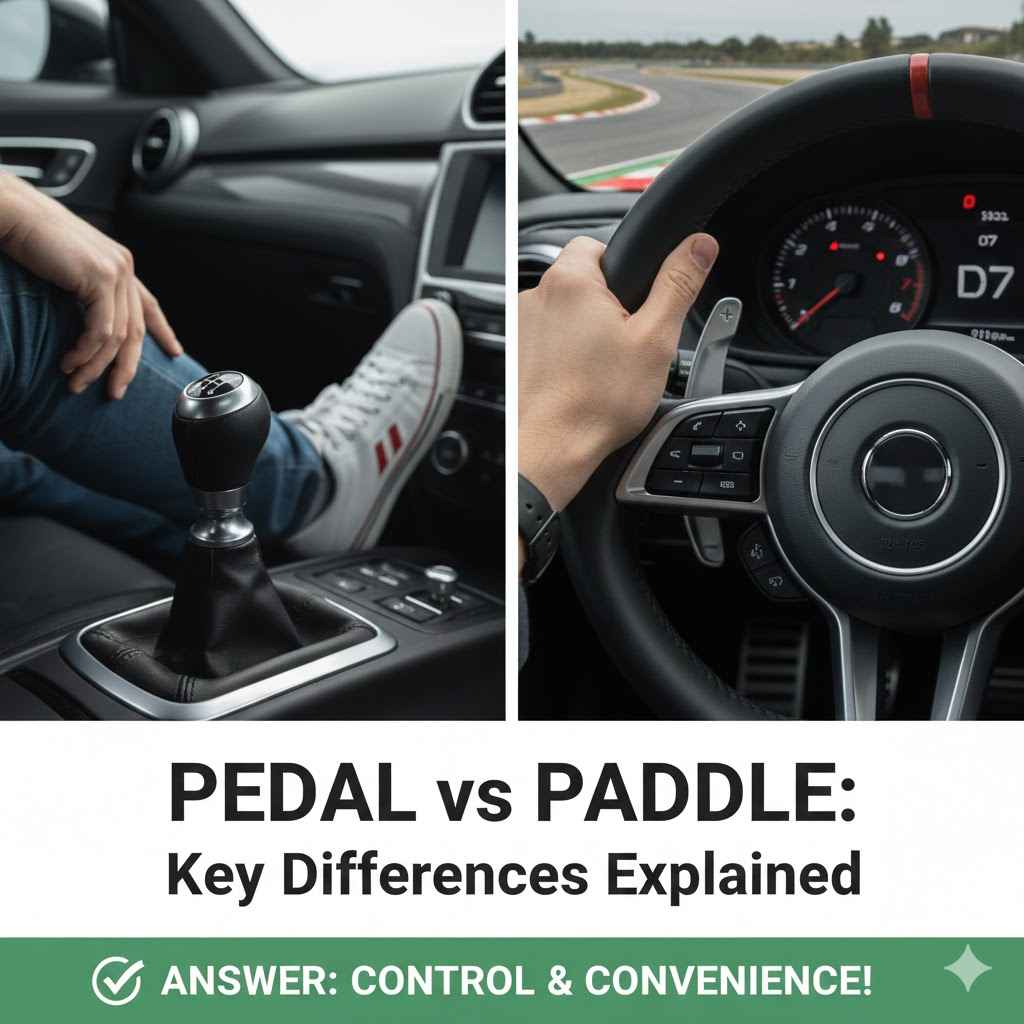
Sometimes, figuring out the right words for water fun can be tricky! People often get confused between things you pedal and things you paddle. This is especially true when you’re just starting out.
Don’t worry, though! We’re here to clear things up easily. Let’s break down the Pedal vs Paddle: Key Differences Explained so you know exactly what you’re looking at.
We’ll make it super simple.
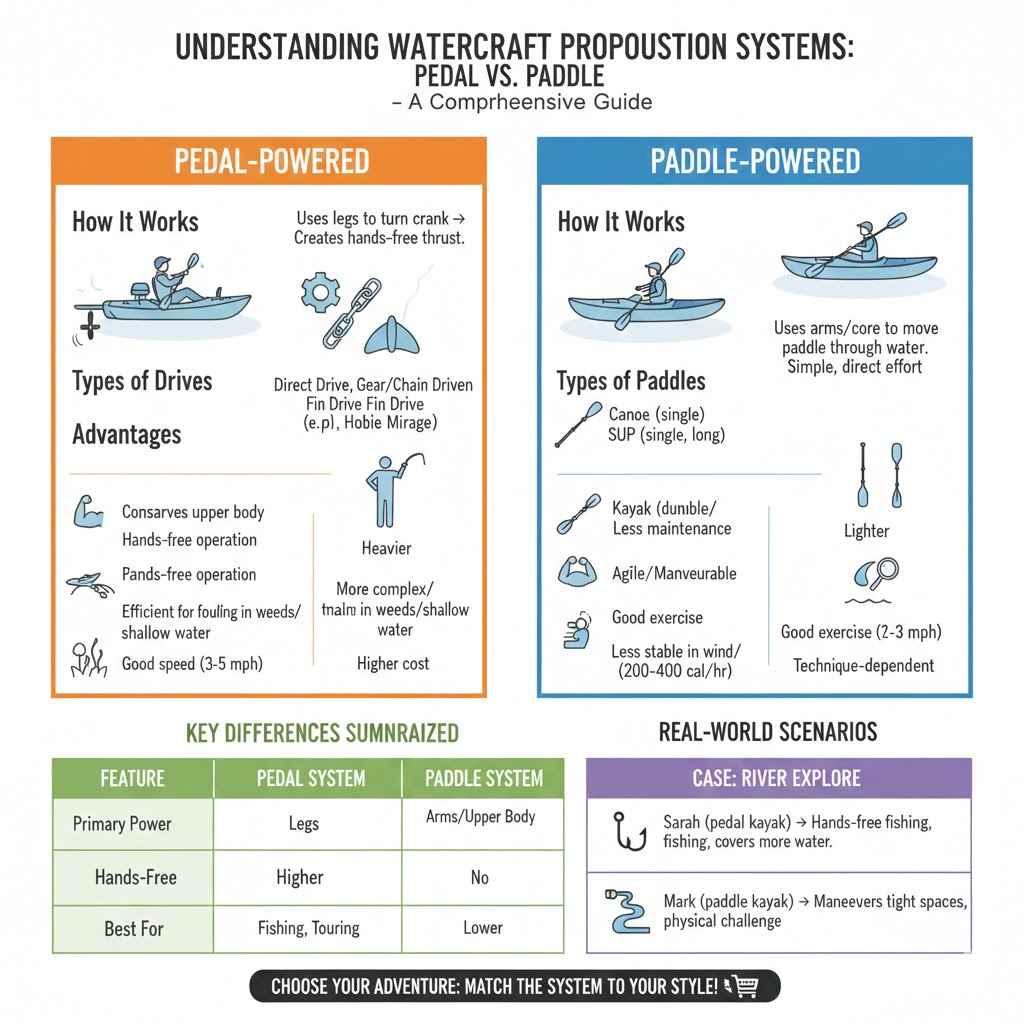
Understanding Watercraft Propulsion Systems
This section looks at how different watercraft move. We’ll explain the main ways people propel themselves on the water. This includes the systems that use your feet to create power and those that use your arms.
Knowing these basics helps you pick the right equipment for your water adventures.
Pedal-Powered Systems
Pedal systems use your legs to turn a mechanism, much like a bicycle. This mechanism then drives a propeller or paddle wheel to move the watercraft forward. It’s a great way to generate consistent power with less upper body strain, making it ideal for longer trips or for those who want a more relaxed experience.
How Pedal Systems Work
The core of a pedal system is a crankset and drive mechanism. When you pedal, you rotate the crank, which in turn spins gears or a chain. This motion is transferred to a propeller shaft or a paddle wheel.
The rotation of the propeller or paddle wheel pushes water, creating thrust. This can be done via a direct drive, a belt, or a chain. Many modern pedal kayaks use a fin or propeller system that sits below the hull, providing efficient propulsion without needing to constantly adjust your position.
Types of Pedal Drives
There are a few main types of pedal drives. Direct drive systems connect the pedals directly to the propeller shaft, offering simplicity and fewer parts to break. Gear-driven systems use a series of gears to transfer power, often allowing for different gear ratios to adjust speed and effort.
Belt-driven systems use a durable belt to connect the pedals to the propeller, which can be quieter and smoother than chain drives. Each type has its pros and cons in terms of efficiency, maintenance, and cost.
Advantages of Pedal Power
Using pedal power offers several benefits. It conserves your upper body strength, which is great for fishing or long-distance paddling where you might need your arms for casting or maneuvering. It also allows for hands-free operation, giving you the freedom to use fishing rods or cameras.
Pedal systems can be quite efficient, allowing for good speeds and stable movement through the water. This makes them a popular choice for recreational users and anglers alike.
Disadvantages of Pedal Power
Despite the advantages, pedal systems do have drawbacks. They can add significant weight and bulk to a watercraft, making it harder to transport and store. The mechanical components can also require more maintenance and are susceptible to damage from impacts or saltwater corrosion.
In shallow or weed-choked waters, the propeller or fins can easily get fouled, requiring you to stop and clear them. The initial cost of a pedal-driven watercraft is also typically higher than a paddle-only version.
A common statistic is that experienced pedal kayakers can maintain speeds of 3-5 miles per hour consistently, whereas casual paddle kayakers might average 1-3 miles per hour. This efficiency allows for covering more ground in less time.
Paddle-Powered Systems
Paddle systems rely on human arm strength to move a paddle through the water. This is the most traditional and simplest way to propel a watercraft. It requires direct physical effort with your arms and core, offering a more engaging and often more agile way to move.
How Paddle Systems Work
In a paddle system, the user holds a paddle and uses their arms, shoulders, and core muscles to move it through the water. For kayaks, this usually involves a double-bladed paddle, where you alternate strokes on each side. For canoes, a single-bladed paddle is used, with strokes taken from one side.
The paddle acts as a lever, applying force to the water to create forward motion. The technique and efficiency vary greatly depending on the type of paddle, the craft, and the user’s skill.
Types of Paddles
Paddles come in various forms, each suited to different types of watercraft and activities. Kayak paddles are typically double-bladed, made from lightweight materials like carbon fiber or aluminum, with different blade shapes optimized for speed, stability, or maneuverability. Canoe paddles are usually single-bladed and can be made from wood, plastic, or composite materials, with varying lengths and blade sizes.
Stand-up paddleboards (SUPs) use long, single-bladed paddles. The choice of paddle significantly impacts the paddling experience.
Advantages of Paddle Power
Paddle-powered watercraft are generally lighter and simpler than their pedal-driven counterparts. This makes them easier to transport, store, and handle on land. They are also usually more affordable.
Paddling offers a more direct connection with the water and allows for greater maneuverability, making it excellent for exploring tight spaces, rocky coastlines, or navigating shallow areas where a pedal drive might be too cumbersome. It’s also a fantastic form of exercise for the upper body and core.
Disadvantages of Paddle Power
The primary disadvantage of paddle power is that it relies heavily on upper body strength and endurance. For longer trips or against strong currents, this can lead to fatigue much quicker than with a pedal system. Achieving high speeds can also be more challenging and requires more effort.
In some situations, like strong winds or waves, controlling a paddle craft can be more difficult compared to a more stable pedal-driven boat. Finding the right paddling technique also takes practice.
Studies show that paddling can burn a significant number of calories, with an average person burning 200-400 calories per hour depending on the intensity and type of paddling. This highlights its effectiveness as a workout.
Key Differences Summarized
The core distinction between pedal and paddle systems lies in the primary source of propulsion and the mechanism used. Pedal systems use your legs to power a mechanical drive, typically a propeller or paddle wheel. This offers efficiency and hands-free operation, often at the cost of added complexity, weight, and expense.
Paddle systems use your arms and upper body to directly move a paddle through water, providing simplicity, maneuverability, and a great workout, but can lead to quicker fatigue over long distances.
Comparison Table Pedal vs Paddle
| Feature | Pedal System | Paddle System |
|---|---|---|
| Primary Power Source | Legs (pedaling) | Arms and Upper Body (paddling) |
| Mechanism | Propeller, paddle wheel, or fins driven by crank | Paddle moved through water |
| Hands-Free Operation | Yes | No |
| Typical Speed | Moderate to High | Slow to Moderate |
| Effort Distribution | Legs, less upper body strain | Upper body, core |
| Complexity | Higher (mechanical parts) | Lower (simple paddle) |
| Weight and Portability | Heavier, less portable | Lighter, more portable |
| Cost | Generally Higher | Generally Lower |
| Best For | Fishing, touring, longer distances, ease of use | Exploring, maneuverability, exercise, shallow waters |
Real-World Scenarios
Imagine Sarah wants to go fishing on a lake. She values the ability to cast her line and reel in a catch without constantly needing to paddle. A pedal kayak allows her to maintain a steady position, keeps her hands free, and lets her cover more water to find the best fishing spots.
She can also pedal slowly or even stop without losing her position easily.
Then there’s Mark, who loves exploring small, winding rivers and coves. He needs to be able to quickly change direction, maneuver around obstacles like fallen logs, and get into very shallow areas. A lightweight, paddle-powered kayak or canoe gives him the agility and control he needs.
He enjoys the physical challenge and the close connection to his surroundings that paddling provides.
Another scenario involves a family on a calm bay. The parents might choose pedal kayaks for a more relaxed pace, allowing them to chat and enjoy the scenery. Their children, however, might opt for paddle kayaks to develop their paddling skills and feel more actively involved in propelling the boat.
This shows how different propulsion methods can coexist and cater to varied preferences on the same outing.
Choosing the Right System For You
Deciding between pedal and paddle power depends on what you plan to do on the water. If your main goal is to go fishing, explore open waters for extended periods, or if you have limited upper body strength, a pedal system might be your best bet. It lets you focus on your activity without the constant effort of paddling.
However, if you enjoy a good workout, love exploring tight spaces and rivers, or need something simple and easy to transport, a paddle system is likely the way to go. The flexibility and affordability of paddle craft are hard to beat for many recreational users.
Consider your physical fitness. If you enjoy upper body exercise, paddling is excellent. If you prefer using your legs or have concerns about arm fatigue, pedaling is a good option.
Also, think about where you will be using the watercraft. Shallow, weed-filled waters might be difficult for pedal drives. Open water with wind might be more manageable with the stability of some pedal kayaks.
Environmental Factors and Watercraft Interaction
This section examines how different water conditions and environments affect the performance and usability of both pedal and paddle watercraft. We will look at how wind, currents, water depth, and the presence of aquatic vegetation can influence your choice and experience.
How Water Conditions Affect Performance
Water conditions play a significant role in how efficiently and enjoyably you can use either a pedal or paddle craft. Strong headwinds can make paddling very tiring as you constantly fight against the wind. While pedaling also requires effort, the continuous leg motion might be less fatiguing for some than repeated arm strokes.
In areas with strong currents, a paddle craft might be easier to maneuver for quick turns or to position yourself, whereas a pedal drive could offer a steadier push against a mild current.
Water depth is another critical factor. Pedal drives, with their propellers or fins located below the hull, can be vulnerable in very shallow water. They risk hitting rocks, submerged objects, or getting tangled in weeds.
This can lead to damage or getting stuck. Paddle craft, on the other hand, often have a shallower draft and the paddle itself can be lifted over obstacles. This makes them generally better suited for exploring shallow rivers, tidal flats, or areas with dense aquatic plant life.
The presence of weeds or submerged debris is a major consideration. Weeds can easily wrap around a pedal propeller, stopping it completely and requiring manual clearing. While weeds can also affect paddle strokes, they are less likely to immobilize the craft entirely.
Kayakers and canoeists can often pull their paddles free from weeds with a strong tug or by using a different stroke technique. This makes paddle craft a more reliable choice for environments prone to significant weed growth.
Real-Life Examples in Different Environments
Consider a kayaker named Alex who loves fishing in coastal mangrove tunnels. These areas are often shallow and filled with submerged roots and debris. Alex uses a paddle kayak because it allows him to easily lift his paddle over obstacles and maneuver through tight spaces.
A pedal kayak would likely get its drive system fouled by the dense vegetation, making it impractical for this type of exploration.
On the other hand, Maria enjoys long-distance touring on large, open lakes. She wants to cover many miles each day and appreciates the ability to maintain a consistent speed without her arms getting tired. Maria uses a pedal kayak.
It allows her to pedal for hours, conserve her upper body for other tasks like setting up camp or using binoculars, and efficiently cover the vast distances of the lake.
A third example is a group of friends on a whitewater river trip. They all use specialized whitewater canoes and kayaks equipped with durable, single-bladed paddles. The agility and quick maneuverability offered by paddling are essential for navigating rapids, avoiding rocks, and performing quick turns.
The constant adjustments and the need to paddle backward or sideways in challenging sections would be extremely difficult, if not impossible, with a fixed pedal drive system.
Statistics from outdoor recreation surveys indicate that over 60% of recreational boaters engage in activities where maneuverability and access to shallow areas are important, suggesting a strong preference for paddle-powered craft in certain types of exploration.
Maintenance and Durability
Pedal-driven watercraft, by their nature, have more moving parts. This means they generally require more maintenance. Components like gears, chains, belts, and the drive shaft can be susceptible to wear and tear, rust, and damage from impacts.
Regular cleaning, lubrication, and inspection are crucial to keep them in good working order. Saltwater, in particular, can accelerate corrosion if not rinsed off thoroughly after each use.
Paddle-powered watercraft are much simpler. The main components are the paddle itself and the craft. Paddles can wear down, especially their edges, and may need occasional repairs or
The complexity of pedal drives also means that if a major component fails, it can be expensive to repair or
Choosing the Right Equipment for Your Needs
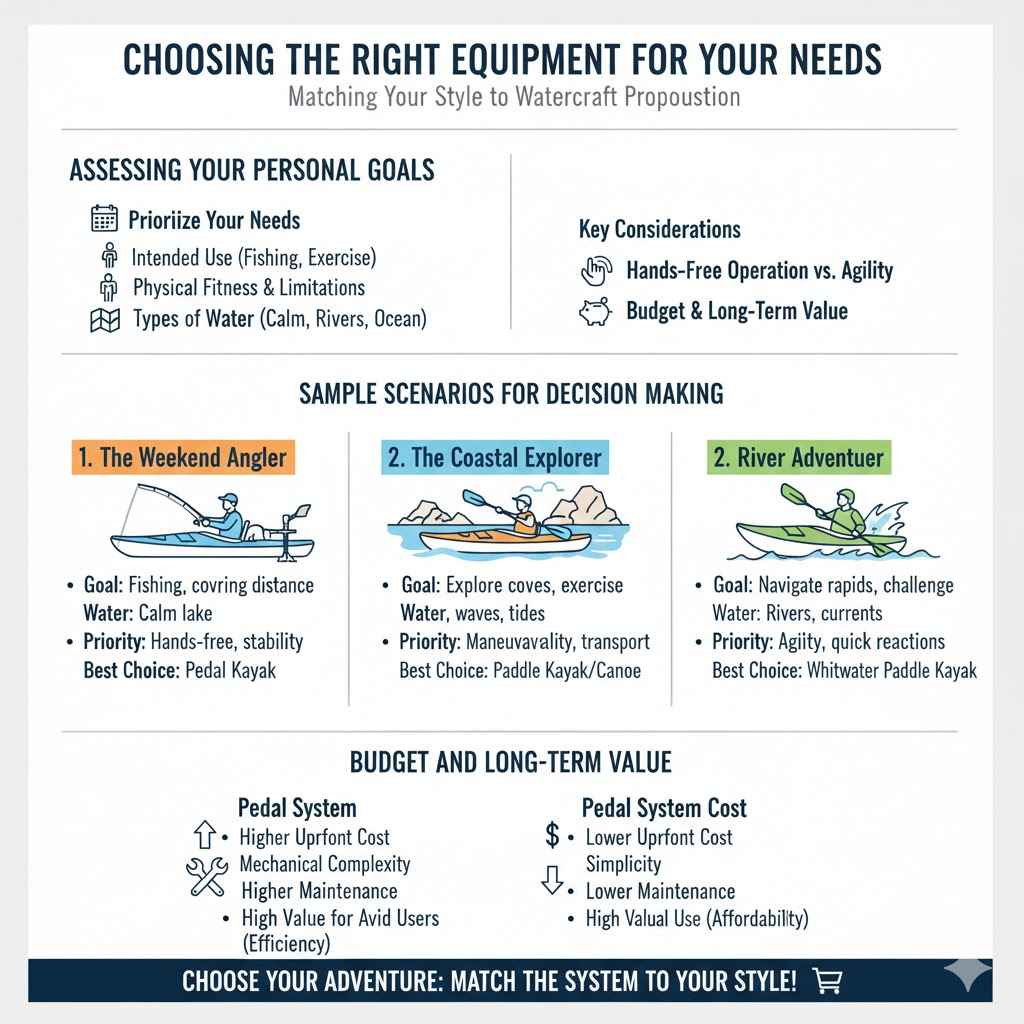
This section helps you make an informed decision by matching the characteristics of pedal and paddle systems to your personal preferences, intended use, and physical capabilities. We will guide you through the thought process of selecting the best option for your water adventures.
Assessing Your Personal Goals
Your primary goals on the water should be the starting point for your decision. Are you looking for a peaceful way to explore your local lake, perhaps with a focus on fishing? Or do you crave the thrill of navigating challenging rivers and exploring remote coastlines?
If fishing is a high priority, especially in areas where you might want to cast and retrieve freely, a pedal kayak could be very advantageous.
If your goal is pure exercise and a deep connection with the environment, or if you plan to explore very shallow or vegetated waters, a paddle craft might be more suitable. Think about how much you value hands-free operation versus the simplicity and agility of paddling. Your fitness level and any physical limitations are also key considerations.
If you have issues with your arms or shoulders, pedaling might be more comfortable.
Consider the types of water you’ll most frequently be on. Are they calm, open waters, or do they involve currents, tides, and wind? Will you be launching from sandy beaches, rocky shores, or docks?
These practical aspects can heavily influence which system is more practical for you.
Sample Scenarios for Decision Making
- Scenario 1: The Weekend Angler You love fishing and spend most of your weekends on a large, relatively calm lake. You want to be able to cast, reel, and handle fish easily, while also covering ground to find good spots. You don’t mind a slightly heavier craft if it means more efficient fishing.
A pedal kayak would likely be ideal here. The hands-free operation lets you focus on fishing. The efficiency helps you explore more of the lake. The stability of many pedal kayaks is also a plus for casting. - Scenario 2: The Coastal Explorer You enjoy venturing along the coast, exploring coves, and paddling in areas with some waves and tidal currents. You also want to be able to easily transport your watercraft to different locations. You are moderately fit and enjoy the physical aspect of paddling.
A paddle kayak or a lightweight canoe would be a better fit. The maneuverability is crucial for coastal exploration. The lighter weight makes transport easier. The simplicity of a paddle system means less can go wrong in a saltwater environment, and you can more easily lift your paddle over shallow areas or kelp beds. - Scenario 3: The River Adventurer You are drawn to the challenge of moving water and enjoy navigating rivers, including some moderate rapids and shallow sections. You prioritize agility and the ability to react quickly to changing conditions.
A paddle-powered whitewater kayak or a nimble canoe is the clear choice. The responsiveness and control offered by paddling are essential for river navigation. Pedal drives are generally not designed for the dynamic and often turbulent conditions found in rivers, and their fixed nature would be a significant hindrance.
Statistics from recreational boating surveys indicate that approximately 70% of users prioritize ease of transport and storage when choosing a watercraft, favoring lighter, paddle-powered options for everyday use.
Budget and Long-Term Value
When considering your budget, remember that pedal-driven watercraft typically have a higher upfront cost due to their mechanical complexity. You’re paying for the engineered drive system. However, for avid users, the efficiency and ease of use might justify this higher initial investment.
The long-term value comes from the enhanced experience and capabilities they offer for specific activities like fishing or touring.
Paddle crafts are generally more affordable, making them a great entry point for beginners or those on a tighter budget. Their lower cost, combined with their simplicity and reduced maintenance needs, can offer excellent long-term value for casual use. If your needs are basic or you plan to use the watercraft infrequently, a paddle craft is likely the more economical choice.
It’s also worth considering the potential repair costs. While pedal drives offer advanced technology, any mechanical system can eventually require maintenance or replacement parts, which can add to the long-term expense. Simple paddle crafts, on the other hand, have fewer parts that can fail, leading to lower ongoing costs.
However, the durability of high-end paddle materials (like carbon fiber) can also be quite costly initially.
Frequently Asked Questions
Question: What is the main difference between pedaling and paddling?
Answer: The main difference is how you move the watercraft. Pedaling uses your legs to turn a propeller or paddle wheel, similar to a bicycle. Paddling uses your arms to move a paddle through the water.
Question: Which is better for fishing pedal or paddle kayaks?
Answer: For fishing, pedal kayaks are often preferred because they allow you to keep your hands free for casting and reeling, and you can maintain a steady position. However, paddle kayaks can be more maneuverable in tight spots.
Question: Are pedal kayaks harder to transport than paddle kayaks?
Answer: Yes, pedal kayaks are generally heavier and bulkier due to the pedal drive system, making them harder to transport and store than simpler paddle kayaks.
Question: Which system is easier to learn for a beginner?
Answer: Paddling is often considered easier to learn initially as it’s more intuitive. However, pedaling can be more physically comfortable for beginners who may tire quickly from paddling.
Question: Can I convert a paddle kayak to a pedal kayak?
Answer: In some cases, yes. Aftermarket pedal drive kits are available for certain kayak models, allowing for conversion, but it requires compatibility and often a significant modification.
Final Thoughts
Choosing between a pedal and paddle system really comes down to what kind of fun you want on the water. Pedaling offers a hands-free, leg-powered way to glide efficiently, great for longer trips. Paddling gives you simple, agile control with a great upper-body workout.
Both are fantastic ways to enjoy the water; just pick the one that best fits your adventures.