
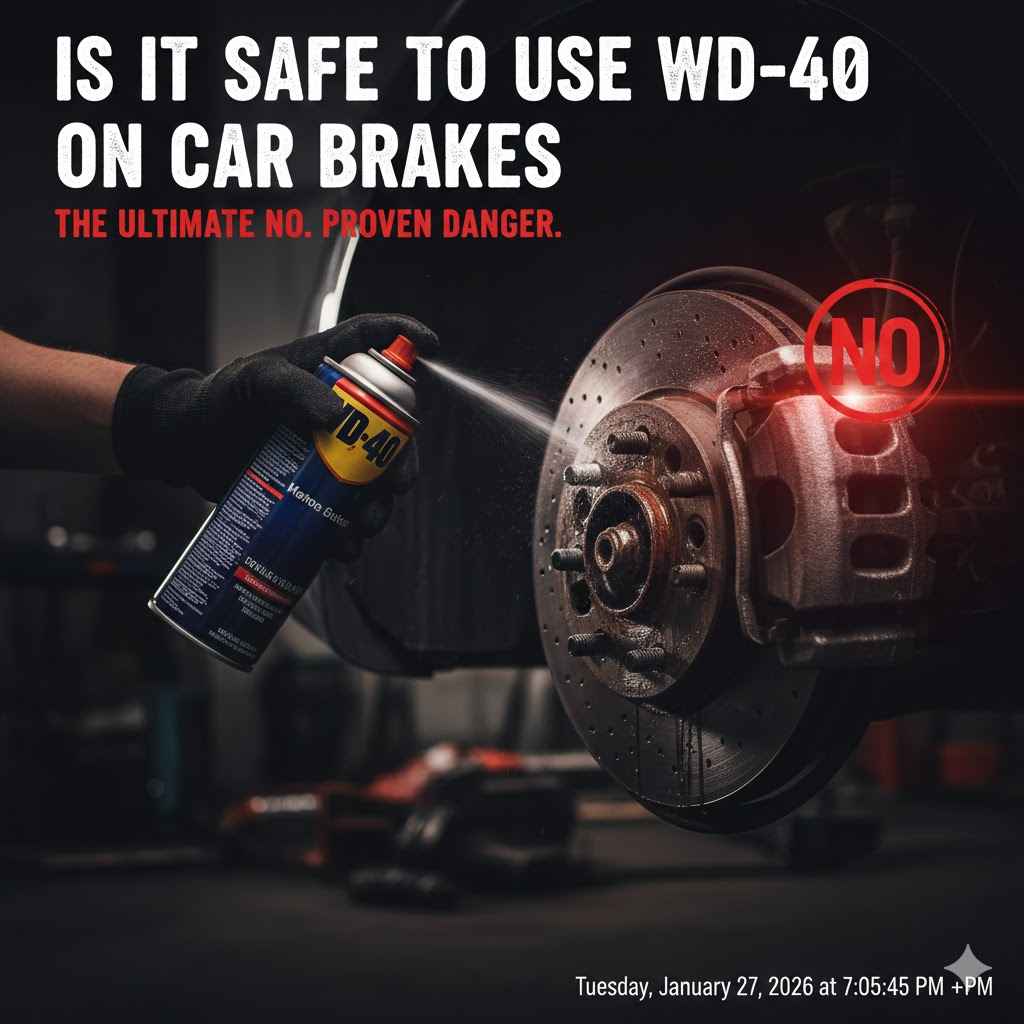
Never use WD-40 on your car’s brakes. It is a lubricant that will contaminate your brake pads and rotors, severely reducing their ability to create the friction needed to stop your car. This is extremely dangerous and can lead to complete brake failure. Always use a dedicated brake cleaner instead.
Hearing that high-pitched squeal every time you press the brake pedal is one of the most annoying sounds a car can make. It’s a common problem, and it’s natural to want a quick fix. You might look at that trusty can of WD-40 on your shelf and think, “This stops squeaks, right?” It’s a logical thought, but one that could have very dangerous consequences for your car and your safety.
I get it. Car care can seem complicated, and you just want a simple solution to a simple problem. The good news is, you’ve come to the right place. We’re going to break down exactly why WD-40 and brakes don’t mix, what’s actually causing that noise, and how you can fix it the right way—safely and easily. Let’s get you back on the road with confidence.
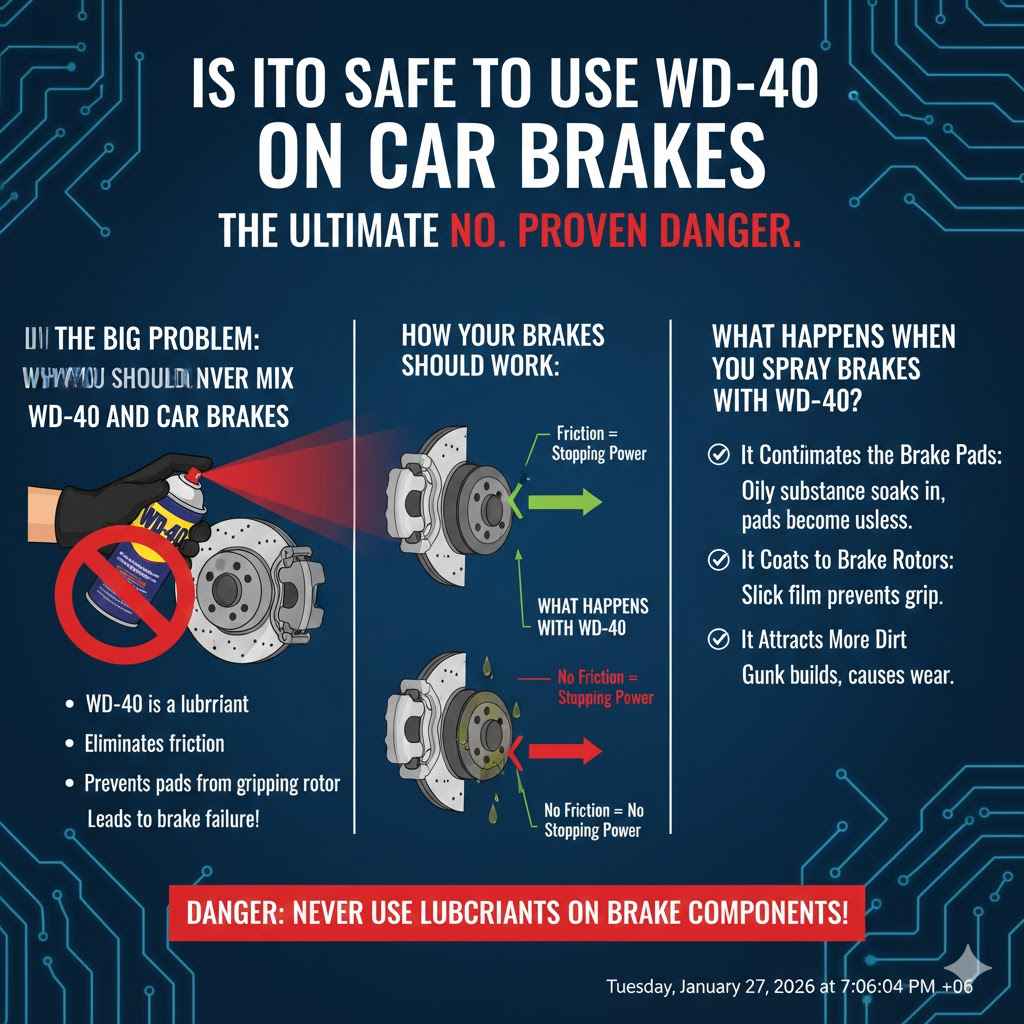
The Big Problem: Why You Should Never Mix WD-40 and Car Brakes
Let’s get straight to the point. Spraying WD-40 on your brake components is one of the most dangerous mistakes you can make while working on your car. It might seem like a harmless idea to quiet a squeak, but you are creating a recipe for disaster.
To understand why, you need to know what WD-40 actually is. The “WD” stands for “Water Displacement.” Its primary job is to get rid of moisture and protect metal from rust. It’s also a light lubricant and a solvent that can free up stuck parts. While it’s a fantastic product for many things around the house and garage, its lubricating properties are exactly what makes it so hazardous for your brakes.
Your car’s braking system works on a very simple principle: friction. When you press the brake pedal, brake pads clamp down on a spinning metal disc called a rotor. The friction between the pads and the rotor is what slows your wheels and brings your car to a stop. Think of it like rubbing your hands together to warm them up—that friction creates resistance and heat.
Now, imagine rubbing your hands together after putting lotion on them. They just slide past each other, right? There’s almost no friction. That’s exactly what happens when you spray WD-40 on your brakes. The oily residue coats the brake pads and rotors, eliminating the friction they need to work. Your brake pedal might feel normal, but when you need to stop, the pads will just slip and slide against the rotor. Your stopping distance will increase dramatically, or worse, you might not be able to stop at all.
What Happens When You Spray Brakes with WD-40?
- It Contaminates the Brake Pads: Brake pads are made of a porous, fibrous material designed to grip the rotor. When you spray them with WD-40, the oily substance soaks deep into the pad material. It’s like trying to get oil out of a sponge—it’s nearly impossible. The pads become permanently contaminated and useless.
- It Coats the Brake Rotors: The oil will also create a slick film over the surface of your metal brake rotors. This film acts as a barrier, preventing the brake pads from getting a solid grip.
- It Attracts More Dirt: The oily residue left by WD-40 is a magnet for brake dust, dirt, and road grime. This gunk can build up in your brake system, causing other problems and potentially leading to uneven wear and more noise down the road.
Using WD-40 on your brakes is the equivalent of pouring oil on them. It’s a direct path to brake failure, and no amount of “quiet” is worth that risk.
So, What Is WD-40 Good For on a Car?
Now, don’t get me wrong, WD-40 is an incredibly useful tool to have in your garage. You just have to use it for the right jobs. It excels at loosening rusted bolts, silencing squeaky door hinges, and protecting metal tools from corrosion. It’s a great multi-purpose product, but it is not a “fix-all” for every automotive problem.
Here’s a simple table to help you remember the do’s and don’ts of using WD-40 on your vehicle.
| Safe Uses for WD-40 on Your Car (The “Do’s”) | Places to NEVER Use WD-40 on Your Car (The “Don’ts”) |
|---|---|
| Loosening rusted lug nuts or bolts (wipe off excess before driving). | Brake pads, rotors, or calipers. |
| Cleaning grease and grime off metal parts (not brake components). | Tire treads or sidewalls. |
| Displacing moisture from a distributor cap or spark plug wires. | Anywhere near the friction surfaces of the clutch. |
| Lubricating squeaky door hinges or hood latches. | On polycarbonate or clear polystyrene plastics (like some headlights). |
| Protecting chrome parts from moisture and light rust. | As a primary lubricant for engine parts or bearings. |
The golden rule is simple: if a part relies on friction to work (like brakes or clutches), keep WD-40 far away from it.
The Real Reasons Your Brakes Are Squeaking
Okay, so we’ve established that WD-40 is out. But you still have that annoying squeak. What’s actually causing it? Brake noise is your car’s way of talking to you, and it’s usually pointing to one of a few common issues.
1. Your Brake Pads Are Worn Out
This is the most common and important reason for squealing brakes. Most brake pads have a small metal tab built into them called a “wear indicator.” When your brake pads wear down to a certain minimum thickness, this metal tab starts scraping against the brake rotor. It’s designed to make a loud, high-pitched squeal to alert you that it’s time for new brake pads. This is a safety feature—don’t ignore it!
2. Glazed or Dirty Rotors and Pads
Sometimes, the surface of your brake pads or rotors can become hardened and smooth, a condition known as “glazing.” This can happen from heavy braking that creates a lot of heat. A glazed surface doesn’t grip as well and can cause a squeal. Similarly, brake dust, dirt, and road grime can build up and cause noise.
3. Lack of Proper Lubrication (On the Right Parts!)
This is where things can get confusing, and it’s why people mistakenly reach for WD-40. Your brake system does need lubrication, but only in very specific, non-friction areas. There are metal-to-metal contact points—like where the brake pads rest in the caliper bracket or on the caliper slide pins—that need a special high-temperature brake lubricant to prevent vibration. When this grease wears out, the vibration can cause a squeak.
4. Morning Squeaks from Moisture
Have you ever noticed your brakes squeak for the first few stops in the morning, especially on a damp day? This is usually caused by a thin layer of rust that forms on the metal rotors overnight from humidity or rain. This is perfectly normal and typically goes away after a few minutes of driving as the brake pads wipe the rust layer off.
The Right Way to Fix Squeaky Brakes: A Safe, Step-by-Step Guide
Now for the good part: how to fix the squeak correctly. Instead of a temporary (and dangerous) spray, let’s address the root cause. The first and best tool for any brake job is a dedicated brake cleaner.
What is Brake Cleaner?
Brake cleaner is a powerful chemical solvent designed specifically to clean brake parts. Unlike WD-40, it evaporates almost instantly and leaves absolutely no residue behind. Its job is to blast away brake dust, oil, grease, and any other contaminants, leaving the surfaces perfectly clean for optimal friction and performance.
Step-by-Step Cleaning Process
If your squeak is caused by dirt or grime, a thorough cleaning might be all you need. Here’s how to do it safely.
- Gather Your Tools: You will need a can of brake cleaner, a lug wrench, a car jack, jack stands, and some clean rags. Always prioritize safety.
- Park on a Level Surface: Park your car on solid, level ground. Engage the parking brake and put the car in “Park” (or in gear for a manual).
- Loosen the Lug Nuts: Before lifting the car, use your lug wrench to slightly loosen the lug nuts on the wheel you’ll be working on. Don’t remove them completely yet.
- Safely Lift the Car: Place the jack on your car’s designated jack point and lift it until the tire is off the ground. Immediately secure the car with a jack stand. The National Highway Traffic Safety Administration (NHTSA) stresses the importance of proper vehicle lifting procedures for safety. Never work under a car supported only by a jack.
- Remove the Wheel: Finish unscrewing the lug nuts and remove the wheel to expose the brake assembly (caliper and rotor).
- Spray Everything with Brake Cleaner: Put on safety glasses. Generously spray the brake cleaner all over the caliper, the rotor, and the visible parts of the brake pads. The goal is to wash all the dust and grime away. You’ll see black gunk dripping onto the ground—that’s a good thing!
- Wipe and Dry: Use a clean rag to wipe down the components if needed, but in most cases, the spray is enough. Brake cleaner evaporates very quickly, so it won’t take long to dry. Make sure everything is completely dry before you proceed.
- Reassemble: Put the wheel back on, hand-tighten the lug nuts, lower the car until the tire just touches the ground, and then use your lug wrench to fully tighten the nuts in a star pattern. Finally, lower the car completely.
After cleaning, take your car for a slow test drive in a safe area to see if the noise is gone. If the squealing persists, it’s likely a sign of worn pads or another issue that needs a closer look from a qualified mechanic.
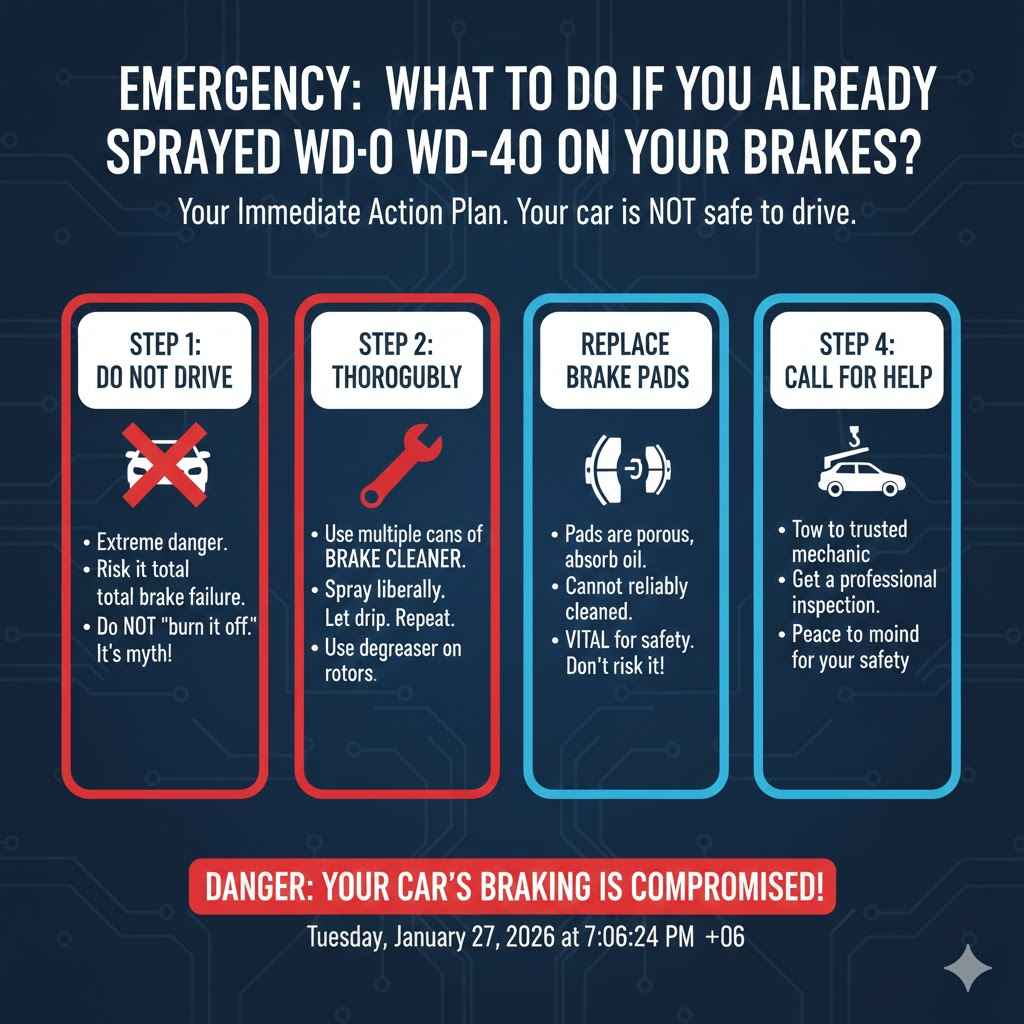
What If I Already Sprayed WD-40 on My Brakes?
If you’re reading this article after you’ve already sprayed WD-40 on your brakes, don’t panic, but you must take immediate action. Your car is not safe to drive.
Immediate Action Plan:
- DO NOT DRIVE THE CAR. PERIOD. This cannot be stressed enough. Your ability to stop is severely compromised. Do not attempt to “burn it off” by driving. This is a myth and will only put you and others in extreme danger.
- Clean It Off Immediately: If you just sprayed it, you might be able to wash most of it off. Get several cans of brake cleaner and follow the cleaning steps above. Use the entire can for each affected brake assembly. Spray liberally and let it drip off. Repeat this process two or three times to try and flush away as much of the WD-40 as possible.
- Assess the Brake Pads: This is the crucial part. The porous brake pads will have absorbed the oil. In 99% of cases, the brake pads are ruined and must be replaced. There is no reliable way to clean the oil out of them once it has soaked in. It’s a cheap and vital part—don’t risk it.
- Clean the Rotors Thoroughly: The metal rotors can usually be saved. After spraying with brake cleaner, scrub them with hot soapy water (like dish soap, which is a degreaser) and a coarse brush. Rinse them completely and then spray them one last time with brake cleaner to remove any soap residue.
- When In Doubt, Call for Help: If you are not 100% confident you have removed all the contamination and replaced the necessary parts, do not drive the car. Have it towed to a trusted mechanic. It’s a small price to pay for your safety.
Choosing the Right Product for the Job
Knowing which product to use is half the battle. This simple table breaks down the three key chemicals you might see when working on brakes.
| Product | Primary Purpose | Where to Use It | Leaves Residue? |
|---|---|---|---|
| WD-40 | Water Displacement, Light Lubrication, Loosening Rust | Door hinges, stuck bolts, protecting metal tools. NEVER on brake friction surfaces. | Yes, an oily film. |
| Brake Cleaner | Cleaning & Degreasing | Directly on brake rotors, calipers, pads, and drums to remove oil, dust, and grime. | No, evaporates completely. |
| Brake Caliper Grease | High-Temperature Lubrication | On caliper slide pins, backs of brake pads (metal-to-metal contact), and bracket contact points. NEVER on pad or rotor surfaces. | Yes, a thick, non-melting grease. |
Frequently Asked Questions (FAQ)
1. Will WD-40 really make my brakes fail completely?
Yes, absolutely. It might not happen the very first time you press the pedal, but the lubricant will drastically reduce the friction needed to stop your car. In an emergency situation where you need to brake hard, they will likely fail, leading to a much longer stopping distance or a complete inability to stop in time.
2. Can I just spray a little WD-40 to stop the squeak?
No. Even a tiny amount is enough to contaminate the brake pad surface and reduce its effectiveness. There is no “safe” amount of lubricant to spray on brake friction surfaces. The squeak is a symptom of a problem that needs to be properly diagnosed and fixed, not covered up.
3. What’s the difference between WD-40 and a real brake cleaner?
They are polar opposites. WD-40 is a lubricant that leaves behind an oily residue. Brake cleaner is a solvent that dissolves oil and grease and evaporates completely, leaving behind a perfectly clean, dry surface. Using one in place of the other is a critical mistake.
4. How much does it cost to fix brakes that I accidentally sprayed with WD-40?
The cost will depend on the extent of the contamination. At a minimum, you will need to buy new brake pads and several cans of brake cleaner. If you do the work yourself, this could cost anywhere from $50 to $150. If you take it to a mechanic, you can expect to pay for parts and labor, likely in the range of $200 to $400 or more, depending on your vehicle.
5. Is it ever okay to use a lubricant on my brakes?
Yes, but only a specific type and only in specific places. A high-temperature ceramic brake grease should be applied in a very thin layer to the back of the brake pads (where they contact the caliper piston) and on the caliper slide pins. This prevents vibration and squealing. This lubricant must never touch the front of the pad or the rotor surface.
6. Can I use silicone spray instead of WD-40 on my brakes?
No. Silicone spray is also a lubricant and will cause the exact same dangerous problems as WD-40. The only liquid that should ever be sprayed directly onto the friction surfaces of your brakes is a dedicated brake parts cleaner.
7. My brakes only squeak when I back up. Is that serious?
This is a common issue and is often caused by slight vibrations as the pads shift. It can also be a sign of worn pads or a need for proper lubrication on the caliper contact points. While not always a sign of immediate danger, it’s worth getting it checked out to be safe.
Your Brakes Are Your Most Important Safety Feature
When it comes to car maintenance, nothing is more important than your brakes. They are the single most critical safety system on your vehicle. Taking shortcuts or using the wrong products on them isn’t just a bad idea—it’s a gamble you can’t afford to lose.
That annoying squeak might be frustrating, but it’s a call for proper attention, not a quick spray from a can of WD-40. By understanding how your brakes work and using the right tools for the job, like brake cleaner and proper brake grease, you can fix the problem safely and effectively. You’ve now learned a vital lesson in car care that will keep you and others safe on the road.
Don’t be afraid to tackle these jobs yourself, but always prioritize safety and knowledge. Your confidence will grow with every task you complete the right way. Keep that can of WD-40 handy for squeaky doors and rusty bolts, and leave the brake work to the products designed for it. Happy (and safe) driving!