
Getting your car ready to go is usually simple, but seeing that little ABS light pop on can be confusing! Many drivers, especially those new to driving, wonder: Is It Safe to Drive With the ABS Light On? It’s a common concern, and it’s easy to feel worried about what it means. Don’t worry, though; this guide will help you sort it out step-by-step. You’ll learn what the ABS light does, why it comes on, and what you should do. Let’s explore how to handle this situation and keep you safe on the road.
What the ABS Light Means and Why It Matters
The Anti-lock Braking System (ABS) light on your dashboard is there to tell you something important. It’s a signal that part of your braking system might not be working correctly. The ABS is a crucial safety feature that prevents your wheels from locking up during sudden braking. When your wheels lock, you lose steering control, which can be dangerous. Knowing what this light means and what to do is important for your safety and the safety of those around you.
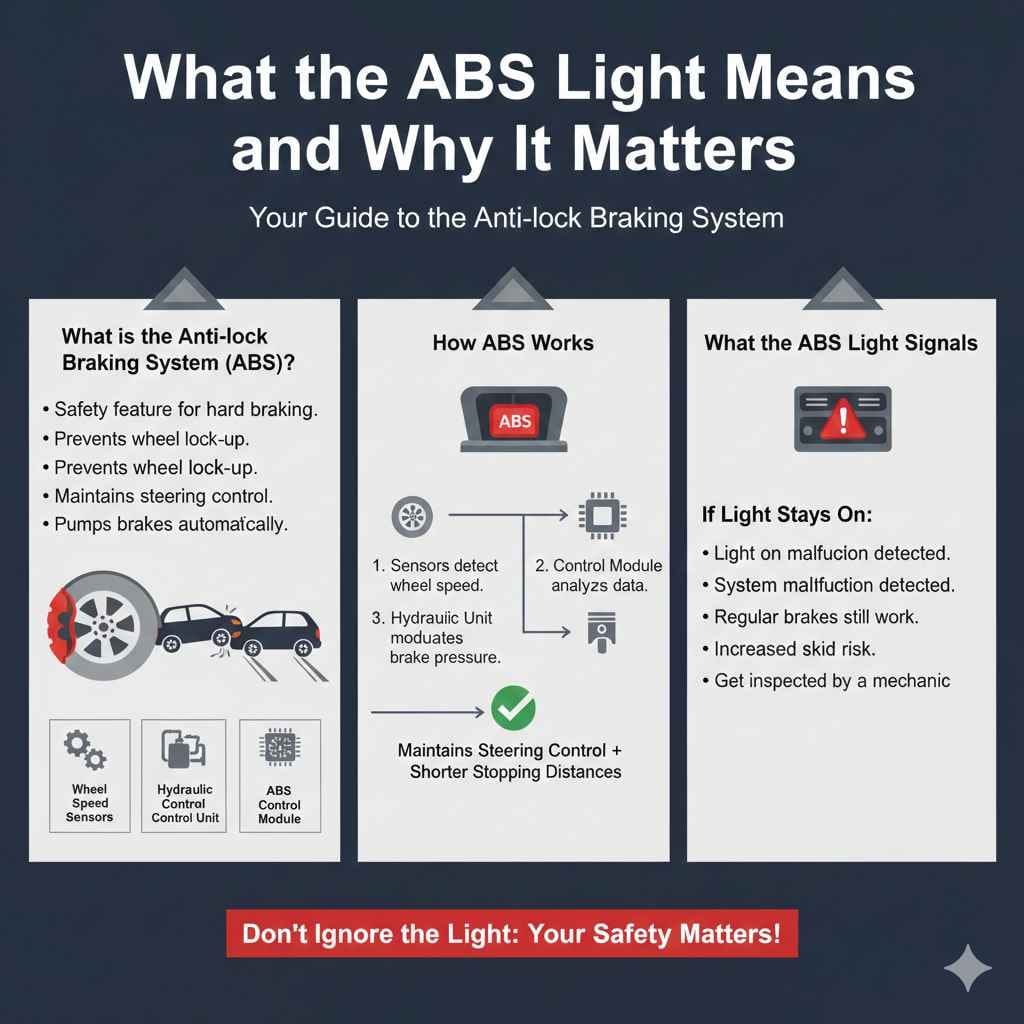
What is the Anti-lock Braking System (ABS)?
The Anti-lock Braking System, or ABS, is a safety feature in your car that helps you keep control when you brake hard. Imagine you’re driving and suddenly need to stop quickly. Without ABS, your wheels could lock up. When your wheels lock, they stop turning, and your car might skid. This can cause you to lose control, making it hard to steer and avoid obstacles. ABS prevents this from happening. It constantly monitors how fast each wheel is turning.
If it senses that a wheel is about to lock, it quickly pumps the brakes for you. This allows the tires to maintain some rolling action, giving you more steering control. The ABS system does this automatically, so you don’t have to pump the brakes yourself. It’s like having a helpful co-pilot for your brakes!
- Wheel Speed Sensors: The ABS uses sensors attached to each wheel to determine how quickly the wheels are rotating. These sensors send information to the ABS control module. The ABS system compares the speed of each wheel to make sure they are rotating at the same rate. This data helps the system know if any wheel is about to lock up during braking.
- Hydraulic Control Unit: This unit houses valves that control the brake fluid pressure. When the ABS detects that a wheel is about to lock, the valves rapidly modulate the brake pressure to that wheel. This means the system applies and releases the brakes very quickly, preventing the wheel from locking and allowing the driver to maintain steering control.
- ABS Control Module: The control module is like the brain of the ABS. It takes information from the wheel speed sensors and uses it to make decisions about how to control the brakes. The module also monitors the entire ABS system for any problems and triggers the ABS warning light if something isn’t working correctly.
- Braking Performance: The main purpose of the ABS is to improve braking performance, especially in emergency situations or on slippery surfaces. The ABS helps reduce stopping distances. It also allows the driver to maintain steering control while braking, which is a major safety advantage.
How the ABS Light Works and What It Signals
The ABS light is a warning signal in your car’s dashboard. This light alerts you that the Anti-lock Braking System has detected a problem. It lights up when you start your car to indicate it’s working properly. It should go off after a few seconds. If the ABS light stays on, or if it comes on while you’re driving, it means something is wrong with the ABS. This doesn’t mean your brakes are completely useless, but it means that the ABS may not be working.
Without ABS, your car’s braking system works like older cars, which means your wheels might lock up if you brake too hard, especially on wet or icy roads. The ABS light is there to make sure you know your braking system might not be performing at its best.
- Initial Self-Test: When you start your car, the ABS light usually turns on briefly as part of a self-test. The system checks its components to ensure they’re functioning. If everything is okay, the light will turn off after a few seconds.
- Continuous Monitoring: The ABS continuously monitors wheel speed, hydraulic pressure, and other data while you drive. This is done with wheel speed sensors. It constantly checks for issues, such as a sensor malfunction, a problem with the hydraulic control unit, or a problem with the ABS module.
- Light Activation: If the ABS detects a problem, it will activate the ABS light. The light will stay on to warn the driver that the ABS isn’t working. It will also store an error code that a mechanic can use to identify the exact problem.
- Braking Functionality: The regular braking system (non-ABS) still works if the ABS light is on. You can still brake, but the ABS features like preventing wheel lockup and maintaining steering control will be disabled. This is why it’s important to get it checked.
Is It Safe to Drive With the ABS Light On?
Driving with the ABS light on can raise safety concerns for any driver. This is because the ABS is designed to enhance your safety and control while braking. Even though your brakes will still work, the absence of ABS could lead to different behaviors in emergency braking situations. Let’s check how the ABS system impacts your driving experience, and the safety measures you should know when the light is on.
Impact on Braking Performance
When the ABS light is on, the main difference you’ll experience is in how your brakes behave during hard braking. The ABS normally prevents your wheels from locking up, which helps you steer while braking. Without the ABS, your wheels might lock if you brake too hard, particularly on wet or icy surfaces. This can lead to longer stopping distances and reduce your ability to steer your car. In normal driving conditions, you might not notice much of a difference.
However, in an emergency, or on a surface with less grip, the absence of ABS is something you may immediately perceive.
- Increased Stopping Distance: The primary effect of a disabled ABS is a possible increase in stopping distance. Without the ABS, the wheels can lock up during sudden braking, causing the vehicle to slide. This sliding reduces the tire’s ability to grip the road, which can make it harder to slow down. The absence of the ABS is more noticeable in wet or icy conditions.
- Loss of Steering Control: The ABS is designed to allow you to maintain steering control while braking. When a wheel locks, the car will continue moving forward, and you will not be able to steer. The ABS prevents this. Without ABS, your steering capabilities are significantly reduced, increasing the risk of losing control, particularly when the road surface is not ideal.
- Braking Technique Adjustments: Without the ABS working, you might need to adjust your braking technique. Instead of slamming on the brakes, which can cause wheel lockup, you may need to apply the brakes more carefully, using a technique called cadence braking. Cadence braking means you press and release the brake pedal repeatedly to try and avoid wheel lockup.
- Environmental Factors: The absence of ABS has a bigger impact in certain conditions. On dry roads, the impact might be less noticeable. But on wet, icy, or gravelly roads, the difference will be very noticeable. These surfaces reduce the tire’s grip, making the car more likely to skid without ABS.
Driving Precautions and Safety Tips
When the ABS light is on, it’s very important to take some extra safety precautions. While you can usually still drive your car, the absence of ABS means your braking behavior might change. You need to be aware of the altered braking performance and adjust your driving accordingly. Here are some key tips for driving safely when the ABS light is illuminated.
- Reduce Speed: One of the most important things you can do is reduce your speed. Driving slower gives you more time to react in an emergency. It also reduces the chances of needing to brake hard, which is when the absence of ABS is most noticeable.
- Increase Following Distance: Increase the distance between your car and the vehicle in front of you. This gives you extra time to react to any sudden stops. A longer following distance gives you a buffer and reduces the likelihood of a collision.
- Avoid Sudden Braking: Try to avoid braking suddenly. Plan your stops and brake smoothly to prevent wheel lockup. Anticipate traffic flow and road conditions to brake gently, which reduces the need for the ABS to intervene.
- Be Extra Cautious in Adverse Conditions: If you’re driving in wet, icy, or snowy conditions, be extra cautious. These conditions reduce tire grip, increasing the risk of skidding. Drive at a much slower speed and be very careful when braking.
- Get the ABS Checked Quickly: The most important thing is to get the ABS checked by a qualified mechanic as soon as possible. The longer you drive without ABS, the higher the risk.
Common Causes and Troubleshooting the ABS Light
When the ABS light comes on, it’s usually because of a problem with the ABS system itself. The good news is that these problems can often be diagnosed and fixed by a qualified mechanic. Identifying the cause is the first step in getting the system back in proper working order. Some of the most common reasons why the ABS light activates include sensor issues, electrical problems, and hydraulic issues. Let’s delve into these common causes and explore basic troubleshooting steps to help you pinpoint the issue.
Sensor Problems and Their Role
Wheel speed sensors are a common source of ABS issues. These sensors monitor how fast each wheel is turning. The ABS system uses this information to determine if a wheel is about to lock up. Problems with these sensors can trigger the ABS light. They can fail due to wear, damage, or even a build-up of dirt and debris. Understanding how these sensors function, and how to identify problems, is important for effective troubleshooting.
- Sensor Function and Location: Each wheel has a wheel speed sensor located near it. These sensors track the rotational speed of the wheels and send data to the ABS control module. The data is interpreted by the ABS to prevent wheel lockup during braking.
- Sensor Failures: A common reason for the ABS light to turn on is a failing wheel speed sensor. The sensor might stop working due to physical damage (like being hit by road debris) or due to wear and tear. If a sensor fails, the ABS system won’t get accurate data, so the system will turn the light on to alert the driver.
- Wiring Issues: The wiring that connects the wheel speed sensors to the ABS control module can also cause problems. Damage to the wiring, such as corrosion or breaks, can disrupt the signals. This will also cause the ABS light to illuminate.
- Diagnosis: A mechanic can use a scan tool to read the error codes stored in the ABS module. This can help identify which wheel speed sensor is faulty. They will test the sensors using a multimeter to check for continuity and to see if the sensor is functioning as it should.
- Cleaning and
Electrical System and Hydraulic Issues
In addition to sensor problems, electrical and hydraulic issues can also trigger the ABS light. The ABS system relies on both a stable electrical supply and a properly functioning hydraulic system. Electrical problems can range from faulty wiring to issues with the ABS module itself. Hydraulic issues involve problems with the brake fluid pressure or the hydraulic control unit. Because the ABS system is complex, it’s critical to have a qualified mechanic perform any necessary diagnostics and repairs.
- Electrical Problems: The ABS system has a lot of electrical components, including the control module and the wiring to the sensors and hydraulic unit. Problems such as a blown fuse, a bad relay, or a faulty ABS module can cause the ABS light to come on. These can disrupt the flow of electricity to the system, causing it to malfunction.
- Hydraulic Issues: The ABS uses a hydraulic control unit to regulate brake fluid pressure. Problems in the hydraulic system, like a faulty pump or a leak, can cause the ABS light to illuminate. These issues can impact the system’s ability to modulate brake pressure.
- ABS Module Problems: The ABS control module is the brain of the system, and can fail over time. The module processes data from the sensors and controls the hydraulic system. A module failure can be caused by electrical surges, moisture, or general wear. If the module is not working correctly, the ABS light will activate.
- Troubleshooting: A professional mechanic can perform diagnostic tests to identify these issues. This might involve checking fuses, testing electrical components, and inspecting the hydraulic system for leaks or other problems.
- Repair and Replacement: Depending on the problem, repairs can involve replacing fuses, wiring, or components like the hydraulic pump or ABS module. If the ABS module is at fault, it can be a costly repair. However, ensuring the ABS is working correctly is crucial for your safety on the road.
Getting the ABS Fixed: What to Expect
When the ABS light comes on, it’s time to get your car looked at. A qualified mechanic will be able to diagnose the problem and perform the necessary repairs. The process typically involves several steps, from the initial inspection to the final road test. Understanding what to expect during the repair process can help make it easier.
Diagnostic Process and Repair Steps
A mechanic’s primary goal is to find the cause of the ABS problem. This involves using specialized tools and diagnostic procedures to identify the fault. The repair process starts with a thorough inspection of the ABS system. This includes both the mechanical and electrical components. The process is designed to make sure the repair is done correctly.
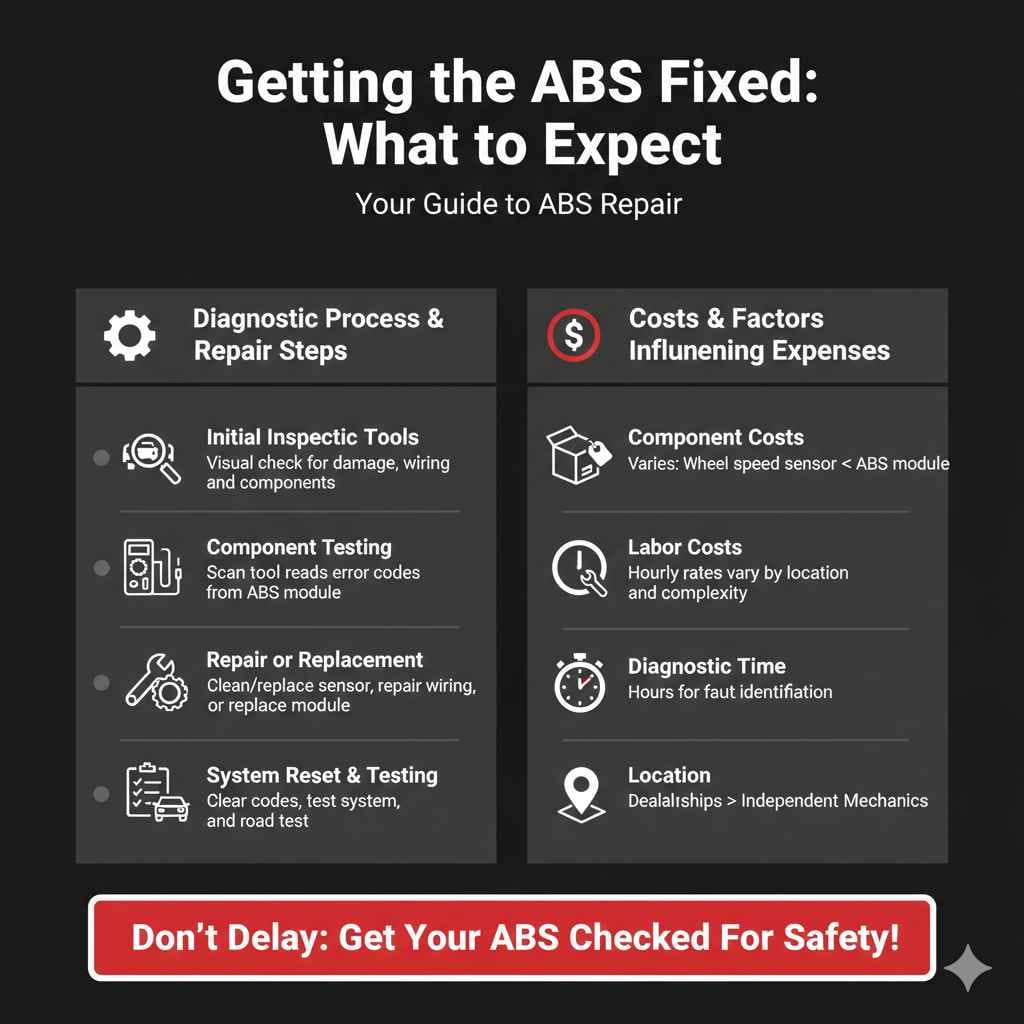
- Initial Inspection: The mechanic will start by visually inspecting the ABS system. This involves looking for any obvious signs of damage or wear. They will examine the wheel speed sensors, wiring, and hydraulic components.
- Using Diagnostic Tools: Mechanics use specialized diagnostic tools to read any error codes stored in the ABS module. They use a scan tool. The tool connects to the car’s computer system and retrieves any trouble codes. These codes provide clues about the source of the problem.
- Component Testing: Once the fault codes are identified, the mechanic will perform tests on the components. This often includes testing the wheel speed sensors, checking for proper electrical signals, and inspecting the hydraulic system.
- Repair or Replacement: Based on the diagnosis, the mechanic will determine what needs to be repaired or replaced. This can range from cleaning or replacing a wheel speed sensor to repairing the wiring or replacing the ABS module.
- System Reset and Testing: After the repair, the mechanic will reset the ABS system and clear any stored error codes. They will then test the system to ensure it’s functioning correctly. This often involves a road test to check the ABS performance during braking.
Costs and Factors Influencing Repair Expenses
The cost to fix an ABS issue can vary depending on what needs to be replaced or repaired. The price depends on the specific component that has failed and the labor involved. Knowing these factors can give you a better idea of what to expect financially. The costs can range from simple sensor replacements to more extensive repairs. The location where you have the repair done will affect the final price.
Component Costs: The cost of components can vary widely. Wheel speed sensors are often less expensive to replace than the ABS module. Hydraulic components can also vary in price depending on the complexity and the car model.
Labor Costs: Labor costs are also a major factor in the total price. Labor rates vary by location and the mechanic’s experience. More complicated repairs take more time and, therefore, cost more.
Diagnostic Time: The time it takes to diagnose the problem can also affect the cost. Extensive diagnostics can involve multiple hours of labor, especially if the problem is hard to identify.
Location: Where you get the repair done can influence the cost. Dealerships usually charge more than independent mechanics. However, you can make sure they use the correct replacement parts.
Additional Considerations: Keep in mind that unexpected problems can arise during the repair process, which can increase the cost. Discuss the potential costs with the mechanic before approving the repair to avoid surprises.
Frequently Asked Questions
Question: Can I drive with the ABS light on?
Answer: Yes, you can usually drive with the ABS light on, but it’s important to be cautious. Your regular brakes will still work, but the ABS features won’t. This means you won’t have the benefits of ABS, such as preventing wheel lockup and maintaining steering control during hard braking.
Question: What does the ABS light look like?
Answer: The ABS light usually looks like the letters “ABS” inside a circle. The shape can vary depending on the car model.
Question: Will my brakes still work if the ABS light is on?
Answer: Yes, your regular brakes will still work. The ABS is a supplement to your braking system. When the ABS light is on, your regular braking system will still work. However, the ABS features will be disabled.
Question: What should I do if the ABS light comes on while I’m driving?
Answer: If the ABS light comes on while you’re driving, reduce your speed and drive cautiously. Get your car to a mechanic as soon as possible to diagnose and fix the issue. Avoid sudden braking and be extra careful in wet or icy conditions.
Question: How much does it cost to fix the ABS?
Answer: The cost to fix the ABS can vary. It depends on the issue and the parts needed. It could range from a simple sensor replacement to a more complex repair. Get an estimate from a mechanic.
Final Thoughts
Understanding what to do when the ABS light comes on can help you stay safe. The key takeaway is to remain calm, drive carefully, and get your car checked as soon as you can. While your car is still drivable with the light illuminated, remember that your braking system may not function as designed in an emergency. This can impact your car’s stopping performance, especially on slippery surfaces. If the ABS light turns on, take it seriously and seek professional help.
Addressing the problem quickly will keep you and your passengers safe. By taking these steps, you’re not just maintaining your car; you’re also taking care of your safety and the safety of those around you. Drive safe, and keep your car in top shape!