
No, it is absolutely not safe to drive with a sinking brake pedal. This symptom signals a serious brake system failure, usually involving low fluid or an internal leak. Continuing to drive risks complete brake loss. Pull over immediately and have your vehicle towed to a professional mechanic for urgent inspection and repair.
Have you noticed your brake pedal sinking slowly toward the floor when you press on it? That feeling can be startling, making you wonder if your car is safe to drive. This spongy or “soft pedal” sensation is one of the scariest issues a driver can face because the brakes are your number one safety feature. Stop worrying for a moment; we will walk through exactly what this means, why it happens, and what you must do next. Understanding this simple warning sign keeps you driving safely and confidently. Let’s demystify this common brake problem together!
What Exactly Is a Sinking Brake Pedal?
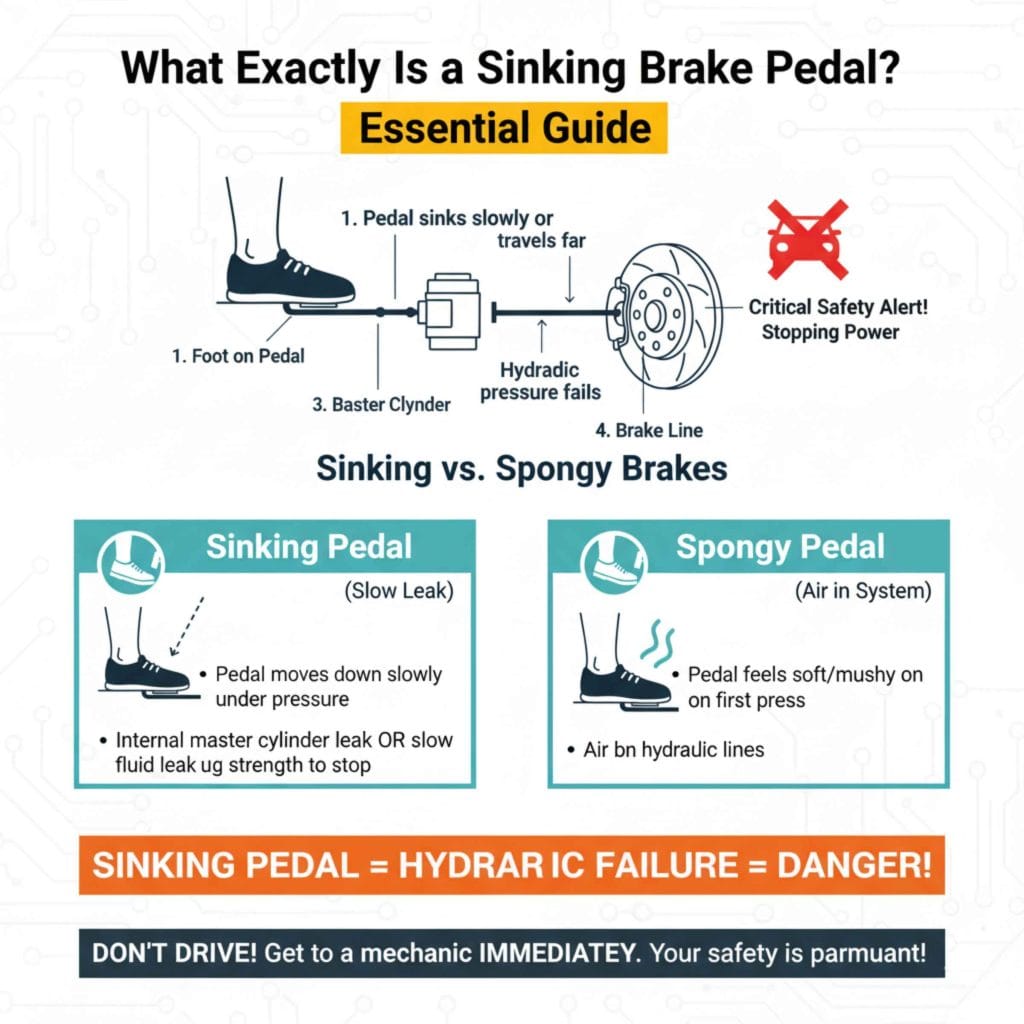
A sinking brake pedal—sometimes called a “soft pedal” or “pedal fade”—happens when the brake pedal moves further down toward the floor than normal before the brakes actually engage, or it slowly sinks to the floor while you hold light pressure on it.
In a healthy system, pressing the pedal should build immediate hydraulic pressure, making the pedal feel firm and responsive. When the pedal sinks, it means the hydraulic system is failing to pressurize correctly.
This isn’t just an annoyance; it is a critical safety alert flashing on your dashboard, even if the light hasn’t illuminated yet! Hydraulic brakes rely on sealed, pressurized fluid to move the brake pads against the rotors. Any air or leak in this sealed system instantly reduces stopping power.
The Difference Between Sinking and Spongy Brakes
While often grouped together, there are subtle differences that help pinpoint the issue:
Sinking Pedal (Slow Leak):The pedal moves down slowly while you hold constant pressure. This usually points to an internal leak within the master cylinder or a slow leak elsewhere in the lines.
Spongy Pedal (Air in System):The pedal feels soft or mushy, especially upon the first press, and might push down further than usual before the brakes grab. This almost always means air has entered the hydraulic lines.
Why Does My Brake Pedal Sink? The Common Culprits
If your pedal is sinking, we need to look at the components that maintain the pressure in your braking system. For beginners, knowing the names of these parts is half the battle. Here are the most common reasons this happens, ranked by what we usually see in the shop:
1. Low Brake Fluid Level
This is the single most common and easiest issue to check. Brake fluid transfers the force from your foot to the wheels. If fluid leaks out, it creates a gap or void where air can sneak in, causing the pedal to sink.
What it means: You have a leak somewhere in the lines, calipers, wheel cylinders, or the master cylinder itself.
Why it causes sinking: Without the fluid filling the space, the piston travels further before it can push anything, resulting in that low pedal feel.
2. Faulty Master Cylinder
The master cylinder is the heart of your hydraulic braking system. It contains pistons that push the brake fluid out when you hit the pedal. Over time, the internal seals (cups) within the master cylinder wear out.
What it means: The seals are not holding the pressure generated when you press the pedal.
Why it causes sinking: Fluid leaks past the worn seals inside the cylinder instead of being forced out into the brake lines. You pump the pedal, and the fluid bypasses the piston, causing the pedal to sink. This is a very serious failure.
3. Air in the Brake Lines
Air compresses easily, unlike brake fluid, which is considered non-compressible. If air gets into the lines, pressing the pedal first compresses the air bubble before it can push the pads.
What it means: The system has been opened (perhaps during a repair) and not properly bled, or a leak allowed air to be sucked in.
Why it causes sinking: You are essentially trying to push a cushion of air instead of direct force on the brake pads.
4. Leaking Brake Lines or Hoses
Brake lines are metal tubes that carry fluid under high pressure from the master cylinder to each wheel. Rubber hoses connect these lines to the brake calipers or wheel cylinders.
What it means: Corrosion on the metal lines or simple wear and tear on the flexible rubber hoses has created a physical breach.
Why it causes sinking: Fluid sprays out of the leak as soon as you press the pedal, dropping the system pressure instantly.
Safety First: What To Do Immediately If Your Pedal Sinks
This is the most important section. When you feel that pedal sinking, you must prioritize stopping the vehicle safely before anything else. Under no circumstances should you continue driving until this is fixed. According to the National Highway Traffic Safety Administration (NHTSA), brake failure is one of the most serious causes of roadway accidents.
Step 1: Stay Calm and Signal
Do not panic. Sudden panic braking will use up most of your remaining stopping power inefficiently.
Turn on your hazard lights immediately to alert other drivers that you have a problem.
Step 2: Utilize Secondary Braking Methods
If you have a sinking pedal, the conventional friction brakes might be severely compromised. You need to rely on the backup systems.
Downshift: If you drive a manual or automatic transmission, quickly downshift one gear at a time. Use your engine compression to help slow the car down (engine braking). This is far more effective than doing nothing.
Parking Brake (Gently!): The emergency or parking brake typically operates cables directly on the rear wheels, bypassing the hydraulic system entirely. Crucially, use this slowly and carefully. Yanking the parking brake at high speeds can lock the rear wheels, causing a skid or spin. Apply it gradually to slow down.
Step 3: Stop the Car Safely
Coast or use engine braking and the gentle parking brake application to guide your car to the side of the road, preferably in a safe, well-lit area away from traffic.
Step 4: Do Not Drive Further
Once stopped, turn the engine off. Do not try to “test” the brakes again by pumping them. Pumping might temporarily build pressure if the issue is minor air in the lines, but it will rapidly deplete fluid if the master cylinder is failing, guaranteeing total brake loss on your next drive attempt.
Call for a tow truck. This repair is not simple DIY work unless you are already experienced with brake hydraulics. Safety must be assured before the car moves again.
How to Diagnose the Cause (For the Curious Beginner)
While towing is the safest advice, understanding the diagnostic process can help you communicate effectively with your mechanic and build confidence.
Check 1: Inspecting the Brake Fluid Reservoir
Locate the brake fluid reservoir, usually a plastic container near the firewall on the driver’s side of the engine bay.
- Visually Inspect the Level: Is the fluid below the MIN or LOW line? Low fluid strongly suggests a leak that must be found.
- Check the Color: Fresh brake fluid is usually clear or amber. Dark brown or black fluid indicates contamination or extreme age, meaning it needs to be flushed, which might uncover minor internal leaks when disturbed.
- Look for External Leaks: Check around the master cylinder cap for any wet spots.
Check 2: The Pumping Test (Use with Caution)
This test helps distinguish between low fluid/major leak versus a master cylinder internal leak.
With the engine off, pump the brake pedal several times until it feels firm.
Hold firm, steady pressure on the pedal.
Observation: If the pedal slowly sinks toward the floor while you hold it, the culprit is highly likely to be the master cylinder seals failing internally.
Check 3: Looking for External Leaks
This requires you to look under the car, but safety glasses and gloves are a must.
If fluid is visible anywhere along the brake lines (especially where metal lines meet flexible hoses or near the wheels), you have found an external leak point that needs professional replacement. Look for wet spots on the pavement under your car.
What Repairs Are Needed for a Sinking Pedal?
The necessary repair directly depends on the diagnosis. Here’s a quick look at what these commonly involve regarding cost and complexity for the mechanic.
| Observed Problem | Likely Repair Required | Severity & Urgency |
|---|---|---|
| Low Fluid | Leak detection, line/hose replacement, system refill, and full brake bleeding. | Immediate. Driving risks total failure. |
| Sinking Pedal (Engine Off) | Master Cylinder replacement, system refill, and full brake bleeding. | Critical. System cannot hold pressure. |
| Air in Lines (Often Spongy Feel) | Thorough brake bleeding procedure (can be complex if contamination occurred). | High. Stopping distance is severely increased. |
| External Leak at Caliper/Hose | Replacement of faulty component (caliper, wheel cylinder, or hose). | Immediate. Fluid loss leads to zero pressure. |
Brake fluid, particularly DOT 3 and DOT 4 types, is hygroscopic, meaning it absorbs moisture from the air over time. This moisture lowers the boiling point and can cause internal corrosion within the master cylinder seals. This is why routine brake fluid flushes (typically every 2–3 years, though you should check your Motor Magazine or owner’s manual) are vital maintenance items.
Can I Just Top Off the Brake Fluid and Drive?
This is a common temptation, and it’s the most dangerous one you can face.
When you top off the brake fluid, you temporarily replace the lost volume, which might make the pedal feel normal again for a few moments. However, you have not fixed the reason the fluid level dropped.
If you top it off and drive:
1. The Leak Continues: The fluid will immediately start leaking out again, potentially under heavy braking when pressure is highest, leading to sudden, catastrophic brake failure mid-drive.
2. Air Remains Entrapped: If the system suffered air ingestion, simply adding fluid doesn’t remove the air. Your stopping power will remain reduced.
The Verdict: Adding fluid is only a temporary measure to get you safely to the nearest repair shop ifthe leak is extremely slow, and you monitor the fluid level constantly. If the pedal sinks while holding pressure, do not add fluid—tow the car.
Understanding Brake Bleeding: Why It’s Necessary
If your diagnosis points to air in the lines (often resulting in a spongy feel but sometimes a sinking feel after a fluid change), bleeding the brakes is required.
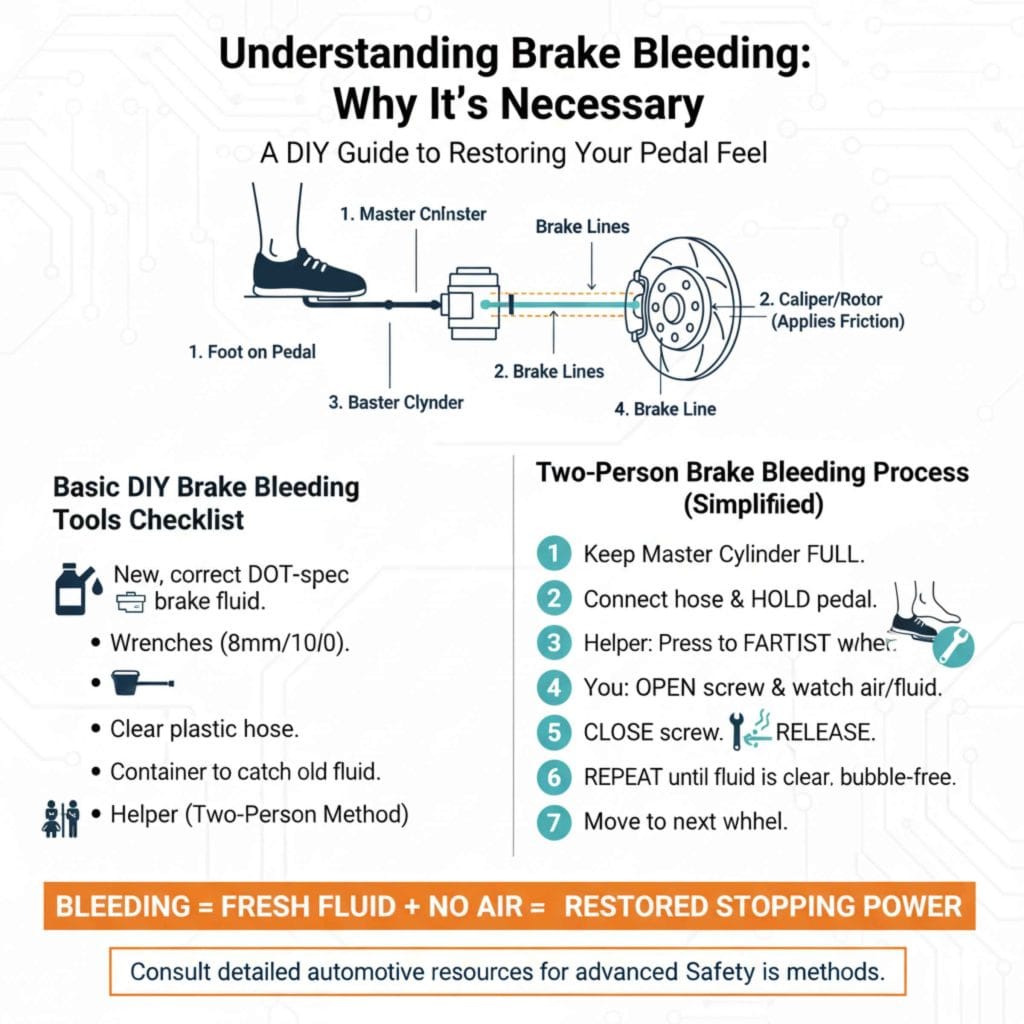
Brake bleeding is the process of forcing clean, fresh brake fluid through the entire system to push all trapped air out through the bleeder screws located at each wheel.
Basic DIY Brake Bleeding Tools Checklist
If you decide to handle a basic bleed after topping off fluid (and you are certain there is no major leak), you will mostly need these items:
- New, correct DOT-spec brake fluid.
- Wrenches to fit the bleeder screws (usually 8mm or 10mm).
- A clear plastic hose that fits snugly over the bleeder screw.
- A container to catch old fluid.
- A helper (two-person bleeding is the easiest method).
The Two-Person Brake Bleeding Process (Simplified Overview)
This process must be followed meticulously to ensure no air re-enters the system:
- Ensure the master cylinder reservoir is full and stays full throughout the entire process.
- Attach the hose to the bleeder screw furthest from the master cylinder (usually the rear passenger wheel first).
- Have your helper slowly press and hold the brake pedal.
- While they hold steady pressure, quickly open the bleeder screw just enough for fluid to exit. You will see old fluid and possibly air bubbles.
- Once the flow stops, immediately tighten the bleeder screw before your helper releases the pedal.
- Have your helper release the pedal.
- Repeat steps 3–5 until only clear, bubble-free fluid comes out of the bleeder screw.
- Move to the next closest wheel and repeat until all four wheels are bled.
For advanced guides on specific bleeding methods (like vacuum or pressure bleeding), consult a detailed automotive resource like the SAE International standards on hydraulic brake fluid management.
Long-Term Safety and Maintenance Tips
Preventing brake issues is always easier and cheaper than fixing them after failure. Think of your brakes as being on a proactive maintenance schedule rather than a reactive repair schedule.
When Should You Get Your Brakes Inspected?
Most automotive experts recommend getting a full brake inspection:
Every time you rotate your tires (usually every 5,000 to 7,500 miles).
At least once per year.
If you notice any change in pedal feel, noise (squealing, grinding), or pulling during braking.
Brake Fluid Life Cycle
Brake fluid degrades over time due to heat and moisture absorption.
| Maintenance Action | Recommended Interval | Why It Matters |
|---|---|---|
| Visual Check (Reservoir Level) | Monthly during routine checks | Detects large, immediate leaks. |
| Full Brake Fluid Flush | Every 2-3 Years (or as specified by manufacturer) | Removes water and corrosion inhibitors, restoring boiling point. |
| Pad/Rotor Inspection | Annually or every 15,000 miles | Ensures friction components are thick enough for safe stopping. |
By adhering to these simple checks, you drastically reduce the chance of encountering a sinking pedal crisis on the road.
Frequently Asked Questions (FAQ) About Sinking Brakes
Q1: If I pump my sinking brake pedal a few times, and then it feels firm, is it safe to drive to the garage?
It is still hazardous. Pumping temporarily forces fluid past worn master cylinder seals or traps air momentarily. The pedal will likely sink again once pressure equalizes or under real-world braking strain. Seek professional help immediately or use minimal, necessary driving only.
Q2: Does a sinking pedal always mean I need a new master cylinder?
Not always, but it is a very strong indication. If the fluid level is good, and pumping only briefly firms the pedal, the master cylinder seals are failing. However, a severely corroded line or failed connection could also be the cause, requiring similar immediate repair.
Q3: Can a brake job cause my pedal to sink afterward?
Yes, if the mechanic did not properly bleed the air out of the lines after touching the system components (like changing calipers), air can remain. This results in a soft or spongy pedal, which should be corrected by having the shop re-bleed the system correctly.
Q4: What is the safest way to describe my brake problem to a tow truck driver or mechanic?
Tell them, “My brake pedal is sinking slowly to the floor when I apply steady pressure, suggesting a hydraulic failure, possibly in the master cylinder or a line leak. I have not driven the car since noticing the symptom.”
Q5: Will my brake warning light always come on if the pedal sinks?
Not necessarily. The brake warning light usually lights up for two main reasons: very low brake fluid level (the float sensor is triggered) or if the parking brake is engaged. A slow internal leak in the master cylinder might not trigger the low-level sensor immediately, meaning you rely solely on pedal feel.
Q6: Why does the pedal feel fine sometimes but sink other times?
This variation often happens when the fluid level is perilously close to the low sensor mark. When you drive up a steep hill, the fluid shifts away from the sensor, triggering the warning when the pressure drops slightly. If you drive on a flatter road, the fluid settles, and the light might turn off until the next shift.
Final Thoughts on Brake Confidence
Dealing with unexpected car trouble, especially involving critical safety systems like brakes, can be incredibly stressful. However, you took the right step today by noticing the sinking pedal and researching the issue.
Remember this core principle: A sinking brake pedal is not a suggestion; it is a mandatory stop sign for your car. While it is completely understandable to want to save money by trying to fix it yourself, brake hydraulics are unforgiving. One small mistake in diagnosing or repairing a master cylinder or line leak can lead to a complete and dangerous loss of stopping power when you need it most.
Trust your instincts. If the pedal sinks, stop driving. Get the system professionally inspected, repaired, and thoroughly bled. Once those brake lines are tight, the fluid is fresh, and the pedal feels firm and stops reliably near the top of its travel, you can drive away with genuine confidence, knowing your most important safety feature is working exactly as intended. Safe travels!