

Quick Summary: No, it is generally not safe to drive with a failing Transmission Control Module (TCM). A bad TCM can cause unpredictable shifting, stalling, or complete transmission lock-up, creating dangerous driving conditions. Stop driving immediately if you suspect a serious TCM issue and seek professional diagnosis.
Hello there! I’m Dustin Hall, and if your car is acting strangely—maybe shifting hard or refusing to move at all—you might be looking at a problem with your Transmission Control Module, or TCM. This little computer is vital for telling your transmission what to do. When it goes bad, things get frustrating and, more importantly, potentially dangerous fast. You might be wondering if you can just limp to the shop. We are going to break down exactly what the TCM does, the risks involved in driving with a bad one, and what you should do next—all in plain English. Let’s get your confidence back in navigating this tricky repair!
What Exactly is the Transmission Control Module (TCM)?
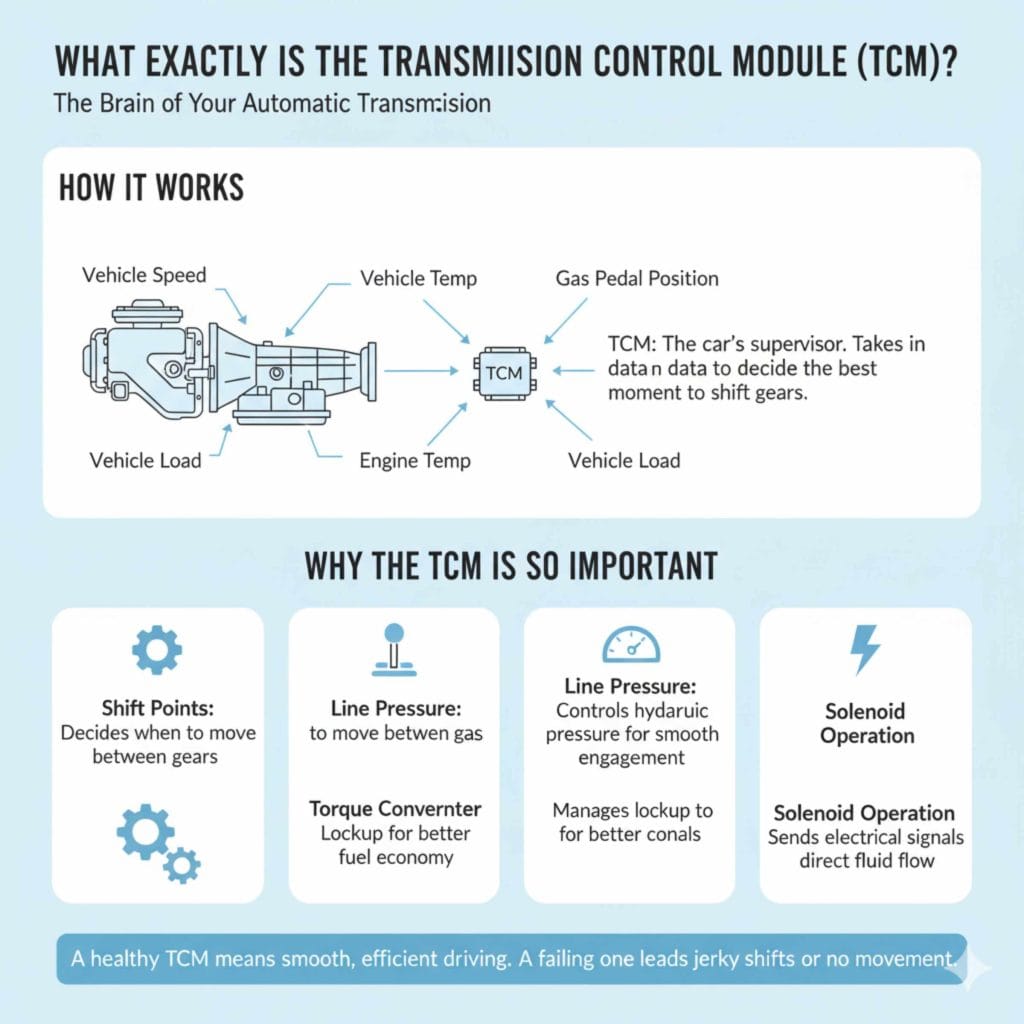
Think of your car as a team that needs clear instructions. The Engine Control Unit (ECU) handles the engine, but the transmission needs its own supervisor. That’s the TCM.
The TCM is essentially the brain of your automatic transmission. It takes in a flood of information every second—like how fast you are going, how hard you are pressing the gas pedal, the engine temperature, and the load on the vehicle. It then processes all this data instantly to decide the exact best moment to shift gears.
Why the TCM is So Important
Without a properly working TCM, your transmission loses its ability to communicate effectively. It can’t coordinate with the engine smoothly.
Here is what the TCM controls:
- Shift Points: Deciding when to move from first gear to second, and so on.
- Line Pressure: Controlling the hydraulic pressure inside the transmission needed to engage the clutches and bands correctly for smooth engagement.
- Torque Converter Lockup: Managing when the torque converter should fully lock for better fuel economy.
- Solenoid Operation: Sending electrical signals to solenoids, which are like tiny valves that direct vital transmission fluid flow.
If any of these functions go wrong, you feel it immediately in how the car drives.
Recognizing the Signs of a Failing TCM
A failing TCM rarely causes problems all at once; usually, it starts with small, annoying symptoms that gradually get worse. Recognizing these initial signs is key to getting ahead of a major breakdown.
Common Warning Signs You Shouldn’t Ignore
When the TCM starts to scramble its signals, these physical signs often appear:
- Check Engine Light (CEL) and Transmission Warning Light: The most common sign. The car’s computer detects an electrical failure somewhere related to the transmission and illuminates the warning lights.
- Erratic or Harsh Shifting: The car might shift way too early or way too late. You might experience a hard “clunk” or “thud” when it finally does change gears.
- Slipping Gears: You press the gas, the engine revs up, but the car doesn’t speed up proportionally. It feels like it can’t find the right gear.
- Inability to Shift: The car might get stuck in one gear (often called “limp mode”), usually second or third, which severely limits highway speed.
- Total Transmission Failure (Won’t Engage): In the worst cases, the TCM fails completely, and the car won’t move out of Park, or Neutral.
- Overheating: Sometimes, improper shifting causes the transmission to work harder than it should, leading to excessive heat buildup.
Is It Safe To Drive With A Bad Transmission Control Module? The Risks
This is the big question every driver faces when they see a warning light. While some very minor electrical hiccups might allow you to drive short distances cautiously, continuing to drive with a confirmed or suspected bad TCM is a significant gamble with your safety and your wallet.
The Safety Risks: Unpredictable Behavior
Safety should always come first. When the TCM acts up, the resulting poor transmission performance is unpredictable, making the vehicle unsafe, especially in traffic or at highway speeds.
1. Sudden Loss of Power or Stalling
If the TCM fails mid-drive, it can cause the transmission to completely disengage or lock up. Imagine driving on an active highway and suddenly having zero power to accelerate. This unexpected deceleration or inability to maintain speed is a major hazard for the vehicles behind you.
2. Uncontrolled Gear Changes
Imagine you are trying to pass another car, and instead of shifting up smoothly, the transmission violently downshifts multiple gears without warning. This sudden jolt can easily cause you to lose control, especially if you are on a slick road or going around a curve.
3. Inability to Accelerate Out of Danger
If you need to pull into traffic or merge onto a freeway, and the transmission refuses to shift out of a low gear due to a bad signal from the TCM, you won’t have the necessary speed to safely fit into the flow of traffic.
The Mechanical Risks: Rapid, Costly Damage
Beyond immediate safety concerns, driving strains the rest of your transmission system, speeding up its failure exponentially.
A TCM controls hydraulic pressure. If it commands too much pressure (over-pressurization), it can blow seals and damage internal components. If it commands too little pressure, the internal clutches and bands start slipping severely.
| Driving Condition with Bad TCM | Immediate Risk | Long-Term Consequence |
|---|---|---|
| Hard Shifting (Clunking) | Shock loading to driveshaft and axles. | Cracked transmission casing or broken mounts. |
| Gear Slipping | Excessive friction and heat generation. | Burned clutch packs; requiring full transmission rebuild. |
| Incomplete Solenoid Activation | Inability to properly lubricate or cool parts. | Total mechanical failure; complete transmission replacement. |
The reality check here is simple: a $500-$1000 TCM repair, or even replacement, is vastly cheaper than a full transmission rebuild, which can easily run into the thousands of dollars. Driving further only guarantees more expensive damage. You can check the typical guidelines for transmission health on resources like the National Highway Traffic Safety Administration (NHTSA) website regarding vehicle safety defects.
Diagnosing the Problem: TCM vs Other Components
Before you rush out and buy a new TCM, it’s crucial to understand that a TCM failure often mimics problems with other parts. Bad wiring, a faulty sensor, or even low transmission fluid can cause similar symptoms. This is where proper diagnosis saves you money.
Step 1: Check the Basics First
Before blaming the computer, eliminate the easy stuff.
- Check Fluid Level and Condition: Is the fluid full? Is it dark brown or black? Does it smell burnt? Low or burnt fluid causes major shifting issues.
- Look for Obvious Wiring Damage: Inspect harnesses leading to the transmission for chewed wires (critters love wiring!) or loose connections.
- Scan for Codes: You need an OBD-II scanner. A generic scanner might only show generic powertrain codes. A professional-grade scanner that reads manufacturer-specific transmission codes (like P07xx codes) is essential for accurate TCM diagnosis.
Step 2: Isolating the TCM
A proper diagnosis looks at the communication between the various modules. A technician will often check:
- Voltage Supply: Is the TCM receiving the correct battery voltage?
- Communication Lines: Is the TCM talking correctly to the ECU via the vehicle’s communication network (CAN bus)?
- Solenoid Readings: Are the solenoids sending back the correct resistance readings when commanded by the TCM?
If the wiring is good, power is present, and the solenoids are testing faulty when commanded by the scan tool, it strongly points toward the TCM itself being the faulty control unit.
What to Do Immediately If You Suspect a Bad TCM
If you have confirmed your car is exhibiting symptoms described above, our goal is to get you safely off the road and into a repair shop without causing further harm.
If You Are Currently Driving: The Safe Shutdown Procedure
If you are on the road and the symptoms suddenly worsen (e.g., gears start clunking violently or the car stalls in traffic), follow these steps immediately:
- Turn on Hazard Lights: Alert other drivers immediately that you are experiencing a problem.
- Pull Over Safely: Coast to the nearest, safest location—a side street, parking lot, or the shoulder, far away from moving lanes.
- Shift to Park and Turn Off: Once stopped, shift into Park (P) and turn the engine completely off momentarily.
- Restart and Test Gently: Restart the engine. If the problem seems gone, proceed very slowly toward the nearest trustworthy repair facility. Stick to low-speed streets.
- If the Problem Returns: Do not try to push it. If the harsh shifting or slipping returns while moving slowly, stop immediately. The vehicle should be towed to avoid catastrophic failure.
If the Car is Parked: The Tow Decision
If the car failed to start, won’t go into gear, or exhibits extreme behavior while parked, do not attempt to drive it. A tow truck is your safest and most financially responsible option here. Towing costs significantly less than replacing a completely ruined transmission.
Understanding TCM Repair Options
Once confirmed, repairing or replacing the TCM requires a few specific steps, especially regarding programming and compatibility. This isn’t like swapping out a simple fuse.
Option 1: Repairing the Existing TCM (Rebuilding)
Some specialized shops can repair your existing TCM by replacing faulty internal components, like capacitors or circuit boards.
Pros of Rebuilding:
- Often less expensive than buying new.
- Keeps the original case and housing.
- Can sometimes save data calibration specific to your car (though usually, reprogramming is still needed).
Cons of Rebuilding:
- Takes longer (you are without your car while it’s shipped out).
- Not all electrical failures are repairable.
Option 2: Replacing with a New or Remanufactured TCM
This is the most common route. You purchase a replacement module, often from the dealer or a high-quality automotive parts supplier.
It is vital to note that modern TCMs are often “VIN-locked” or require specific programming. A generic TCM bought off a shelf often won’t work correctly right out of the box.
The Critical Step: Programming and Calibration
When you install a new or remanufactured TCM, it must be “flashed” or programmed with the correct software calibration specific to your car’s make, model, engine, and sometimes even its specific transmission variant.
This programming often requires specialized dealer-level diagnostic tools. A general mechanic might be able to install the unit, but the final step usually requires a trip to the dealership or a specialized transmission shop capable of:
- Flashing the correct software version onto the new TCM.
- Performing necessary relearn procedures to ensure the new module correctly communicates with the ECU and sensors. (You can read more about vehicle data communication standards governed by bodies like the International Organization for Standardization (ISO) regarding vehicle networks).
If you skip programming, the car might start, but it will likely display limp mode or shift poorly because the new brain doesn’t speak your car’s specific language.
DIY vs Professional: When to Call in the Experts
As someone focused on empowering everyday drivers, I fully support DIY whenever it’s safe and affordable. However, the TCM sits at the intersection of electrical failure and complex mechanical control.
When You Might Handle the Physical Swap (If You Are Confident)
In some older or easier-to-access vehicles, the TCM is located right on top of the transmission or easily reached in the engine bay. If you have sourced a pre-programmed or compatible replacement unit, the physical swap might be manageable.
Tools you might need for a physical swap:
- Basic socket set and ratchet.
- Torque wrench (for safe reinstallation).
- Harness release tools (to avoid damaging plastic connectors).
- An electric anti-static wrist strap (electronics are sensitive!).
Why Professional Help is Usually Necessary Here
For most modern vehicles, towing the car to a professional specializing in transmissions or electrical diagnostics is the better choice.
Here is why professional attention is usually required:
| Area of Concern | Why a Professional Excels |
|---|---|
| Accurate Diagnosis | Access to high-level scan tools that can confirm the TCM is truly the root cause, not just a symptom of a sensor failure. |
| Reprogramming/Flashing | Possessing the manufacturer-specific software licenses and tools required to correctly code the new module to your VIN. |
| Warranty Protection | Professional installations usually come with a labor warranty, unlike a potentially failed DIY installation. |
TCM Health: Prevention is the Best Medicine
Once you get your TCM sorted, you certainly don’t want to revisit this issue soon! Maintaining your transmission fluid is the single best thing you can do to prolong the life of your TCM and the entire transmission assembly.
Simple Steps for Transmission Longevity
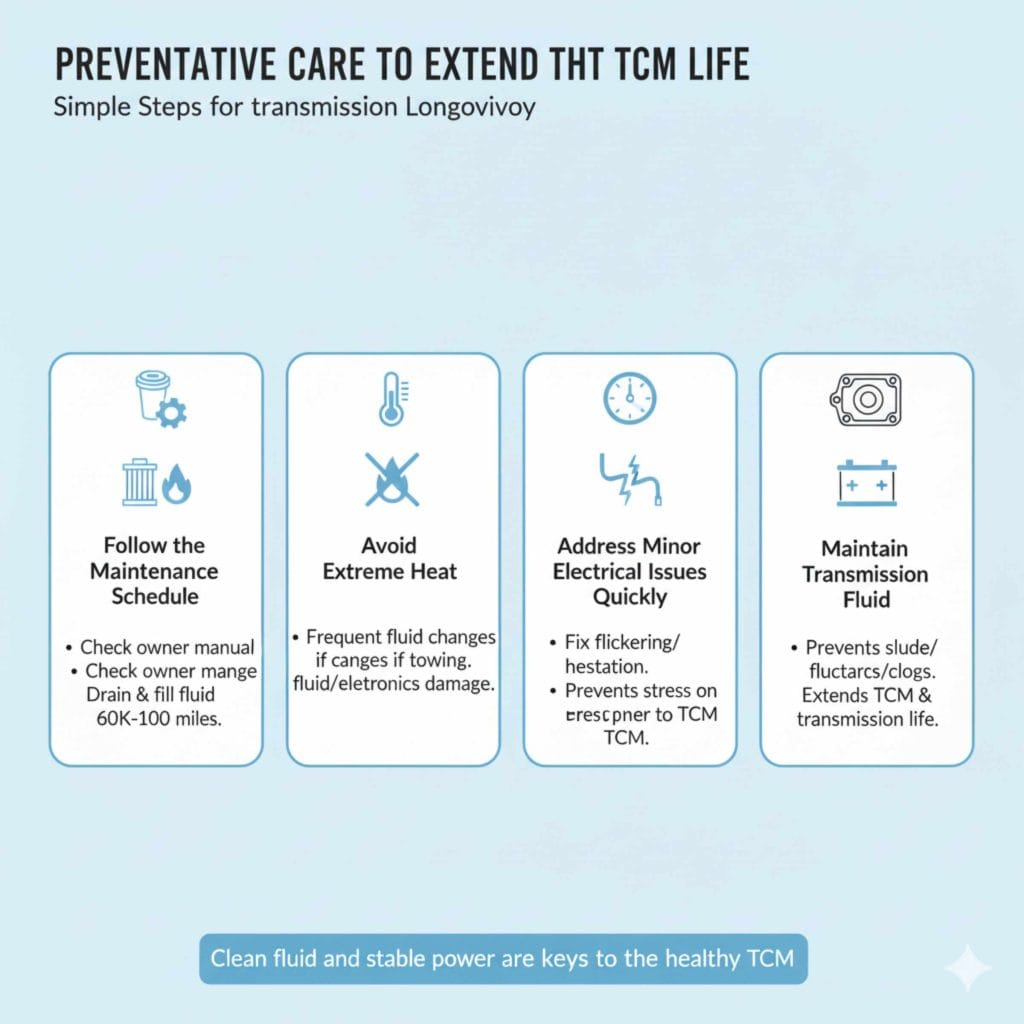
1. Follow the Maintenance Schedule: Check your owner’s manual. While some modern cars claim “lifetime” fluid, most experts recommend draining and filling the transmission fluid every 60,000 to 100,000 miles under normal driving conditions.
2. Avoid Extreme Heat: Excessive heat is the enemy of both fluid and electronics. If you often tow heavy loads or drive in extreme desert heat, consider having the fluid changed more frequently.
3. Address Minor Electrical Issues Quickly: Do not ignore small, intermittent electrical hiccups. A strange flicker or momentary hesitation might point to a weak connection that could eventually stress the TCM.
4. Keep the Battery Healthy: Voltage fluctuations caused by a weak battery or failing alternator can cause erratic performance across all vehicle electronics, including the TCM.
Frequently Asked Questions (FAQs) About Bad TCMs
Q1: Can I clear the Check Engine Light and drive if the TCM is bad?
A: You can clear the light, but the underlying fault will return quickly. Driving with a bad TCM is unsafe because the vehicle’s shifting behavior will remain unpredictable, risking greater mechanical damage.
Q2: How much does it typically cost to fix or replace a Transmission Control Module?
A: Costs vary widely by car manufacturer and model, but expect anywhere from $500 for a basic component replacement to over $1,500 if a brand-new, dealer-programmed TCM is required.
Q3: Will a loose battery cable cause transmission shifting problems like a bad TCM?
A: Yes, poor electrical connections can mimic module failures. Always check battery terminals and ground straps first, as a weak electrical signal can confuse the TCM and cause erratic shifts.
Q4: Is it okay to drive my automatic car if it’s only stuck in ‘Limp Mode’?
A: Limp mode is designed to let you drive slowly to a repair shop. While you can drive short distances, keep speeds very low (under 40 mph), avoid hills, and understand you are risking component damage by forcing the transmission to operate outside its normal parameters.
Q5: Can the TCM be swapped with one from a junkyard car?
A: Physically swapping the unit is easy in many cars, but you must ensure the replacement unit has the exact matching software and hardware codes for your vehicle, or it will not function correctly, requiring additional programming costs.
Q6: How long can I safely drive with a bad TCM before the transmission breaks completely?
A: There is no set timeline. Driving with highly erratic shifting or slipping gears can destroy your transmission in a few miles, especially if clutch packs are burning up. The safest answer is: stop driving as soon as you suspect the issue.
Conclusion: Prioritize Safety and Professional Insight
Dealing with a car problem that feels complex, like a failing Transmission Control Module, can certainly feel overwhelming. Remember this: the TCM is your transmission’s decision-maker. When that decision-making process breaks down, your car becomes unreliable and potentially hazardous.
While minor, new symptoms might let you limp briefly, the overwhelming consensus is that driving with a confirmed faulty TCM is risky—both immediately for your safety and long-term for your budget. Take the time to get an accurate diagnostic scan. Once the TCM is confirmed as the culprit, prioritize getting it professionally repaired or replaced and correctly programmed. By taking sensible, careful steps now, you protect yourself, your passengers, and—most importantly—you save your transmission from unnecessary, expensive trauma. You’ve got this!