
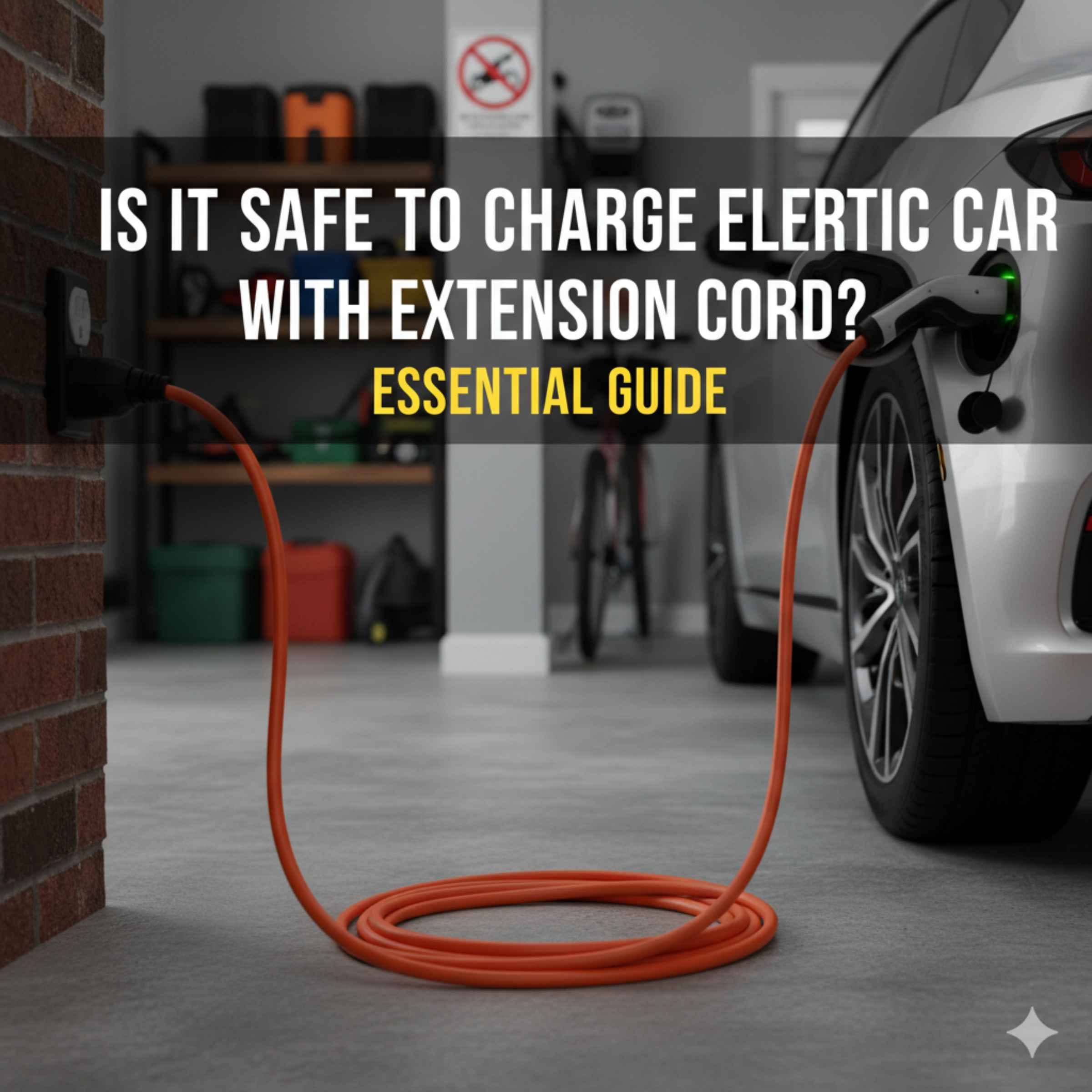
Quick Summary: While you can temporarily charge your EV with an extension cord in a pinch, it is generally not recommended for regular use due to fire risk and slow charging speeds. Only use heavy-duty, properly rated cords for very short durations, following strict safety guidelines.
Welcome! As a new electric vehicle (EV) owner, you’ve probably already noticed how great driving electric is. But finding a charging spot when you need it can sometimes be tricky. Maybe the standard outlet is just out of reach, or perhaps you’re visiting a friend who doesn’t have a dedicated charger installed yet. This often leads to a common question: is it safe to charge electric car with extension cord?
It feels like a simple solution, but when dealing with high-power electrical devices like modern EVs, safety comes first. You don’t need to be an electrician to understand the risks and rules. I’m here to guide you through exactly what you need to know, step-by-step, so you can make a safe decision every time you plug in. Let’s demystify extension cord charging and keep your battery happy!
Understanding EV Charging Levels and Power Draw
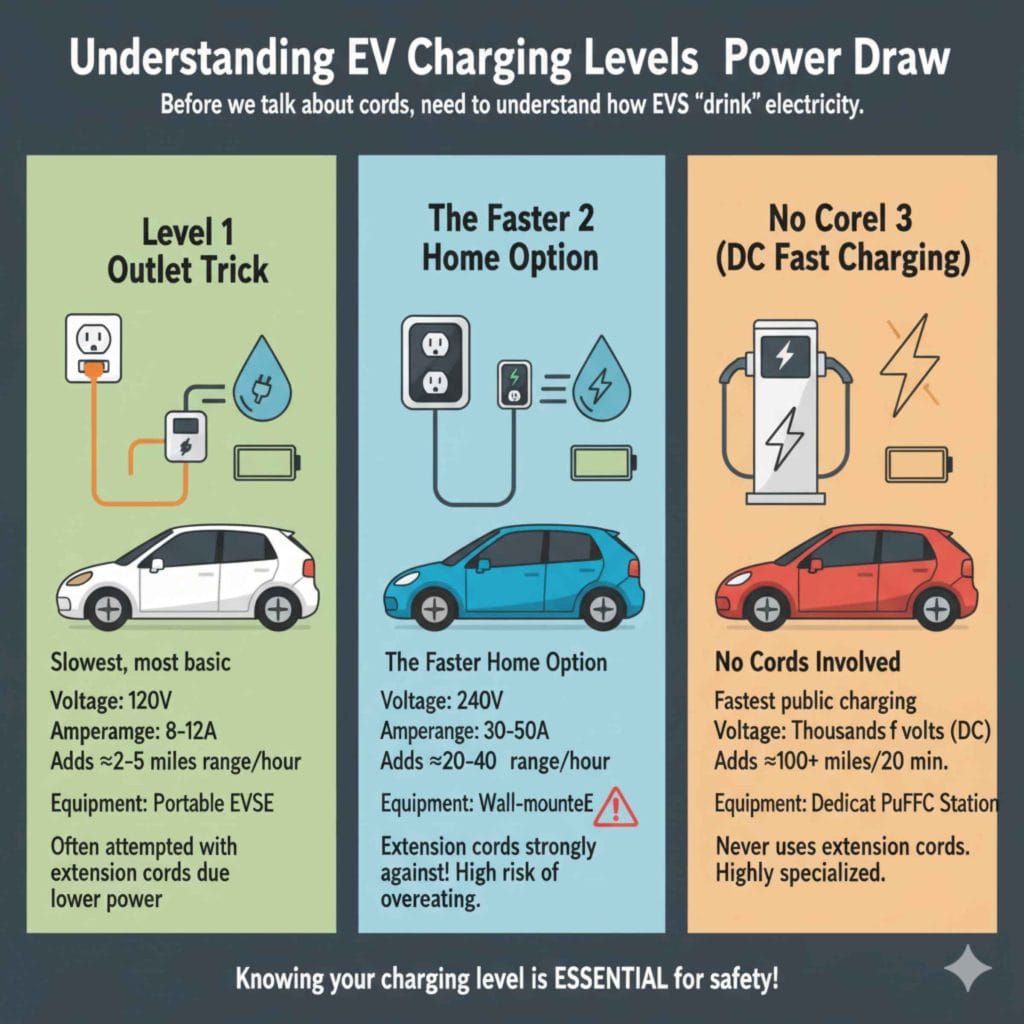
Before we talk about cords, we need to understand how EVs “drink” electricity. Not all charging is the same. Knowing this helps you see why an extension cord might be okay for one type of charging but completely dangerous for another.
Level 1 Charging: The Standard Outlet Trick
This is the slowest, most basic way to charge an EV. It uses the standard wall outlet you plug your toaster or lamp into—a 120-volt (V) connection in North America. This is often called “trickle charging” because it adds only about 2 to 5 miles of range per hour.
- Voltage: 120V
- Amperage (Current Draw): Usually set to 8 to 12 Amperes (A) by the car or charger.
- Equipment Used: The portable charger that came with your car (the EVSE—Electric Vehicle Supply Equipment).
Level 1 charging is what most people try to use extension cords for, as the power draw is relatively low compared to other methods.
Level 2 Charging: The Faster Home Option
Level 2 charging uses a 240V circuit, similar to what a large dryer or oven uses. This is much faster, adding 20 to 40 miles of range per hour. While some DIY enthusiasts might try to adapt cords for this, it is strongly advised against using an extension cord for Level 2 charging. The current draw is far too high, making overheating a massive risk.
Level 3 (DC Fast Charging): No Cords Involved
This is what you use on road trips at dedicated public stations. It involves direct current (DC) and thousands of volts. You never use an extension cord here; the connection is direct and highly specialized.
The Critical Safety Concern: Amperage and Wire Gauge
The biggest enemy when using an extension cord for charging is heat. When electricity flows through a wire, the wire resists that flow slightly, creating heat. If the wire is too thin (high gauge number) for the amount of electricity (amperage) passing through it, it gets very hot. This heat can melt the insulation, causing a short circuit or, worse, a fire.
The standard cord that comes with your Level 1 charger (the one that plugs into the wall) is designed specifically for that low-power job. When you try to lengthen that circuit with a standard household extension cord, you introduce several problems.
Understanding Wire Gauge (AWG)
Electricians use the American Wire Gauge (AWG) system. The lower the gauge number, the thicker the wire, and the more current it can safely carry.
For household electronics, we commonly see 16-gauge or 14-gauge cords. However, Level 1 EV charging, even at 12A, puts sustained strain on the circuit. Reputable electrical organizations, like the National Fire Protection Association (NFPA), provide guidelines on safe use. If you must use an extension cord, you need one rated for continuous, heavy load.
Step-by-Step: If You Absolutely Must Use an Extension Cord for Level 1 Charging
I understand that sometimes you are in a bind. If you’ve exhausted all other options and need to add a little charge using Level 1, follow these non-negotiable safety steps. Remember, this is for emergencies or very short periods only.
Step 1: Check Your EVSE and Car Settings
Your car’s portable charger (EVSE) might let you manually reduce the charging speed. Lowering the amperage reduces the heat generated.
- Access your vehicle’s charging settings menu (usually on the central touchscreen or in the companion app).
- If possible, manually set the charging rate to 8 Amps instead of 12 Amps. This lowers the strain on the extension cord setup significantly.
Step 2: Select the Correct Heavy-Duty Extension Cord
This is the most crucial part. Do not grab that flimsy orange cord from the garage.
- Gauge Requirement: You must use an extension cord rated at 12-gauge (12 AWG) or thicker (lower number, like 10 AWG). Check the printing directly on the cord jacket.
- Rating Length: The cord should be as short as possible—ideally 25 feet or less. The longer the cord, the higher the resistance, and the more heat it generates over distance.
- Indoor/Outdoor Rating: Ensure it is rated for heavy-duty outdoor use, as the connectors might be exposed to temperature swings.
- Amperage Rating: The cord must be rated for at least 15 Amperes (A) continuous use.
A great resource for understanding wire sizing for extended electrical loads can be found through resources published by electrical safety bodies, like those guiding residential wiring standards, which emphasize that continuous loads (like EV charging that runs for several hours) must be handled with oversized wiring to prevent thermal buildup.
Step 3: Inspection and Connection Protocol
Never plug things in if you suspect damage. A visually flawed cord can cause major problems.
- Inspect Everything: Check both ends of the extension cord for cuts, nicks, melted spots, or bent prongs. Inspect the wall outlet and the EVSE plug for dust or corrosion.
- Plug into Wall First: Plug the extension cord fully into the wall outlet. Ensure the fit is snug.
- Plug EVSE In: Plug your EVSE charging connector securely into the extension cord.
- Monitor Initial Flow: After plugging the EVSE into the car, listen and feel (briefly and carefully) near the connections. You should feel absolutely no heat after 15 minutes. If any part of the cord or any joint feels warm to the touch, unplug immediately.
Step 4: Continuous Monitoring
If you must leave the vehicle charging unattended, you cannot ignore it, especially when using an extension cord.
- Check the cord and connections every 30–60 minutes for the first few hours.
- Ensure the cord is completely uncoiled and laid flat—never bundle or coil an extension cord while it is under load, as this traps heat and guarantees overheating.
- Keep it away from foot traffic, water, and anything flammable.
When Is Extension Cord Charging Absolutely Forbidden?
Understanding when not to use an extension cord is just as important as knowing the safe way to attempt it. Certain scenarios create immediate, high-level dangers for your vehicle, your home, and yourself.
The “Never Ever” List for Extension Cords
| Scenario | Risk Level | Why It’s Dangerous |
|---|---|---|
| Level 2 (240V) Charging | Extreme / Immediate Fire Hazard | These chargers draw 30A or more. Household extension cords are nowhere near rated for this sustained high current. They will melt and likely ignite quickly. |
| Using Light-Duty or Household Cords | High | Thin wires (16 AWG or higher) cannot safely handle the sustained 12A draw of Level 1 charging. Heat buildup is almost guaranteed. |
| Daisy-Chaining Cords | Extreme | Never plug one extension cord into another. Each connection point adds resistance, creating a major heat spot. |
| Using Damaged or Frayed Cords | Extreme | Exposed wires or damaged insulation provide an easy path for short circuits or electrical arcing. |
| Charging Outdoors in Rain/Snow | High | Water contacting compromised wiring or connections can lead to immediate electrical shock or shorting. Always use GFCI protection if charging outside. |
The Danger of Shared Circuits
If you plug your EVSE into an outlet that is also powering a vacuum cleaner, a space heater, or other high-draw temporary items, you risk tripping the circuit breaker or, worse, overloading the wiring inside your wall prematurely. EV charging is a continuous load. Ensure that the circuit powering the outlet is dedicated, or that no other high-draw items are operating on that circuit while you charge.
Long-Term Solutions: Why Professional Installation Beats Cords
If you find yourself needing an extension cord regularly, it signals that you need a permanent charging setup. Relying on improvised solutions is stressful, wastes time, and introduces preventable risk. Investing in the right charging solution ensures maximum safety and performance.
Option 1: Install a Proper Level 2 EVSE
This is the best solution for home charging convenience and speed. A certified electrician will install a dedicated, high-capacity circuit (usually 40A or 50A) connected to a wall-mounted EVSE unit.
Benefits of Professional Installation:
- Speed: Significantly faster charging compared to Level 1.
- Safety: The circuit is sized exactly for the charger’s requirements, minimizing resistance and heat.
- Convenience: The charger is always safely mounted and ready to go—no cord management needed.
When seeking quotes, ensure the electrician pulls the necessary permits and ensures the installation complies with local building codes. You can often find guidance on recommended home charging setups from the Department of Energy, which strongly favors dedicated Level 2 installations for regular use.
Option 2: Dedicated, High-Quality Outdoor Extension Reel System (Use with Caution)
In rare cases where the plug is just slightly too far—say, 50 feet away—and you only need Level 1 charging, some specialized users opt for pre-fabricated, heavy-duty charging extension reels. These are not your average hardware store cords.
- They are purpose-built using thick 10-gauge wire.
- They are designed to safely handle the required amperage while unspooled.
However, even these specialized tools introduce a connection point that can fail. For most drivers, this is still overly complex compared to installing a proper Level 2 charger closer to where the car usually parks.
Battery Health and Charging Efficiency with Cords
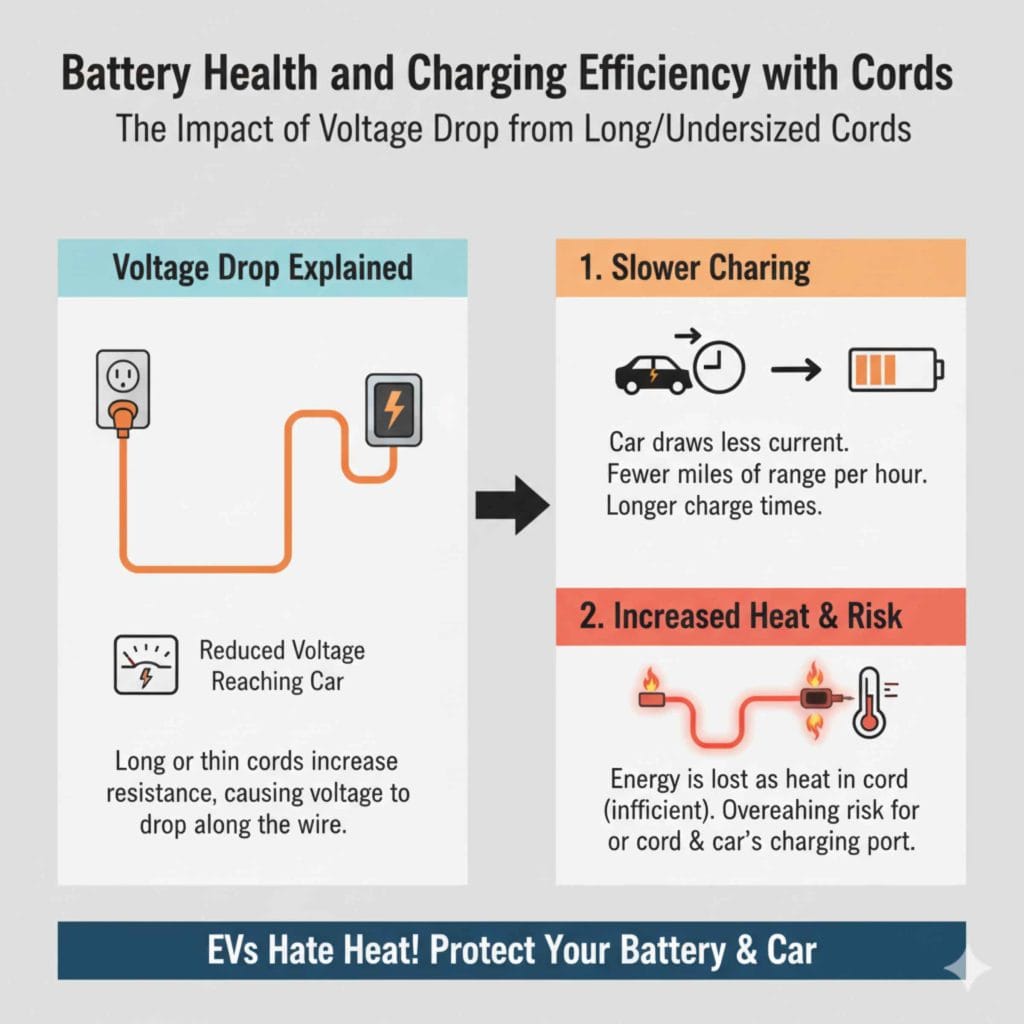
Safety is paramount, but efficiency matters too. When you use a very long or undersized extension cord, you reduce the effective voltage reaching the car. This is known as “voltage drop.”
The Impact of Voltage Drop
If the voltage drops too low, two things happen:
- Slower Charging: The car draws lower current to compensate, meaning you gain fewer miles per hour, even if the timer says it is charging.
- Increased Heat in the Cord: Paradoxically, electrical resistance causes inefficiency. The energy that isn’t going into your battery is being released as heat in the extension cord, making the cord run hotter for the same charging speed.
EVs hate heat. While the extension cord itself is the main fire risk, excessive heat generation anywhere in the charging path is generally inefficient and stresses the connections on your valuable car charging port over time.
Reviewing the Essentials: A Safety Checklist
To wrap up this essential guide, here is a simplified checklist to use every single time you consider plugging into an extension cord for your Level 1 charge. Run through this list before leaving the car connected.
The Extension Cord Charging Safety Checklist
| Check Area | Requirement | Pass/Fail |
|---|---|---|
| Charging Level | Must be Level 1 (120V) only. ABSOLUTELY NO Level 2 (240V). | |
| Cord Gauge | Must be 12 AWG or lower (thicker). | |
| Cord Length | As short as possible (ideally under 25 feet). | |
| Condition | No cuts, crimps, or melted sections anywhere on the cord. | |
| Uncoiling | Cord must be completely uncoiled and straight on the ground. | |
| Circuit Load | The outlet should not power other major appliances simultaneously. | |
| Heat Check | No warmth felt at connections after 30 minutes of charging. |
Frequently Asked Questions (FAQ) for New EV Owners
Q1: Can I use a power strip or surge protector with my EV charger?
A: Absolutely not. Your EVSE needs a direct, dedicated connection to the wall outlet. Power strips and surge protectors are not designed for the sustained, high-amperage draw of even Level 1 charging and are major fire hazards when overloaded this way.
Q2: If I use a heavy-duty chord, how much slower will my charging be?
A: It depends on the length and gauge. A short, high-quality (12 AWG) cord will cause minimal slowdown. A very long, slightly undersized cord (like cheap 14 AWG) can noticeably reduce efficiency due to voltage drop, sometimes making the charge take an hour or two longer than if plugged in directly.
Q3: Will using an extension cord void my EV or EVSE warranty?
A: Possibly, if damage occurs. If using an improper cord leads to overheating that damages the EVSE unit or the car’s charging port, the manufacturer may deny a warranty claim based on improper usage or modification of the charging setup.
Q4: Is it safe to charge my EV overnight using an extension cord?
A: No. Overnight charging requires continuous, unattended operation. This is the highest risk scenario for using an extension cord, as any heat buildup will occur quietly while you sleep, maximizing the danger of unnoticed fire ignition.
Q5: What should I do if I see smoke or smell burning from the cord?
A: Unplug immediately, safely. If you see smoke or smell melting plastic, do not touch the cord. Go to the breaker box and shut off the circuit immediately. Once power is off, carefully unplug the connections. Inspect for damage before attempting to charge via that outlet again.
Q6: Can I use the round, heavy-duty RV style extension cords?
A: Generally, no, unless specifically rated for EV use. While RV cords are heavy-duty, they are often rated for 30A or 50A loads on 240V circuits (Level 2 applications) and might not be optimally configured or gauged for the sustained 12A draw of a 120V Level 1 connection safely over long distances.
Conclusion: Prioritizing Safety Over Convenience
As an everyday driver making the smart switch to electric, I want you to feel confident controlling your vehicle’s energy needs. When the question, is it safe to charge electric car with extension cord, comes up, the safest, clearest answer is “No, not for routine charging.”
For the majority of drivers, Level 1 charging should always go directly into a known, safe wall outlet without any intermediaries. If you are in a situation where distance is an issue—perhaps you are borrowing an outlet at a relative’s home—you can employ the emergency protocol we detailed, but ONLY using brand-new, correctly gauged (12 AWG or 10 AWG), heavy-duty cords, and only for minimal charging sessions while actively monitoring the setup.
Your electric vehicle is a significant investment, and the charging equipment is crucial