
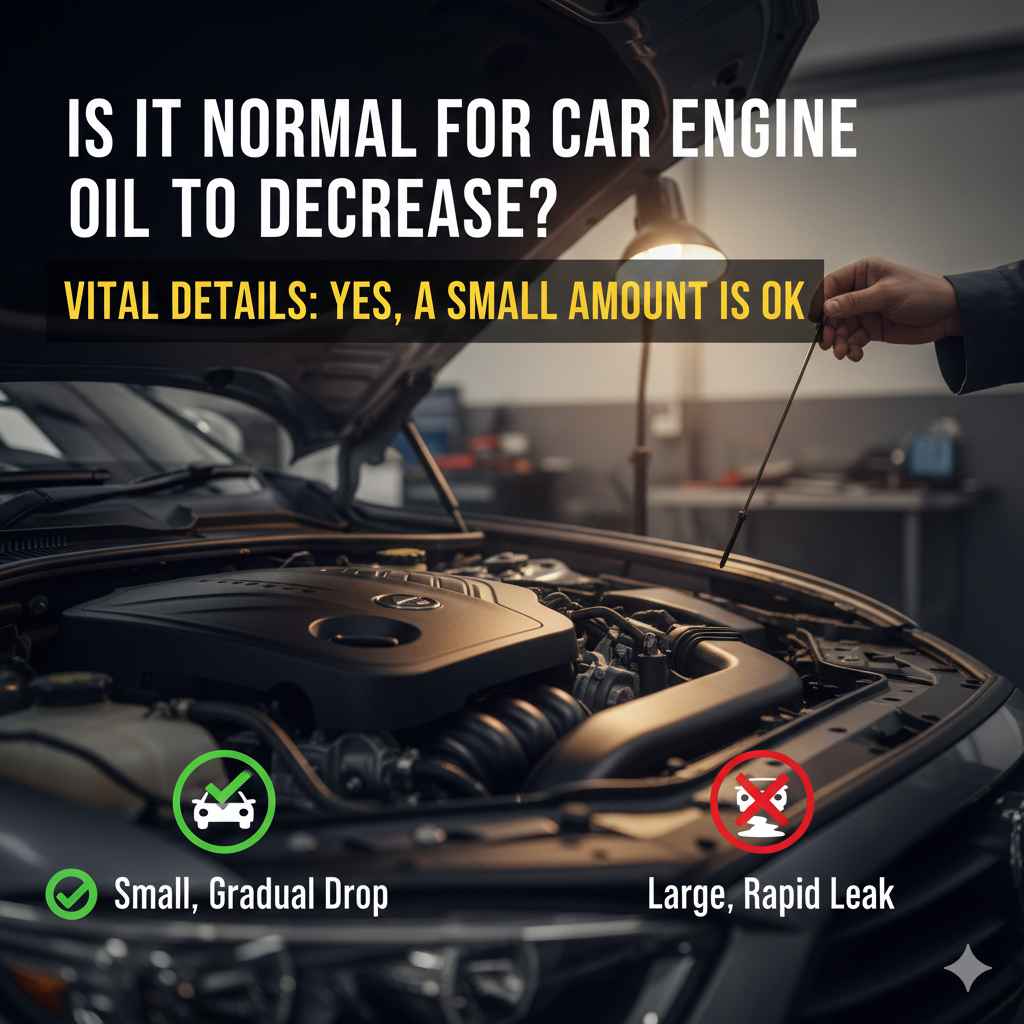
Yes, it is normal for a car engine to use a small amount of oil between changes. Modern engines can burn a tiny bit during normal operation. However, a sudden drop in oil level, visible leaks, or smoke from your exhaust often points to a problem that needs attention. Regularly checking your dipstick is key.
You pull into your driveway, turn off the car, and remember it’s time for a quick check-up. You pop the hood, pull out the oil dipstick, and your heart sinks a little. The oil level is lower than it was last month. The first thought for many drivers is, “Oh no, is something seriously wrong?” It’s a frustrating and common worry, but take a deep breath. You’ve come to the right place.
Losing a bit of engine oil doesn’t always spell disaster. In this guide, I’ll walk you through why your car might be using oil, how to tell the difference between normal consumption and a real problem, and what you can do about it. We’ll keep it simple, clear, and focused on giving you the confidence to understand what’s happening under your hood.
To understand why your oil level might drop, we need to separate oil loss into two main categories: normal oil consumption and problematic oil loss. One is a normal part of how your engine works, while the other is a sign that something needs fixing.
What is Normal Oil Consumption?
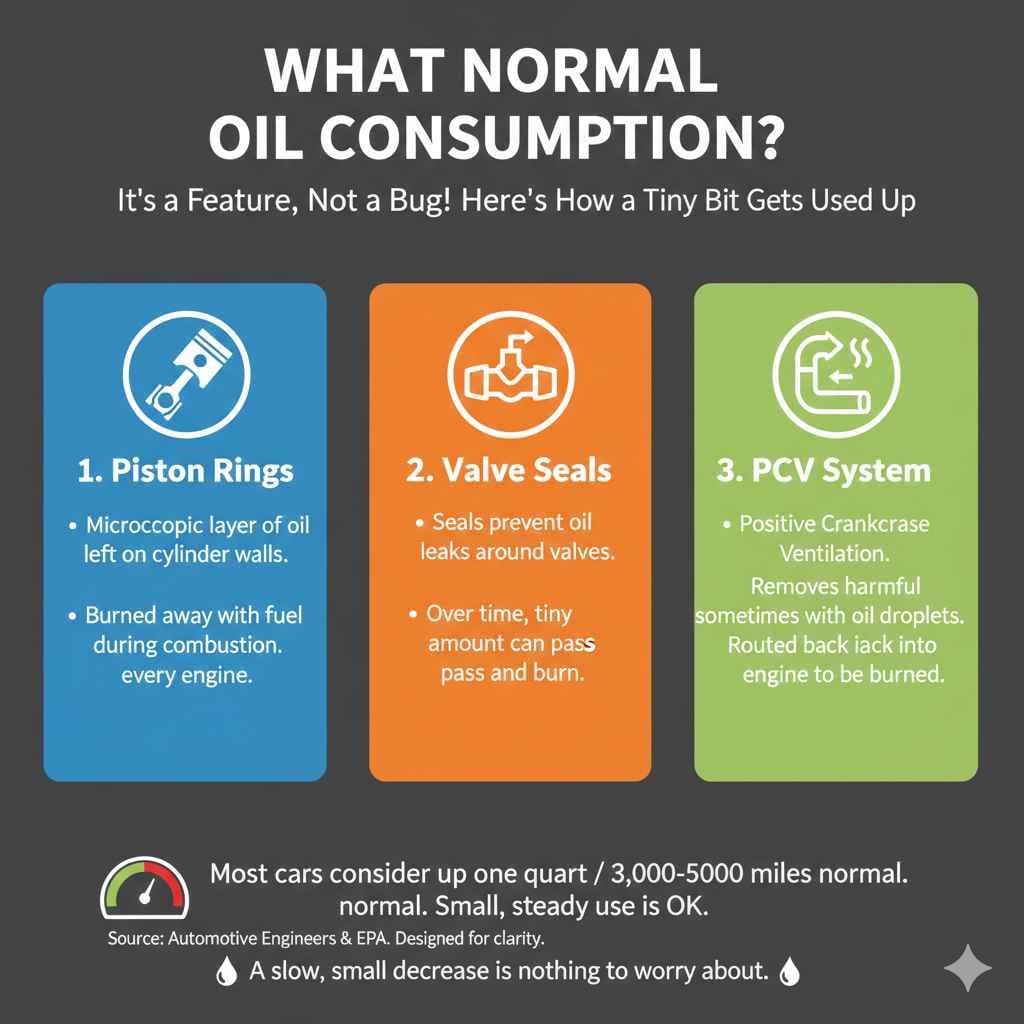
Believe it or not, your car’s engine is designed to use a very small amount of oil. It’s a feature, not a bug! Inside your engine, thousands of controlled explosions are happening every minute. Pistons are flying up and down inside cylinders at incredible speeds. To prevent metal-on-metal destruction, a super-thin film of oil coats everything.
Here’s how a tiny bit of that oil gets used up:
- Piston Rings: Each piston has rings that seal the combustion chamber. As the piston moves, these rings scrape most of the oil off the cylinder walls, but a microscopic layer is left behind and gets burned away with the fuel. This is completely normal and happens in every engine.
- Valve Seals: Your engine has valves that open and close to let air in and exhaust out. Seals at the top of these valves prevent oil from leaking down into the engine. Over time, these seals can allow a minuscule amount of oil to pass, which then gets burned.
- PCV System: The Positive Crankcase Ventilation (PCV) system removes harmful vapors from the engine. Sometimes, this system can pull tiny oil droplets along with the vapors, which are then routed back into the engine to be burned. You can learn more about these systems from the Environmental Protection Agency (EPA), as they are a key part of modern emissions control.
Most car manufacturers consider losing up to one quart of oil between oil changes (typically every 3,000 to 5,000 miles) to be within the normal range. High-performance or turbocharged engines may even use a bit more. The key takeaway is that a slow, steady, and very small decrease is usually nothing to worry about.
When Oil Loss Signals a Problem
A sudden drop in your oil level, needing to add oil every week, or seeing other warning signs is not normal. This points to a problem that needs your attention. Problematic oil loss usually comes from two sources: external leaks (oil dripping out) or internal leaks (oil burning inside the engine).
1. External Oil Leaks
This is the most common cause of significant oil loss. An external leak means oil is escaping the engine through a bad seal or gasket and dripping onto the ground or other parts of your car. These are often the easiest problems to spot.
How to Spot an External Leak:
- Puddles or Drips: Look for dark brown or black spots on your driveway or parking spot. Place a large piece of cardboard under your car overnight to see if anything drips.
- Oily Engine Parts: Pop the hood and use a flashlight. Look for areas on the engine that are wet, grimy, and covered in gunk. Leaking oil attracts dirt and dust, creating a thick, greasy buildup.
- Burning Smell: If oil is leaking onto hot parts like the exhaust manifold, you’ll often smell a distinct, sharp burning odor while driving or after you park.
Common Spots for External Leaks:
- Valve Cover Gasket: This rubber seal sits on top of your engine. It’s a very common leak spot. You’ll see oil seeping down the sides of the engine.
- Oil Pan Gasket: The oil pan is at the very bottom of your engine. A leak here will cause drips directly underneath the car.
- Oil Filter: If the oil filter wasn’t tightened correctly or its gasket is faulty, it can leak. This is common right after an oil change.
- Crankshaft or Camshaft Seals: These seals are deeper in the engine and more difficult to fix, but they can wear out and cause significant leaks.
2. Internal Oil Leaks (Burning Oil)
If you don’t see any drips but your oil level keeps dropping, your engine is likely burning it. This happens when worn-out parts allow too much oil to enter the combustion chamber. This is more serious than an external leak because it can damage expensive components like your catalytic converter over time.
How to Spot an Internal Leak (Burning Oil):
- Blue or Grayish Smoke from the Exhaust: This is the classic sign of burning oil. You might see it when you first start the car, when you accelerate hard, or constantly while driving.
- Foul Smell: Burning oil has a smell similar to burning plastic or asphalt.
- Rapid Oil Loss with No Drips: If the dipstick shows a significant drop but the ground under your car is clean, burning oil is the likely culprit.
Common Causes of Burning Oil:
- Worn Piston Rings: When these rings wear out, they can’t effectively seal the combustion chamber, allowing oil to slip past and burn.
- Worn Valve Seals: Old, hardened valve seals can’t stop oil from leaking down the valve stems and into the engine. A classic sign is a puff of blue smoke when you start the car after it’s been sitting for a while.
- PCV System Failure: A clogged or stuck PCV valve can cause pressure to build up inside the engine. This pressure can force oil past gaskets and seals, leading to both leaks and increased oil burning.
- Blown Head Gasket: This is a more severe issue. The head gasket seals the gap between the engine block and the cylinder head. If it fails, oil and coolant can mix. You might see milky, frothy oil on your dipstick or thick white smoke from the exhaust.
Normal vs. Problematic Oil Loss: A Quick Cheat Sheet
To make things easier, here’s a simple table to help you tell the difference at a glance.
| Symptom | Likely Normal Consumption | Likely a Problem |
|---|---|---|
| Amount of Oil Lost | Less than 1 quart between oil changes | More than 1 quart between oil changes; needing to add oil frequently |
| Visible Drips | None | Dark puddles or spots on the ground |
| Exhaust Smoke | None (or a little white vapor on cold days) | Noticeable blue, gray, or white smoke |
| Smell | No unusual smells | A sharp, burning oil smell |
| Check Engine Light | Off | May be on, indicating a sensor or emissions issue |
How to Check Your Engine Oil Level the Right Way
Checking your oil is one of the easiest and most important things you can do for your car. It takes less than five minutes. Do it once a month and before any long road trips.
- Park on Level Ground: This is crucial for an accurate reading. If your car is on a slope, the oil will pool to one side of the oil pan.
- Run the Engine (Briefly): Let the engine run for a minute to circulate the oil, then turn it off. Wait 5-10 minutes for the oil to settle back down into the pan. Checking a cold engine is okay, but a warm engine gives a more accurate reading of the operating level.
- Locate the Dipstick: Pop the hood. The oil dipstick usually has a brightly colored handle (often yellow or orange) and may have an oil can symbol on it.
- Pull and Wipe: Pull the dipstick all the way out. Use a clean, lint-free rag or paper towel to wipe the entire length of the dipstick clean.
- Re-insert and Read: Push the dipstick all the way back in, making sure it’s fully seated. Immediately pull it back out again.
- Check the Level: Look at the very end of the dipstick. You will see two marks, dots, or a cross-hatched area. The oil level should be between these two marks. If it’s below the lower mark, you need to add oil.
Your Oil is Low… Now What? A Simple Guide to Topping Up
If your oil is low, adding more is simple. The hardest part is making sure you use the right kind of oil.
Step 1: Get the Right Oil
Check your owner’s manual! It will tell you the exact type and weight of oil your car needs (e.g., 5W-30, 0W-20). Using the wrong oil can harm your engine. You can find this information in the maintenance section of your manual or sometimes printed on the oil cap itself.
Step 2: Add Oil Slowly
- Open the Oil Cap: Locate the oil filler cap on top of your engine. It will usually have the same oil can symbol as the dipstick. Unscrew it and place it somewhere safe where it won’t get dirty.
- Use a Funnel: A funnel prevents messy spills, which can cause smoking and bad smells if oil gets on the hot engine.
- Add a Little at a Time: Start by adding about half a quart of oil. The distance between the “Full” and “Add” marks on your dipstick is usually one quart, so don’t just dump the whole bottle in.
- Re-check the Level: Wait a minute for the oil to drain down, then use the dipstick to check the level again.
- Repeat if Necessary: Continue adding small amounts of oil and re-checking until the level is at or just below the “Full” mark. Do not overfill! Too much oil can be just as bad as too little.
- Replace the Cap: Screw the oil filler cap back on securely. You’re all set!
Common Leak Spots and Potential Repair Costs
If you suspect a leak, it’s helpful to know what you might be dealing with. Repair costs can vary widely based on your car model and local labor rates. This table gives you a general idea.
| Common Leak Source | Difficulty of Repair | Estimated Repair Cost Range |
|---|---|---|
| Oil Filter Gasket | Easy | $30 – $100 (often fixed with a standard oil change) |
| Valve Cover Gasket | Easy to Moderate | $150 – $450 |
| Oil Pan Gasket | Moderate | $250 – $700+ (sometimes requires removing other parts) |
| Crankshaft Seal | Difficult | $400 – $1,000+ (labor-intensive) |
| Head Gasket | Very Difficult | $1,500 – $3,500+ (a major engine repair) |
Note: These are rough estimates. For an accurate quote, it’s always best to consult a trusted mechanic. Resources like Kelley Blue Book can help you estimate repair costs in your area.
When to Call a Professional Mechanic
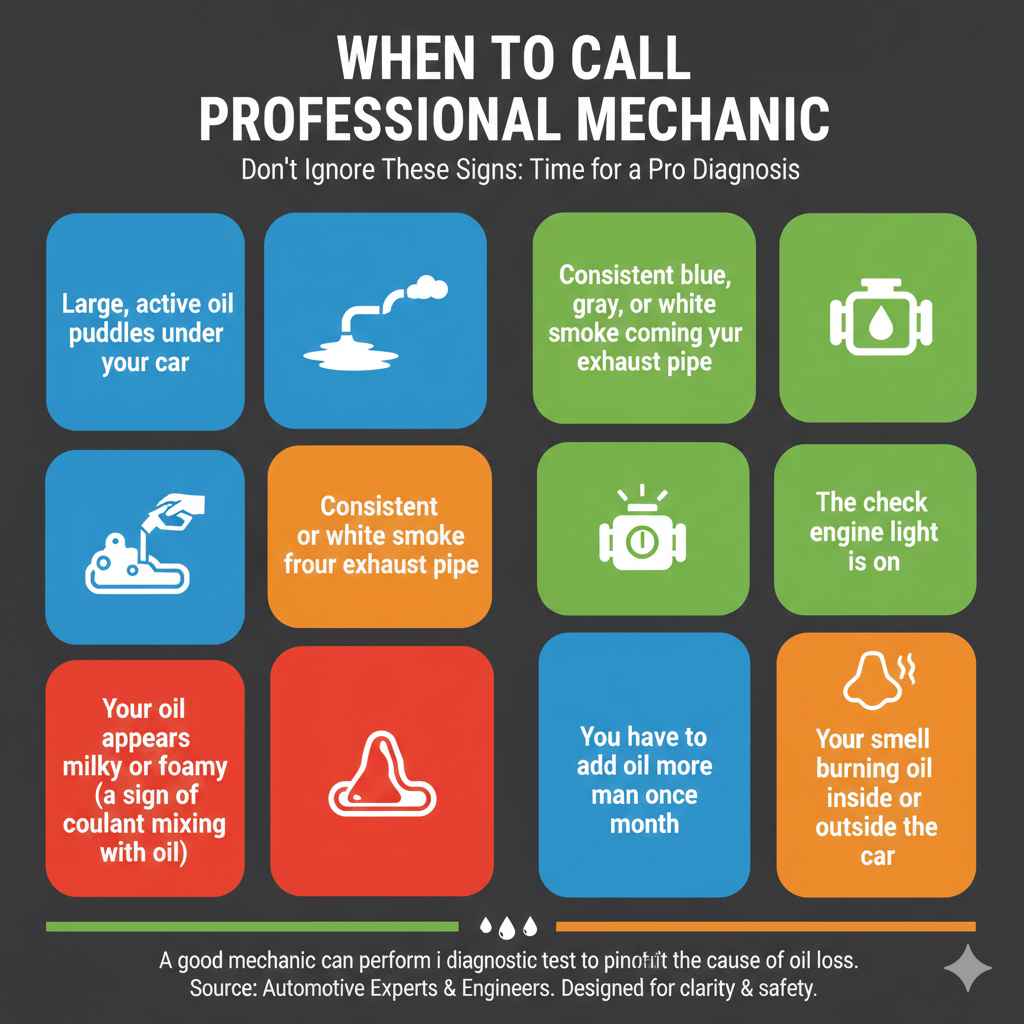
While you can handle checking and topping up your oil, some signs mean it’s time to let a pro take a look. Don’t ignore these symptoms, as they can lead to much more expensive repairs down the road.
Call a mechanic if you notice:
- Large, active oil puddles under your car.
- Consistent blue, gray, or white smoke coming from your exhaust pipe.
- The check engine light is on.
- Your oil appears milky or foamy (a sign of coolant mixing with oil).
- You have to add oil more than once a month.
- You can smell burning oil inside or outside the car.
A good mechanic can perform a diagnostic test to pinpoint the exact cause of the oil loss, whether it’s a simple gasket or a more complex internal issue.
Frequently Asked Questions (FAQ)
1. How much oil consumption is considered normal?
Most automakers state that losing up to one quart of oil for every 1,000 to 1,500 miles is acceptable. However, for a typical driver, losing less than half a quart between 5,000-mile oil changes is more common. If you’re adding more than a quart between changes, it’s wise to have it checked.
2. Why would a brand new car be losing oil?
New engines have a “break-in” period where the piston rings are still seating against the cylinder walls. During this time (the first few thousand miles), it’s normal for a car to consume a bit more oil. If it continues after the break-in period, consult your dealership as it may be a warranty issue.
3. Can I just keep adding oil instead of fixing the problem?
For a very minor leak, you might get by for a short time. However, it’s not a long-term solution. Unrepaired leaks can worsen suddenly, leading to a catastrophic loss of oil and severe engine damage. Burning oil can also damage expensive oxygen sensors and your catalytic converter, leading to failed emissions tests and costly repairs.
4. What does blue smoke from my exhaust mean?
Blue or grayish-blue smoke is a tell-tale sign that your engine is burning oil. This means oil is getting past the piston rings or valve seals and into the combustion chamber. It’s a clear signal to see a mechanic for a diagnosis.
5. How often should I check my car’s oil?
A good rule of thumb is to check your oil level at least once a month. If you have an older car, drive long distances, or know your car consumes some oil, checking it every other time you fill up with gas is a great habit to get into.
6. Does the type of oil I use affect how much is consumed?
Yes, it can. Thinner, lower-viscosity oils (like 0W-20) can sometimes be consumed faster in some engines compared to thicker oils. Also, conventional oils may break down and burn off faster than high-quality full synthetic oils. Always use the oil viscosity recommended in your owner’s manual for best performance and protection.
Conclusion: Stay Ahead of the Problem
Seeing your car’s engine oil decrease can be worrying, but now you know that a small drop is often a normal part of a healthy engine’s operation. The key is to be proactive. By making a monthly oil check a regular part of your routine, you’ll quickly learn what’s normal for your specific car.
When you know your car’s baseline, you’ll be able to spot trouble early—whether it’s a drip on the pavement or a puff of smoke from the tailpipe. Understanding the difference between normal consumption and a real leak empowers you to take action before a small issue becomes a major, wallet-draining repair.
So, don’t fear the dipstick. Embrace it as your best tool for keeping your engine happy, healthy, and reliable for many miles to come. You’ve got this!