
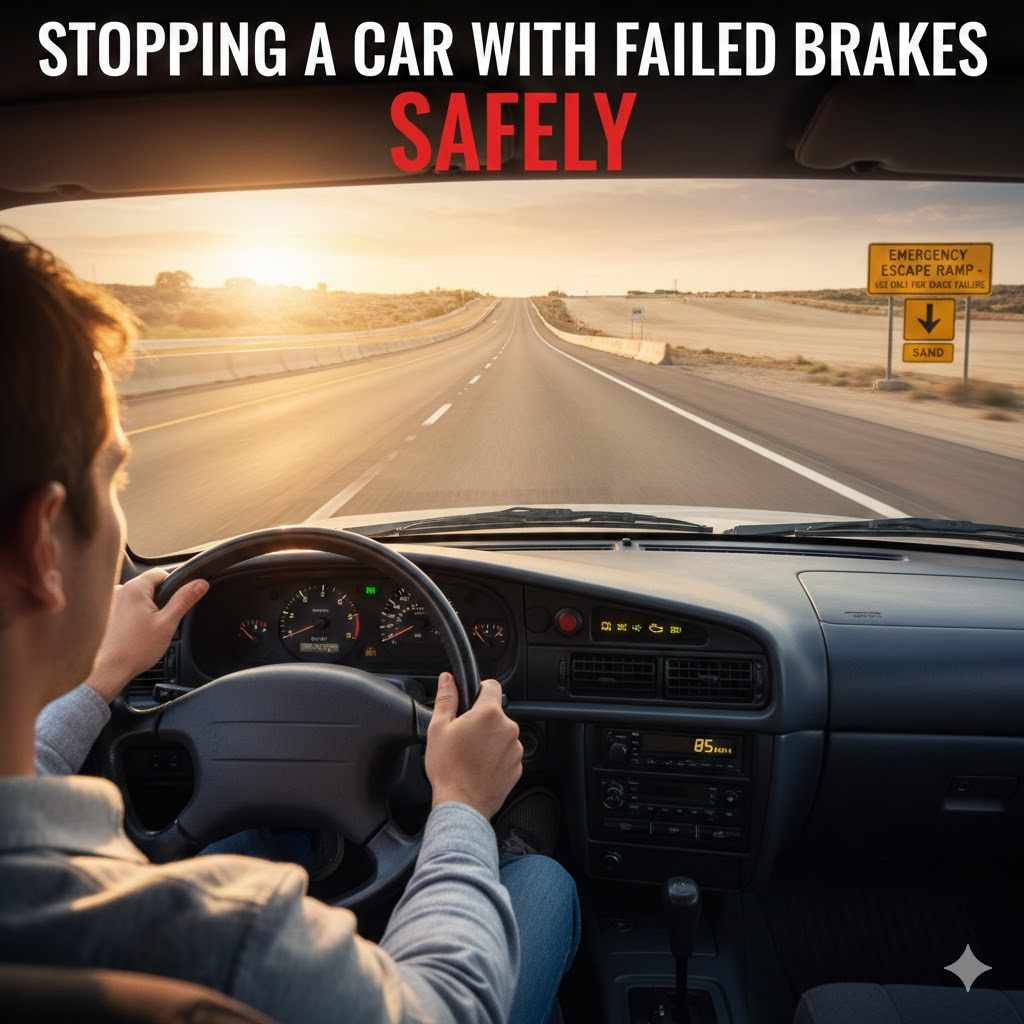
It can be scary when your car’s brakes suddenly stop working. Many drivers, especially new ones, don’t know exactly what to do in this dangerous situation. This guide will help you understand How to Stop a Car with Failed Brakes Safely.
We will walk you through simple steps to keep you and others safe.
Understanding Brake Failure Causes
Brake failure happens when your car’s braking system stops working. This can be very frightening. Knowing why it happens helps you stay calm and react better.
This section will look at common reasons brakes fail so you can be prepared.
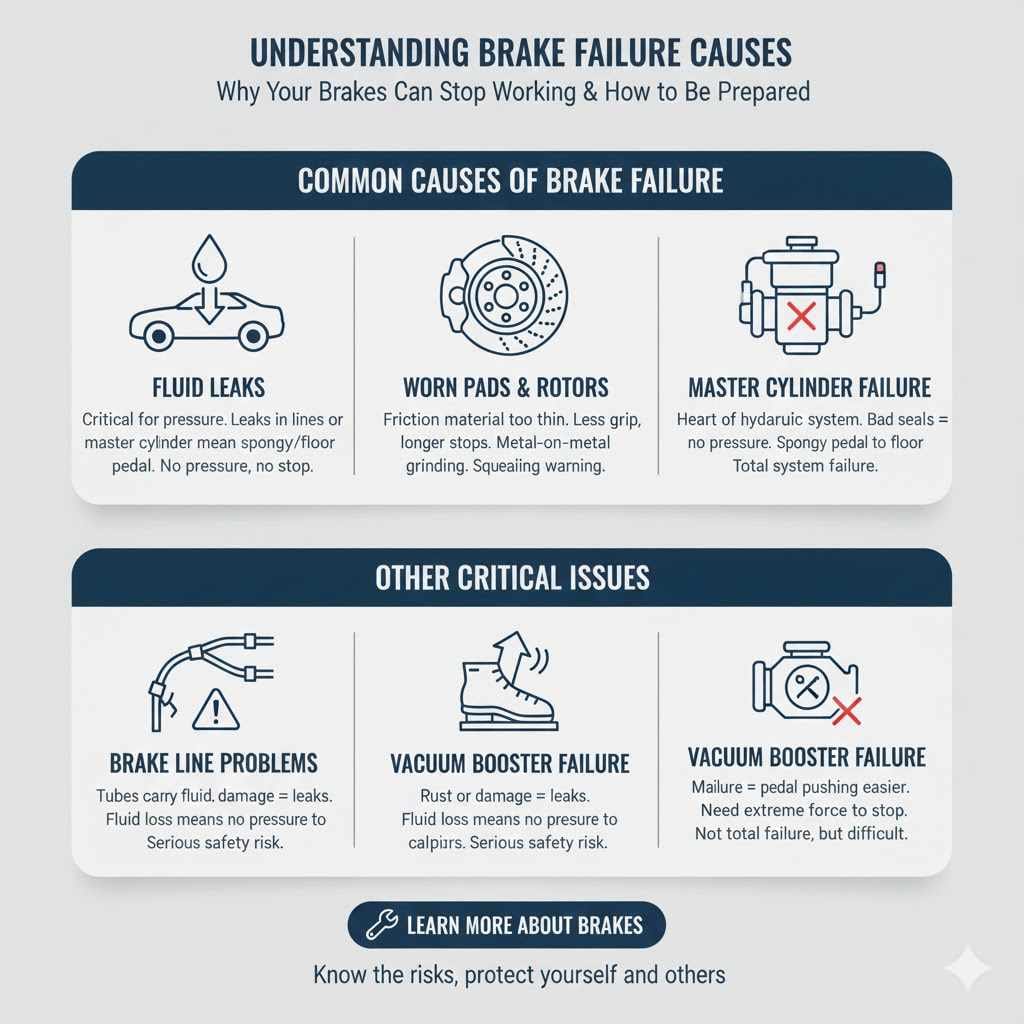
Fluid Leaks
Brake fluid is very important. It helps push the brake pads onto the rotors to slow your car down. If there is a leak in the brake lines or the master cylinder, the fluid can escape.
Without enough fluid, the pressure needed to brake is lost.
A fluid leak means the pedal might feel soft or go all the way to the floor. It’s like trying to push a sponge. This is a common cause of brake failure.
Small leaks can sometimes be fixed, but a major loss of fluid means your brakes won’t work at all.
Worn Brake Pads and Rotors
Brake pads and rotors wear out over time. They are like the shoes and the spinning plates of your braking system. When they are too thin, they can’t grip and slow the wheels effectively.
Worn parts might make squealing noises first. If you ignore these sounds, they can get so thin that they fail to work. This is especially true in emergency stops.
They can overheat and lose their effectiveness, leading to brake failure.
Master Cylinder Problems
The master cylinder is the heart of the hydraulic brake system. It uses your foot’s pressure on the pedal to push brake fluid through the lines. If the seals inside the master cylinder are bad, it can’t create the necessary pressure.
When the master cylinder fails, you will likely notice a spongy or soft brake pedal. The pedal might sink to the floor. This component is vital, and its failure means the entire braking system stops working.
Issues with Brake Lines
Brake lines are tubes that carry the brake fluid from the master cylinder to the brakes at each wheel. These lines can rust or get damaged from road debris. A cracked or broken brake line will leak fluid.
Like other fluid leaks, this prevents the brake calipers from squeezing the brake pads. The car will not be able to slow down. This is a serious problem that requires immediate attention.
Vacuum Booster Failure
Many cars have a vacuum booster that makes pressing the brake pedal easier. It uses engine vacuum to multiply your force. If the booster fails, you’ll still have brakes, but it will be much harder to press the pedal.
The pedal will feel very stiff. You will need to push with a lot of force to slow down. This isn’t total brake failure, but it makes stopping much more difficult and requires significant physical effort.
Immediate Steps When Brakes Fail
When you realize your brakes aren’t working, it’s easy to panic. But staying calm is key. Knowing these immediate steps can help you manage the situation safely.
This part covers what to do the moment you realize your brakes have failed.
Stay Calm and Don’t Slam the Brakes
The first thing to do is breathe. Panicking makes it harder to think clearly. Slamming on the brakes, if they had any function left, could lock the wheels.
This would make steering impossible.
You want to keep control of your vehicle. Focus on what you can still do to slow down. Think about the alternative ways to stop your car safely.
Pump the Brake Pedal
If your brakes have partially failed, or if the pedal feels soft, try pumping it. Push the pedal down firmly and release it, then push again quickly. This can sometimes build up enough pressure in the brake lines to create some braking force.
This action forces any remaining brake fluid to the brakes. It might give you just enough stopping power to slow down. Don’t expect a full recovery, but it can help a little.
Shift to a Lower Gear
Using your transmission to slow down is a very effective method. Shift your car into a lower gear. If you are in an automatic, move the gear shift from “D” (Drive) to “3,” “2,” or even “1.”
In a manual car, shift from fifth gear to fourth, then third, and so on. The engine will act as a brake. This is called engine braking.
It will slow your car down gradually.
Use the Parking Brake
The parking brake, also called the emergency brake, is a separate braking system. It usually works on the rear wheels. You can pull the lever or press the pedal for the parking brake.
Pull it up or press it gradually. If you yank it hard, it might lock the rear wheels and cause you to skid. Apply steady pressure to slow the car down.
Steer to Safety
While you are trying to slow down, keep steering. Look for a safe place to pull over. This could be an empty lane, a shoulder, or an open field.
Avoid sharp turns.
Signal your intentions if possible. Try to guide your car away from other traffic. Your goal is to bring the car to a complete stop in a secure location.
Advanced Techniques for Stopping Safely
Beyond the immediate actions, there are more advanced methods to consider when your brakes completely fail. These techniques rely on using the car’s other systems to help you stop. They can be very useful in difficult situations.
Scraping Against a Wall or Guardrail
In a dire emergency, you might need to use friction to slow down. If there is a solid wall or a guardrail on the side of the road, you can very carefully use it. Gently steer your car to rub against it.
This will create friction and help slow your speed. Do this with extreme caution. It will damage your car.
The goal is to reduce your speed to a manageable level before coming to a stop.
Riding the Clutch (Manual Transmission)
For cars with manual transmissions, you can use the clutch to help slow down. While in a lower gear, you can partially engage the clutch. This means you don’t push the pedal all the way in.
This creates resistance between the engine and the wheels. It’s similar to engine braking but with a different feel. Be careful not to overheat your clutch.
Downshifting Strategically
Downshifting is crucial for controlling speed when your brakes fail. Start by downshifting to a lower gear. As the car slows, downshift again to an even lower gear.
This process helps maintain control. It prevents the engine from over-revving. It also provides continuous braking force.
The lower the gear, the greater the engine braking effect.
Using Terrain to Your Advantage
If you are on a hill, use it. If going downhill, shift into a very low gear (like 1 or 2) to fight gravity. If going uphill, the incline itself will help slow you down.
Look for gentle slopes or curves to help bleed off speed. Avoid steep drops or sharp inclines that could be dangerous.
Cranking the Steering Wheel
While not a direct braking method, sharp turns can sometimes create resistance. If you are in a desperate situation and need to slow down quickly, you might be able to crank the steering wheel back and forth.
This can create drag. However, this is a risky maneuver. It could lead to losing control if not done carefully.
It’s a last resort for slowing down.
When to Seek Professional Help
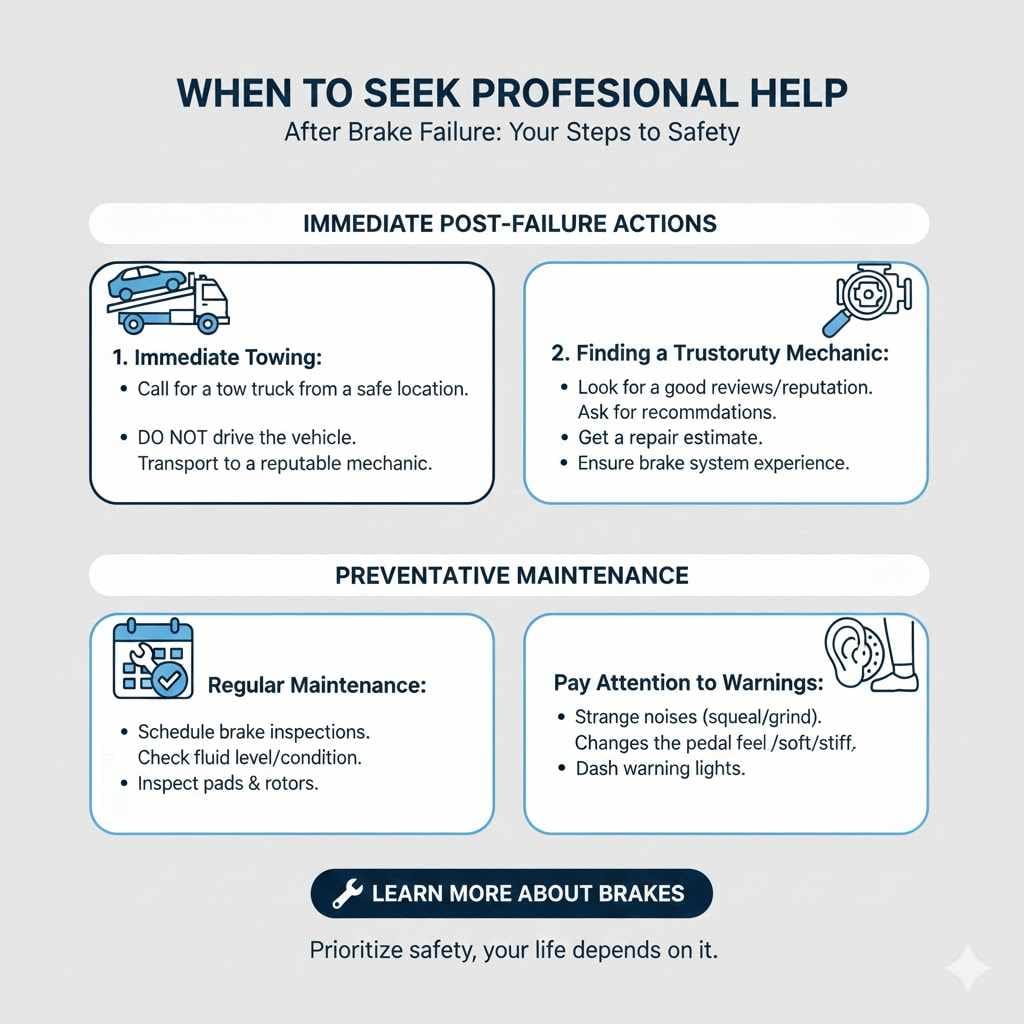
Once you have safely stopped your car after brake failure, the most important next step is to get professional help. Do not try to drive the car again until it has been inspected and repaired. Your safety is paramount.
Immediate Towing
As soon as you are in a safe location, call for a tow truck. Do not attempt to drive the vehicle, even for a short distance. Your car is not safe to drive without functioning brakes.
The tow truck will take your car to a reputable mechanic. They can diagnose the problem and fix it properly. This ensures your car is safe for future use.
Finding a Trustworthy Mechanic
Choosing the right mechanic is important. Look for someone who has good reviews and a solid reputation. Ask friends or family for recommendations.
A good mechanic will explain what is wrong with your brakes. They will provide an estimate for the repairs before starting work. Make sure they are experienced with brake systems.
Understanding Brake System Maintenance
Regular maintenance can prevent brake failure. Get your brakes checked often. This includes checking the brake fluid level and condition, as well as the wear on your brake pads and rotors.
Pay attention to any strange noises or changes in how your brake pedal feels. Early detection of problems can save you from a dangerous situation like brake failure.
Common Questions About Brake Failure
Frequently Asked Questions
Question: What should I do if my brake pedal goes to the floor?
Answer: If your brake pedal goes to the floor, try pumping it rapidly. Also, shift to a lower gear and use your parking brake gradually. Steer to a safe location.
Question: Can I drive my car if my brakes are weak?
Answer: It is not safe to drive with weak brakes. You should have them inspected and repaired by a professional immediately before driving again.
Question: How often should I check my brake fluid?
Answer: Check your brake fluid level every few months. It is also good to have it inspected during regular oil changes and maintenance services.
Question: What is engine braking?
Answer: Engine braking is using your car’s engine to help slow down. You do this by shifting to a lower gear, which creates resistance against the wheels.
Question: Is it dangerous to use the parking brake suddenly?
Answer: Yes, suddenly jerking the parking brake can cause the rear wheels to lock up and make the car skid. It is better to apply it smoothly and gradually.
Conclusion
Learning How to Stop a Car with Failed Brakes Safely empowers you. You now know the steps to take when brakes fail. Stay calm, use your gears and parking brake, and steer to safety.
Regular brake checks can prevent this. Drive safely.