
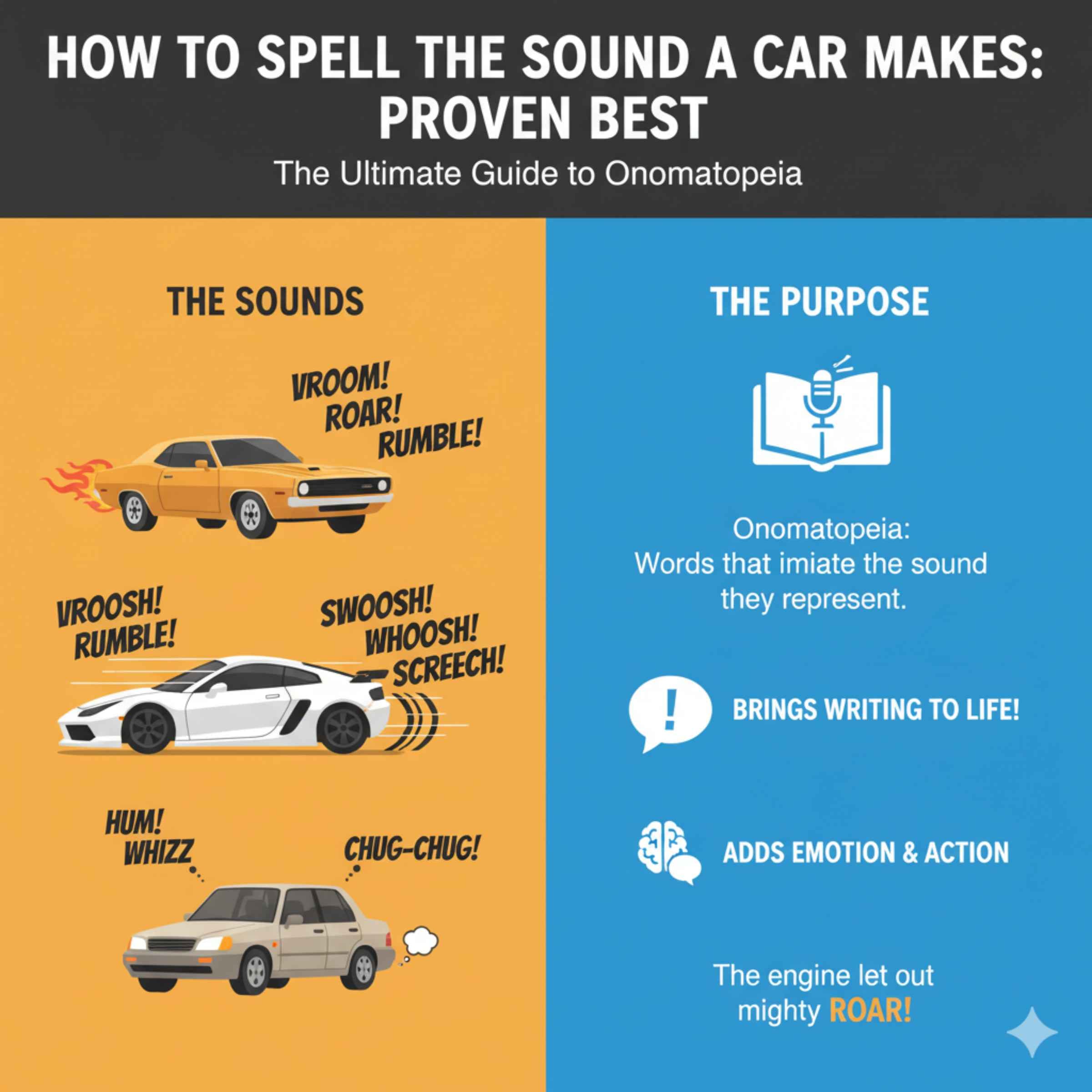
The most common ways to spell the sound a car makes are “Vroom,” “Honk,” “Screech,” and “Beep,” depending on the specific noise, engine action, or situation. Understanding the context helps you choose the perfect onomatopoeia for your writing or conversation.
Ever listened closely to your car and wondered just how to write down that noisy moment? You are not alone! Describing car sounds—whether it’s a happy engine roar or a surprising tire squeal—can be tricky. It’s frustrating when you need to explain exactly what your car did, but the words just don’t feel right. Don’t worry! As your automotive guide, Dustin Hall, I am here to make this simple. We will break down the language of engines and horns into easy, everyday spells. Prepare to sound like a pro when you talk about car noises next time!
Why Spelling Car Sounds Matters (It’s More Than Just Fun)
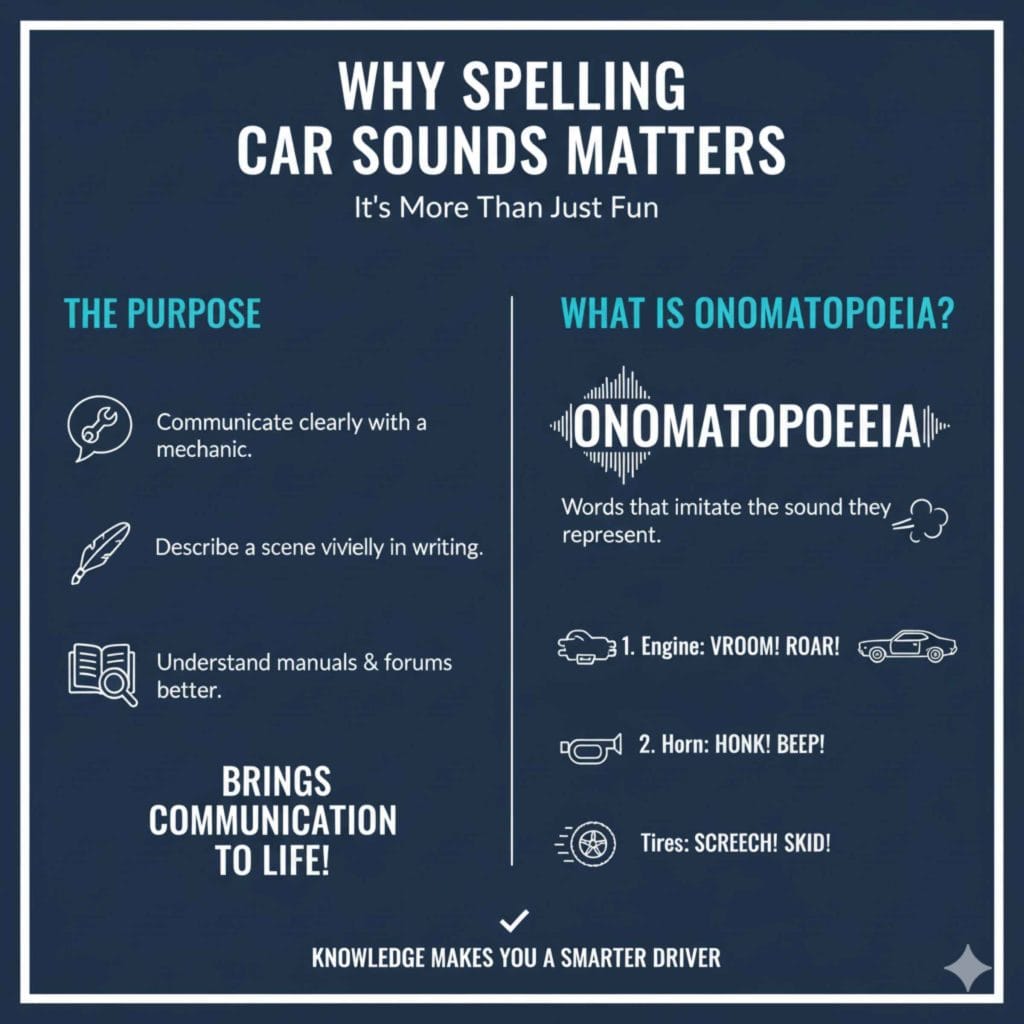
We use sounds to communicate what’s happening around us. When it comes to cars, these sounds often signal important clues about the vehicle’s health or behavior. Knowing the right “spell” for the sound helps you:
- Communicate clearly with a mechanic.
- Describe a scene vividly in writing (like telling a story).
- Understand driver manuals or online forums better.
Car noises are called “onomatopoeia”—fancy word, simple idea. It means a word that sounds like the noise it describes. Let’s look at the main categories of sounds cars make and the best ways to spell them.
Part 1: The Engine Sounds – From Idle to Full Throttle
The engine is the heart of the car, and it makes the most distinct noises. These sounds usually relate to acceleration, speed, or running rough.
The Smooth, Fast Engine: “Vroom” vs. “Roar”
When a car speeds up quickly, that classic, exciting sound is often written in a few ways. Think about a race car or a powerful sports car taking off.
- Vroom: This is the most universally recognized spelling. It perfectly captures the rising pitch and power of acceleration. Example: “He hit the gas, and the car went vroom!”
- Vroom-vroom: Often used for continuous acceleration or shifting gears.
- Brrrum: Sometimes used for lower, deeper engine noises or less intense acceleration.
The Idling Engine: Steady and Quiet
When your car is just sitting there, running normally (like at a stoplight), the sound is generally very low key.
- Purr: Best for a well-maintained, quiet engine, often associated with luxury or finely tuned cars.
- Thrum: Suggests a low, steady vibration or deep hum.
- Idling Noise (Descriptive): Sometimes, it’s better not to use onomatopoeia and just describe it: “The engine ran smoothly.”
The Troubled Engine: Rough Running and Backfiring
If the sound is rough, it usually signals a problem you should have checked out. (If you hear any of these, try to limit driving until a professional looks at it. Safety first!)
When an engine misfires or runs poorly, you might hear:
- Chug-chug-chug: For a very slow, struggling engine.
- Rattle: A loose sound, often indicating something vibrating inside the engine bay.
- Clunk/Knock: These are serious diagnostic sounds. A deep, heavy knock usually needs immediate attention. You should check resources like the National Highway Traffic Safety Administration (NHTSA) if you suspect major mechanical failure.
- Putt-putt: For older, small engines, like lawnmowers or very dated cars.
Part 2: The Horn and Alert Sounds
These are the intentional sounds drivers use to signal others. These spellings are usually very standard because they directly relate to the function of the horn mechanism.
The Standard Horn Sound
This is the universal warning sound. It’s short, sharp, and designed to be noticed instantly.
- Honk: The most common and appropriate way to spell a standard car horn. It implies a single, loud blast on most everyday vehicles.
- Beep: Used for shorter, often less aggressive sounds, or when describing smaller vehicle horns (like scooters or small electronic alerts).
- Blare: Used when the horn is excessively loud or used for a long time—a dramatic description.
The Modern or Electronic Alert
Newer cars often have sophisticated alarm systems or parking sensors that make different sounds.
| Situation | Best Spelling | Usage Context |
|---|---|---|
| Parking Sensor Activation | Beep… Beep-Beep-Beep | Regular, rhythmic warning as you approach an obstacle. |
| Seatbelt Warning | Chime or Ding | A melodic or repetitive, less aggressive alert inside the cabin. |
| Alarm System Activation | Wail or Yelp | Describes the fluctuating pitch of a security alarm. |
Part 3: The Movement Sounds – Tires and Brakes
The sounds your tires and brakes make tell you a lot about how you are driving or if something needs adjustment. These are crucial for safe driving!
Brake Noises
Brake sounds usually mean friction. When brake pads wear down, metal hits metal, creating serious noise.
- Screech: The classic, high-pitched sound of brake pads grabbing the rotor, often when braking hard or when the pads need replacing soon.
- Squeal: Similar to screech, but often milder, perhaps just indicating dampness or slight wear starting.
- Grind: This is the sound of metal-on-metal contact, meaning your brake pads are completely gone. If you hear this, stop driving immediately and replace the pads before you damage the rotors. This is a serious safety issue you can learn more about by reading basic brake maintenance guides from trusted sources like AAA.
Tire Sounds (When Moving)
Tire sounds depend heavily on speed, road surface (asphalt vs. gravel), and tire condition.
- Hiss: A slow leak, often indicating a puncture or slow pressure loss.
- Thump-thump: Usually caused by a flat spot on the tire or (more commonly) an unbalanced wheel causing a rhythmic bump you feel and hear.
- Whir or Hum: A low, continuous sound that gets louder with speed. This often points to worn-out wheel bearings.
Part 4: Damage and Accidents – The Loud Disruptions
These sounds are fortunately rare, but when they happen, they are dramatic and loud!
Impact and Breaking Sounds
When metal bends or components break, the sounds are usually sharp and sudden.
- Crash: The general term for a collision.
- Smash: Often used for glass breaking (like a window impact).
- Bang: A very loud, sharp noise, often when a door is slammed forcefully or something heavy falls onto the car.
- Crunch: Excellent for describing the sound of fenders being crumpled or plastic bumpers cracking upon a low-speed bump.
Exhaust Failures
A hole in your muffler or exhaust pipe changes the engine sound dramatically, usually making it much louder and deeper.
The best spelling here is often:
Rumble, Roar, or Bark: These suggest a deep, loud exhaust note, often indicating a leak rather than a typical “vroom.”
Comparing Common Spellings: Making the Right Choice
Sometimes, multiple words fit, but one is usually better depending on precision. Here is a quick reference guide to help you choose the proven best spelling.
| The Sound You Hear | Best Spelling (Most Common Use) | Why It Fits Best (Beginner Tip) |
|---|---|---|
| Car accelerating hard | Vroom | Best for speed and excitement. |
| Warning horn used sharply | Honk | The standard, quick alert sound. |
| Tires sliding/braking hard | Screech | High-pitched friction noise. |
| Engine running very smoothly | Purr | Implies quiet, happy operation. |
| Metal grinding while stopping | Grind | Indicates dangerous, complete pad wear. |
Practical Application: Using These Sounds in Real Life
Now that you know the “spells,” how do you use them to your advantage?
Communicating with Your Mechanic
When you call your service shop, being specific helps them prepare or understand the urgency. Avoid just saying, “My car is noisy.” Try this:
- “When I press the brake pedal hard, I hear a loud screech.” (Suggests worn pads.)
- “When I start the car cold, the engine makes a rhythmic rattle for about 30 seconds.” (Suggests a potential internal issue needing diagnosis.)
- “At highway speeds, there is a constant hum coming from the front left.” (Suggests a likely wheel bearing problem.)
Storytelling and Writing
If you are writing an email, text, or story, using the right sound makes your description pop. Imagine explaining a close call:
“I almost didn’t see the dog run out! I slammed on the brakes, causing the tires to screech loudly against the pavement, but thankfully, the honk scared it just enough for the car to stop without a crunch.”
Tips for Identifying Unfamiliar Car Noises
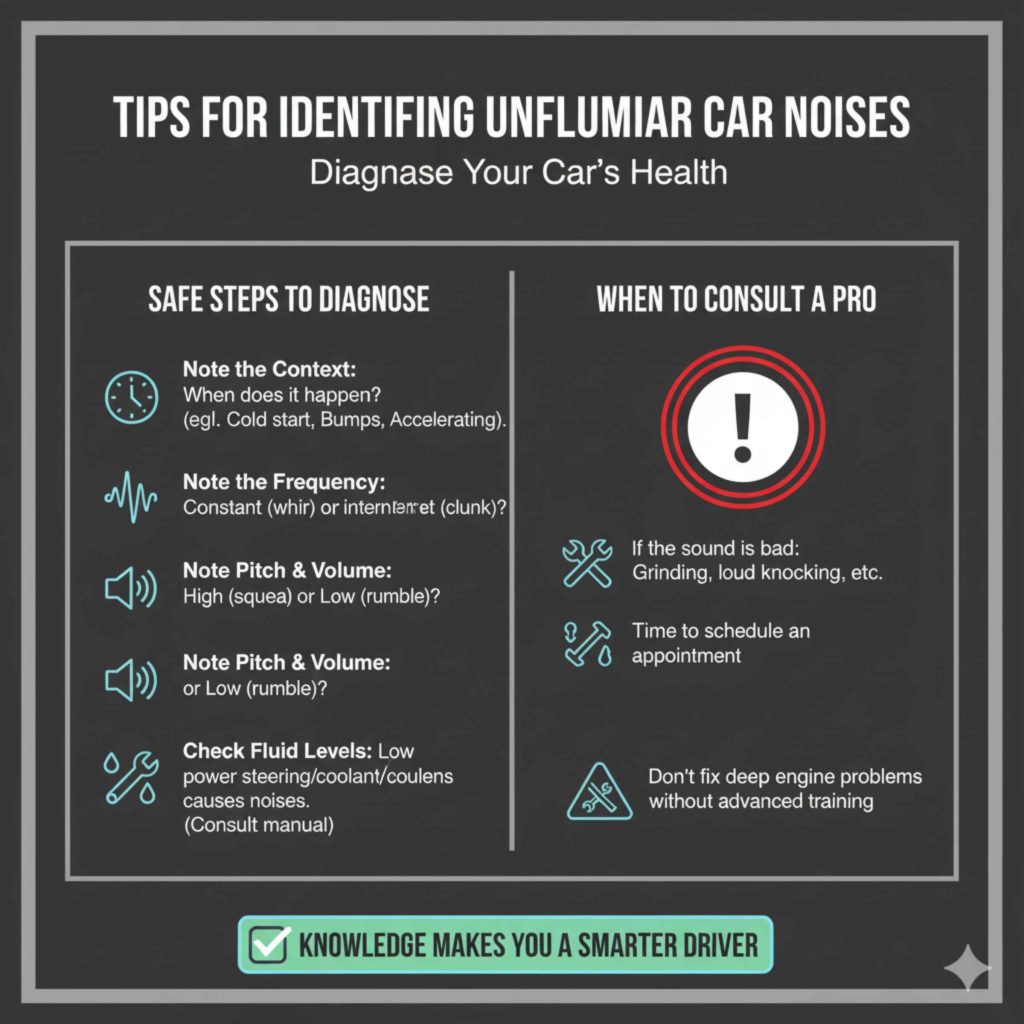
Sometimes a sound doesn’t fit neatly into “Vroom” or “Honk.” If you hear something new, follow these safe steps to diagnose it:
- Note the Context: When does it happen? (Cold start? Going over bumps? Lightly accelerating?)
- Note the Frequency: Is it constant (like a whir) or intermittent (like a sudden clunk)?
- Note the Pitch and Volume: Is it high (like a squeal) or low (like a rumble)?
- Check Fluid Levels: Low power steering fluid or coolant can cause strange noises. Always check your owner’s manual for safe fluid checking procedures!
- Consult a Trusted Source: If the sound is bad (like grinding or loud knocking), it’s time to schedule an appointment. Don’t try to fix deep engine problems yourself unless you have advanced training.
Frequently Asked Questions (FAQ)
Q1: Is “Vroom” the only right way to spell a fast car sound?
A: No, but it is the most popular! “Roar” works well for very big, loud engines, and “Zoom” implies lighter, faster movement, but “Vroom” is the standard spelling for powerful engine acceleration.
Q2: What should I tell the mechanic if my brakes make a “grind” sound?
A: Tell them exactly that: “When I press the brakes, I hear a loud grind.” This tells them immediately that the brake pads are likely completely worn down to the metal backing plate, which requires a priority repair.
Q3: How do I spell the sound from a car alarm?
A: Car alarms are best described as a “Wail” or a “Siren.” If it’s a shorter, choppy sound, “Yelp” or “Beep sequence” might work better.
Q4: If my car is rattling, is it safe to drive?
A: A light rattle that goes away quickly is usually fine. However, a persistent, loud engine rattle or knock could mean serious internal damage. Follow the safe driving guidelines from manufacturers; if in doubt, limp it carefully to the nearest service center.
Q5: Which spelling is best for a car driving on gravel?
A: Gravel usually causes the sound of small stones kicking up, which is often written as “Patter” or “Clicking” as the stones hit the underside of the car, or just a general “Crunch” of the tires on the loose surface.
Q6: What is the difference between a “Screech” and a “Squeal” when braking?
A: A Screech is usually louder, sharper, and happens during hard braking. A Squeal is milder and can happen even with light braking, often due to slight brake pad overheating or dampness.
Conclusion: Confidence in Understanding Car Noises
Figuring out how to spell the sound a car makes is less about strict grammar and more about clear communication. You’ve learned the proven best terms—from the joyous “Vroom” of acceleration to the urgent “Grind” warning you about critical brake wear. Remember, these sounds aren’t just background noise; they are your car talking to you. By learning these simple onomatopoeias, you gain confidence whether you are telling a funny story, writing an email, or giving crucial information to your trusted mechanic. Keep listening, keep learning, and drive safely knowing you can now accurately describe whatever sound your reliable ride throws at you!