
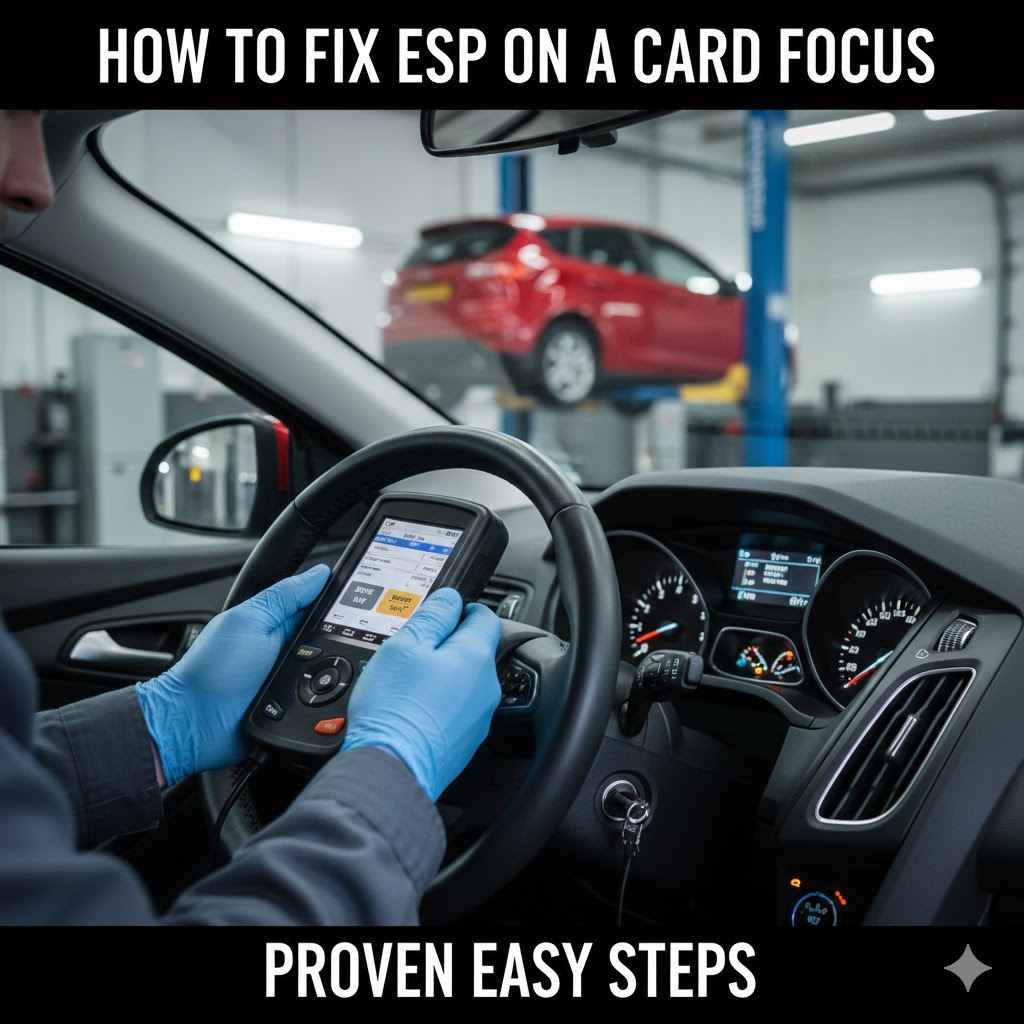
To fix the ESP light on a Ford Focus, start with the simplest checks. First, check your brake fluid level and top it off if low. Next, use an OBD-II scanner to read any error codes, which often point to a faulty wheel speed sensor. Cleaning the sensors or checking the related fuse can often solve the problem without a mechanic.
Seeing a warning light on your dashboard can be stressful. The “ESP” light is a common one for Ford Focus owners. But don’t worry. This light often points to a simple issue you can fix yourself. You don’t always need a trip to the garage. This guide will walk you through the steps. We will find the cause and fix it together. Let’s get your car back to feeling safe and sound.
That little light on your dash that says “ESP” can be a bit of a mystery. But it’s there for a very important reason: your safety. Let’s break down what it is, why it might be on, and how you can confidently fix it. You’ve got this!
What Is the ESP System on Your Ford Focus?
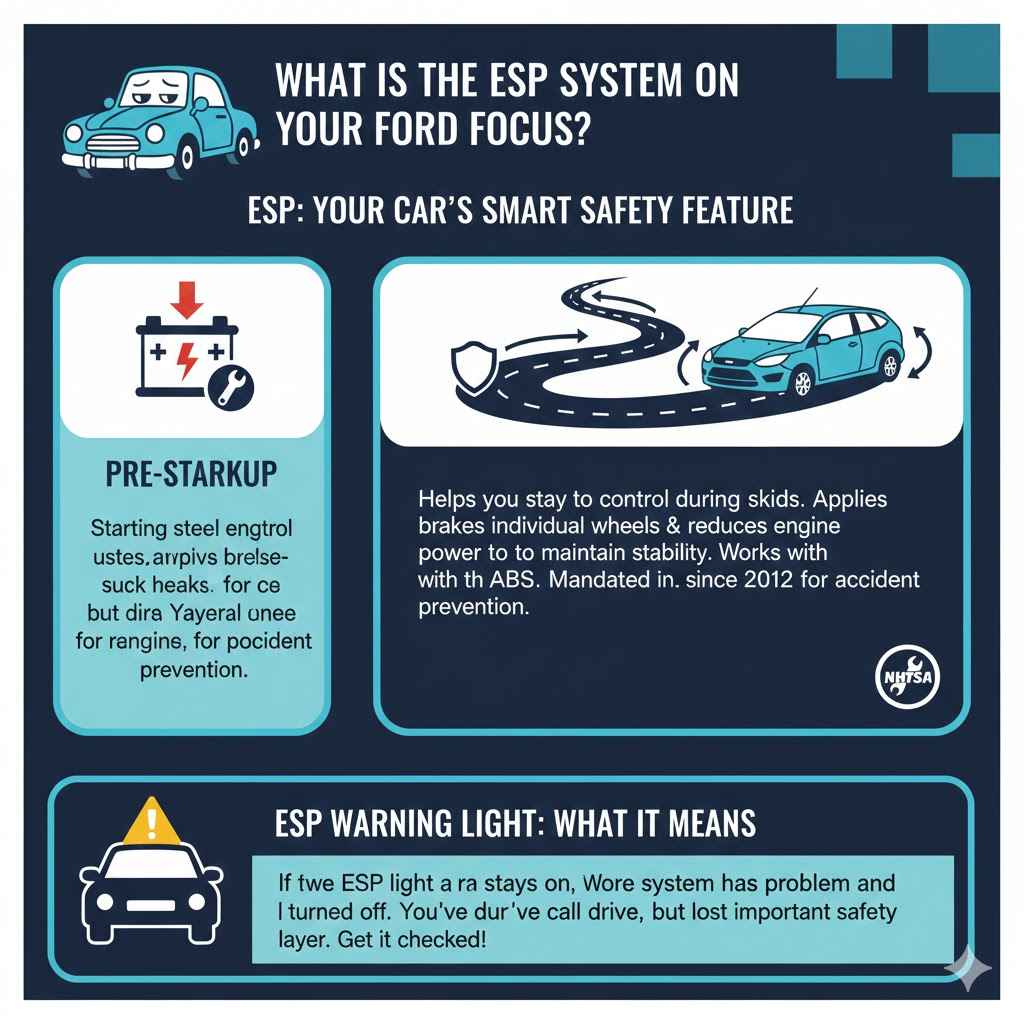
ESP stands for Electronic Stability Program. Think of it as a smart safety feature that helps you stay in control of your car. If your Ford Focus starts to skid or slide on a slippery road, the ESP system jumps into action. It cleverly applies the brakes to individual wheels and may even reduce engine power to help straighten the car out.
The main goal of ESP is to prevent you from losing control. It is a vital safety system that works alongside your Anti-lock Braking System (ABS). In fact, the U.S. government has mandated this technology for all passenger vehicles since 2012 because it is so effective at preventing accidents. You can learn more about its importance from the National Highway Traffic Safety Administration (NHTSA).
When the ESP light is on and stays on, it means the system has a problem and is turned off. While your car will still drive, you won’t have that extra layer of safety. So, it’s important to figure out what’s wrong.
Why Is My Ford Focus ESP Light On? Common Causes
An ESP warning light doesn’t always mean a big, expensive repair is needed. Often, it’s caused by a simple issue. Here are the most common culprits, starting from the easiest to check.
- Low Brake Fluid: The ESP system uses your brakes to work. If the brake fluid is too low, it can’t operate correctly and will trigger the light. This is the first and easiest thing to check.
- Faulty Wheel Speed Sensor: Each wheel has a sensor that tells the car’s computer how fast it’s spinning. The ESP system needs this information to know if a wheel is slipping. These sensors can get dirty or fail, which is a very common reason for the ESP light to come on.
- Faulty Steering Angle Sensor: This sensor tells the computer which way you are steering. If it fails, the ESP system doesn’t know what you want the car to do, so it shuts down as a precaution.
- Blown Fuse: Just like any electronic system, the ESP has fuses. A simple blown fuse can cause the entire system to stop working.
- Low Battery Voltage: Modern cars are packed with electronics. If your car battery is weak or failing, it can cause all sorts of strange warning lights to appear, including the ESP light.
- ABS Module Failure: This is less common, but the main computer for your braking and stability systems (the ABS module) can fail. This is a more complex issue that usually requires a professional mechanic.
Common ESP Faults at a Glance
Here is a simple table to help you understand the possible problems quickly.
| Common Cause | Typical Symptom(s) | DIY Difficulty Level |
|---|---|---|
| Low Brake Fluid | ESP light is on, brake pedal may feel spongy. | Very Easy |
| Dirty or Faulty Wheel Speed Sensor | ESP and ABS lights are often on together. | Easy to Moderate |
| Faulty Steering Angle Sensor | ESP light is on, steering might feel slightly off. | Moderate (Reset is easy, replacement is harder) |
| Blown Fuse | ESP system does not work at all. | Very Easy |
| Weak Car Battery | Multiple warning lights, car is slow to start. | Easy |
| ABS Module Failure | ESP, ABS, and brake warning lights are on. Speedometer may not work. | Difficult (Pro job) |
Tools You’ll Need for the Job
You won’t need a professional workshop to do these checks. A few basic tools will get you started. Having these on hand will make the process smooth and simple.
- OBD-II Scanner: This is the most important tool. It plugs into your car and reads the error codes, telling you exactly where the computer has found a problem. They are affordable and a must-have for any car owner.
- Basic Socket Set: For removing wheel bolts or sensor bolts.
- Jack and Jack Stands: If you need to inspect the wheel speed sensors, you’ll need to safely lift the car.
- Multimeter: To check your car battery voltage and fuses.
- Brake Cleaner: A can of this is perfect for cleaning dirty wheel speed sensors.
- Clean Rags or Paper Towels: For cleaning up any spills or grime.
- Your Ford Focus Owner’s Manual: This is your best friend for finding the fuse box and brake fluid reservoir.
Step-by-Step Guide to Fixing the ESP Light on Your Ford Focus
Ready to get started? Follow these steps in order. We’ll start with the easiest fixes first. This will save you time and help you find the problem quickly.
Step 1: Safety First!
Before you do anything, make sure you and your car are safe. Your safety is always the number one priority.
- Park your Ford Focus on a flat, level surface. Avoid slopes or soft ground.
- Put the car in Park (for automatic) or in gear (for manual).
- Engage the parking brake fully.
- If you plan to lift the car, use wheel chocks behind the wheels that will stay on the ground.
- Let the engine cool down completely before working in the engine bay.
Step 2: Check Your Brake Fluid Level
This is the simplest check and a very common cause. It only takes a minute!
- Open the hood of your Ford Focus.
- Locate the brake fluid reservoir. It’s usually a small, clear plastic container on the driver’s side of the engine bay, against the back wall (firewall). The cap will have a brake symbol on it.
- Look at the side of the reservoir. You will see “MIN” and “MAX” lines. The fluid should be between these two lines.
- If the fluid is below the “MIN” line, you need to add more. Buy the correct type of brake fluid for your car (check your owner’s manual, it’s usually DOT 3 or DOT 4).
- Unscrew the cap and carefully pour in the fluid until it reaches the “MAX” line. Do not overfill it.
- Replace the cap tightly. Start the car and see if the ESP light goes off. Sometimes you need to drive a short distance for it to reset.
Note: If your brake fluid is very low, it might mean your brake pads are worn down or you have a leak. It’s a good idea to have your brakes inspected soon.
Step 3: Read the Trouble Codes with an OBD-II Scanner
If the brake fluid was fine, it’s time to ask your car’s computer what’s wrong. An OBD-II scanner is your direct line of communication.
- Find the OBD-II port in your Ford Focus. It’s usually located under the dashboard on the driver’s side, near the steering column.
- Plug the scanner into the port.
- Turn the car’s ignition to the “On” position, but don’t start the engine.
- Follow the instructions on your scanner to read the “trouble codes.”
- The scanner will show you a code, like “C1145” for a wheel speed sensor. Write down any codes you find.
- You can search online for what your specific Ford Focus code means. This will point you directly to the problem area (e.g., “right front wheel speed sensor circuit failure”).
This step takes the guesswork out of the repair. It tells you which sensor or system to focus on next.
Step 4: Inspect the Fuses
A simple blown fuse can knock out the whole system. It’s an easy and cheap fix.
- Consult your owner’s manual to find the location of the fuse boxes. Most cars have one in the engine bay and one inside the car, often near the glove box or driver’s side footwell.
- The manual will have a diagram showing what each fuse is for. Look for fuses labeled “ESP,” “ABS,” or “Stability Control.”
- Pull out the correct fuse using a fuse puller (often included in the fuse box) or small pliers.
- Hold the fuse up to the light. You should see a small metal strip inside. If that strip is broken or burned, the fuse is blown and needs to be replaced.
- Replace it with a new fuse of the exact same amperage rating. Using a fuse with the wrong rating can cause serious electrical damage.
Step 5: Check the Wheel Speed Sensors
This is one of the most common failures. The OBD-II scanner will usually tell you which wheel sensor is having a problem.
- Safely jack up the car and secure it with jack stands. Remove the wheel where the faulty sensor is located.
- Look behind the brake rotor and caliper. You will see a small sensor with a wire attached to it. This is the wheel speed sensor. It points towards a toothed ring (the reluctor ring) on the axle or wheel hub.
- Inspect the wiring: Look for any signs of damage to the wire. Is it cracked, frayed, or disconnected? Sometimes the wire gets damaged by road debris.
- Clean the sensor: The sensor is magnetic and can get covered in brake dust and metal shavings. This can block its signal. Carefully unbolt the sensor (usually one small bolt) and pull it out.
- Spray the sensor with brake cleaner and wipe it clean with a rag. Also, inspect and clean the toothed reluctor ring if you can see it.
- Reinstall the sensor, reconnect the wire, and put the wheel back on. Lower the car safely.
- Clear the codes with your OBD-II scanner and take the car for a short drive to see if the light comes back on. If it does, the sensor itself may need to be replaced.
Step 6: Reset the Steering Angle Sensor
Sometimes the steering angle sensor just needs to be recalibrated. This is a simple procedure you can do in your driveway.
- Start your car’s engine.
- Slowly turn the steering wheel all the way to the left until it stops.
- Then, slowly turn the steering wheel all the way to the right until it stops.
- Finally, return the steering wheel to the center position (wheels pointing straight ahead).
- Turn the car off and then start it again. This simple reset can sometimes fix the issue and turn off the ESP light.
Step 7: Check Your Car Battery
A weak battery can cause all kinds of confusing electronic problems. A quick voltage check can rule this out.
- Set your multimeter to the DC voltage setting (V with a straight line and dashes).
- With the engine off, touch the red probe to the positive (+) terminal of the battery and the black probe to the negative (-) terminal.
- A healthy, fully charged battery should read around 12.4 to 12.6 volts.
- If the reading is below 12.2 volts, your battery may be weak and need charging or replacement. Many auto parts stores will test your battery for free.
When to Call a Professional Mechanic
DIY repairs are great for saving money, but it’s also important to know your limits. Sometimes, a job is best left to a professional with specialized tools and experience.
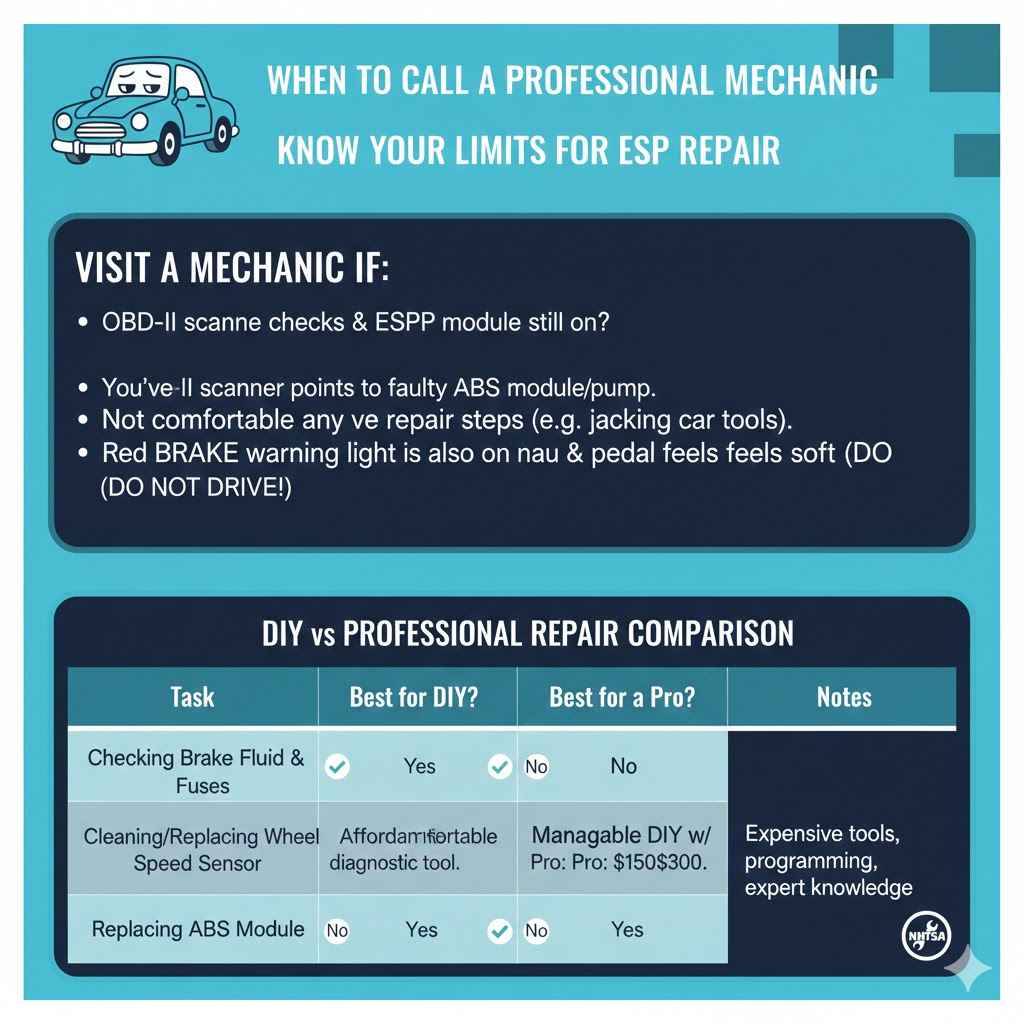
You should visit a mechanic if:
- Your OBD-II scanner points to a faulty ABS module or pump. This is a complex and expensive part that requires special procedures to replace and bleed.
- You have performed all the checks above and the ESP light is still on.
- You are not comfortable or confident performing any of the steps, especially jacking up the car.
- The warning light is on along with a red brake warning light, and the brake pedal feels very soft or goes to the floor. Do not drive the car in this case. It could be unsafe.
DIY vs. Professional Repair Comparison
| Task | Best for DIY? | Best for a Pro? | Notes |
|---|---|---|---|
| Checking Brake Fluid & Fuses | Yes | No | These are basic checks every car owner can do. |
| Reading OBD-II Codes | Yes | No | An OBD-II scanner is an affordable and powerful diagnostic tool for any DIYer. |
| Cleaning/Replacing a Wheel Speed Sensor | Yes | If you’re not comfortable | This is a very manageable DIY job with basic tools. A mechanic might charge $150-$300. |
| Replacing the ABS Module | No | Yes | This requires expensive tools, programming, and expert knowledge of the brake system. |
Frequently Asked Questions (FAQ)
1. Can I drive my Ford Focus with the ESP light on?
Yes, you can usually drive the car. The regular braking system will still work. However, the Electronic Stability Program will be disabled, meaning you won’t have that extra safety feature in an emergency skid. It’s best to get it fixed as soon as you can for your safety.
2. How much does it cost to fix an ESP sensor on a Ford Focus?
If it’s a wheel speed sensor, the part itself is usually affordable, costing between $30 and $80. If you replace it yourself, that’s your only cost. If you take it to a mechanic, you can expect to pay between $150 and $300 for parts and labor.
3. Does the ESP light mean my brakes will fail?
No, the ESP light itself does not mean your primary brakes will fail. Your car will still stop when you press the brake pedal. However, if the red “BRAKE” warning light comes on at the same time, you should pull over safely and get the car checked immediately, as this could indicate a serious problem with the hydraulic brake system.
4. How do I reset the ESP light on my Ford Focus?
The ESP light should reset itself once the underlying problem is fixed. After you perform a repair (like cleaning a sensor or topping up fluid), the light may go off immediately or after a short drive. You can also use an OBD-II scanner to clear the trouble codes from the car’s computer, which will turn off the light.
5. What is the difference between ESP and ABS?
They are related systems that often share components. The Anti-lock Braking System (ABS) prevents your wheels from locking up during hard braking, allowing you to steer. The Electronic Stability Program (ESP) is more advanced; it uses the ABS to prevent skids and slides during cornering or swerving, helping you maintain control.
6. Why does my Ford Focus ESP light flash sometimes when I’m driving?
This is completely normal! If the ESP light flashes while you are driving (especially on a wet or icy road), it means the system is actively working to prevent a skid. It’s a sign that the system is doing its job to keep you safe. The light should turn off once the tires regain traction.
Conclusion: You Can Take Control of Your Car’s Health
Seeing the ESP light on your Ford Focus dashboard doesn’t have to ruin your day. As you’ve learned, the cause is often a simple issue that you can diagnose and fix right in your own driveway. By following these proven steps—checking your brake fluid, reading the codes, and inspecting the sensors—you can solve the problem with confidence.
Taking a few moments to understand your car not only saves you money but also empowers you as a driver. You’re building skills, learning how your vehicle works, and ensuring it remains safe and reliable on the road. So next time a warning light appears, remember this guide, grab your tools, and know that you have what it takes to handle it.