
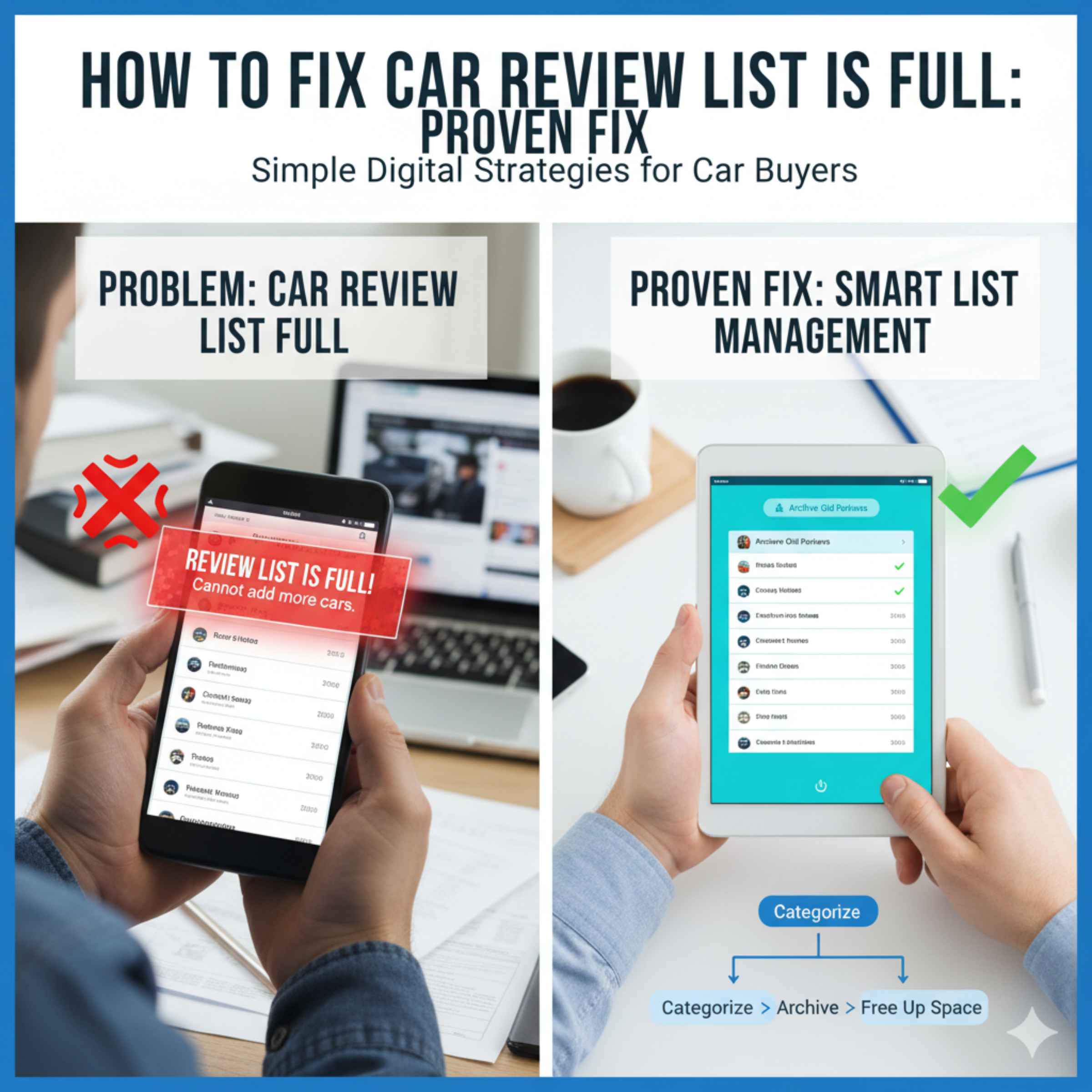
Quick Summary: If your car’s system shows “Car Review List Is Full,” it usually means the built-in diagnostic or data storage memory for vehicle status reports is maxed out. The proven fix is almost always to access the vehicle’s settings menu—often found on the infotainment screen—and manually clear the saved diagnostic history or error log located in the “Service,” “Diagnostics,” or “Vehicle Status” section.
How To Fix “Car Review List Is Full”: A Simple Guide for Drivers
Do you stare at your car’s dashboard or infotainment screen, seeing that annoying message: “Car Review List Is Full”? It stops you from checking important vehicle health reports right when you need them. This message is common, especially in newer cars with advanced monitoring systems. It usually only means the car’s internal logbook is simply overcrowded with old data. It doesn’t mean your car is about to break down! As your trusted guide, Dustin Hall, I am here to show you exactly how to clear this digital clutter. We will go step-by-step, using simple language so you can tackle this fix with total confidence. Soon, you’ll be back to tracking your real maintenance needs without that frustrating error message getting in the way.
Understanding the “Car Review List Full” Error
Before we jump into fixing it, let’s quickly understand what this message actually means. This isn’t a mechanical warning like low oil pressure. It’s a digital one.
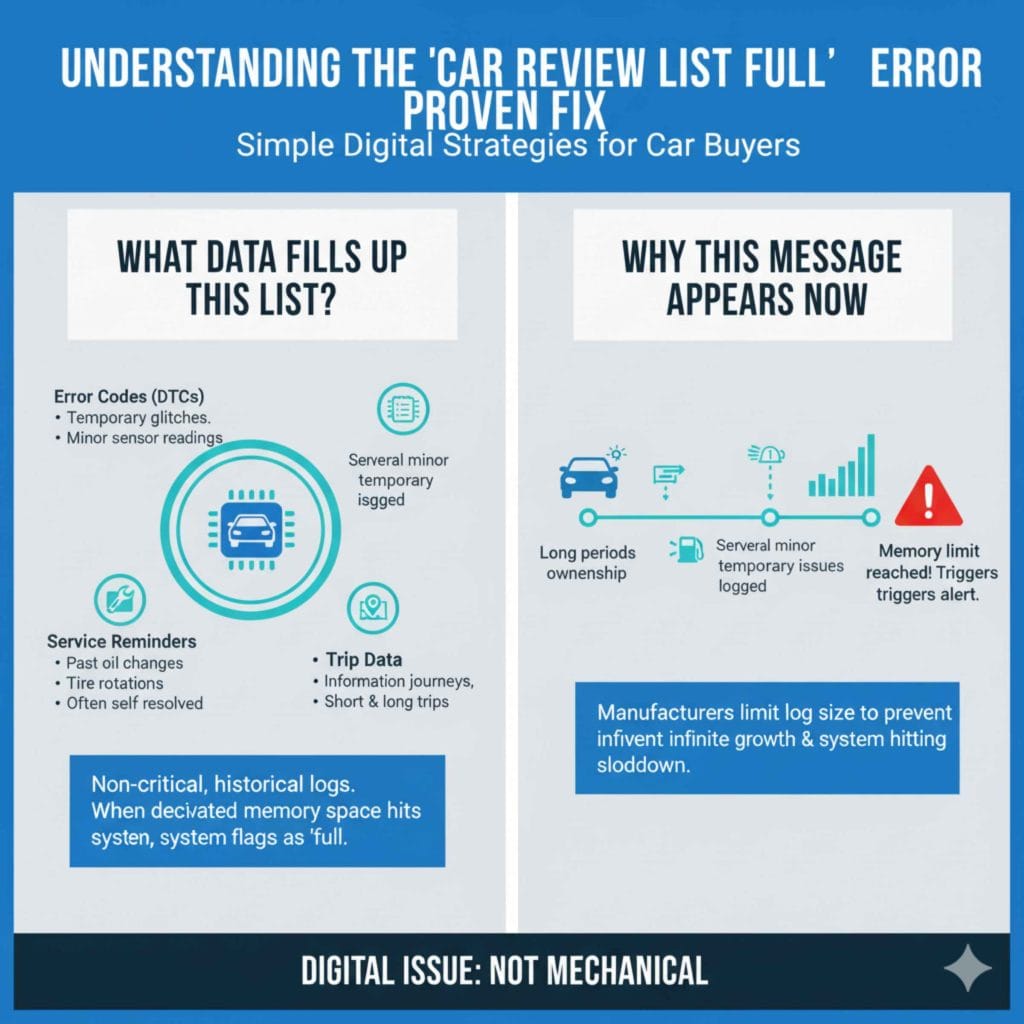
What Data Fills Up This List?
Modern cars keep detailed records of everything that happens, which is great for tracking maintenance.
- Error Codes (DTCs): Temporary glitches or minor sensor readings that the car logged but might have resolved themselves.
- Service Reminders: Records of past oil changes, tire rotations, or inspection due dates.
- Trip Data: Information logged from short and long journeys.
When the dedicated memory space for these non-critical, historical logs hits its limit, the system flags the space as “full.” It’s like your phone saying your photo album is full even though you still have space for important new messages.
Why This Message Appears Now
Many drivers only see this message after long periods of ownership or if they have had several minor, temporary issues logged without ever clearing the history. Manufacturers put a limit on this log to prevent it from growing infinitely large, which could slow down the system. Hitting that limit triggers the alert.
Safety First: What NOT To Do
When you see an error message, your first instinct might be to panic or try drastic measures. Let’s keep things safe and simple.
Crucial Warning: This specific message rarely indicates an immediate safety hazard. If you also see red warning lights (like the check engine light, brake warning, or temperature gauge spiking), stop driving immediately and seek professional help. The “List Full” message usually relates to stored history, not current, critical failures.
Step-by-Step Guide: How to Fix “Car Review List Is Full”
The solution almost always involves navigating the digital menus in your car’s infotainment system. The exact button names vary widely between makes (Ford, Honda, Toyota, etc.), but the overall process remains the same.
Phase 1: Locating the Right Menu
You will need your car running (or in the accessory/on position) so the screen is active. Do not attempt complex menu navigation while driving.
- Access the Main Menu: Use the touchscreen or physical buttons (often labeled “Menu,” “Settings,” or “Info”) on your center console.
- Find the Vehicle Settings: Look for sections related to the vehicle itself. Common labels include:
- Settings
- Vehicle Status
- Maintenance
- Service
- Diagnostics
- Navigate to the Log/History: Once in the main settings area, look for options like “Review History,” “Error Log,” “Test Results,” or simply “Log.”
Phase 2: Clearing the Stored Data Logs
This is where you delete the old, non-critical data that is taking up space.
Many experts agree that clearing these non-critical logs periodically is good practice. The National Highway Traffic Safety Administration (NHTSA) encourages drivers to stay aware of their vehicle monitoring systems, but also to manage the alerts effectively.
- Identify the Clear Option: Within the history/log menu you found in Phase 1, you are looking for a button or selection that says “Clear Log,” “Reset History,” or “Erase Entries.”
- Confirm Deletion: The system will almost certainly ask, “Are you sure you want to delete all saved entries?” Select “Yes” or “Confirm.”
- Check for Secondary Logs: Some cars store trip data separately from error codes. If the message persists, check other related menus (like “Trip Computer” or “Driving Data”) and see if there is a separate “Reset” function there as well.
Phase 3: Verifying the Fix
After clearing the logs, always confirm the fix worked.
- Back out of the settings menu completely.
- Turn the car off, wait 30 seconds, and restart the vehicle.
- Check the instrument cluster or main display. The “Car Review List Is Full” message should now be gone.
- Test the system you cleared. Try to access the Service Reminder list; it should now be empty or accessible.
Common Menu Layout Variations by Manufacturer
Since menu locations vary so much, here is a quick cheat sheet based on common systems. Always refer to your vehicle’s owner’s manual if you get stuck.
| Car Manufacturer | Likely Menu Path (General) | Typical Item to Clear |
|---|---|---|
| BMW / Mercedes (iDrive/COMAND) | Vehicle Settings > Information > Service History | Reset Service Intervals or Delete Log |
| Ford / Lincoln (SYNC) | Settings > Vehicle > System Messages | Clear Message Log |
| Toyota / Lexus (Entune/Multimedia) | Setup > General > Vehicle Statistics | Erase Trip Data |
| Honda / Acura | Setup > Vehicle Settings > Maintenance Monitor | Reset Maintenance Minder |
What If Clearing the Log Doesn’t Work? (Advanced Troubleshooting)
If you followed the steps and the message immediately reappears, there are a few other possibilities we need to investigate.
Scenario 1: Frozen Module
Sometimes the software controlling the display just gets temporarily stuck.
- Perform a Hard Reboot: Disconnect the negative terminal (-) battery cable for about 15 minutes. This completely drains residual power and forces the car’s electronic modules to restart fresh when you reconnect it. (Ensure you know the radio code if required before doing this!)
- Check Fuses: Look in your owner’s manual for the fuse related to the “Infotainment System” or “BCM” (Body Control Module). If it’s blown, replacing it might clear the persistent error state.
Scenario 2: A Real, Pending Code is Stuck
If the list is full of actual diagnostic trouble codes (DTCs), clearing the review list might not clear the underlying code that triggered the warning.
You’ll need an OBD-II scanner for this. These scanners plug into the port usually found under the dashboard near your steering wheel. You can buy a basic scanner for far less than a single mechanic visit. For example, beginner-friendly Wi-Fi OBD-II readers are widely available online and connect right to your smartphone.
Using an OBD-II Scanner to Check Deep Codes
| Step | Action | Purpose |
|---|---|---|
| 1. | Plug the scanner into the OBD-II port. | Establish communication with the car’s computer (ECM/PCM). |
| 2. | Run the “Read Codes” command on the scanner. | See if any non-historical codes are pending. |
| 3. | If you find a persistent code (e.g., P0420), research it. | Determine if the code requires immediate professional attention (like an oxygen sensor issue). |
If a real code is found, clearing the review list won’t fix the issue; addressing the underlying code (like fixing a faulty sensor) is required. For serious codes, consult official resources like the NHTSA website for general safety guidelines.
Scenario 3: System Glitch Requiring a Dealer Reset
In a very small percentage of cases, especially with highly complex luxury vehicles, the system memory might be corrupted or require a specific software handshake that only the dealership scan tool (like BMW’s ISTA or GM’s Tech2) can perform. If all else fails, calling your dealer and explaining you have already cleared the user-accessible service logs is the next step.
Preventative Maintenance: Keeping Your Digital Logs Clean
Being proactive is the easiest way to avoid this headache in the future. Think of this as digital oil changes for your car’s computer!
Best Practices for Log Management
- Reset Service Reminders Immediately: After every oil change, tire rotation, or scheduled service, take 60 seconds to reset that specific reminder on your display. Don’t let the car log 10 “Overdue” notices for the same service.
- Use the Scanner Periodically: If you enjoy DIY work, buy a simple OBD-II scanner mentioned above. Every few months, plug it in and check for any pending codes. Clearing minor, transient codes yourself keeps the main log clean.
- Cycle Check: When you notice a very minor, temporary warning (like a door ajar sensor glitch that immediately corrected itself), check the review list/history later that week. If that minor glitch is now logged, clear it out manually before the system hits capacity.
The Difference Between Clearing and Resetting
It is vital to know what you are deleting versus what you are updating.
- Clearing the Review List: Deletes the history/logbook entries. This usually fixes the “List Full” warning.
- Resetting the Service Minder/Oil Life: Updates the counter for future maintenance due dates. This is necessary after performing the actual service.
If you reset the service minder but don’t clear the old history log item, you might still get the “List Full” warning because the history file needed cleaning, not the maintenance counter.
Common Misconceptions About This Error
Many drivers worry about things that simply aren’t true when they see this message. Let’s clear up some of the confusion so you can drive confidently.
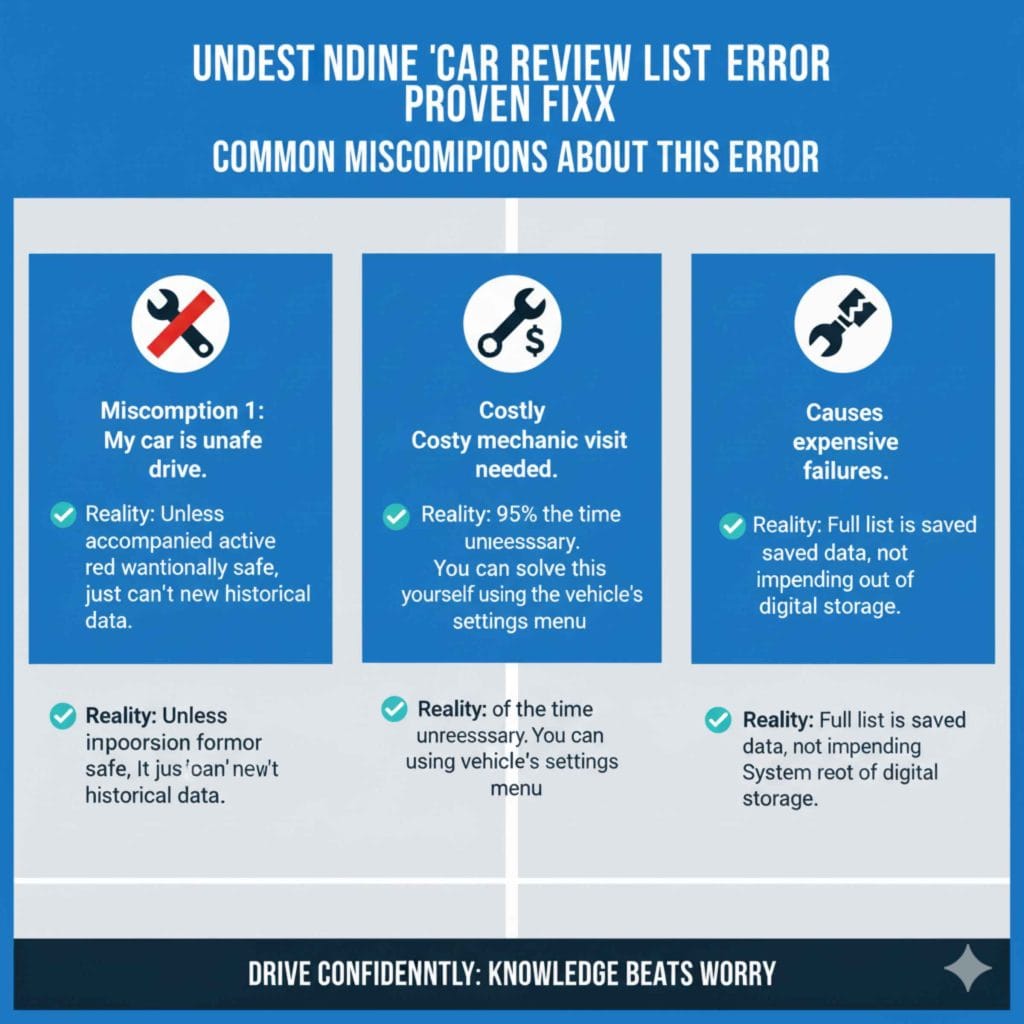
Misconception 1: My car is unsafe to drive.
Reality: Unless accompanied by active red warning lights, the car is functionally safe. It just can’t store new historical data.
Misconception 2: I need a costly mechanic visit to fix this.
Reality: 95% of the time, a visit to the service center is unnecessary. You can solve this yourself using the vehicle’s settings menu.
Misconception 3: This error will cause expensive components to fail soon.
Reality: The full list is overloaded with saved data, not impending mechanical failure. The system is simply reporting it is out of digital storage space.
Frequently Asked Questions (FAQ)
Q1: Will deliberately ignoring the “Car Review List Is Full” message hurt my car?
A: No, it will not cause mechanical damage. It just prevents the car from logging new information, meaning you might miss tracking important diagnostic hints if a new, minor issue pops up before you manually clear the list again.
Q2: Can I clear the list using an iPhone app instead of the built-in screen?
A: Sometimes, yes, if your car has a compatible third-party app subscription (like certain premium connected services). However, the surest and most direct way is always through the vehicle’s native infotainment settings or by using an OBD-II scanner.
Q3: How often should I check or clear these vehicle logs?
A: If you are a heavy driver, checking them every six months is a good routine. For average drivers, clearing the log whenever you clear your actual oil life service reminder is usually sufficient.
Q4: Does clearing the list erase my radio presets or GPS favorites?
A: Usually, no. The “Car Review List” or “Error Log” is separate from user comfort settings like radio stations or stored navigation destinations. However, performing a hard battery disconnect (Step 1 under Advanced Troubleshooting) will often erase those settings.
Q5: What if my car doesn’t have a touchscreen?
A: If you have an older model without a large screen, look for buttons on your steering wheel or dash labeled “Display,” “Sel,” or “Info.” You navigate through menus using arrow keys on the steering wheel or sometimes by holding down the odometer reset button while the car is on.
Q6: If I use an OBD-II scanner to clear codes, does that also fix the “List Full” message?
A: It might, depending on the car model! If the “List Full” status was triggered by an accumulation of codes, clearing those codes with the scanner will fix both issues simultaneously. If it was triggered by service history entries, you still need to clear the user history menu.
Conclusion: Confidence Through Clarity
Seeing an unfamiliar warning message in your car can be unsettling, but you’ve just learned that the “Car Review List Is Full” error is one of the easiest digital nuisances to handle. By guiding your way through your vehicle’s settings—be it through a touchscreen or simple button controls—you have the power to declutter that system memory. Remember, this is maintenance for your car’s computer brain, not a complex mechanical repair. Keep up the good habit of resetting those maintenance indicators and occasionally checking those digital logs, and you’ll maintain a clear, communicative relationship with your vehicle for years to come. Great job taking charge of your own car care!