
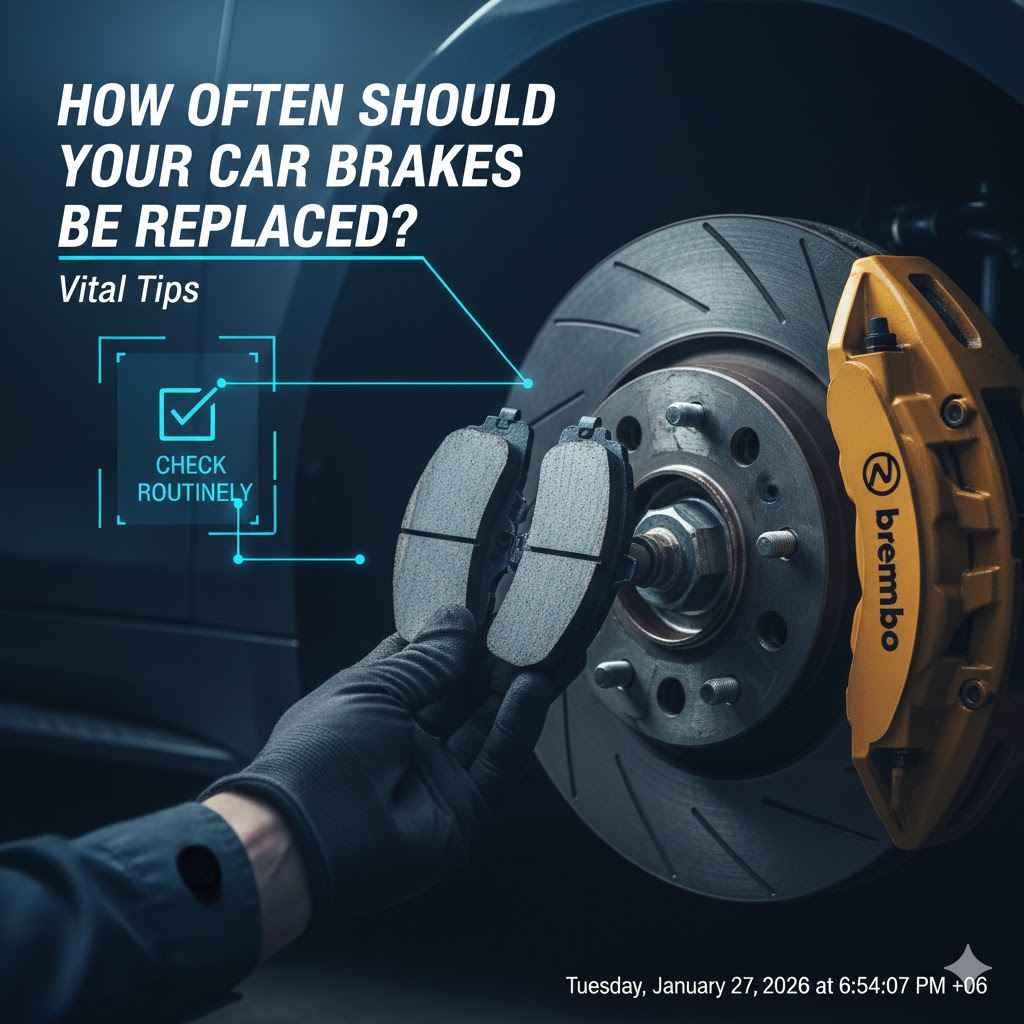
Most car brakes should be replaced every 25,000 to 70,000 miles. However, this range varies widely based on your driving habits, the type of brake pads you use, and your driving environment. The best way to know is to check your brakes regularly and watch for warning signs like squealing sounds or a vibrating pedal.
Hearing a strange noise when you press the brake pedal can be nerve-wracking. You start wondering, “Are my brakes failing? How much will this cost?” It’s a common worry for many drivers. Your car’s braking system is its most important safety feature, and not knowing its condition can feel stressful. But don’t worry, you’re in the right place. Understanding your brakes is easier than you think.
I’m here to walk you through everything you need to know, without any confusing mechanic talk. We’ll cover how to tell when your brakes need service, what factors affect their lifespan, and how you can even check them yourself. Let’s build your confidence and keep you safe on the road.
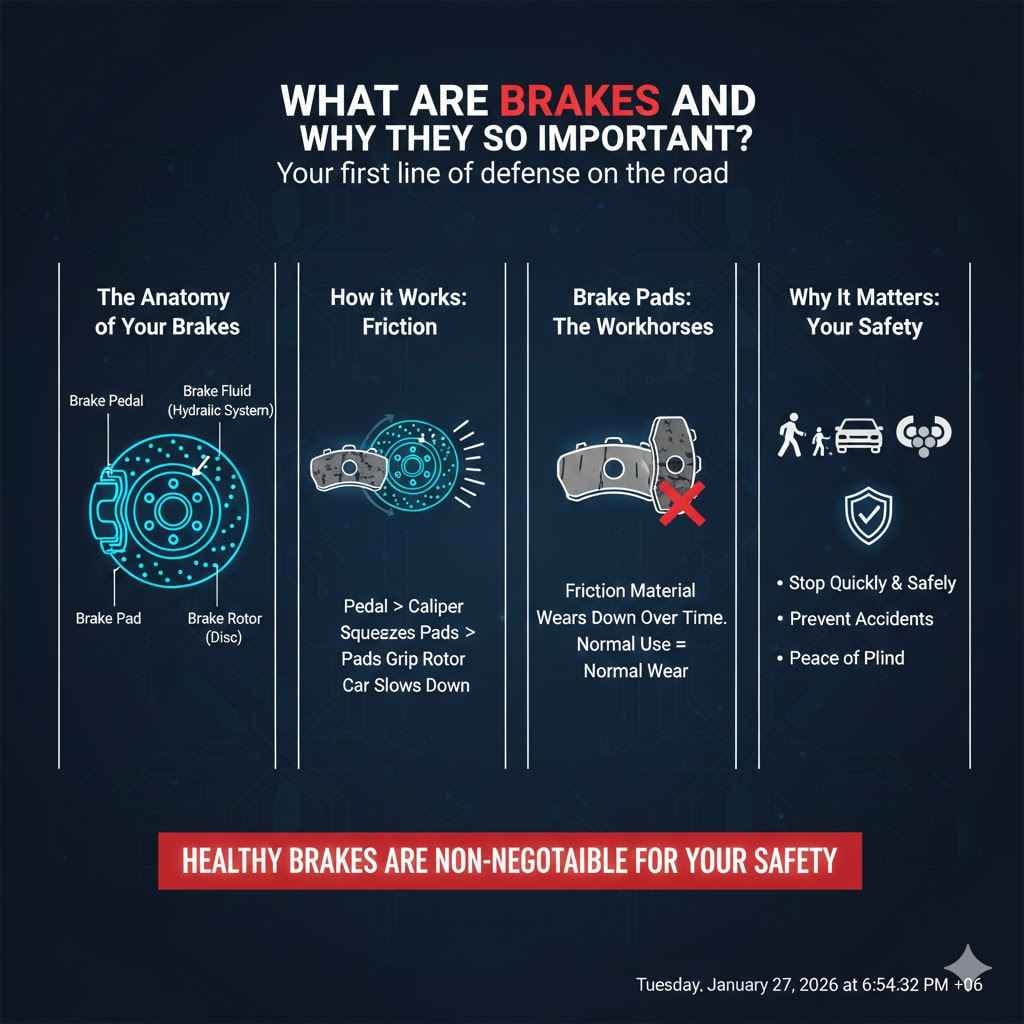
What Are Brakes and Why Are They So Important?
Before we talk about replacing them, let’s quickly cover what your brakes do. When you push the brake pedal, you’re starting a chain reaction. A hydraulic system pushes brake pads against spinning discs called rotors (or inside drums on some older cars). This friction is what slows and stops your car. It’s simple, but it has to work perfectly every single time.
Think of your brake pads as the hardworking shoes of your car. Just like the soles on your favorite sneakers, they wear down with every use. Keeping them in good shape is non-negotiable for your safety and the safety of everyone around you. A healthy brake system gives you peace of mind, knowing you can stop quickly and safely when you need to.
The Real Answer: There Is No Single Mileage Rule
You might see numbers like “every 50,000 miles” online, but that’s just a rough guess. The truth is, there’s no magic number for brake replacement. Some drivers might need new brakes at 25,000 miles, while others can go 70,000 miles or more on the same set. It all comes down to a few key factors that are unique to you and your car.
Instead of relying on a mileage number, it’s much smarter to learn the signs of wear and have your brakes inspected regularly. This way, you replace them when they actually need it, saving you money and keeping you safe. Let’s look at what really wears down your brakes.
Key Factors That Determine How Long Your Brakes Last
Your brakes’ lifespan depends on a mix of things. Understanding these factors will help you estimate when it might be time for a check-up.
1. Your Driving Habits
This is the biggest factor of all. Are you an aggressive driver who brakes hard and late? Or do you tend to coast to a stop and brake gently? Hard, sudden braking generates a lot of heat and friction, which wears down your brake pads and rotors much faster. Smooth, gradual braking is much kinder to your brake system.
2. Your Driving Environment
Where you drive matters just as much as how you drive.
- City Driving: Stop-and-go traffic is tough on brakes. Every traffic light and intersection means more braking, causing more wear over a shorter distance.
- Highway Driving: If you do most of your driving on the highway, you use your brakes far less often. This can help them last much longer.
- Hilly or Mountainous Areas: Driving downhill requires frequent braking to control your speed, which puts a heavy strain on your pads and rotors.
3. Your Vehicle’s Weight
It takes more force to stop a heavy vehicle than a light one. A large SUV or truck will naturally wear through its brakes faster than a small, compact car. If you often tow a trailer or carry heavy loads, this adds even more strain to your braking system.
4. The Type of Brake Pads
Brake pads are not all the same. They are made from different materials, each with its own pros and cons for performance, noise, and durability. Knowing what kind you have can give you a better idea of their expected lifespan.
Here’s a simple breakdown of the most common types:
| Brake Pad Type | Description | Pros | Cons |
|---|---|---|---|
| Organic | Made from a mix of non-metallic materials like rubber, glass, and resins. Often the standard pad on new cars. | Quiet, soft on rotors, inexpensive. | Wear out the fastest, create more dust. |
| Ceramic | Made from a dense ceramic material with embedded copper fibers. A popular premium option. | Very quiet, produce little dust, last a long time, stable in a wide range of temperatures. | Most expensive option. |
| Semi-Metallic | Made from a mix of metals like steel, iron, and copper. Great for performance. | Excellent stopping power, good heat dissipation, durable. | Can be noisy, harder on rotors, produce more brake dust. |
Listen and Look: 6 Warning Signs Your Brakes Need Help
Your car is great at telling you when something is wrong. You just have to know what to listen and feel for. If you notice any of these signs, it’s time to get your brakes checked right away.
- High-Pitched Squealing or Squeaking: This is often the first sign. Most brake pads have a small metal tab called a “wear indicator.” When the pad gets too thin, this tab scrapes against the rotor and makes a loud squealing noise. It’s your car’s way of saying, “Hey, check my brakes soon!
- Deep Grinding or Growling Noise: This is a more serious sound. It usually means your brake pads are completely worn away, and now the metal backing plate of the pad is grinding against the metal rotor. This is a metal-on-metal sound that means you are damaging your rotors. Stop driving and get this fixed immediately to avoid a more expensive repair.
- Vibration or Pulsating in the Brake Pedal: If you feel a shaking or pulsing in the brake pedal or steering wheel when you brake, it’s often a sign that your rotors are warped. Rotors can get uneven from overheating. While not always an immediate danger, it reduces your braking effectiveness and should be addressed.
- A Soft or “Spongy” Brake Pedal: Does your brake pedal feel mushy or go down further than usual? This could mean you have air or moisture in your brake lines, or a problem with the master cylinder. Your brake system is hydraulic, and it needs to be a sealed system. A spongy pedal is a serious safety concern.
- Your Car Pulls to One Side: When you brake, your car should stop in a straight line. If it pulls to the left or right, it could mean one of your brake calipers is stuck or not working correctly. This creates an uneven braking force that can be dangerous.
- The Brake Warning Light Comes On: Your dashboard has warning lights for a reason. If the brake light (it might say “BRAKE” or show a symbol) turns on, it could mean anything from low brake fluid to a serious issue with the system. Don’t ignore it.
A Quick At-Home Brake Check for Beginners
You don’t have to be a mechanic to do a basic check on your brakes. This simple inspection can give you a good idea of their condition and empower you when you talk to a repair shop.
Step 1: The Visual Pad Check
You can often see your brake pads without even taking off the wheel.
- Park your car on a flat surface and make sure it’s cool.
- Look through the spokes of your wheel at the brake caliper (the clamp-like part that sits over the shiny rotor).
- Inside the caliper, you’ll see the brake pad pressed against the rotor. You want to look at the thickness of the pad material.
- A good rule of thumb is that the pad material should be thicker than a quarter-inch (about 6mm). If it looks like it’s down to about an eighth of an inch (3-4mm) or less, it’s time to plan for a replacement.
Step 2: Check the Brake Fluid
Brake fluid is the lifeblood of your hydraulic brake system.
- Open your hood. The brake fluid reservoir is usually a small, clear plastic container located on the driver’s side, toward the back of the engine bay.
- Check the fluid level against the “MIN” and “MAX” lines on the side. If it’s low, it could indicate a leak or that your brake pads are very worn (as the pads wear, the fluid level drops slightly to fill the space).
- The fluid should be a clear, honey-like color. If it looks dark brown or black, it’s old and contaminated with moisture, which can make your brakes less effective. According to safety experts like the National Highway Traffic Safety Administration (NHTSA), maintaining your brake system is critical for vehicle safety.
Step 3: Look at the Rotors
While you’re looking at the pads, take a peek at the shiny metal discs they press against. The surface of the rotors should be smooth and even. If you see deep grooves or scoring marks, it’s a sign they may need to be replaced along with your pads.
Brake Pads vs. Rotors: What’s the Difference?
People often talk about “getting a brake job,” but that can mean different things. It’s helpful to know the two main parts that get replaced: pads and rotors.
- Brake Pads: These are the parts with the friction material. They are designed to wear down and are the most frequently replaced component of your brake system.
- Brake Rotors: These are the metal discs that the pads squeeze. They also wear down over time, but much more slowly than the pads. They can also become warped from heat.
Do you need to replace both at the same time? Not always. A common practice is to replace rotors with every other brake pad change. However, if the rotors are warped, heavily grooved, or worn below the minimum safe thickness (a mechanic can measure this), they must be replaced with the pads.
| Component | Typical Lifespan | Primary Function | Common Sign of Failure |
|---|---|---|---|
| Brake Pads | 25,000 – 70,000 miles | Creates friction to stop the rotor. | Squealing, grinding, thin appearance. |
| Brake Rotors | 50,000 – 70,000+ miles | Provides the surface for pads to grip. | Vibration, pulsating pedal, visible grooves. |
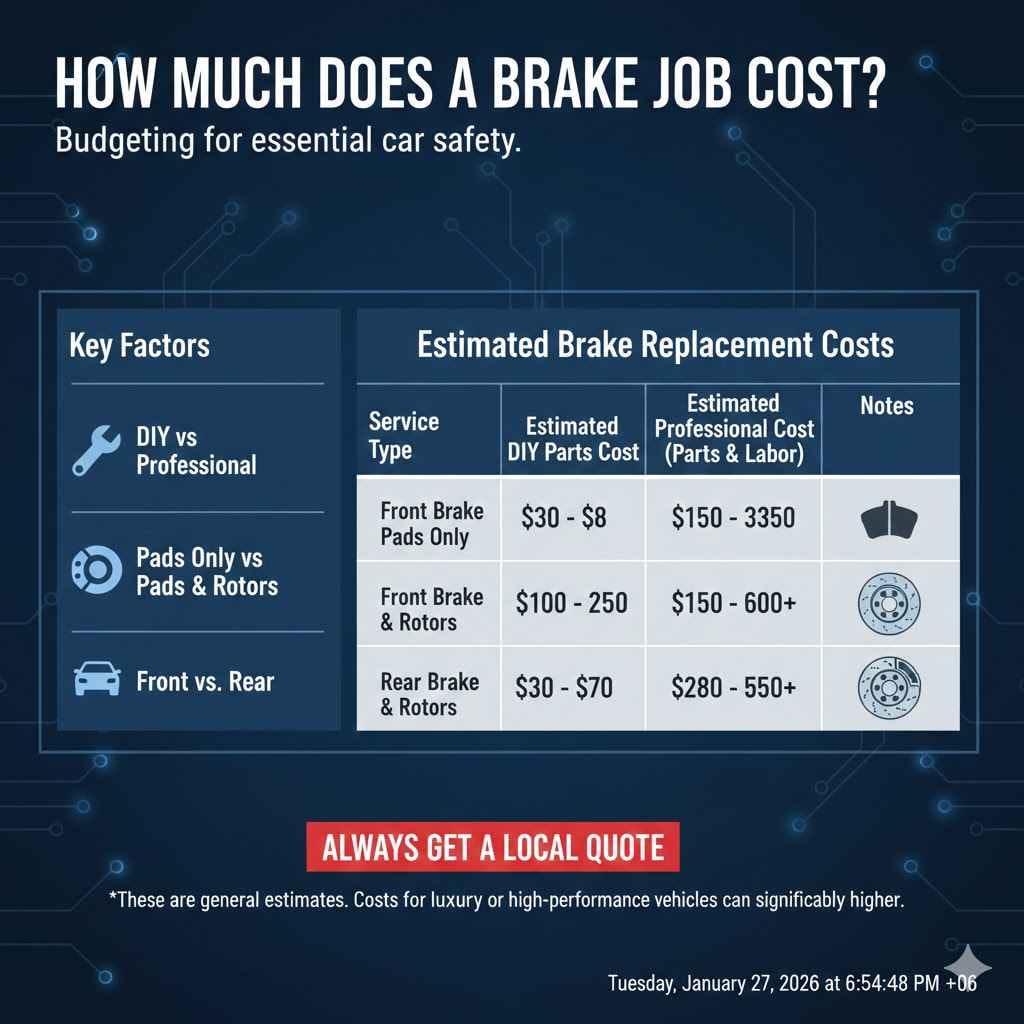
How Much Does a Brake Job Cost?
The cost can vary a lot depending on your vehicle, the parts you choose, and labor rates in your area. But here is a general idea to help you budget.
- DIY vs. Professional: Doing it yourself can save you hundreds on labor, but you need the right tools and knowledge. For a safety system like brakes, going to a trusted mechanic is the best choice for most people.
- Pads Only vs. Pads and Rotors: A “pads-only” job is cheaper. Replacing both pads and rotors will cost more but is often necessary for the best performance and safety.
- Front vs. Rear: Your front brakes do most of the stopping work (around 70%), so they tend to wear out faster and are often more expensive to replace than the rear brakes.
Here are some rough estimates. Always get a quote from a local shop for an accurate price.
Estimated Brake Replacement Costs
| Service Type | Estimated DIY Parts Cost | Estimated Professional Cost (Parts & Labor) |
|---|---|---|
| Front Brake Pads Only | $30 – $80 | $150 – $350 |
| Front Brake Pads & Rotors | $100 – $250 | $300 – $600+ |
| Rear Brake Pads Only | $30 – $70 | $150 – $300 |
| Rear Brake Pads & Rotors | $90 – $200 | $280 – $550+ |
These are general estimates. Costs for luxury or high-performance vehicles can be significantly higher.
Frequently Asked Questions (FAQ)
Can I just replace one brake pad?
No, you should always replace brake pads in pairs (both front wheels or both rear wheels at the same time). Replacing only one side would cause uneven braking, making your car pull dangerously to one side when you stop.
How long can I drive on grinding brakes?
You shouldn’t. A grinding sound means the pads are gone and metal is scraping against metal. This severely reduces your stopping power and is rapidly damaging your rotors, which will make the final repair much more expensive. Treat grinding brakes as an emergency and get them fixed immediately.
What’s the difference between front and rear brakes?
Your front brakes do most of the work (up to 70%) of stopping your car. Because of this, they are usually larger and wear out faster than the rear brakes. Your rear brakes handle the remaining load and provide stability during braking.
Do I need to replace rotors every time I replace pads?
Not necessarily. If your rotors are still thick enough (above the minimum thickness stamped on the rotor) and are not warped or deeply grooved, a mechanic may be able to “resurface” them, which means machining them smooth again. However, many modern rotors are thinner and lighter, so replacement is often the safer and more common recommendation.
What is “bedding in” new brakes?
“Bedding in” or “breaking in” is a process of getting your new pads and rotors to work together smoothly. It involves a series of controlled stops to transfer a thin, even layer of friction material from the pads onto the rotors. This prevents vibration and ensures maximum stopping power. Your mechanic usually does this, or they may give you instructions on how to do it yourself.
Why is my brake pedal soft?
A soft or spongy brake pedal is usually caused by air in the hydraulic brake lines. It can also be a sign of a failing master cylinder or low brake fluid. This is a major safety issue because it means you aren’t getting full braking power. Get it inspected by a professional right away.
Is it safe to do a brake job myself?
If you have the right tools, a safe space to work, a good repair manual for your car, and mechanical experience, a brake job can be a manageable DIY project. However, brakes are your car’s most critical safety system. If you have any doubts at all, it’s always best to leave the job to a professional mechanic.
Conclusion: Stay Safe and Be Proactive
When it comes to your brakes, the best approach is to be proactive, not reactive. Don’t wait for that awful grinding sound. Pay attention to how your car feels and sounds every day. A regular visual check and an annual inspection from a trusted mechanic will ensure your braking system is always ready to protect you.
Remember, there’s no single mileage answer for “how often should your car brakes be replaced?” It’s all about your car, your driving style, and regular check-ups. By learning the warning signs and understanding the basics, you’ve already taken a huge step toward becoming a more confident and responsible car owner. Now you can make smart decisions that keep you safe on the road and save you money in the long run. Drive safely!