
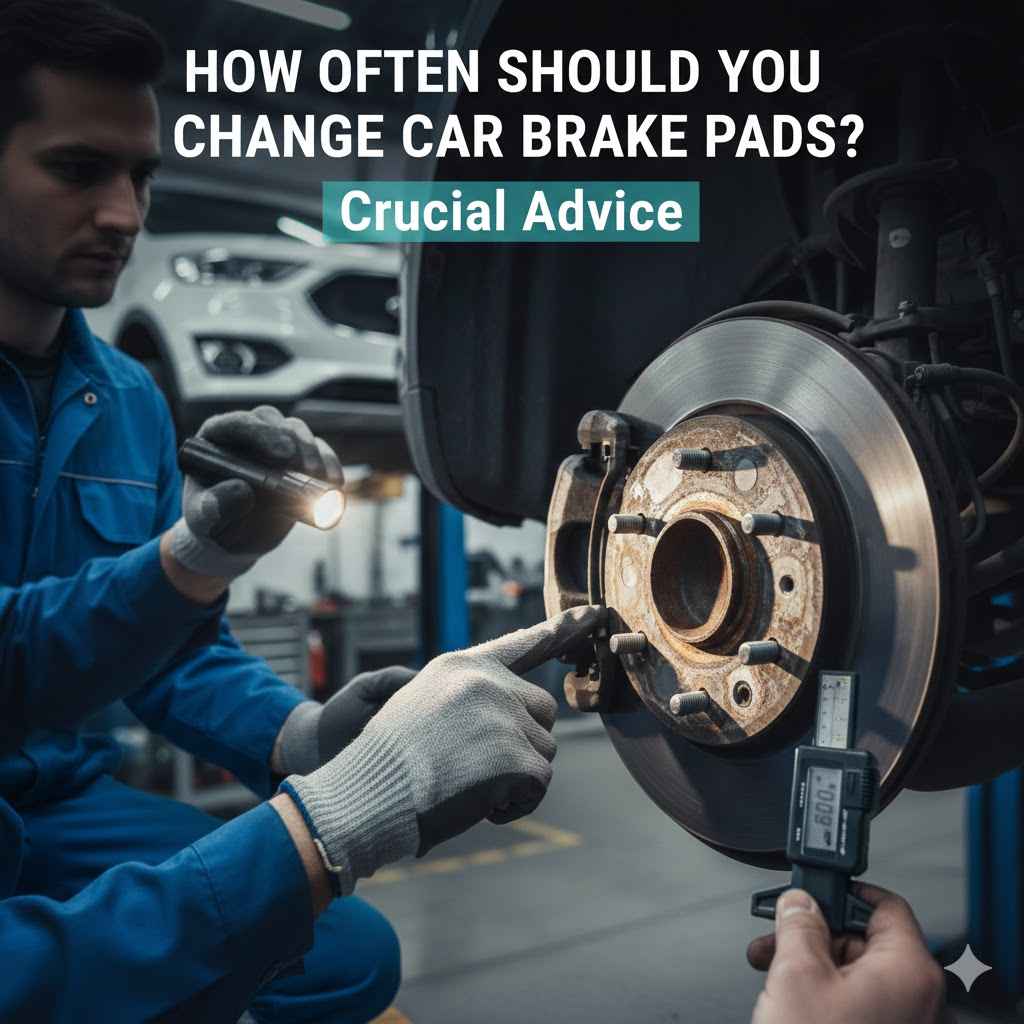
Most car brake pads should be replaced every 25,000 to 70,000 miles. However, this range varies widely depending on your driving habits, the type of vehicle you drive, and the material of your brake pads. The best way to know for sure is to listen for warning signs and have them visually inspected regularly.
Hearing a strange noise when you press the brake pedal can be stressful. Is it a big problem? Is it going to be expensive? Your car’s brakes are your most important safety feature, so it’s natural to worry. But here’s the good news: understanding your brake pads is much easier than you think.
Many drivers aren’t sure when to change their brake pads, and that uncertainty can lead to bigger, more costly repairs down the road. This guide will take the guesswork out of it. We’ll walk you through everything you need to know in simple, easy-to-understand steps. You’ll learn how to spot warning signs, what affects your brake pad life, and how to feel confident about your car’s safety.
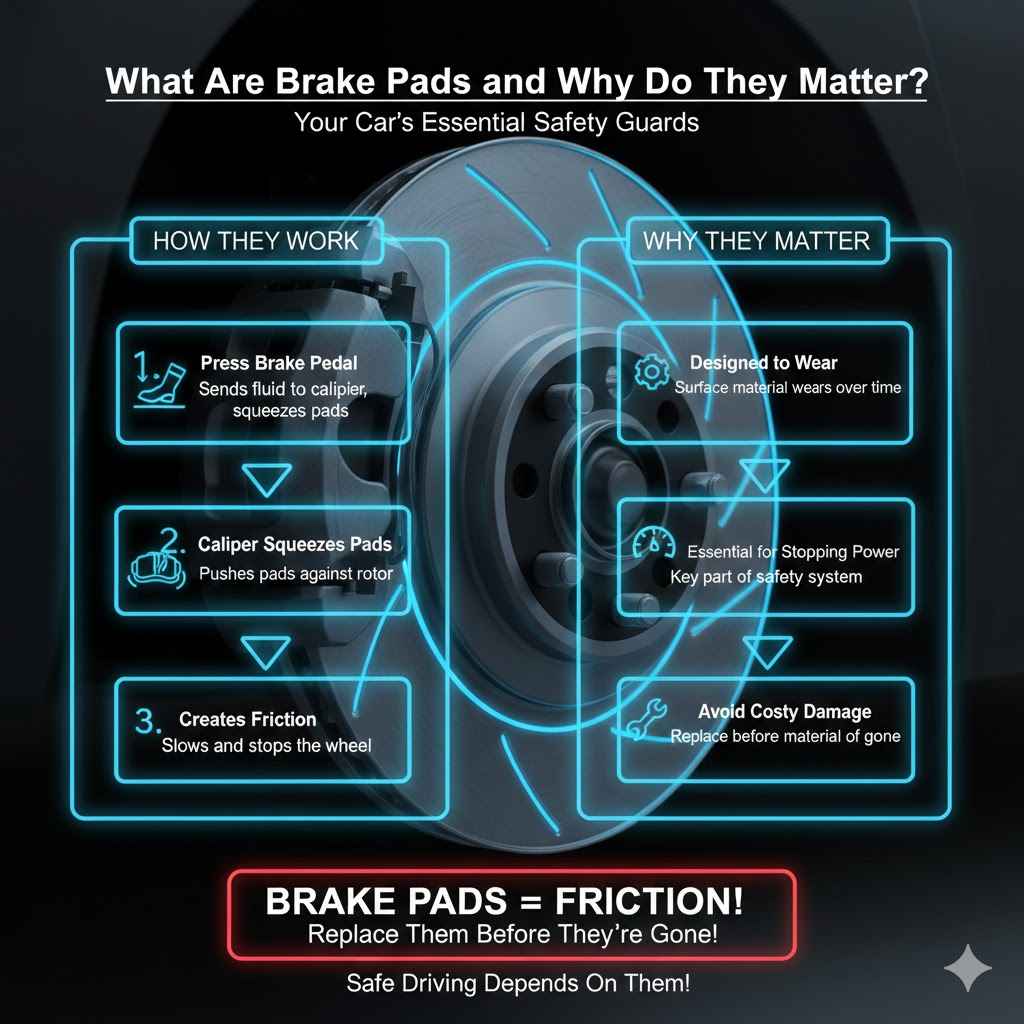
What Are Brake Pads and Why Do They Matter?
Before we dive into timelines, let’s quickly cover what brake pads actually do. Think of them as the hardworking feet of your car’s braking system. They are small blocks of a special friction material attached to a metal backing plate.
Here’s how they work in three simple steps:
- When you push the brake pedal, a part called a caliper squeezes the brake pads against a spinning metal disc, called a rotor.
- This creates friction, which is what slows down and stops your wheels from turning.
- Every time you brake, a tiny amount of that friction material wears away.
Because they are designed to wear down over time, brake pads are one of the most common replacement parts on any vehicle. Keeping them in good shape is absolutely essential for safe driving. Healthy brake pads mean you can stop quickly and reliably when you need to. Worn-out pads mean longer stopping distances and a much higher risk of an accident.
The Big Question: How Often Do Brake Pads Need Changing?
As we mentioned in the summary, the general guideline is every 25,000 to 70,000 miles. Some high-quality pads can even last longer. You might be wondering, “Why is that range so huge?”
The truth is, there’s no single, magic number for every car. The lifespan of your brake pads depends on a unique mix of factors. It’s like asking how long a pair of running shoes will last. It depends on how often you run, where you run, and the quality of the shoes themselves. Let’s break down the key factors that determine how long your brake pads will last.
Key Factors That Affect Brake Pad Lifespan
Understanding these factors will help you estimate when your own brakes might need attention and show you how you can even help them last longer.
1. Your Driving Habits
This is the single biggest factor. How you drive has a massive impact on your brake pads.
- City vs. Highway Driving: If you do most of your driving in the city with lots of stop-and-go traffic, you’re using your brakes constantly. This wears them out much faster than driving long distances on a highway with minimal braking.
- Aggressive Driving: Do you tend to speed up quickly and brake hard at the last second? This aggressive style puts extreme stress and heat on your brake pads, causing them to wear down very quickly. Gentle, gradual braking is much kinder to them.
- “Riding the Brakes”: Resting your foot on the brake pedal while driving, especially downhill, creates constant friction and heat. This is a sure way to wear out your pads prematurely.
2. Your Vehicle’s Weight
It takes more energy to stop a heavier object. A large SUV, truck, or a car loaded with heavy cargo needs more braking force to come to a stop. This extra work puts more strain on the brake pads, causing them to wear out faster than those on a small, lightweight compact car.
3. The Type of Brake Pad Material
Brake pads are not all made from the same stuff. The material they are made from affects their performance, noise level, and lifespan. Here are the three most common types:
| Brake Pad Type | Description | Typical Lifespan |
|---|---|---|
| Organic (NAO) | Made from a mix of non-metallic materials like glass, rubber, and resins. They are quiet and soft on rotors. | Shorter (20,000 – 30,000 miles) |
| Semi-Metallic | Contain 30% to 65% metal (like steel, iron, or copper). They offer excellent braking and heat transfer but can be noisy and wear rotors faster. | Medium (30,000 – 50,000 miles) |
| Ceramic | Made from dense ceramic material with embedded copper fibers. They are quiet, produce less dust, and last a long time, but are usually the most expensive. | Longest (50,000 – 70,000+ miles) |
4. Your Driving Environment
Where you live and drive matters. If your daily commute involves steep hills, you’ll be using your brakes more heavily to control your speed, leading to faster wear. Similarly, living in a coastal area with salty air or a region with harsh winters where roads are salted can cause parts of your braking system, like the calipers, to corrode and stick, which can also accelerate pad wear.
5 Warning Signs Your Brake Pads Are Worn Out
Your car is pretty good at telling you when something is wrong. You just have to know what to listen for and look for. If you notice any of these five signs, it’s time to get your brake pads checked right away.
- High-Pitched Squealing or Screeching Noise
This is the most common and earliest warning sign. Most brake pads have a small metal tab called a “wear indicator.” When the pad material wears down to a certain point, this tab makes contact with the rotor and creates a loud squealing sound whenever you brake. It’s an audible alert system telling you, “Hey, it’s time for new pads soon!” - Deep Grinding or Growling Sound
If you hear a low, harsh grinding noise, this is a much more serious warning. It means the brake pad material has completely worn away, and now the metal backing plate is grinding directly against the metal rotor. This is a metal-on-metal situation that can severely damage your rotors, turning a simple brake pad replacement into a much more expensive repair. Stop driving immediately and have your car inspected. - Vibrating or Pulsating Brake Pedal
Do you feel a shaking or pulsing sensation in the brake pedal or steering wheel when you apply the brakes? This can be a sign that your brake rotors are warped from excess heat. While it can sometimes be caused by unevenly worn pads, it often points to a problem with the rotors themselves, which are a critical part of the brake system. - Your Car Takes Longer to Stop
If you notice that you have to press the brake pedal down further than usual, or that your car isn’t stopping as quickly as it used to, your brake pads might be at the end of their life. This is called “brake fade,” and it means the pads can no longer create enough friction to stop your car effectively. This is a major safety concern. - The Brake Warning Light Comes On
Many modern cars have a sensor built into the brake pads. When the pads wear down to a minimum thickness, the sensor triggers a warning light on your dashboard. This light typically looks like a circle with parentheses around it ((!)) or may simply say “BRAKE.” Don’t ignore it!
How to Check Your Brake Pads Yourself (The Easy Way)
You don’t need to be a mechanic to get a rough idea of your brake pad’s condition. A quick visual inspection can give you peace of mind. All you need is a flashlight.
Safety First: Make sure your car is parked on a flat, level surface and that the engine is off. Most importantly, ensure the brakes are cool to the touch. They can get extremely hot after driving.
Step 1: Look Through Your Wheel Spokes
You don’t even need to take the wheel off for a quick check. Kneel or crouch down and look through the spaces in your wheel. You’re looking for the brake caliper, which is the metal clamp-like assembly that fits over the shiny, circular brake rotor.
Step 2: Locate the Brake Pad
Inside the caliper, you will see the brake pad pressed up against the rotor. You’ll be looking at the edge of the pad. It consists of the thick metal backing plate and the friction material (the pad itself) that makes contact with the rotor.
Step 3: Check the Pad Thickness
This is what you’re here for. Look at the thickness of the friction material between the backing plate and the rotor. A new brake pad is about 10-12 millimeters thick (or about half an inch). The rule of thumb is that if the friction material looks to be less than 1/4 inch (or about 6 millimeters) thick, you should start planning to have them replaced soon. If they are down to 1/8 inch (3 millimeters) or less, they need to be replaced immediately.
Think of it this way: if the pad material is thinner than the metal backing plate it’s attached to, it’s definitely time for a change.
Understanding Brake Pad Materials: Which Is Right for You?
When it’s time for a replacement, you’ll be faced with a choice of materials. The right one for you depends on your car, your driving style, and your budget. This table breaks down the pros and cons of the most common types.
| Material Type | Pros | Cons | Best For |
|---|---|---|---|
| Organic (NAO) |
|
| Daily commuters with small to mid-size cars who prioritize a quiet, smooth ride and low cost. |
| Semi-Metallic |
|
| Trucks, SUVs, and drivers who want high-performance braking in various conditions. A great all-around choice. |
| Ceramic |
|
| Luxury and high-performance cars, or any driver who wants the best in quiet, clean, and long-lasting performance. |
For more official information on brake safety and standards, the National Highway Traffic Safety Administration (NHTSA) is an excellent resource that sets federal standards for vehicle safety.
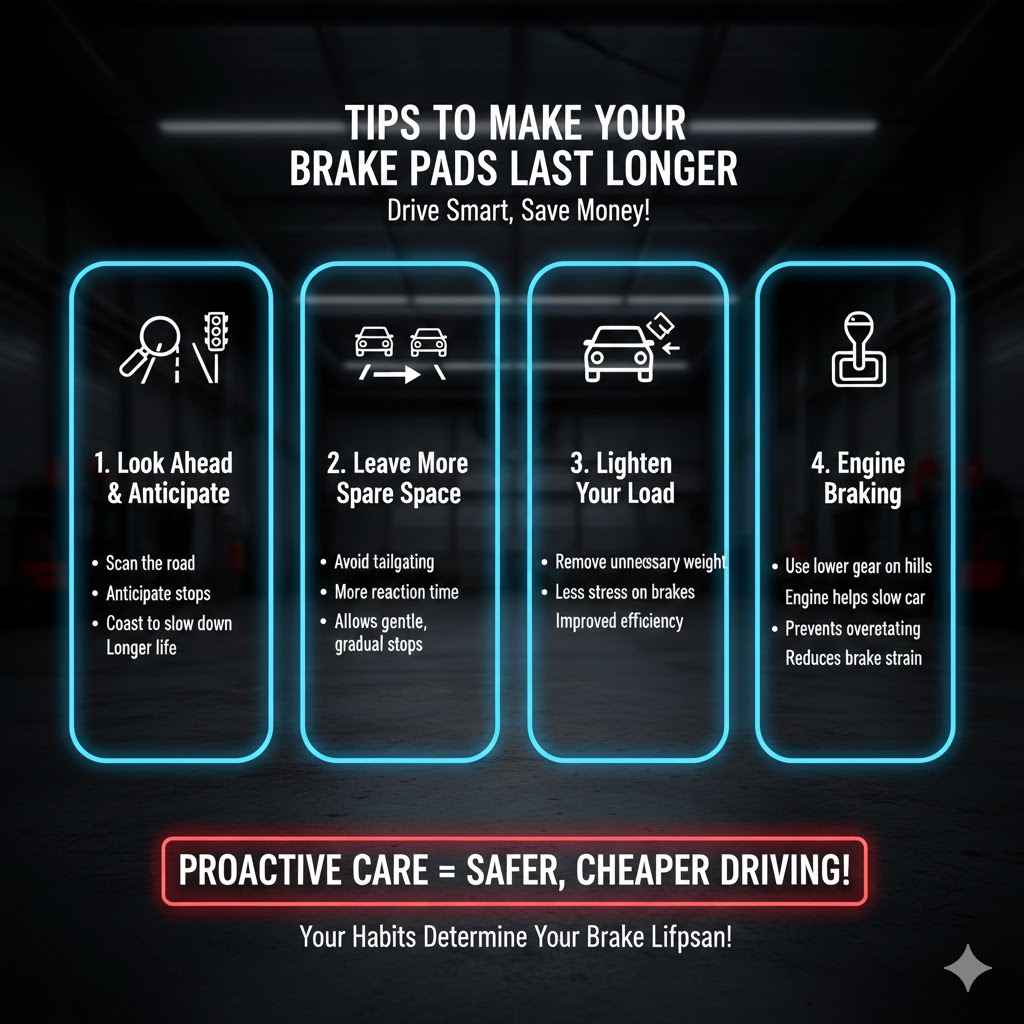
Tips to Make Your Brake Pads Last Longer
Want to save money and visit the mechanic less often? You can extend the life of your brake pads with a few simple changes to your driving habits.
- Look Ahead and Anticipate Stops: Instead of waiting until the last second to brake, look far down the road. If you see a red light or stopped traffic ahead, take your foot off the gas and let the car coast to slow down naturally. This reduces the amount of work your brakes have to do.
- Leave More Space: Avoid tailgating. Leaving a safe following distance between you and the car in front gives you more time to react and allows for gentle, gradual braking instead of sudden, hard stops.
- Lighten Your Load: Extra weight makes your car work harder to stop. Clean out any heavy, unnecessary items from your trunk or cabin. Every pound counts!
- One Foot for Driving: If you drive an automatic, train yourself to use only your right foot for both the gas and the brake. This prevents you from accidentally “riding the brake” with your left foot, which causes constant, unnecessary wear.
- Consider Engine Braking: When going down a long, steep hill, shift your automatic transmission into a lower gear (like L, 2, or 3). This uses the engine to help slow the car, taking a lot of the strain off your brakes and preventing them from overheating.
Frequently Asked Questions (FAQ)
Should I replace all four brake pads at once?
Not necessarily. Brake pads are typically replaced in pairs, either the two front pads or the two rear pads. The front brakes on most cars do about 70% of the braking, so they tend to wear out much faster than the rear ones. A mechanic will measure all four and let you know which axle needs service.
What’s the difference between brake pads and brake rotors?
Brake pads are the wearable friction material that gets pressed against the brake rotors. The rotors are the large metal discs that the pads clamp onto to stop the wheel from spinning. If you wait too long to replace worn pads, the metal backing can grind into the rotors and damage them, requiring a more expensive repair.
Can I drive with squeaky brakes?
If it’s the high-pitched squeal from the wear indicator, it’s a warning sign, not an emergency. It means you should schedule a brake inspection soon. However, if you hear a deep, metallic grinding sound, you should stop driving immediately. That sound indicates a serious problem that could lead to brake failure.
How much does a brake pad replacement cost?
The cost can vary significantly based on your vehicle and location. Generally, you can expect to pay between $150 and $300 per axle for parts and labor at an independent repair shop. Dealerships and luxury or performance vehicles will likely be more expensive.
Do rear brake pads wear out as fast as front ones?
No, they usually don’t. As mentioned, the front brakes handle the majority of the braking force due to weight shifting forward when you slow down. Because of this, front brake pads typically wear out about twice as fast as the rear ones.
What are OEM vs. aftermarket brake pads?
OEM stands for “Original Equipment Manufacturer.” These are the same pads that your car came with from the factory. Aftermarket pads are made by other companies. They come in a wide range of prices and quality levels, from basic budget options to high-performance upgrades that may be better than the OEM parts.
Your Brakes, Your Safety: A Final Word
Keeping your brakes in top condition is one of the most important responsibilities of being a car owner. While there isn’t a single, simple answer for how often to change them, you are now equipped with the knowledge to make smart decisions. Remember the key takeaways: the lifespan of your pads depends heavily on how and where you drive, the type of car you have, and the pads you use.
Pay attention to your car. Listen for new sounds, feel for changes in the brake pedal, and take a quick look at your pads every few months. By being proactive, you not only ensure your safety on the road but also prevent small issues from turning into expensive, complicated repairs. You’ve got this!