
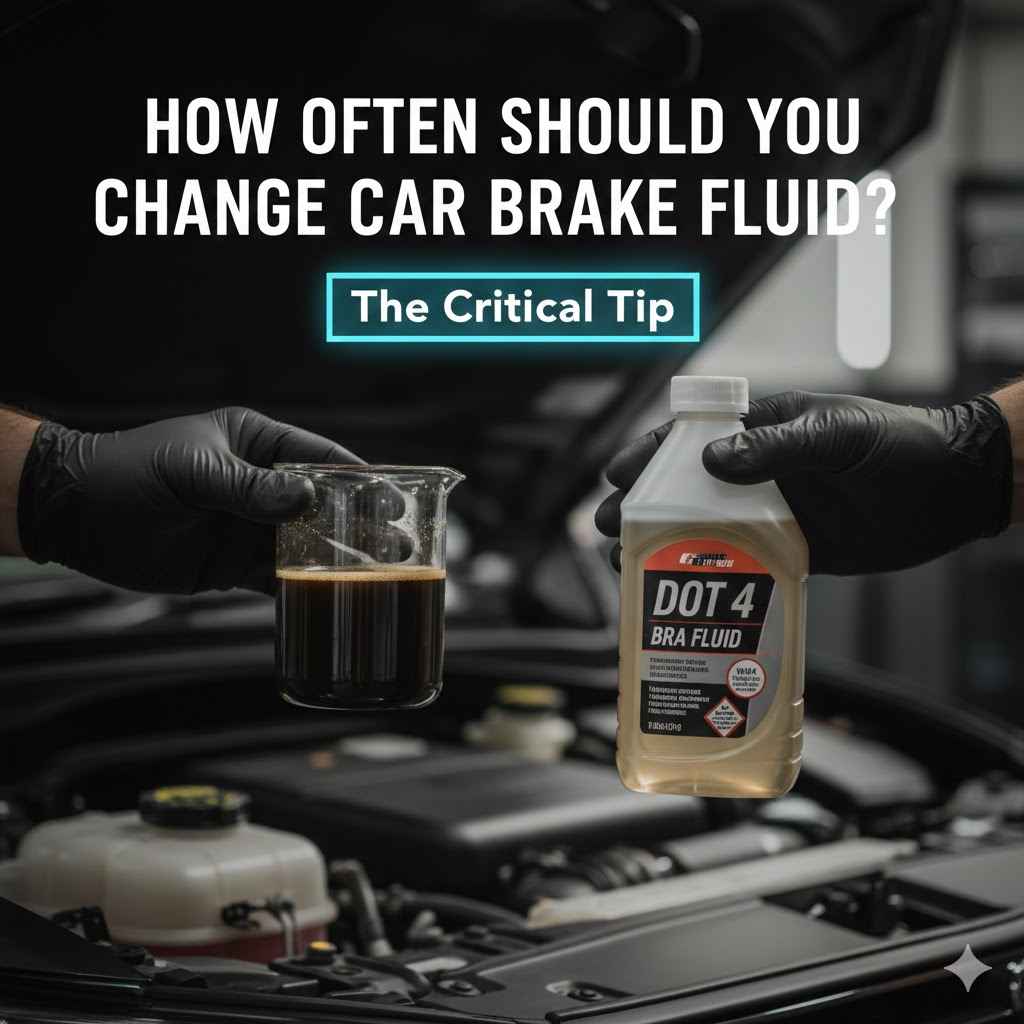
Most car manufacturers recommend changing brake fluid every two to three years. However, the critical tip is that time and moisture are more important than mileage. Brake fluid absorbs water from the air, which lowers its boiling point and can lead to brake failure. Test your fluid annually for moisture to ensure your brakes are always safe and reliable.
Your car’s brakes are its most important safety feature. You press the pedal, and the car stops. Simple, right? But behind that simple action is a powerful fluid working hard to keep you safe. This is your brake fluid, and it’s one of the most overlooked parts of car care. Many drivers don’t even think about it until there’s a problem.
If you’ve ever wondered about this mysterious fluid, you’re in the right place. We’re going to break down everything you need to know in simple, easy-to-understand terms. Forget confusing jargon. We’ll show you why this fluid is so important, how often to change it, and how you can check it yourself. Let’s get you feeling confident about your car’s brakes.
What Is Brake Fluid and Why Is It So Important?
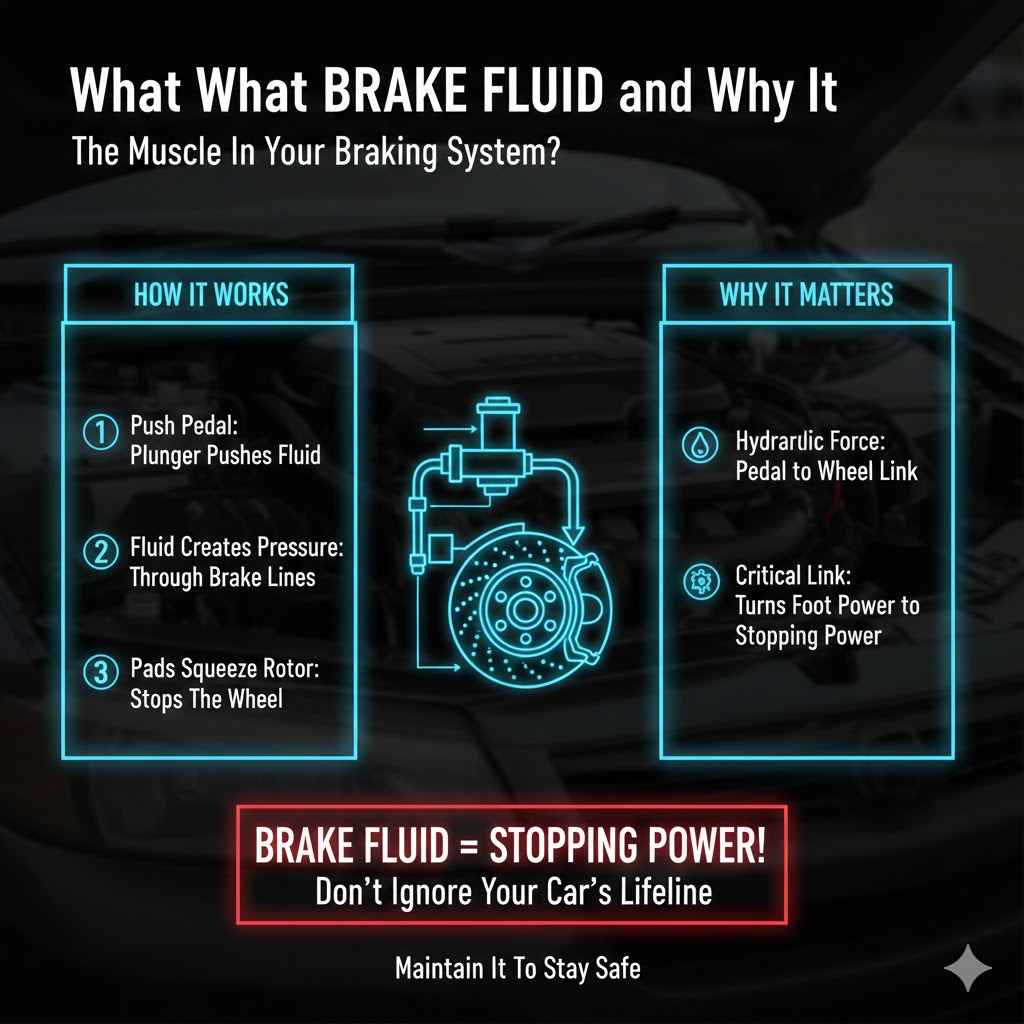
Think of brake fluid as the muscle in your braking system. When you push the brake pedal, you aren’t physically squeezing the wheels to a stop. Instead, you’re pushing a small plunger that sends this special fluid rushing through a network of tubes, called brake lines.
This fluid creates immense hydraulic pressure. It’s this pressure that pushes the brake pads against the rotors (the shiny discs you see behind your wheels), creating the friction that slows and stops your car. Without brake fluid, your brake pedal would be useless.
In short, brake fluid turns the light touch of your foot into enough force to stop a two-ton vehicle. It’s a critical link in the chain of events that keeps you safe on the road, which is why maintaining it is so vital.
The Critical Tip: It’s Not Just About Miles or Years
Here’s the single most important thing to understand about brake fluid: it is “hygroscopic.” That’s a fancy word that means it loves to absorb water. Over time, tiny amounts of moisture from the air seep into the brake system through microscopic pores in the hoses and seals.
Why is this a problem? Two big reasons:
- Lower Boiling Point: Brakes get incredibly hot from friction. Fresh, clean brake fluid has a very high boiling point to handle this heat. But as it absorbs water, that boiling point drops dramatically. If the fluid boils, it creates vapor bubbles. Unlike liquid, vapor can be compressed. When you press the pedal, you’ll just be squishing bubbles instead of applying pressure to the brakes. This leads to a terrifying situation where the pedal feels spongy and goes to the floor without stopping the car.
- Internal Corrosion: Water also causes rust and corrosion from the inside out. This can damage expensive parts like your brake lines, calipers, wheel cylinders, and the sophisticated Anti-lock Brake System (ABS) module. A brake fluid change is cheap insurance against very expensive repairs down the road.
This is why the critical tip isn’t just about following a mileage schedule. The age of the fluid and the humidity of your climate are often more important factors.
So, How Often Should You Change Car Brake Fluid?
Now for the big question. While the moisture issue is key, you still need a starting point for maintenance. Here are the general guidelines:
- General Recommendation: Most vehicle manufacturers and mechanics recommend a brake fluid change every two to three years, regardless of how many miles you’ve driven.
- Mileage Guideline: If you prefer to go by mileage, the typical range is every 24,000 to 45,000 miles.
Always Check Your Owner’s Manual First
The best and most accurate advice for your specific car is sitting in your glove box. Your vehicle’s owner’s manual will provide the exact service interval recommended by the engineers who designed it. Different braking systems have different needs, so always defer to the manual’s guidance.
Factors That Can Affect the Schedule
The “every two years” rule is a great baseline, but you might need to change your fluid more often if you experience any of the following:
- Humid Climates: If you live near the coast or in a rainy, humid area, your brake fluid will absorb moisture much faster. You might consider annual changes.
- City Driving: Constant stop-and-go traffic means you’re using your brakes more frequently, generating more heat and stressing the fluid.
- Towing or Mountain Driving: Hauling heavy loads or driving down steep grades puts extreme stress and heat on your brakes, which can degrade the fluid faster.
- High-Performance Driving: If you take your car to a track day or drive aggressively, your brake fluid needs to be in perfect condition. Many enthusiasts change it before every track event.
Signs You Need a Brake Fluid Change Now
Your car is great at giving you warning signs when something is wrong. If you notice any of these symptoms, your brake fluid could be the culprit. Don’t wait for your next scheduled service—get it checked immediately.
- Spongy or Soft Brake Pedal: This is the classic sign of air or moisture in the lines. If the pedal feels mushy or sinks further to the floor than usual, it’s a major red flag.
- ABS Light Turns On: A dirty or low brake fluid level can sometimes trigger the ABS warning light on your dashboard.
- Longer Stopping Distances: If you feel like your car isn’t stopping as quickly or decisively as it used to, old fluid could be reducing your braking power.
- Dark or Murky Fluid: Fresh brake fluid is clear with a slight yellow tint. If you check it and it looks dark brown or black, it’s contaminated and needs to be replaced.
How to Check Your Brake Fluid at Home (It’s Easy!)
You don’t need to be a mechanic to perform this simple but important check. It only takes a minute and can give you great peace of mind. Here’s how to do it.
Step 1: Locate the Brake Fluid Reservoir
Pop your hood and look for a small, semi-transparent plastic container up near the back of the engine bay, usually on the driver’s side. The cap is typically black or yellow and will often have a warning symbol or the words “BRAKE FLUID” printed on it.
Step 2: Check the Fluid Level
The reservoir has “MIN” and “MAX” lines marked on the side. The fluid level should always be between these two lines. If it’s below the “MIN” line, you may have a leak in your brake system, which is a serious safety issue that needs immediate professional attention.
Step 3: Inspect the Fluid Color
Look at the color of the fluid inside the reservoir. This is your best visual clue to its condition. New fluid is nearly clear. Over time, it darkens as it absorbs moisture and collects microscopic debris.
| Fluid Color | Condition & Meaning |
|---|---|
| Clear to Light Amber/Yellow | Good. Your fluid is fresh and in great condition. No action is needed. |
| Medium Amber to Light Brown | Okay, but aging. The fluid is starting to absorb moisture. Plan to have it changed at your next service interval. |
| Dark Brown or Black | Bad. The fluid is heavily contaminated with moisture and debris. It needs to be changed as soon as possible. |
A Deeper Look: Testing for Moisture Contamination
While color is a good indicator, the most accurate way to know your fluid’s condition is to test its moisture content directly. This might sound complicated, but there are simple, inexpensive tools that make it easy for anyone.
Using a Brake Fluid Tester Pen
These are affordable electronic devices that measure the percentage of water in your brake fluid. You simply dip the tip of the pen into the reservoir, and LED lights will indicate the moisture level. Green usually means it’s okay, while yellow and red mean it’s time for a change. It’s a foolproof way to know for sure.
Using Test Strips
Another option is brake fluid test strips. Just like a pool testing strip, you dip it into your brake fluid for a moment, and the pad on the end changes color. You then compare this color to a chart on the packaging to determine the fluid’s condition. It’s a quick and simple chemical test.
Understanding Different Types of Brake Fluid
You can’t just grab any bottle of brake fluid off the shelf. Using the wrong type can cause serious damage to your braking system. The type required for your car is usually printed on the reservoir cap.
The most common types are designated by the Department of Transportation (DOT). Here’s a simple breakdown:
| Type | Chemical Base | Key Characteristic | Compatibility |
|---|---|---|---|
| DOT 3 | Glycol-Ether | The most common type in standard vehicles. Lower boiling point. | Can be mixed with DOT 4. |
| DOT 4 | Glycol-Ether | Higher boiling point than DOT 3. Used in many European cars and for heavy-duty use. | Can be used where DOT 3 is specified. |
| DOT 5.1 | Glycol-Ether | Even higher boiling point than DOT 4. For high-performance and racing applications. | Can be mixed with DOT 3 and DOT 4. |
| DOT 5 | Silicone | Does not absorb water. Used in classic cars and military vehicles. Not for modern cars with ABS. | NEVER mix with DOT 3, 4, or 5.1. It will cause gelling and system failure. |
The most critical takeaway is to never mix silicone-based DOT 5 fluid with the common glycol-ether-based fluids. Always use the type specified in your owner’s manual. For more information on vehicle safety standards, you can visit official resources like the National Highway Traffic Safety Administration (NHTSA).
DIY Brake Fluid Change vs. Professional Service
So your fluid is dark, and it’s time for a change. Should you do it yourself or take it to a shop? Let’s look at the options.
The DIY Approach: For the Confident Beginner
Changing brake fluid (often called “bleeding the brakes”) is a task some car owners tackle themselves. It involves removing the old, contaminated fluid from the system while adding new fluid, ensuring no air bubbles get in.
Pros:
- Saves Money: You only pay for the cost of the fluid and maybe a few simple tools.
- Great Learning Experience: It helps you understand your car better and builds confidence.
- Satisfaction: There’s a real sense of accomplishment in doing your own maintenance.
Cons:
- Risk of Error: The biggest risk is introducing air into the brake lines. This will make your brakes feel spongy and completely ineffective until it’s properly bled out.
- Requires Tools: You’ll need a wrench to fit the bleeder screws, a catch bottle, and tubing. A partner to pump the brakes is also very helpful.
- Messy and Hazardous: Brake fluid is corrosive and can damage your car’s paint. Old fluid must also be disposed of properly at a hazardous waste facility.
The Professional Service: The Safe and Easy Option
For most drivers, having a professional mechanic perform a brake fluid flush is the best choice. They have the right tools and experience to do the job quickly and safely.
Pros:
- Peace of Mind: You know the job is done correctly by a trained technician, with no risk of air in the system.
- Proper Equipment: Shops use pressure bleeders that push new fluid through the system, ensuring all the old, contaminated fluid is removed.
- Convenience: It’s fast, clean, and they handle the proper disposal of the old fluid for you.
Cons:
- Higher Cost: You are paying for labor and expertise, so it will cost more than doing it yourself.
What Happens If You Never Change Your Brake Fluid?
Ignoring your brake fluid is not a good idea. It’s a small maintenance task that prevents very big, very dangerous problems. If left unchanged for years, here’s what you can expect:
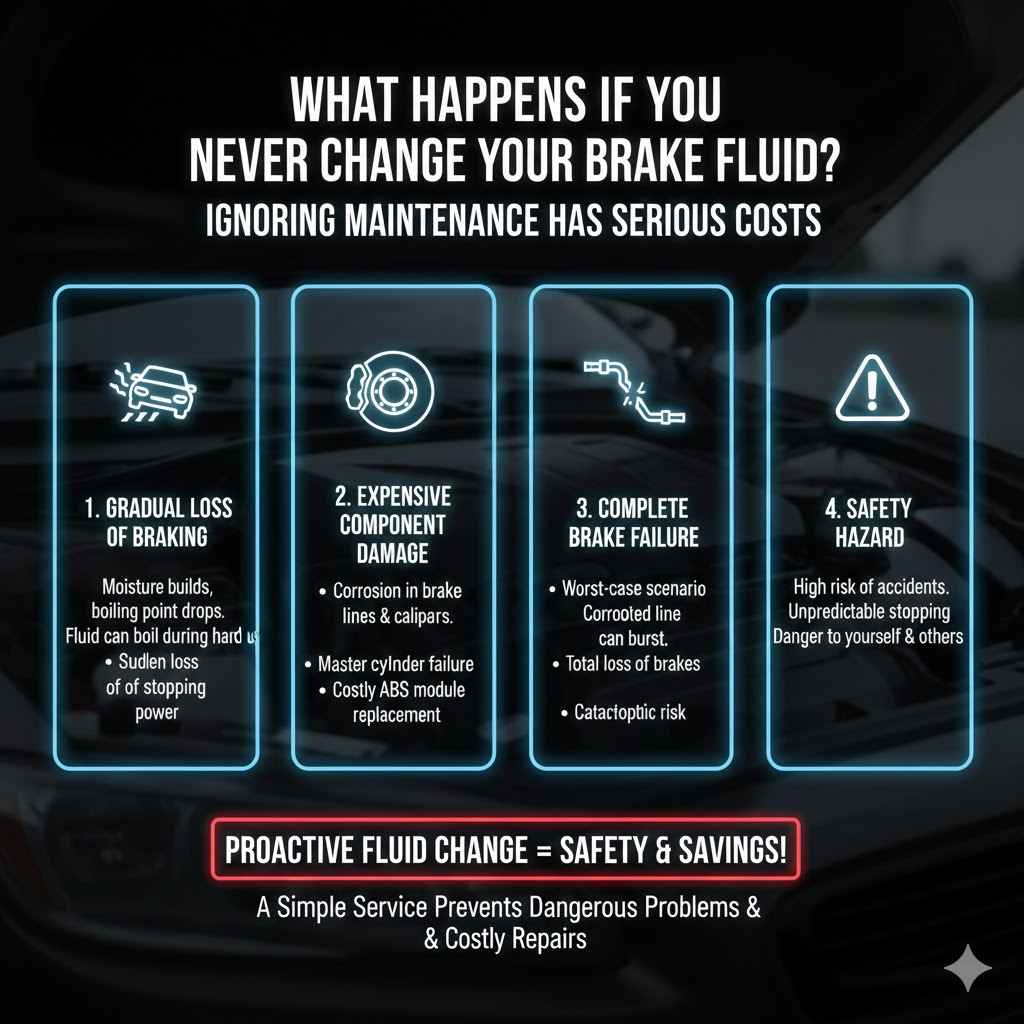
- Gradual Loss of Braking Power: As moisture builds, the boiling point drops. On a long downhill drive or after a series of hard stops, your fluid could boil, leading to a sudden loss of braking ability.
- Expensive Component Damage: The corrosive, water-logged fluid will slowly eat away at your brake lines, calipers, and the master cylinder. The most costly repair is often to the ABS module, which can cost thousands of dollars to replace.
- Complete Brake Failure: In a worst-case scenario, a corroded brake line could burst under pressure, causing a complete and total loss of your brakes.
A simple, inexpensive fluid change is one of the best investments you can make in your safety and your car’s longevity.
Frequently Asked Questions (FAQ)
1. Can I just top off my brake fluid instead of changing it?
You should only top off brake fluid if the level is low but the fluid is still clean. Topping off does not remove the moisture and contaminants already in the system. If the fluid is old and dark, it needs a full change (or flush) to be effective.
2. How much does a professional brake fluid change cost?
The cost can vary depending on your vehicle and location, but you can typically expect to pay between $80 and $150 for a professional brake fluid flush at a reputable repair shop.
3. What color should brake fluid be?
New, clean brake fluid should be almost clear with a slight yellow or amber tint. If it looks like dark tea or coffee, it is contaminated and needs to be replaced.
4. Is it okay to use a different DOT number than my car requires?
It’s best to stick with what your owner’s manual recommends. You can often upgrade from DOT 3 to DOT 4 for a higher boiling point, but never downgrade. And remember, never mix DOT 5 (silicone-based) with any other type.
5. Does brake fluid expire in the bottle?
Yes. Once a bottle of brake fluid is opened, it begins absorbing moisture from the air. You should always use a fresh, sealed bottle for any brake service and discard any leftover fluid. An unopened bottle can last for years.
6. What’s the difference between a brake fluid change and a brake bleed?
A “brake bleed” is the process of removing air bubbles from the brake lines. A “brake fluid change” or “flush” is the process of completely removing all the old fluid from the system and replacing it with new, fresh fluid. A flush always includes bleeding the system.
7. Why is my brake fluid level low?
A slightly dropping fluid level over a long time can be normal as your brake pads wear down. However, if the level is below the “MIN” line or drops suddenly, it almost always indicates a leak in the brake system. This is a major safety hazard and should be inspected by a mechanic immediately.
Your Next Step for Safer Braking
You’ve done it! You now know more about brake fluid than most drivers on the road. You understand that it’s not just about miles on a sticker—it’s about protecting your braking system from its number one enemy: moisture.
Your next step is simple. The next time you have a free minute, pop the hood and take a look at your brake fluid reservoir. Check the level and inspect the color. Is it clear and golden, or has it turned dark and murky? This one-minute check gives you the power to make a smart, informed decision about your car’s most important safety system.
Whether you choose to schedule a service with your trusted mechanic or grab a tester pen for a more accurate look, you are now in control. Taking care of your brake fluid is an easy, inexpensive step that ensures your brakes are ready to perform when you need them most. Drive confidently, and drive safe!