
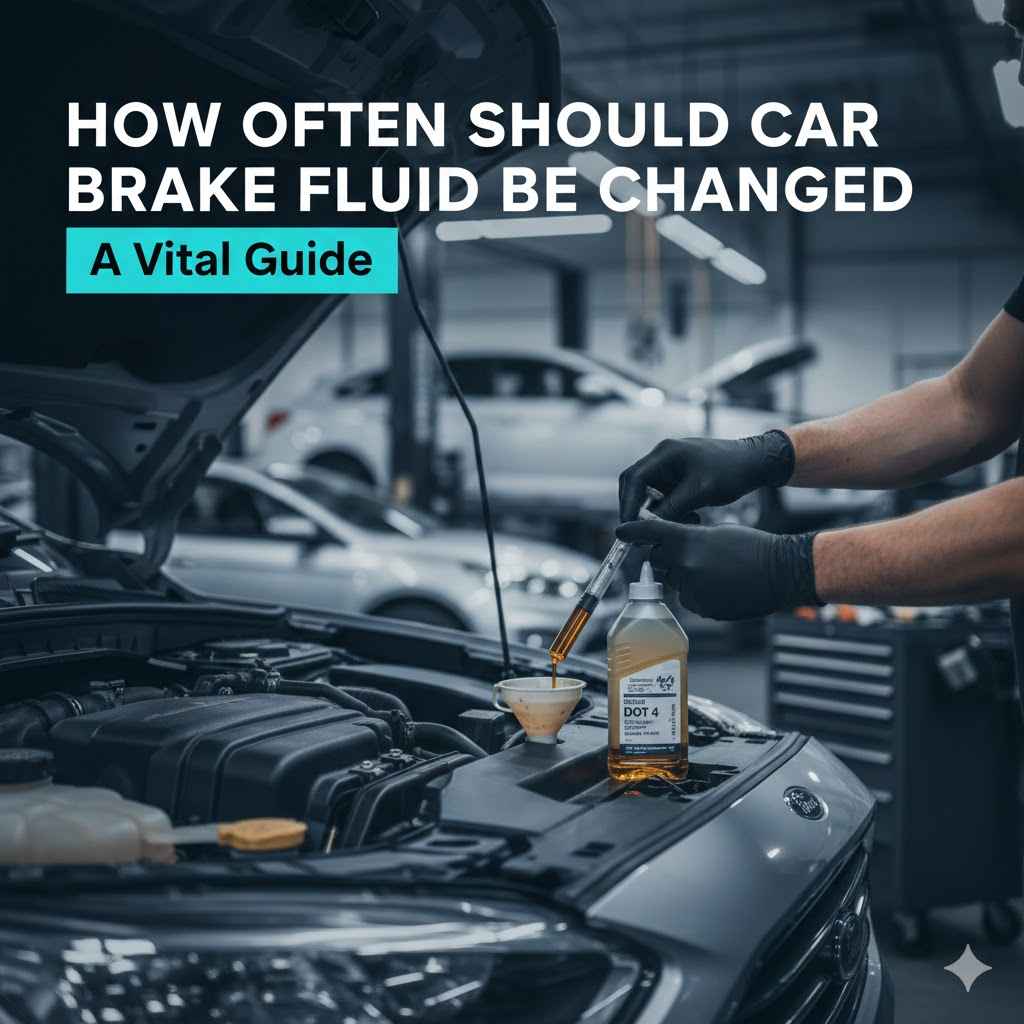
Most car manufacturers recommend changing your brake fluid every two to three years or every 30,000 to 45,000 miles, whichever comes first. Always check your vehicle’s owner’s manual for the most accurate schedule, as this is the single most important maintenance task for ensuring your brakes work safely and reliably every time.
Your car’s brakes are one of its most important safety features. You trust them to work every single time you press the pedal. But have you ever thought about the one thing that makes it all happen? It’s brake fluid. This is a part of car care that many people forget. Don’t worry, it’s a common oversight! Understanding your brake fluid is easy, and taking care of it is one of the best things you can do for your car and your safety. In this guide, we’ll walk you through everything you need to know, step by step.
What is Brake Fluid and Why is it So Important?
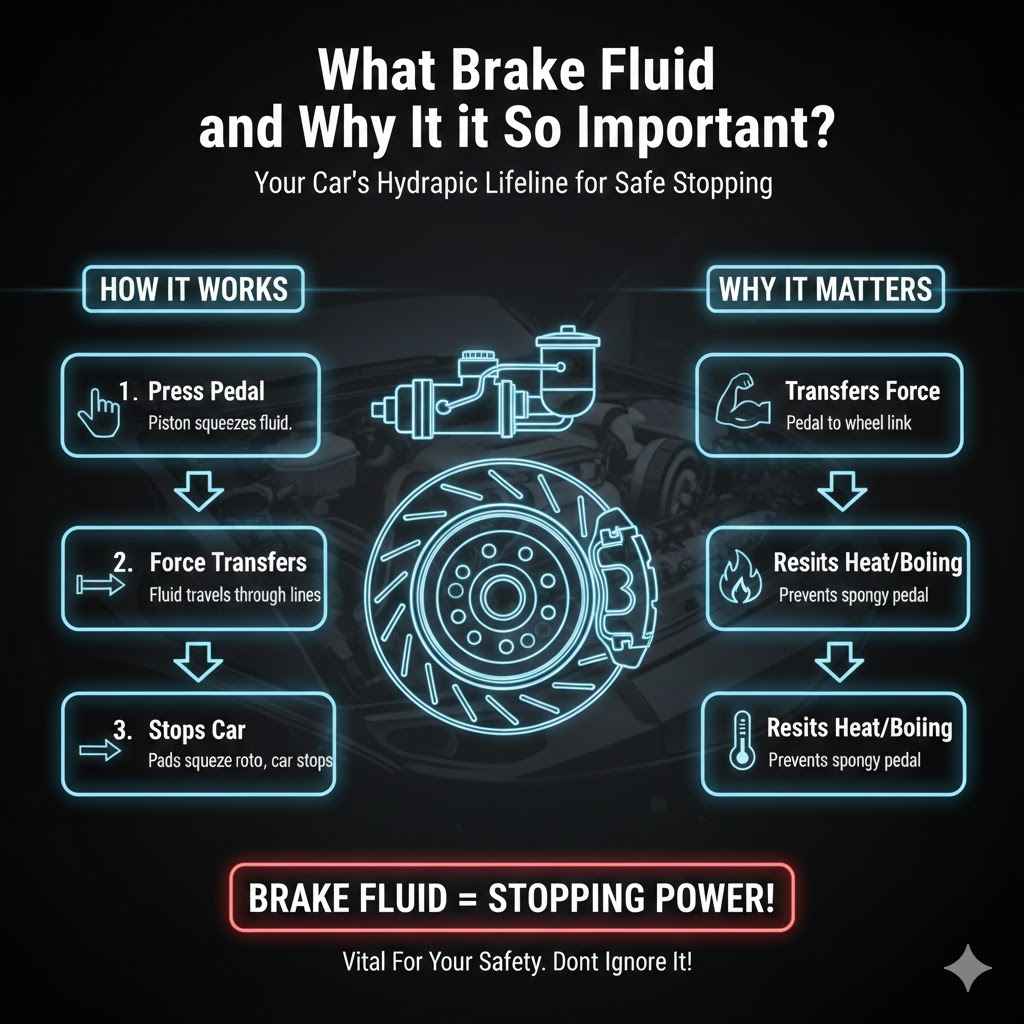
Think of brake fluid as the muscle behind your brakes. It’s a special hydraulic fluid that lives in a sealed system of tubes and hoses. When you push the brake pedal, you are actually pushing a piston that squeezes this fluid. Because liquid doesn’t compress easily, the force travels through the brake lines instantly, pushing against your brake pads and stopping your car. Without this fluid, your brake pedal would just go to the floor, and your car wouldn’t stop.
Its main job is to transfer force, but it also has another critical role: it must resist boiling. Braking creates a huge amount of heat. If the fluid were to boil, it would create gas bubbles in the lines. Unlike liquid, gas can be squeezed easily. This would make your brake pedal feel soft and “spongy,” and your car would lose most of its stopping power. This is why using the correct, high-quality brake fluid is essential for your safety on the road.
The Hidden Enemy: Why Brake Fluid Goes Bad
If the brake system is sealed, you might wonder why the fluid ever needs to be changed. The problem is a scientific property of most brake fluids: they are hygroscopic. That’s a fancy word that simply means brake fluid loves to absorb water. Over time, tiny amounts of moisture from the air seep into the system through microscopic pores in the rubber hoses and past seals.
This absorbed water causes two major problems that can seriously compromise your safety:
- It Lowers the Boiling Point: Fresh brake fluid has a very high boiling point, often well over 400°F (204°C). However, as it absorbs water, that boiling point drops dramatically. The National Highway Traffic Safety Administration (NHTSA) warns that contaminated fluid can lead to brake failure. If you are braking heavily, like when going down a long hill or in stop-and-go traffic, the heat can cause this water-logged fluid to boil. This creates steam bubbles in the lines, leading to a dangerous loss of braking power right when you need it most.
- It Causes Corrosion: Water is the enemy of the metal parts inside your brake system. Moisture in the brake fluid can cause rust and corrosion in your brake lines, calipers, wheel cylinders, and the expensive anti-lock brake system (ABS) module. This corrosion not only leads to system failure but can also result in costly repairs that could have been avoided with a simple fluid change.
How Often Should You Really Change Your Brake Fluid?
The golden rule is to follow your vehicle manufacturer’s recommendation. This information is always listed in your owner’s manual in the maintenance schedule section. However, a good general guideline for most cars on the road today is to change the brake fluid every 2 to 3 years.
Some manufacturers use mileage instead of time, often suggesting a change every 30,000 to 45,000 miles. Your driving habits also play a role. If you live in a very humid climate, drive in hilly or mountainous areas, or frequently tow a trailer, your brake fluid may absorb moisture faster and need to be changed more often.
To give you a better idea, here are some general recommendations from popular car brands. Remember, your specific model’s manual is the ultimate authority.
| Car Manufacturer | General Recommended Interval |
|---|---|
| Honda / Acura | Every 3 years, regardless of mileage. |
| Toyota / Lexus | Every 30,000 miles or 3 years. |
| Ford | Typically every 2 to 3 years. Check manual for specifics. |
| BMW / Mercedes-Benz | Every 2 years. These brands are often very strict about this interval. |
| Volkswagen / Audi | Initial change at 3 years, then every 2 years after that. |
| Subaru | Every 30,000 miles. |
Note: This table provides general estimates. Always consult your owner’s manual for the precise maintenance schedule for your vehicle.
Signs Your Brake Fluid Needs Changing Right Now
Sometimes your car will give you clear signals that your brake fluid is old and needs attention. If you notice any of the following symptoms, it’s time to get your fluid checked and likely changed immediately, as your safety could be at risk.
1. Spongy or Soft Brake Pedal
This is the most common and most dangerous sign. If your brake pedal feels squishy, soft, or sinks toward the floor when you press it, it’s a strong indicator that there is air or moisture in the brake lines. The fluid has likely boiled at some point, creating vapor pockets. This is a serious safety hazard that dramatically reduces your stopping ability.
2. Changes in Brake Performance
Are you noticing that it takes longer to stop than it used to? Do you have to press the brake pedal harder or further down to get the same braking response? This gradual decrease in performance can be caused by old, contaminated fluid that isn’t transferring force as efficiently as it should.
3. The Brake Fluid Looks Dark or Dirty
New, clean brake fluid is nearly clear or has a light amber or yellowish tint. Over time, as it absorbs moisture and collects microscopic debris from seals and hoses, it will turn dark brown or even black. A quick visual inspection of the fluid in its reservoir can tell you a lot about its condition.
4. The ABS Light Comes On
The Anti-lock Braking System (ABS) is a complex and sensitive component. The internal valves and pump are designed to work with clean fluid. If the fluid becomes contaminated with moisture or debris, it can clog these small passages and trigger the ABS warning light on your dashboard. Ignoring this can lead to a very expensive repair of the ABS module.
5. You Can’t Remember the Last Time it Was Changed
If you’ve owned your car for more than a couple of years and have no record of a brake fluid change, it’s best to assume it needs to be done. This is a case where being proactive is far better than waiting for a problem to appear. It’s a cheap and easy way to buy peace of mind.
How to Check Your Brake Fluid: A Simple 3-Step Guide
You don’t need to be a mechanic to check your brake fluid. It’s one of the easiest checks you can perform on your car. It only takes a minute and can give you a quick look at the health of your brake system.
What You’ll Need:
- A clean, dry, lint-free rag or paper towel.
Step-by-Step Instructions:
- Locate the Brake Fluid Reservoir: Pop your hood and look for a small, semi-transparent plastic container, usually located at the back of the engine bay on the driver’s side. The cap will often be yellow or black and have a symbol on it that looks like a circle with parentheses around it.
- Check the Fluid Level: Without opening the cap, look at the side of the reservoir. You will see “MIN” and “MAX” lines molded into the plastic. The fluid level should be comfortably between these two marks. If the level is low, it could indicate a leak in your brake system or that your brake pads are very worn.
- Inspect the Fluid Color: Look at the color of the fluid through the plastic. Is it a light, honey-like color? That’s good! Is it dark like coffee or cola? That’s a clear sign the fluid is old, contaminated, and needs to be replaced soon.
Safety Tip: If you need to open the cap, first wipe the outside of the cap and the surrounding area with your clean rag. This prevents any dirt or debris from falling into the fluid, which could damage the system.
Testing Your Brake Fluid: Going a Step Further
A visual check is great, but it doesn’t tell the whole story. Brake fluid can look clean but still have a high moisture content. For a more accurate reading, you can use one of two simple tools.
Brake Fluid Test Strips
These are small paper strips that you dip into the brake fluid for a second. When you pull the strip out, it will change color. You then compare this color to a chart that comes with the strips to determine the moisture content and copper levels. They are cheap, easy to use, and a great way for a beginner to get a quick assessment.
Electronic Brake Fluid Testers
For a more precise measurement, you can use an electronic tester. This is a pen-shaped device with two small prongs on the end. You dip the prongs into the fluid, and the tool measures the electrical conductivity to determine the exact percentage of water in the fluid. It gives you a clear, immediate result. While more expensive than strips, they are very accurate and a favorite tool of DIY enthusiasts.
| Moisture Content | Brake Fluid Condition | Action Required |
|---|---|---|
| Less than 1% | Excellent | No action needed. Your fluid is in great shape. |
| 1% to 2% | Good / Okay | The fluid is still safe, but plan to change it at your next service interval. |
| 3% or more | Poor / Dangerous | Change the brake fluid immediately. The boiling point is dangerously low. |
DIY vs. Professional Brake Fluid Change: Which is Right for You?
Once you’ve determined your brake fluid needs changing, you have two choices: do it yourself or take it to a trusted mechanic. Let’s look at the pros and cons of each.
Changing Brake Fluid Yourself (The DIY Route)
For those who enjoy working on their own car, changing the brake fluid (also known as a “brake bleed”) can be a rewarding project.
- Pros: You can save a significant amount of money on labor costs. You also gain valuable experience and a deeper understanding of how your car works.
- Cons: It can be a messy job. You need specific tools, like a set of wrenches and a brake bleeder kit. The biggest risk is accidentally introducing air into the brake lines, which can be difficult and dangerous to remove. You must also dispose of the old brake fluid properly, as it is hazardous waste. According to the Environmental Protection Agency (EPA), used automotive fluids must be handled responsibly.
Having a Mechanic Do It (The Professional Route)
For most drivers, especially beginners, this is the recommended option. It’s a routine job for any qualified mechanic.
- Pros: It’s fast, safe, and hassle-free. Professionals have specialized equipment, like pressure or vacuum bleeders, that replace the fluid quickly and ensure no air gets into the system. They also handle the proper disposal of the old fluid.
- Cons: The primary downside is the cost. You will be paying for both the fluid and the mechanic’s labor time.
Our Recommendation: While a DIY brake bleed is possible, the brake system is critical to your safety. If you have any doubts about your ability to do the job perfectly, it’s always best to leave it to a professional. The peace of mind is well worth the cost.
Understanding Different Types of Brake Fluid
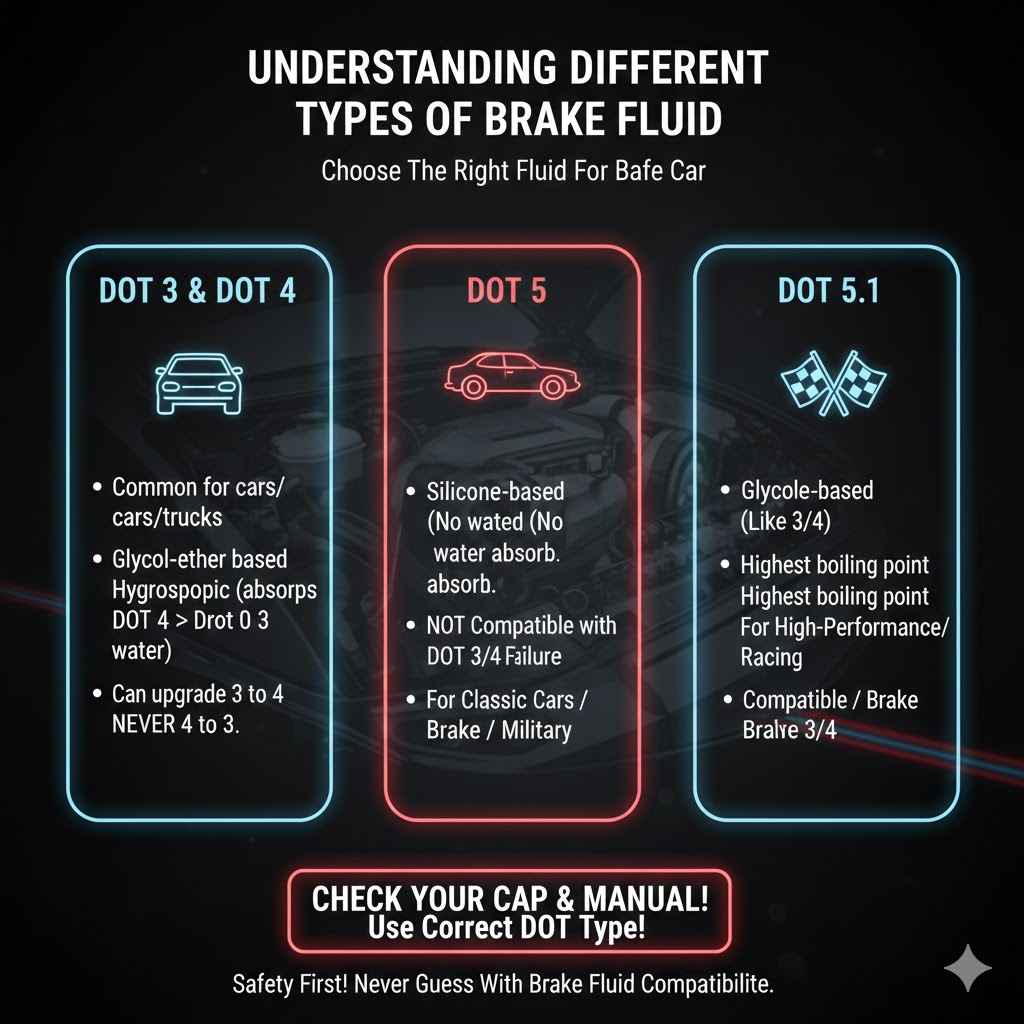
Not all brake fluids are the same. You must use the type specified for your vehicle. The type is usually printed on the cap of the brake fluid reservoir and is always listed in your owner’s manual. The most common types are designated by the Department of Transportation (DOT).
DOT 3 and DOT 4
These are the two most common types of brake fluid used in cars and trucks today. Both are glycol-ether based, which means they are hygroscopic (they absorb water). The main difference is that DOT 4 has a higher boiling point than DOT 3, making it better for vehicles that see heavier use or have high-performance brake systems. You can usually put DOT 4 fluid in a system that calls for DOT 3, but you should never put DOT 3 in a system that requires DOT 4.
DOT 5
This type is very different. DOT 5 is silicone-based, not glycol-based. Its biggest advantage is that it does not absorb water. However, it is NOT compatible with DOT 3 or DOT 4 and cannot be mixed with them. Mixing them will cause the fluid to gel and can lead to complete brake failure. DOT 5 is typically used only in classic cars that are stored for long periods or in some military vehicles.
DOT 5.1
This can be confusing. Despite the name, DOT 5.1 is a glycol-based fluid like DOT 3 and 4, not silicone-based like DOT 5. It has an even higher boiling point than DOT 4 and is used in high-performance and racing applications that generate extreme heat. It is compatible with DOT 3 and 4 systems.
Frequently Asked Questions (FAQ)
What happens if I never change my brake fluid?
If you never change your brake fluid, it will continue to absorb moisture. This will lower its boiling point, leading to a spongy brake pedal and reduced stopping power. It will also cause rust and corrosion inside your brake system, potentially leading to brake line failure and expensive damage to the ABS module and calipers.
Can I just top off my brake fluid instead of changing it?
If your fluid level is slightly low, you can top it off with fresh fluid of the correct type. However, this does not remove the moisture and contaminants already in the system. Topping off is a temporary fix for the level, not a substitute for changing the old fluid.
How much does a professional brake fluid change cost?
The cost can vary depending on your vehicle and location, but you can typically expect a professional brake fluid flush and replacement to cost between $80 and $150. This is a very small price to pay for ensuring your brakes are working perfectly.
Is it safe to drive with old brake fluid?
No, it is not safe. Old, water-contaminated brake fluid can boil under heavy use, leading to a sudden and significant loss of braking ability. This is a major safety risk that can be easily avoided with proper maintenance.
What color should new brake fluid be?
New DOT 3, DOT 4, and DOT 5.1 brake fluid is typically clear with a slight yellow or amber tint. If you see fluid in the reservoir that is dark brown or black, it’s a clear sign that it’s old and contaminated.
Can I mix different types of brake fluid?
You should never mix DOT 5 (silicone-based) fluid with any other type. You can generally mix DOT 3, DOT 4, and DOT 5.1 (all glycol-based), but it’s always best to use the exact type recommended by your car’s manufacturer for optimal performance.
Does my driving style affect how often I need to change brake fluid?
Yes, absolutely. If you frequently drive in heavy stop-and-go traffic, live in a hilly area where you use your brakes a lot, or engage in performance driving, your brakes will generate more heat. This puts more stress on the fluid, and you may need to change it more frequently than the standard recommendation.
Your Brakes Are Your Lifeline: A Final Thought
Of all the maintenance tasks you can perform on your car, taking care of your brake system is one of the most important. Brake fluid is the unsung hero that ensures your vehicle can stop safely and reliably every single time. By remembering the simple rule of changing it every 2-3 years, checking the fluid’s condition periodically, and paying attention to any warning signs, you are doing more than just maintaining your car—you are investing in your safety and the safety of everyone else on the road.
It might seem like a small detail in the grand scheme of car care, but it has a huge impact. Now that you know what to look for and why it matters, you can feel confident in making the right decisions for your vehicle. Taking this simple step will give you peace of mind on every drive. You’ve got this!