
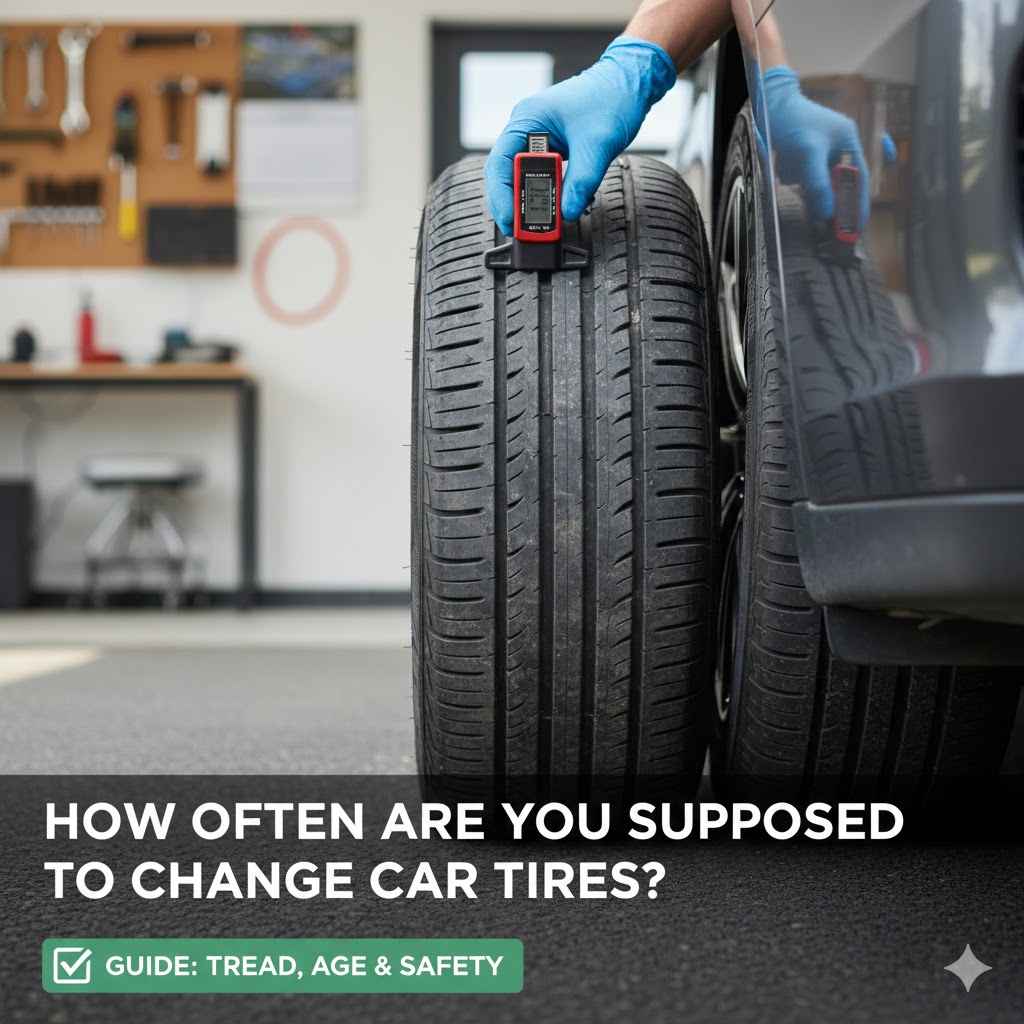
Figuring out how often you should change your car tires can be a bit tricky for new drivers. You might wonder if it’s based on time, how much you drive, or if they just look worn out. It’s a common question because tires are super important for safety.
But don’t worry, it’s simpler than it sounds! We’ll walk through it step by step so you know exactly when it’s time for new ones. Get ready to learn what to look for and keep your car rolling safely.
When Do You Need New Car Tires
This section is all about understanding the main signs and general guidelines for knowing when your car tires need to be replaced. It’s not just about one single factor, but a combination of things that tell you it’s time for new rubber on your wheels. We’ll explore the key indicators that show your tires are reaching the end of their useful life, ensuring you can make informed decisions about your vehicle’s safety and performance.
Tire Tread Depth A Key Indicator
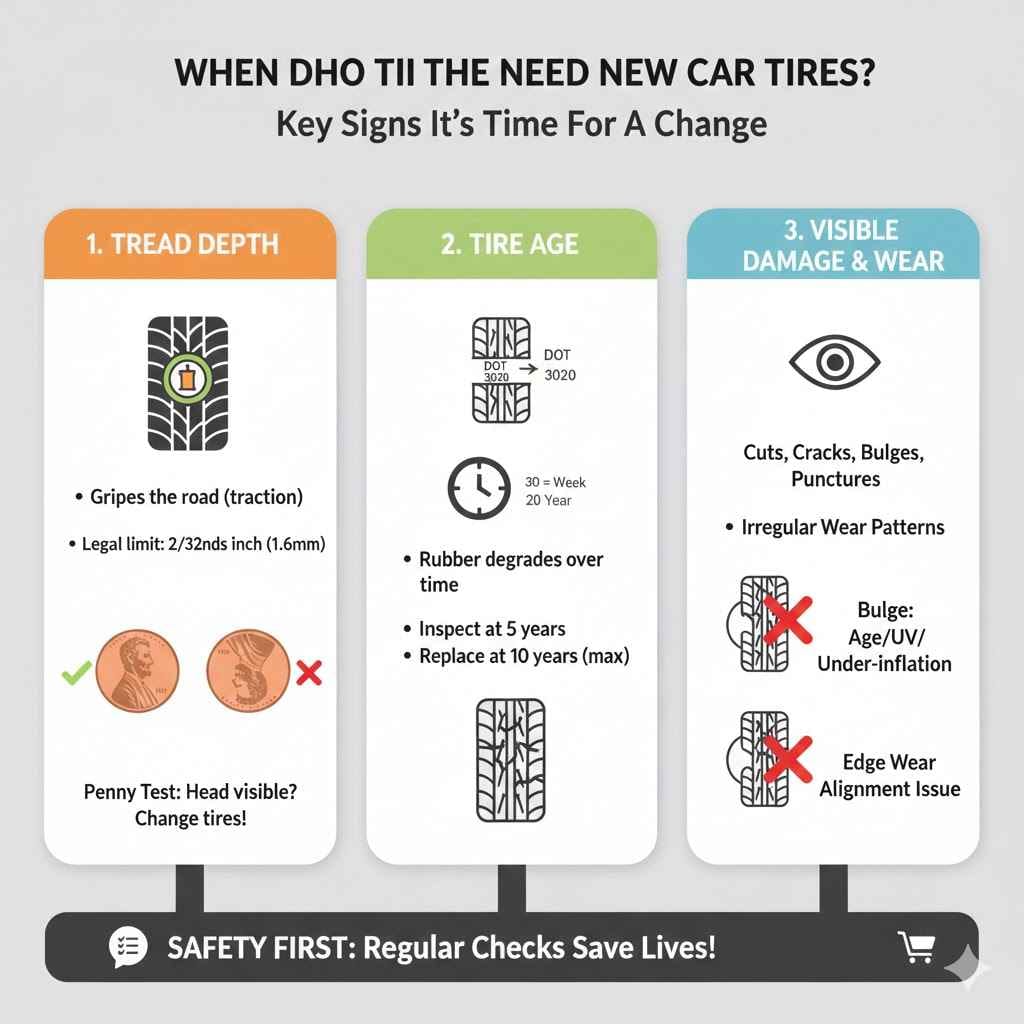
The tread on your tires is what grips the road. When this tread wears down, your tires can’t provide the traction you need, especially in rain or snow. This makes your car harder to control and can lead to longer stopping distances.
Keeping an eye on your tread depth is one of the most important ways to know when it’s time for new tires.
Most tires have small bars built into the grooves called tread wear indicators. When the tread wears down to the same level as these bars, your tires are legally worn out in many places and need to be changed immediately. You can also use a tire tread depth gauge, which is a small, inexpensive tool that measures the depth of the tread in millimeters or 32nds of an inch.
A common recommendation is to replace tires when the tread depth reaches 2/32nds of an inch (about 1.6 mm).
Think about how a smooth tire would behave. It would easily slip on wet roads, making it dangerous to drive. That’s why maintaining sufficient tread is so vital for safe driving.
How To Check Tread Depth
Checking your tread depth is a straightforward process that you can easily do yourself. You don’t need to be a mechanic to perform this simple but crucial check.
- Use a Tread Depth Gauge: This is the most accurate method. Insert the gauge into the deepest part of a tire groove and read the measurement. Do this in several spots around the tire and on different tires to get a good average.
- The Penny Test: A quick and easy way is to use a penny. Insert a penny into the deepest tread groove with Lincoln’s head facing down. If you can see the top of Lincoln’s head, your tread is likely too low and it’s time to consider new tires. Repeat this for multiple grooves and tires.
- Look for Wear Bars: As mentioned earlier, many tires have small raised bars within the main grooves. If your tire tread is worn down to the same level as these bars, it’s time for new tires.
Regularly checking your tire tread helps you avoid potential hazards and ensures your car performs its best in all driving conditions. It’s a small effort for a big gain in safety.
Tire Age A Less Obvious Factor
While tread wear is the most visible sign, the age of your tires is also very important. Tires are made of rubber, and rubber degrades over time, even if the tires don’t look worn out. This degradation can make the rubber brittle and more prone to cracking or sudden failure, which is incredibly dangerous.
You might have tires with plenty of tread left, but if they are too old, they can still be unsafe.
The general recommendation is to have your tires inspected by a professional if they are five years old or older, and to consider replacing them if they are ten years old, regardless of tread depth. This is because the chemical compounds in the rubber break down over time due to exposure to oxygen, heat, and UV rays. This process is called oxidation.
Imagine an old rubber band that has been left out in the sun for a long time. It becomes stiff, brittle, and snaps easily. Tires, being made of rubber, undergo a similar process, though much slower.
This makes them less flexible and more susceptible to damage.
How To Find Your Tire’s Age
Your tire’s age is indicated by a four-digit number on its sidewall. This is part of the Tire Identification Number (TIN) or DOT code. The last two digits of the DOT code represent the year the tire was manufactured, and the two digits before that represent the week of the year.
For example, a DOT code ending in ‘2219’ means the tire was manufactured in the 22nd week of 2019.
- Locate the DOT Code: Look for the letters “DOT” on the sidewall of your tire. The numbers and letters following “DOT” are the tire’s identification code.
- Identify the Last Four Digits: The last four digits of the DOT code are what tell you the manufacturing date. The first two of these four digits indicate the week of manufacture (01 through 52), and the last two digits indicate the year of manufacture.
- Calculate the Age: For instance, a DOT code ending in ‘3020’ signifies a tire made in the 30th week of the year 2020. If today’s date is in 2024, that tire is four years old.
It’s crucial to check this periodically. Even if your car is rarely driven, the tires will still age. Regular checks ensure you’re not driving on potentially hazardous old tires.
Visible Damage And Irregular Wear Patterns
Besides tread depth and age, you should also regularly inspect your tires for any signs of damage or unusual wear patterns. These can indicate underlying problems with your suspension, alignment, or even the tire itself, and can significantly compromise safety. Promptly addressing these issues can prevent further damage and potential accidents.
Common types of visible damage include cuts, cracks, bulges, or punctures. A bulge on the sidewall, for example, signifies internal damage that could lead to a blowout. Small nicks and cuts might seem minor, but they can worsen over time and lead to air leaks.
Irregular wear patterns are also a red flag. If one side of the tire is more worn than the other, or if you notice cupping (rounded depressions) or feathering (uneven wear across the tread blocks), it usually points to an alignment or balancing issue. These problems not only wear out your tires faster but also affect your car’s handling and fuel efficiency.
Common Types Of Tire Damage
Understanding the different types of damage can help you identify problems early.
- Cuts and Scratches: These are shallow or deep abrasions on the tire surface. Small superficial cuts might not be an immediate concern, but deep cuts or those that expose the tire’s internal structure require immediate attention.
- Cracks: You might see cracks in the tread or on the sidewalls. These often appear due to aging, exposure to sunlight, or under-inflation. Cracking on the sidewall is particularly serious as it indicates the rubber is becoming brittle and losing its integrity.
- Bulges and Blisters: These appear as outward bumps on the tire’s sidewall. They are a clear sign of internal damage to the tire’s structure, often from impact. A bulged tire is a serious safety hazard and should be replaced immediately, as it is at high risk of bursting.
- Punctures: While many small punctures can be repaired, larger ones or those in the sidewall usually mean the tire needs to be replaced.
It’s good practice to walk around your car and give your tires a quick visual check before you set off on longer trips. This habit can catch potential issues before they become serious.
Understanding Irregular Tire Wear
Different types of wear suggest different problems.
- Edge Wear: If only one edge of the tire is significantly more worn than the rest, it often indicates an alignment problem.
- Center Wear: If the center of the tread is worn down faster than the edges, it usually means the tire has been over-inflated.
- Cupping or Scalloping: This looks like a series of round depressions around the tire’s edge. It’s often a sign of unbalanced tires or worn suspension components.
- Feathering: This is when the tread blocks are worn down on one side more than the other, creating a “feather-like” edge. It can also be a symptom of alignment issues.
If you notice any of these wear patterns, it’s a good idea to have your car’s alignment and suspension checked by a professional. This will save you money on premature tire replacement and improve your car’s handling.
Factors Influencing Tire Lifespan
Several factors can affect how long your car tires last, sometimes making them wear out sooner than expected or even last longer. Understanding these elements helps you adjust your driving and maintenance habits to get the most out of your tires and ensure they remain safe. It’s a mix of how you drive, how you care for them, and the conditions they face.
Driving Habits And Tire Wear
The way you drive has a massive impact on how quickly your tires wear down. Aggressive driving, such as rapid acceleration, hard braking, and sharp cornering, puts a lot of stress on the tire’s rubber. This friction causes the tread to wear away much faster than it would with gentler driving.
Think of it like rubbing your hands together vigorously versus rubbing them lightly – the vigorous rubbing causes more friction and heat.
For example, a driver who frequently accelerates hard from a stoplight will wear out their tires faster than someone who accelerates smoothly. Similarly, slamming on the brakes to stop quickly generates significant friction and heat, wearing down the tread. Taking corners at high speeds also causes excessive side-loading on the tires, leading to uneven and rapid wear.
This increased wear not only means you’ll need to buy new tires sooner but can also affect fuel economy and driving safety. Smooth, defensive driving is the best way to extend tire life and keep your car running efficiently.
Aggressive Driving vs. Smooth Driving
Let’s look at how different driving styles affect tire wear.
- Hard Acceleration: When you floor the gas pedal, the tires spin, creating friction and wearing down the tread quickly. This is especially true if you have a powerful car. This process also generates a lot of heat.
- Sudden Braking: Slamming on the brakes causes the tires to skid or lock up briefly, which wears down the tread very rapidly. This also makes your stopping distances longer and can be dangerous.
- Sharp Turns: Taking corners too fast puts immense lateral force on the tires. This can cause the edges of the tread to wear down much faster than the rest of the tire.
- Smooth Acceleration and Braking: Gradual acceleration and gentle braking reduce the friction and heat generated. This allows the tire tread to last much longer.
- Gentle Cornering: Taking turns at a moderate speed lessens the stress on the tire’s sidewalls and tread, promoting even wear.
By adopting smoother driving habits, you not only save money on tires but also improve your car’s fuel efficiency and make your driving experience safer and more comfortable.
Proper Tire Inflation And Its Importance
Keeping your tires properly inflated is one of the simplest yet most effective ways to extend their lifespan and ensure optimal performance and safety. Under-inflated tires flex more, generating excess heat and causing rapid wear on the edges of the tread. Over-inflated tires have a smaller contact patch with the road, leading to faster wear in the center of the tread and a harsher ride.
The correct tire pressure for your vehicle is usually found on a sticker inside the driver’s side door jamb or in your owner’s manual. It’s not the maximum pressure listed on the tire’s sidewall, but the recommended pressure for your specific vehicle.
Imagine a balloon. If it’s not filled enough, it’s floppy. If it’s overfilled, it’s stiff and might pop easily.
Tires work similarly; they need to be filled to the right amount of air pressure to function correctly.
Impact of Under-Inflation
When tires don’t have enough air, several problems arise.
- Increased Tread Wear on Edges: The tire’s sidewalls flex excessively, causing the outer edges of the tread to wear down much faster than the center.
- Overheating: The increased flexing generates more heat, which can damage the tire’s internal structure and increase the risk of a blowout.
- Poor Fuel Economy: Under-inflated tires create more rolling resistance, meaning your engine has to work harder to move the car, using more fuel.
- Reduced Handling: The car may feel sluggish and less responsive to steering inputs.
A study by the U.S. Department of Energy found that under-inflated tires can decrease gas mileage by up to 3% for every 1 PSI drop in pressure.
Impact of Over-Inflation
On the other hand, too much air can also be detrimental.
- Increased Tread Wear in Center: The tire bulges in the middle, so only the center of the tread makes contact with the road, wearing down faster.
- Harsh Ride: The tire is too stiff, absorbing less road shock, making the ride bumpy and uncomfortable.
- Reduced Traction: With less of the tire’s surface on the road, braking and cornering can be less effective.
- Higher Risk of Damage from Road Hazards: A rigidly inflated tire is more susceptible to damage from potholes or debris.
Checking your tire pressure at least once a month, and before long trips, is a simple habit that pays off significantly in tire longevity and vehicle safety. Always check pressure when the tires are cold, meaning they haven’t been driven for at least three hours.
Vehicle Alignment And Balancing
Proper wheel alignment and tire balancing are crucial for maximizing tire life and ensuring a smooth, safe ride. Alignment refers to the angles of your wheels, how they are positioned relative to each other and the road. Balancing ensures that the weight distribution of the tire and wheel assembly is even.
Both issues, if neglected, can lead to uneven tire wear and affect your car’s handling.
If your car’s wheels are not aligned correctly, the tires will drag or scrub against the road surface, causing them to wear out prematurely and unevenly. For instance, if your front wheels are not pointed straight ahead, they might be constantly turning slightly, which wears down the edge of the tire. Similarly, unbalanced tires cause vibrations, especially at higher speeds.
These vibrations can not only be annoying but also contribute to wear on suspension components and tires.
Think of a shopping cart with a wobbly wheel. It’s hard to push straight and it makes a racket. Your car’s tires can experience similar issues if not aligned or balanced correctly.
What Is Wheel Alignment
Wheel alignment involves adjusting the angles of your wheels so they are set parallel to each other and perpendicular to the ground. The key angles are:
- Camber: This is the inward or outward tilt of the top of the tire when viewed from the front. Too much positive or negative camber causes wear on the outer or inner edge of the tire, respectively.
- Caster: This is the angle of the steering axis when viewed from the side. It affects steering stability and handling.
- Toe: This is the angle of the tires when viewed from above. If the tires are not pointing straight ahead, they are “toeing in” (pointing slightly inward) or “toeing out” (pointing slightly outward). Incorrect toe causes the tires to scrub or drag on the road, leading to rapid wear on the edges.
Misalignment can occur due to hitting potholes, curbs, or simply from normal wear and tear on suspension components.
What Is Tire Balancing
Tire balancing is a process that ensures the weight of the tire and wheel assembly is distributed evenly around the axle. Tires and wheels are not perfectly uniform in weight. Balancing involves attaching small weights to the rim of the wheel to counteract any heavier spots, ensuring the tire rotates smoothly.
- Symptoms of Unbalanced Tires: You might feel vibrations in the steering wheel or the seat of the car, especially at highway speeds. This can also lead to a “cupping” wear pattern on the tire.
- How it’s Done: Tires are mounted on a balancing machine that spins them and measures any imbalances. Weights are then added to the rim at specific points to correct these imbalances.
Getting your alignment checked annually or if you notice uneven wear, pulling to one side, or steering wheel vibrations is a proactive step in extending tire life. Similarly, tire balancing is often done when new tires are installed or when a tire is repaired.
Environmental Factors And Tire Wear
The environment in which you drive and store your vehicle can also influence how quickly your tires wear out and degrade. Extreme temperatures, harsh road conditions, and even how your car is stored when not in use can all play a role. Being aware of these factors can help you take steps to protect your tires.
For example, driving frequently on rough, unpaved roads with sharp rocks or debris can cause cuts and punctures, leading to premature wear or damage. In very hot climates, the constant high temperatures can accelerate the aging process of the rubber, making it more brittle over time. Conversely, prolonged exposure to extreme cold can also affect tire performance and can, over long periods, contribute to material degradation.
Storage is also key. If your car sits unused for long periods, especially in direct sunlight, the tires can develop flat spots or the rubber can start to degrade. Proper storage can prevent these issues.
Extreme Temperatures
Both heat and cold can affect tires.
- High Heat: Prolonged exposure to high temperatures, especially from hot pavement and direct sunlight, can accelerate the aging of the rubber compounds in tires. This can lead to increased brittleness and cracking over time, reducing their lifespan. It also affects tire pressure.
- Extreme Cold: While less damaging to the rubber itself in the short term, extreme cold can make the tire compound stiffer and reduce traction significantly. Over very long periods, the constant expansion and contraction due to temperature changes can also contribute to material fatigue.
The ideal condition for tire longevity is moderate temperatures.
Road Conditions
The surfaces your tires encounter make a big difference.
- Rough Roads: Driving on gravel, dirt roads, or roads with many potholes and sharp debris increases the risk of cuts, punctures, and sidewall damage. This type of driving wears tires down faster.
- Salt and Chemicals: In areas where roads are treated with salt or harsh chemicals during winter, these substances can corrode wheel rims and, over time, potentially affect the rubber compounds if not cleaned off properly.
- Highways vs. City Driving: Highway driving at consistent speeds is generally less stressful on tires than stop-and-go city driving with frequent braking and acceleration.
If you frequently drive in harsh conditions, consider tires designed for those specific environments or inspect your tires more often for signs of wear and damage.
Storage Considerations
How your car is parked can impact tire health.
- Sunlight Exposure: Parking in direct sunlight for extended periods can degrade the rubber due to UV radiation, leading to cracks and fading.
- Flat Spots: If a car sits for a very long time (months or years) without moving, the weight of the vehicle can cause the tires to develop flat spots where they rest on the ground. This can lead to vibrations and premature wear when you start driving again.
Parking in a garage or using tire covers can help protect tires from the sun. For long-term storage, consider inflating tires to a slightly higher pressure or using tire cradles to prevent flat spots.
How Often Are You Supposed To Change Car Tires
Now, let’s directly address the question of how often are you supposed to change car tires. It’s not a simple one-size-fits-all answer, as we’ve seen how various factors play a role. However, there are clear guidelines based on wear, age, and damage that most experts agree on.
The goal is to replace them before they become a safety risk.
General Mileage Guidelines
While tread wear and age are the primary indicators, many manufacturers and automotive experts provide general mileage guidelines for tire replacement. These are estimates, and your actual tire life may vary significantly based on the factors discussed earlier, such as driving style and road conditions. However, they offer a useful benchmark.
Most passenger car tires are designed to last between 40,000 and 80,000 miles (approximately 64,000 to 129,000 kilometers). High-performance tires or those made with softer compounds for better grip might have a shorter lifespan, perhaps in the range of 20,000 to 40,000 miles. On the other hand, tires designed for durability and longevity could potentially exceed 80,000 miles.
These mileage figures are based on average driving conditions and proper maintenance. If you drive aggressively, in harsh weather, or on poor roads, you will likely reach the point of needing new tires much sooner, regardless of the mileage.
Typical Tire Lifespans By Type
Here’s a look at expected mileage for different tire types.
- All-Season Tires: These are the most common type for general use and typically range from 40,000 to 60,000 miles. They offer a balance of performance in various conditions.
- Performance Tires: Designed for better handling and grip, especially at higher speeds, these often have softer rubber compounds and tend to wear faster, usually between 20,000 and 40,000 miles.
- All-Terrain Tires: Used for SUVs and trucks that might go off-road, these tires are built for durability but can still wear down based on driving habits, typically lasting 40,000 to 60,000 miles.
- Winter Tires: These are specialized for snow and ice and are typically made of a softer compound to remain flexible in cold. They often wear faster than all-season tires, with lifespans ranging from 20,000 to 50,000 miles depending on usage.
Remember, these are just estimates. Always prioritize checking your tire’s tread depth and looking for signs of damage or age over simply reaching a mileage count.
When To Replace Regardless Of Mileage
Even if you haven’t reached the estimated mileage, there are critical situations where you must replace your tires.
- Worn Tread: If your tread depth reaches 2/32nds of an inch (or 1.6 mm), it is unsafe and illegal in many places, no matter the mileage.
- Age: As discussed, if tires are 10 years old or more, they should be
- Visible Damage: Bulges, significant cracks, cuts that expose the tire’s inner structure, or sidewall damage mean immediate replacement is necessary for safety.
- Persistent Vibrations or Handling Issues: If you experience ongoing vibrations or your car pulls to one side despite alignment checks, it could indicate tire problems that warrant replacement.
A tire’s primary job is to keep your car connected to the road safely. If it’s compromised by wear, age, or damage, it’s time for new ones, no exceptions.
The Role Of Tire Manufacturers Recommendations
Tire manufacturers often provide specific recommendations for their products. These can include recommended tire pressures, rotation schedules, and estimated treadwear warranties. Paying attention to these manufacturer guidelines can help you maintain your tires properly and understand their expected lifespan.
When you buy new tires, they usually come with information about their expected performance and any warranties offered. A treadwear warranty, for example, is a guarantee from the manufacturer that their tires will last for a certain number of miles. If they wear out before that mileage, you may be eligible for a prorated replacement.
However, these warranties often have conditions, such as requiring proof of regular tire rotation and maintenance.
It’s wise to consult the manufacturer’s website or the documentation that came with your tires for precise advice. They know their products best and can offer the most accurate guidance.
Understanding Treadwear Ratings
Treadwear ratings are part of the Uniform Tire Quality Grading (UTQG) system. They provide a relative indicator of a tire’s expected lifespan.
- The Rating System: Treadwear ratings are assigned by manufacturers and are tested under controlled conditions. A tire with a treadwear rating of 400 is expected to last twice as long as a tire with a rating of 200.
- Relative Measurement: It’s important to remember this is a relative score. A 400 treadwear tire from one brand might not last exactly as long as a 400 treadwear tire from another brand, as testing conditions can vary slightly.
- Warranty Implications: Many treadwear warranties are based on these ratings, so understanding them can be helpful if you are looking for tires designed for longevity.
While treadwear ratings are useful, they are not the sole determinant of how long a tire will last in real-world conditions. Driving habits and maintenance remain critical.
Warranty Requirements
If your tires come with a treadwear warranty, there are usually conditions you must meet.
- Regular Rotations: Most warranties require that you have your tires rotated at recommended intervals (often every 5,000 to 8,000 miles). This ensures even wear across all tires.
- Maintenance Records: You may need to keep records of these rotations and other maintenance to make a warranty claim.
- Proper Inflation: Manufacturers expect tires to be maintained at the correct inflation pressures.
Always read the fine print of any tire warranty to understand its terms and conditions.
When To Schedule Tire Replacement
Knowing when to replace your tires is a critical safety measure. It’s not just about avoiding a flat tire; it’s about ensuring your car can stop effectively, steer accurately, and maintain control in all driving conditions. This section will guide you on the best times and ways to schedule tire replacements.
Signs Your Tires Need Immediate Attention
Sometimes, your tires will give you clear signals that they need immediate attention. These are not indicators that you can afford to ignore, as they directly impact your safety.
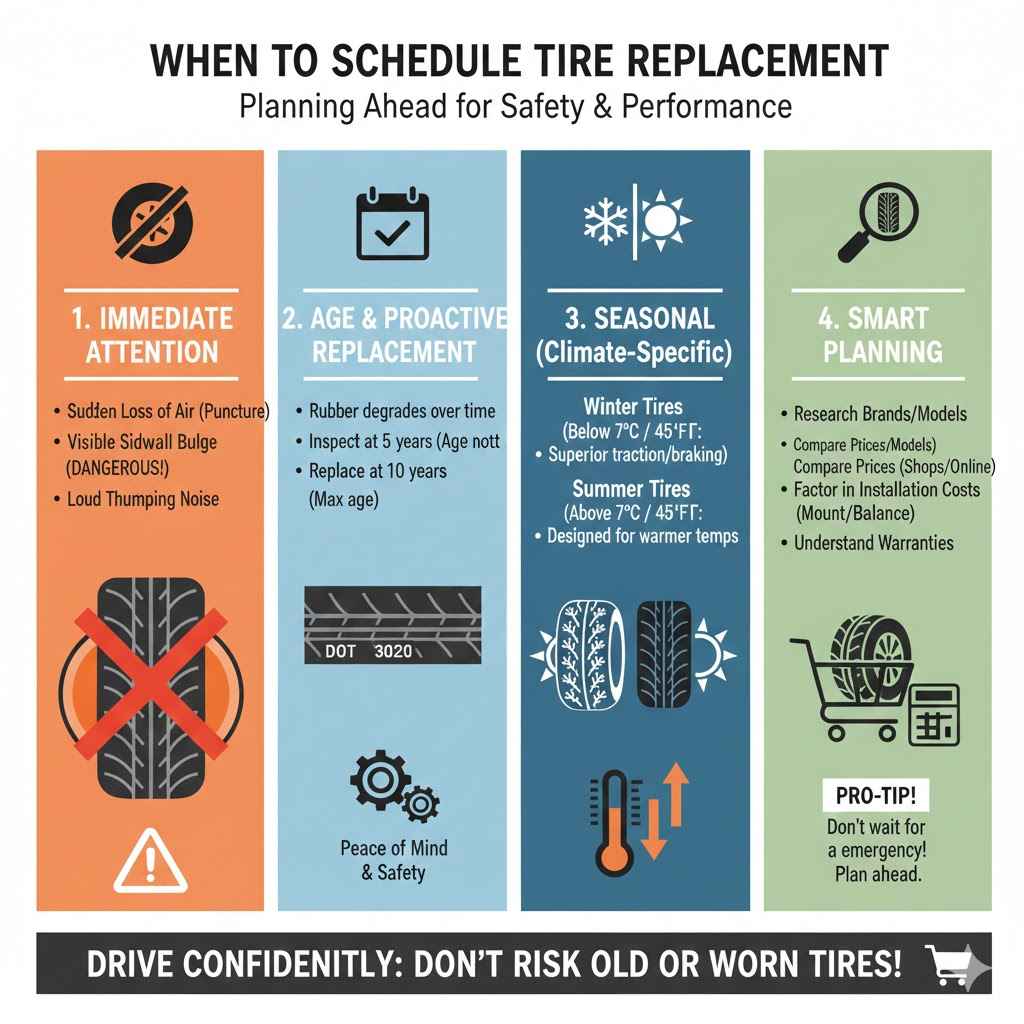
The most obvious sign is a sudden loss of air pressure or a visible puncture. If you notice your tire is flat or rapidly losing air, pull over safely as soon as possible. Don’t drive on a flat tire, as it can quickly destroy the wheel and cause you to lose control.
Another critical sign is a significant bulge or blister on the sidewall. This indicates internal structural damage and a high risk of sudden failure or blowout.
You might also notice a persistent, loud thumping noise coming from one of your tires, which could indicate internal damage or separation. Any of these signs warrant an immediate stop and a thorough inspection, likely leading to a tire replacement.
Blowouts And Sudden Failure
A blowout is when a tire suddenly and rapidly deflates, often with a loud bang. This can be caused by under-inflation, impact damage, tread separation, or age-related degradation.
- Causes: Blowouts are often triggered by a combination of factors, such as hitting a sharp object at speed, driving on severely under-inflated tires that overheat, or having tires that are old and brittle.
- What to Do: If you experience a blowout, do not panic or slam on the brakes. Grip the steering wheel firmly, ease off the accelerator, and gently steer the vehicle to a safe location off the road.
- Prevention: Regular inspection for damage, maintaining correct tire pressure, and replacing old or worn tires are the best ways to prevent blowouts.
The National Highway Traffic Safety Administration (NHTSA) estimates that tire issues contribute to thousands of accidents and fatalities each year.
Sidewall Damage
The sidewall of a tire is its most vulnerable part.
- What to Look For: Damage can include cuts, cracks, bulges, or punctures. Even a small cut can allow moisture to enter the tire’s internal structure, leading to corrosion of the steel belts over time.
- Why it’s Dangerous: A bulge in the sidewall indicates that the internal cords that give the tire its structure have been weakened or broken. This dramatically increases the risk of a sudden, catastrophic tire failure.
- Repairability: Sidewall damage is generally not repairable. Any significant damage to the sidewall means the tire must be replaced.
A visual inspection of your tires’ sidewalls can reveal problems before they become dangerous.
Proactive Replacement For Peace Of Mind
Replacing tires proactively, before they reach their absolute limit, is a smart move that offers peace of mind and ensures you’re always driving on safe equipment. It’s about planning ahead rather than waiting for a problem to occur.
Consider your driving habits and environment. If you frequently drive long distances, in adverse weather conditions, or on challenging roads, it makes sense to err on the side of caution. Replacing tires slightly before they are technically “worn out” can prevent unexpected issues and give you confidence in your vehicle’s performance, especially during critical maneuvers like braking or steering in emergencies.
Think of it like changing the oil in your car. You don’t wait until the engine seizes up; you change the oil at recommended intervals. Similarly, changing your tires at appropriate wear levels or age is preventative maintenance that keeps you and others safe.
Seasonal Tire Changes
In some regions, changing tires seasonally is common and recommended for safety.
- Winter Tires: In areas with significant snow and ice, winter tires offer superior traction and braking performance compared to all-season tires. They are made with a special rubber compound that stays flexible in cold temperatures. It is generally recommended to switch to winter tires when temperatures consistently drop below 7 degrees Celsius (45 degrees Fahrenheit).
- Summer Tires: If you use dedicated winter tires, you should switch back to your all-season or summer tires when temperatures consistently rise above 7 degrees Celsius (45 degrees Fahrenheit). Summer tires are designed for warmer conditions and may become too stiff and lose traction in freezing temperatures.
- Benefits: This seasonal rotation ensures you have the optimal tire for the prevailing weather conditions, significantly enhancing safety and performance during challenging months.
While this involves extra effort and cost, it provides a significant safety advantage in regions with extreme seasonal variations.
Planning For Tire Purchases
When you decide it’s time for new tires, a little planning can help you get the best value and make an informed choice.
- Research Options: Look into different tire brands and models that fit your vehicle and driving needs. Consider factors like treadwear rating, traction capabilities, and noise levels. Read reviews to see what other drivers think.
- Shop Around for Prices: Tire prices can vary greatly between retailers. Compare prices at different tire shops, dealerships, and online retailers. Look for sales or discounts.
- Factor in Installation Costs: Remember to include the cost of mounting, balancing, and any necessary alignment in your budget. Some retailers offer package deals.
- Consider Tire Warranties: Understand the warranty offered by the manufacturer and the retailer. This can provide added value and peace of mind.
By planning ahead, you can avoid a rushed purchase when your current tires are worn, potentially saving money and ensuring you select tires that are best suited for your vehicle and driving style.
Frequently Asked Questions
Question: How often are you supposed to change car tires based on time alone
Answer: While mileage and wear are primary factors, tires should generally be inspected annually after they are five years old and replaced if they are ten years old or more, regardless of tread depth. This is because rubber degrades over time.
Question: Can I just replace one tire if it’s worn out
Answer: It is strongly recommended to replace tires in pairs (either front or rear) to maintain consistent handling and braking. Replacing just one tire can negatively affect your car’s balance and safety.
Question: What does a tire’s UTQG rating mean
Answer: UTQG stands for Uniform Tire Quality Grading. The treadwear portion of this rating (e.g., 400, 600) is a relative score indicating how long a tire’s tread is expected to last compared to other tires tested under similar conditions.
Question: Do I need to change my tires if they look okay but are old
Answer: Yes, if your tires are ten years or older, they should be
Question: How often should I check my tire pressure
Answer: You should check your tire pressure at least once a month and before long trips. It’s best to check when the tires are cold, meaning they haven’t been driven for at least three hours.
Summary
So, how often are you supposed to change car tires It’s a mix of checking tread depth, tire age, and looking for any damage. Most tires last between 40,000 and 80,000 miles, but remember this is just a guide. Prioritize your safety by inspecting your tires regularly and replacing them when the tread is low, they are old, or show signs of wear and tear.