
The essential cost for a Transmission Control Module (TCM) replacement typically ranges from $500 to $1,500 or more, depending on your vehicle’s make, model, and whether you choose OEM or aftermarket parts. This guide breaks down exactly what you pay for and how to find the best deal.
When your car starts acting strangely—maybe the gears won’t shift smoothly, or the “Check Engine” light flashes an error code—it can feel overwhelming. Often, the culprit is a small but mighty computer called the Transmission Control Module, or TCM. If you’re worried about the repair bill, you are not alone. Feeling confused about auto repair costs is normal, especially when dealing with electronic components.
This guide is here to cut through the confusion. We will clearly explain what a TCM does, what causes it to fail, and exactly where your money goes when you need a replacement. By the end of this article, you will know how much a transmission control module replacement costs and feel confident talking to your mechanic or tackling the job yourself.
Understanding Your Transmission Control Module (TCM)
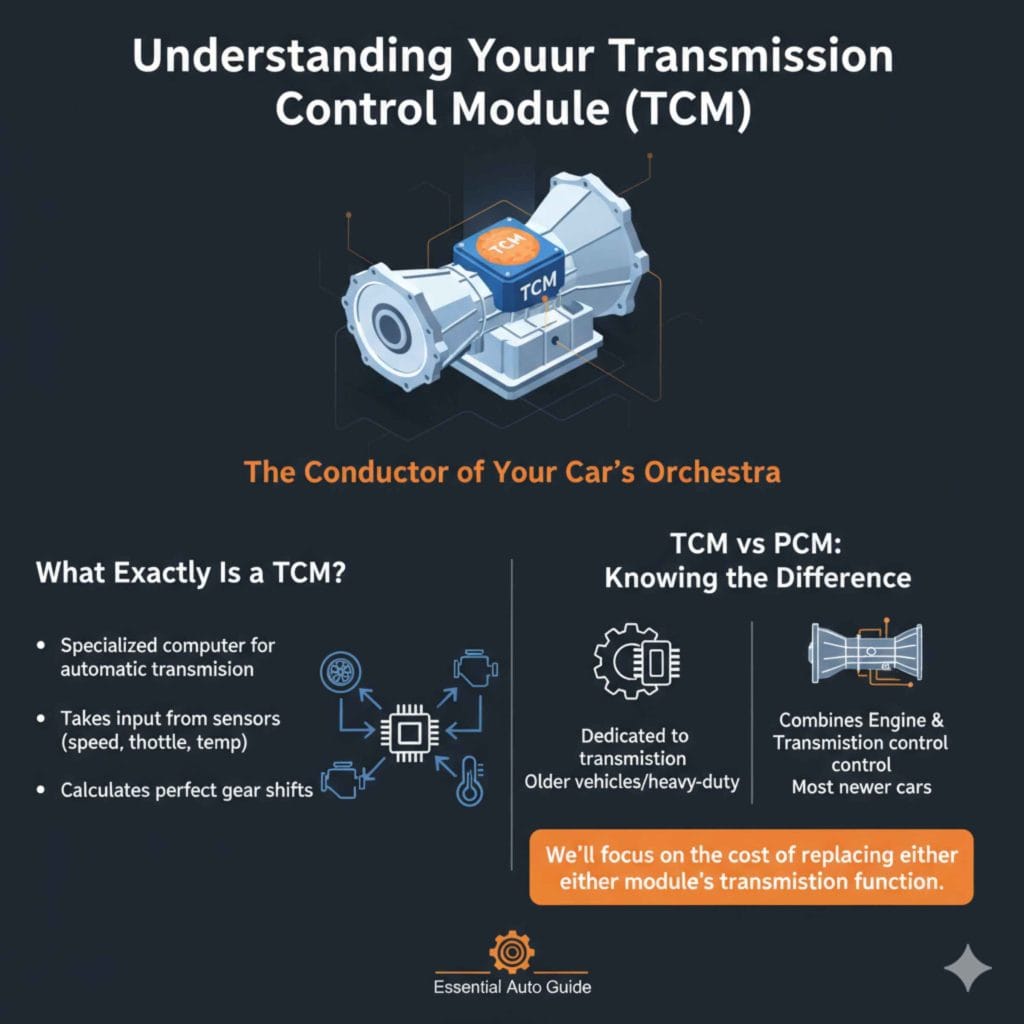
Before we discuss the price tag, let’s get cozy with the TCM. Think of your car’s transmission like a complex orchestra. If the engine is the lead musician, the TCM is the conductor. It doesn’t create power, but it tells every component exactly when to play its part.
What Exactly Is a TCM?
The Transmission Control Module (TCM), sometimes called the Transmission Control Unit (TCU), is a specialized computer dedicated solely to managing your automatic transmission. It takes input from various sensors in your car—like speed sensors, throttle position sensors, and fluid temperature sensors.
Using this incoming data, the TCM instantly calculates the perfect moment to shift gears for the smoothest drive, best fuel economy, and optimal performance. It controls solenoids inside the transmission that open and close fluid passages to engage the correct gear.
TCM vs. PCM: Knowing the Difference
Many modern cars have only one main computer. It’s a common point of confusion for car owners. Is the TCM separate, or is it part of another module?
- TCM (Transmission Control Module): Dedicated only to the transmission functions. Found mostly in vehicles with separate transmission electronics, often older models or some heavy-duty trucks.
- PCM (Powertrain Control Module): This is the brain that handles both the engine and the transmission. In most newer cars, if you have a “TCM problem,” you are likely replacing the entire PCM, which can sometimes increase the cost.
For clarity, in this article, we will focus on the cost aspect of replacing either a dedicated TCM or the transmission function within a combined PCM.
Clear Signs You Might Need a TCM Replacement
A failing TCM usually causes noticeable symptoms long before a complete breakdown. Recognizing these early signs can help you address the issue before it causes further damage or leaves you stranded. If you notice any of the following, get a diagnostic scan done right away.
Common Symptoms of a Failing TCM
- Harsh or Erratic Shifting: Gears might slam into place (harsh shifting), or the transmission might hesitate or “hunt” for the right gear for too long. Sometimes, it locks into “limp mode” (only using a single gear).
- Check Engine Light (CEL): While many issues trigger the CEL, TCM failures often result in very specific trouble codes related to internal transmission communication or solenoid performance.
- Slipping Gears: The engine revs up, but the car doesn’t accelerate proportionally because the transmission isn’t fully engaging the drive gear.
- Transmission Fluid Leaks/Burnt Smell (Indirect Signs): While not direct TCM failure, if the module causes the transmission to operate in the wrong gear constantly, it can overheat the fluid, leading to leaks or a burning smell.
- Inaccurate Speedometer or Odometer: In some designs, the TCM communicates with the instrument cluster, causing readings to fluctuate wildly if the module is malfunctioning.
Pro Tip: Always start with scanning the codes! A code reader (which you can buy cheaply or often have read for free at auto parts stores) can confirm if the problem lies with the TCM, a sensor connected to it, or the wiring harness.
The True Cost Breakdown: How Much Is A Transmission Control Module Replacement?
The final bill for replacing a TCM is made up of three main parts: the part itself, the labor required to install it, and the crucial, often overlooked, programming step.
Cost Component 1: The TCM Part Price
The price of the module varies dramatically based on where you buy it and what type you select. This is often the biggest variable in the total estimate.
TCM Part Price Comparison Table
| Part Type | Approximate Unit Cost (USD) | Pros | Cons |
|---|---|---|---|
| Brand New OEM (Dealer) | $500 – $1,200+ | Guaranteed fit and quality; best warranty. | Most expensive option. |
| Remanufactured/Rebuilt | $300 – $700 | Good balance of cost and reliability; usually warranted. | Slightly less reliable than brand new. |
| Used/Salvage Yard | $50 – $250 | Cheapest upfront cost. | High risk; unknown history; usually short or no warranty. |
Key Takeaway on Parts: For critical components like the TCM, most trusted mechanics strongly recommend avoiding cheap, used modules unless they come with an extensive, transferable warranty. A faulty replacement unit will waste your labor cost!
Cost Component 2: Labor Time for Installation
Installation time can range from quick to complicated. For many mainstream vehicles, the physical installation of the module bolt-on is relatively easy, taking perhaps 30 minutes to 1 hour. However, the mechanic must account for diagnostic time.
- Simple Installation: If the old module is easy to access (often mounted on the side of the valve body inside a transmission pan), the physical swap is fast.
- Complex Installation: In some vehicles, the TCM is integrated deep within the transmission housing or is part of a larger PCM assembly inaccessible without significant disassembly. In these cases, labor costs rise quickly.
Typical mechanic labor rates hover between $100 and $175 per hour. If the job takes two hours for diagnosis and swap, you could add $200 to $350 in labor.
Cost Component 3: Programming and Flashing (The Crucial Step)
This is the step that most beginners forget about, but it is non-negotiable for modern TCMs.
When you replace a TCM in most vehicles made after the mid-2000s, the new or replacement unit must be “paired” or “flashed” with the vehicle’s unique software—its VIN, transmission settings, and sometimes its security codes. If you simply plug in a new module, your car will likely not start or the transmission will not shift correctly.
This requires specialized scanning tools, often dealer-level equipment, to communicate with the manufacture’s database. This process can take 1 to 3 hours depending on the complexity of the manufacturer’s programming protocols.
External Resource Note: Understanding the importance of vehicle electronics security and updates is crucial. The National Highway Traffic Safety Administration (NHTSA) often pushes for regular software updates to ensure vehicle safety systems function correctly, highlighting why professional programming is necessary.
Putting It All Together: Estimated Total Replacement Costs
Combining these elements gives us the final expected range for how much a transmission control module replacement is.
Total Estimated TCM Replacement Cost Ranges
| Vehicle Type / Complexity | Part Type | Estimated Total Cost Range (USD) |
|---|---|---|
| Older Models / Simple Swap | Remanufactured | $550 – $850 |
| Mid-Range Modern Vehicle | OEM or High-Quality Remanufactured | $900 – $1,400 |
| Premium/Luxury Vehicle or PCM Replacement | OEM New | $1,400 – $2,500+ |
Remember, these estimates cover repair at a general independent or chain auto repair shop. Dealerships (which use only OEM parts and charge premium labor rates) will almost always be on the higher end of these ranges.
DIY vs. Professional Replacement: Saving Money Safely
Since the TCM replacement involves critical programming, the DIY route is only recommended for the very mechanically advanced. However, you can save money by intelligently choosing where you have the work done.
Why DIY is Risky for TCM Replacement
For a novice or beginner DIYer, swapping a TCM is usually NOT a simple plug-and-play job. Attempting the replacement without the specialized programming tools can lead to:
- Purchasing the wrong part for your specific transmission code.
- Damaging internal transmission seals during access.
- Installing the module without flashing the necessary software, resulting in a non-functional, expensive paperweight.
Smart Savings Strategies (When Using a Pro)
If you decide to hire a professional, here are ways to manage the overall cost of how much a transmission control module replacement is:
- Shop Around for Labor: Get quotes from three different trusted, independent shops. Ask them specifically what is included in their programming fee.
- Consider Quality Remanufactured Parts: Ask if they will install a high-quality, professionally remanufactured unit sourced by you or them. This can save several hundred dollars compared to an OEM dealer part.
- Ask for Code Confirmation: Ensure the repair focuses on the TCM and not just a malfunctioning sensor that reports to the TCM. Don’t pay for a full replacement if a $50 sensor is the root cause! (This is why initial diagnostics are crucial.)
Factors That Can Increase or Decrease Your Repair Bill
The cost chart above gives you an average idea, but several underlying factors will push your specific bill higher or lower.
Factors Driving Costs Up
- Vehicle Complexity: Luxury European and high-end Domestic vehicles often use highly integrated electronics where the TCM shares housing with other critical systems (like the ABS or engine control), making the initial part replacement much pricier if the whole PCM needs replacement.
- Dealership Pricing: Dealers often have the highest hourly rates and mandate the use of OEM parts, pushing the total cost up by 20% to 40% compared to independents.
- Failing Wiring Harnesses: If the module failed due to water damage or rodent chewing, the mechanic must spend extra time tracing and repairing the wiring harness before installing the new module. This adds significant diagnostic labor time.
- Need for Software Updates: Sometimes, even an OEM replacement module requires a separate, high-level software update from the manufacturer after installation to fully integrate with the car’s latest safety protocols.
Factors Driving Costs Down
- Easy Access: On older trucks or vehicles where the TCM is located externally on the transmission casing, installation labor is minimal.
- A Good Warranty: If you buy a professionally rebuilt unit with a 3-year/50,000-mile warranty, you are protected against future failures, saving you money down the road.
- Simplified Systems: Vehicles with simpler, three-speed or four-speed transmissions often have physically separate, less complex TCMs resulting in a cheaper unit price.
Aftermarket vs. OEM: Which Module Should You Choose?
Deciding between an Original Equipment Manufacturer (OEM) part and an aftermarket or remanufactured part is key to controlling the cost of how much a transmission control module replacement is.
Original Equipment Manufacturer (OEM)
These parts come directly from the company that built your car (Ford, Toyota, etc.).
- Best For: Ensuring perfect integration and maximizing the warranty period, especially if your car is newer.
- The Trade-Off: You pay a premium for the badge on the box.
Remanufactured/Rebuilt Modules
These are used original modules that have been completely disassembled, cleaned, faulty components replaced (like soldering joints or capacitors), and tested with new software loads.
- Best For: Providing significant savings (often 30–50% less than new OEM) while restoring reliability.
- The Trade-Off: You must choose a reputable rebuilder. Look for companies that offer extensive warranties and clear testing procedures.
When purchasing a remanufactured unit, confirm that the seller also offers the necessary programming services or instructions, as incompatibility is the number one cause of failure after installation.
Preventative Care: Extending Your TCM’s Life
Since replacing the TCM is an expensive repair, taking simple steps to protect the transmission—and thus the module—is smart maintenance.
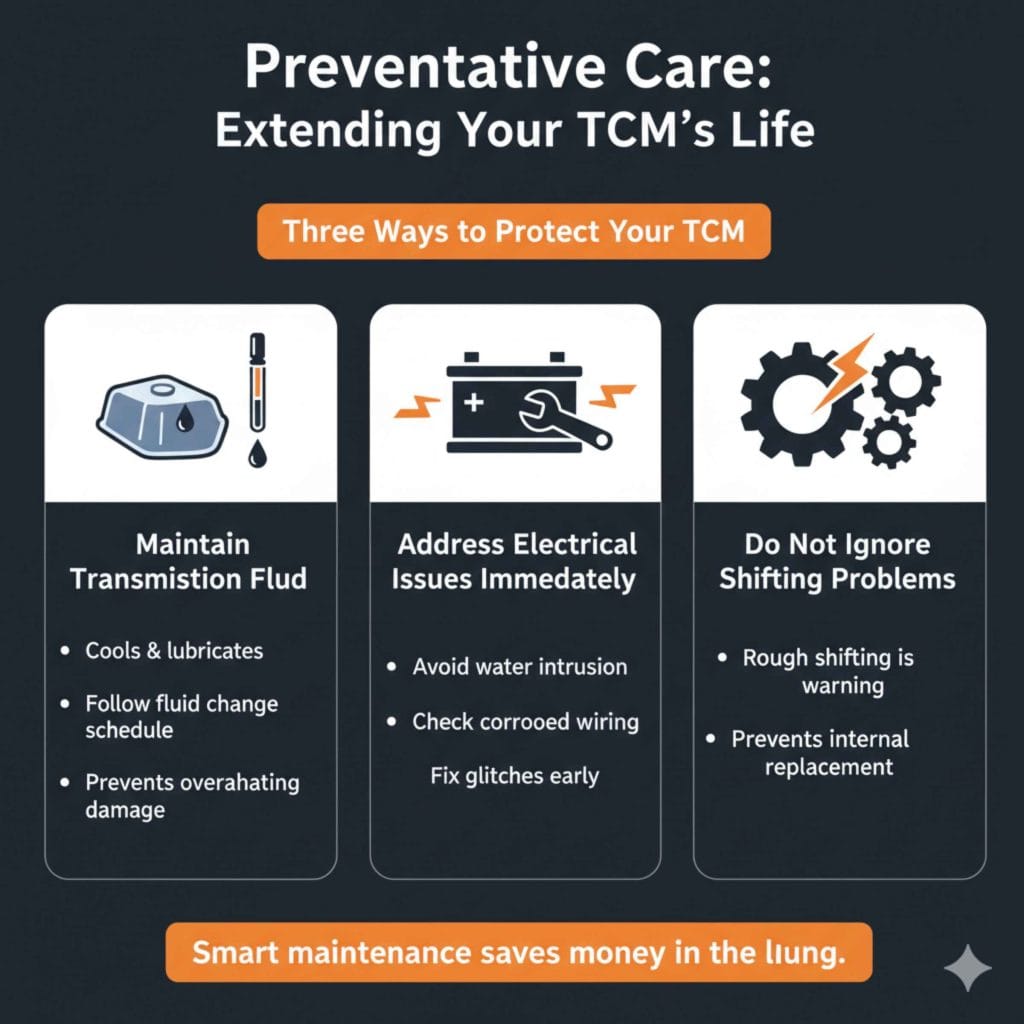
Three Ways to Protect Your TCM
- Maintain Transmission Fluid: The fluid cools and lubricates the transmission components, including the TCM if it is submerged (in-pan designs). Follow your owner’s manual recommendations for fluid changes. Dirty, old fluid causes overheating, which damages electronic components.
- Address Electrical Issues Immediately: Water intrusion, corroded battery terminals, or frayed wiring puts stress on all electronic modules. If you smell electrical burning or notice intermittent electrical glitches, have the wiring inspected.
- Do Not Ignore Shifting Problems: If your car starts shifting roughly, address it immediately. Forcing a failing transmission to shift often burns out internal clutches, which might force a much more expensive full transmission replacement instead of just a TCM swap.
Frequently Asked Questions (FAQ) About TCM Replacement
Q1: Can I just reset my car battery to fix a TCM issue?
A: A battery reset (or clearing codes) might temporarily fix a minor electronic glitch, but it will not fix a physically damaged or failed Transmission Control Module. If the internal hardware is faulty, the symptoms will return quickly after the reset.
Q2: How long does a new TCM last once installed?
A: A high-quality OEM or professionally remanufactured TCM, installed correctly with proper programming, should last the remaining lifespan of your vehicle—often 100,000 miles or more.
Q3: Is it cheaper to fix the old TCM instead of replacing it?
A: Sometimes. Some independent electronic repair specialists can repair specific faults on the circuit board of an old TCM. This is often cheaper than buying a new module, but only works if the failure is minor (like a bad capacitor or solder joint) and not due to widespread internal circuit board failure.
Q4: Can a mechanic replace the TCM if I buy the part online?
A: Most independent mechanics will agree to install a part you provide, but they often charge a small fee or refuse to warranty the labor if the part fails later, as they cannot vouch for its quality. They may prefer to source the part themselves.
Q5: Does driving with a bad TCM hurt the transmission itself?
A: Yes, it can significantly hasten transmission wear. If the TCM incorrectly commands shifts, it can cause excessive wear on clutches and bands, leading to overheating and eventual mechanical failure, turning a $1,200 repair into a $4,000+ repair.
Q6: What is “flashing” the module, and why is it necessary?
A: Flashing (or programming) involves loading the specific software needed for your car’s VIN, engine size, and axle ratio onto the new module. Without this step, the car’s computer network will reject the new module, and the transmission won’t operate.
Conclusion: Making the Smart Move on Your TCM Repair
Dealing with transmission issues can certainly feel daunting, but understanding the cost behind how much a transmission control module replacement is simplifies your decision-making. As we have seen, the repair cost is heavily influenced by the part quality (OEM vs. Remanufactured) and the non-negotiable requirement for professional programming.
While the average range sits between $900 and $1,400 for a reliable fix, remember that proactive maintenance—like fluid checks—is your best tool for avoiding this expense entirely. Don’t just accept the first quote you receive. Arm yourself with the knowledge of what you are paying for, especially regarding programming costs, and you can confidently drive away knowing you made the best decision for your car’s reliability