
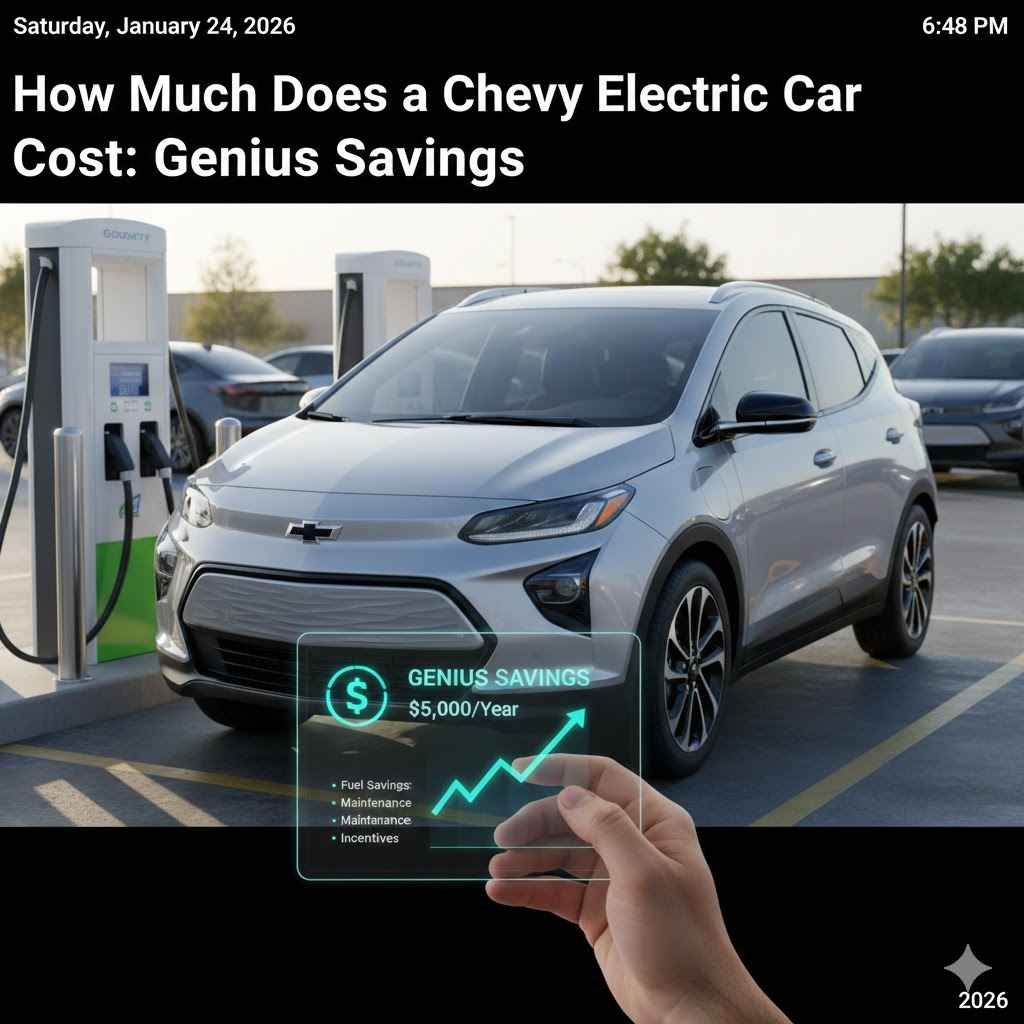
A new Chevy electric car can cost anywhere from around $30,000 to over $75,000, depending on the model. However, after federal and state tax credits, the real cost is often thousands less. Plus, you’ll save big on gas and maintenance, making the total cost of ownership incredibly low.
Hey everyone, Dustin Hall here! If you’ve ever found yourself at a gas pump, watching the numbers climb, and thinking, “There has to be a better way,” you’re not alone. The world of electric vehicles (EVs) can seem a little confusing, especially when it comes to price. You see a sticker price online, but then hear about tax credits and fuel savings. What’s the real deal? Today, we’re going to break it all down. We’ll look at how much a Chevy electric car really costs, from the moment you buy it to the money it saves you every single day. Let’s make sense of the numbers and uncover some genius savings together.
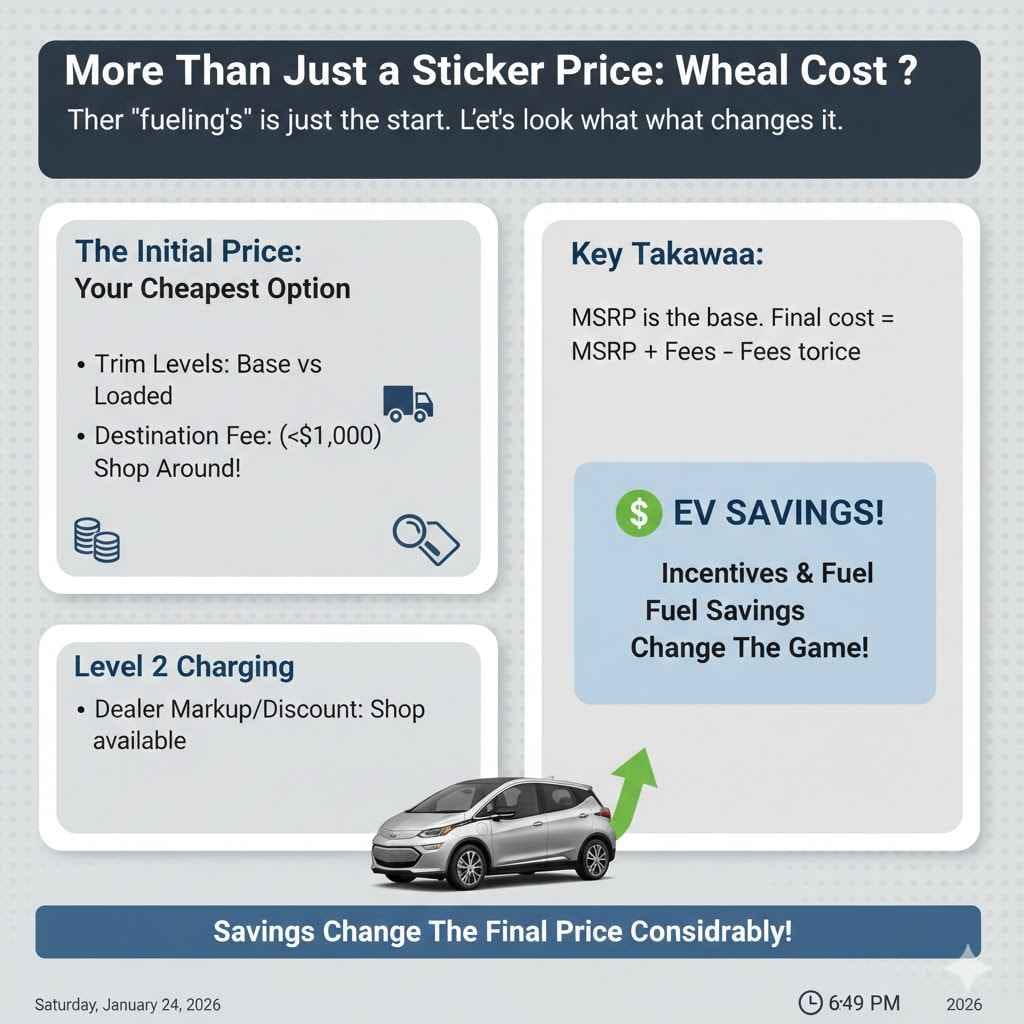
More Than Just a Sticker Price: What’s the Real Cost?
When you look at a car online or on a dealership lot, the first number you see is the Manufacturer’s Suggested Retail Price, or MSRP. It’s a good starting point, but it’s not the final number you’ll write on the check. Think of it like a base ingredient—other things get added in before you get the final meal.
Here are a few things that change the initial price:
- Trim Levels: Just like a gas car, Chevy EVs come in different versions, or “trims.” A base model will cost less, while a fully-loaded version with all the cool gadgets, a bigger battery, or all-wheel drive will cost more.
- Destination Fee: This is a standard charge for getting the car from the factory to the dealership. It’s typically non-negotiable and adds about $1,000 to $1,500 to the price.
- Dealer Markups or Discounts: Depending on how popular a car is, a dealer might add a “market adjustment” fee, increasing the price. On the other hand, they might offer discounts to move inventory. It always pays to shop around!
The key takeaway is this: the MSRP is just the beginning. The real magic happens when we start subtracting the incredible savings available only to EV buyers.
Meet the Chevy EV Family: A Price Guide for 2024
Chevrolet is going all-in on electric, offering a fantastic range of vehicles to fit different needs and budgets. From efficient commuters to powerful trucks, there’s something for everyone. Let’s look at the current lineup and their starting prices before any incentives.
The All-New Chevy Equinox EV: The Game Changer
The Equinox EV is arguably one of the most exciting electric SUVs to hit the market. It offers great style, tons of space for families, and an impressive range at a price that’s designed to compete directly with gas-powered SUVs. It’s built to be the car that gets millions of people to switch to electric.
- Starting MSRP: Around $34,995
- Who it’s for: Families, commuters, and anyone looking for a practical, stylish, and affordable all-electric SUV.
The Sporty Chevy Blazer EV: Power and Style
If you want an EV with a bit more attitude and performance, the Blazer EV is your answer. It has a muscular design, offers thrilling acceleration (especially in the SS performance model), and still provides plenty of SUV utility. It’s proof that electric cars can be incredibly fun to drive.
- Starting MSRP: Around $56,715
- Who it’s for: Drivers who want performance and head-turning style without sacrificing the practicality of an SUV.
The Workhorse Chevy Silverado EV: Redefining the Truck
The Silverado EV takes everything people love about America’s favorite truck and electrifies it. It offers mind-boggling power, a massive driving range, and innovative features like the “midgate” which lets you extend the bed into the cab for hauling extra-long items. It’s a true work truck that just happens to be electric.
- Starting MSRP: Around $77,905 (for the RST First Edition trim)
- Who it’s for: Truck owners, contractors, and adventurers who need serious capability and towing power.
The Original Chevy Bolt EV & EUV: The Value Kings
While the Bolt EV and its slightly larger sibling, the Bolt EUV, are being phased out for a next-generation model, you can still find them as fantastic used or remaining new vehicles. For years, they were the go-to choice for an affordable, reliable EV. They packed a great range into a compact, easy-to-park package, making them perfect for city driving and daily commuting.
- Original Starting MSRP: Around $26,500 (often found for less now)
- Who it’s for: Budget-conscious buyers, first-time EV owners, and city dwellers looking for an efficient and zippy ride.
Chevy EV Lineup at a Glance
Here’s a simple table to help you compare the models. Keep in mind that prices are starting points and range can vary based on the specific trim and battery option you choose.
| Chevy EV Model | Starting MSRP (Approx.) | Estimated Range (up to) | Best For |
|---|---|---|---|
| Equinox EV | $34,995 | 319 miles | Families, All-Around Value |
| Blazer EV | $56,715 | 320 miles | Performance, Style |
| Silverado EV | $77,905 | 450 miles | Work, Towing, Power |
| Bolt EV/EUV (Discontinued) | $26,500 | 259 miles | Budget, Commuting |
Unlocking Genius Savings: Your Guide to EV Tax Credits and Rebates
Okay, this is where we get to the really good part—the “genius savings.” Buying an EV isn’t just about the sticker price; it’s about the huge discounts you can get from the government and even your local utility company. These incentives can dramatically lower the cost of your Chevy EV.
The Big One: The Federal EV Tax Credit
The U.S. government wants to encourage people to buy electric cars. To do this, they offer a significant tax credit of up to $7,500 for new, qualified clean vehicles. Think of it as a massive coupon from Uncle Sam.
Here’s how it works in simple terms:
- Check Vehicle Eligibility: Not every EV qualifies. The car must be assembled in North America, and its battery components must meet specific sourcing requirements. Chevy is working hard to make sure models like the Equinox EV and Blazer EV qualify.
- Check Your Eligibility: There are also income limits for the buyer. You need to make sure you fall within the guidelines to claim the credit.
- Claiming the Credit: Starting in 2024, the process got even easier! Many dealerships can now apply the credit directly at the point of sale. This means you don’t have to wait until tax time; the price of the car is instantly reduced by up to $7,500 right then and there.
For the most up-to-date and official information, you should always check the government’s own resources. The FuelEconomy.gov website is a fantastic tool that lists all the qualifying vehicles and explains the rules in detail.
Don’t Forget Your State! Local Incentives Add Up
The savings don’t stop with the federal government. Many states, cities, and even local utility companies offer their own rebates and incentives. These can include:
- State Tax Credits or Rebates: Some states offer an additional few thousand dollars back when you purchase an EV.
- Utility Rebates: Your electric company might offer a rebate for installing a Level 2 home charger, which makes charging faster and more convenient.
- Reduced Vehicle Taxes: Some areas offer a discount on the annual property tax you pay on your car.
- HOV Lane Access: In many congested areas, you can drive your EV in the carpool lane, even if you’re alone!
These local perks can add up to thousands more in savings, making the deal even sweeter. A quick search for “[Your State] EV incentives” will show you what’s available in your area.
The Long Game: How a Chevy EV Saves You Money Every Day
The initial savings from tax credits are amazing, but the real genius of owning a Chevy EV is the money you save over the long run. The total cost of ownership is often far lower than a comparable gas-powered car.
Say Goodbye to the Gas Station
This is the most obvious and impactful saving. Instead of paying for expensive gasoline, you’re paying for much cheaper electricity. Most EV owners do the majority of their charging overnight at home, just like a cell phone. The cost difference is staggering.
Let’s look at a simple comparison. Let’s assume you drive 1,000 miles a month.
| Metric | Gas-Powered SUV (25 MPG) | Chevy Equinox EV (3.9 mi/kWh) |
|---|---|---|
| Fuel/Energy Needed | 40 gallons of gas | 256 kWh of electricity |
| Average Cost | $3.50 per gallon | $0.15 per kWh (national avg.) |
| Monthly Cost | $140.00 | $38.40 |
| Annual Savings | Over $1,200 saved per year! | |
As you can see, you could be saving over $100 every single month just on fuel. That’s like getting a raise!
Fewer Trips to the Mechanic
An electric motor has far fewer moving parts than a gasoline engine. This simple fact saves you a ton of money and headaches on maintenance. Think about all the things you have to do for a gas car that you’ll never have to do with a Chevy EV:
- No Oil Changes: Ever. That’s a saving of $50-$100 every few months.
- No Spark Plugs: No need to replace them.
- No Belts or Hoses: The engine doesn’t have timing belts or serpentine belts that can wear out and break.
- No Exhaust System: No mufflers or catalytic converters to rust out and replace.
- Brakes Last Longer: EVs use “regenerative braking,” which uses the motor to slow the car down and puts energy back into the battery. This means you use your traditional brake pads much less often.
Your main maintenance items will be tires, windshield wipers, and cabin air filters—the same things you’d replace on any car. This simplicity means more money in your pocket and more time on the road.
Understanding Charging Costs
Charging is your new “fueling up.” Here’s a quick breakdown of the different ways to charge and what they typically cost:
- Level 1 (Wall Outlet): This is just plugging your car into a standard 120-volt outlet in your garage. It’s very slow (adding a few miles of range per hour) but it’s also the cheapest. It’s great for topping off overnight.
- Level 2 (Home Charger): This is what most EV owners use. It’s a 240-volt charger (like an electric dryer outlet) installed in your garage. It can fully charge your Chevy EV overnight and is very cost-effective, using your home’s electricity rate.
- Level 3 (DC Fast Charging): These are the super-fast chargers you find along highways at public charging stations. They can add hundreds of miles of range in under 30 minutes. They cost more than charging at home but are perfect for long road trips.
Let’s Do the Math: A Real-World Cost Breakdown
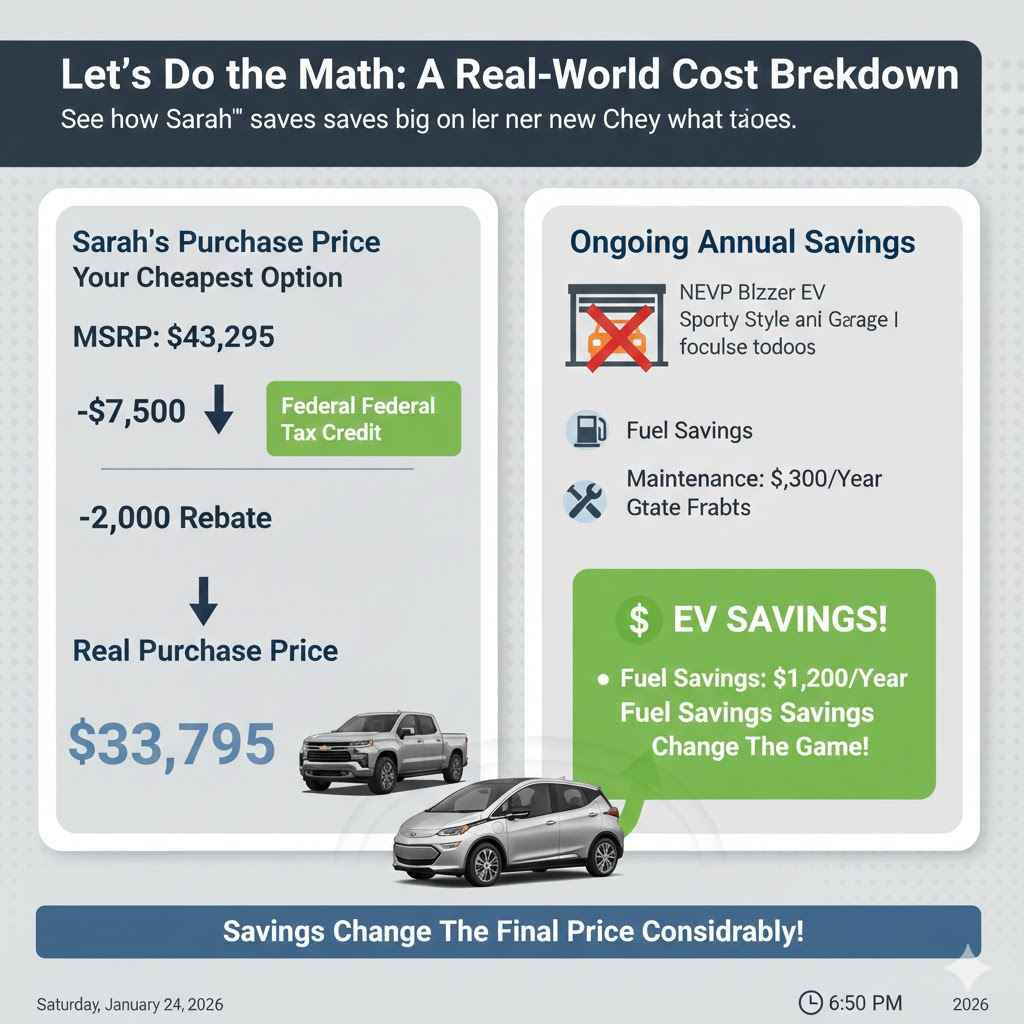
Theory is great, but let’s see how this works for a real person. Meet Sarah. She’s looking to buy a new Chevy Equinox EV 2LT trim.
- Sticker Price (MSRP): Let’s say the MSRP for her chosen model is $43,295.
- Subtract Federal Tax Credit: The Equinox EV qualifies for the full $7,500 credit, which she gets instantly at the dealership.
New Price: $43,295 – $7,500 = $35,795
- Subtract State Rebate: Sarah lives in a state that offers a $2,000 rebate for new EVs.
New Price: $35,795 – $2,000 = $33,795
Right away, Sarah’s brand new, high-tech electric SUV costs her under $34,000. That’s already competitive with many gas-powered SUVs. But the savings are just beginning.
Compared to her old gas SUV, we calculated she will save about $1,200 per year on fuel and at least $300 per year on maintenance like oil changes and other engine check-ups. That’s an extra $1,500 back in her pocket in the first year alone.
When you add it all up, the “real cost” of owning a Chevy EV is dramatically lower than the sticker price suggests. It’s an investment that pays you back month after month.
Frequently Asked Questions About Chevy EVs
Are Chevy electric cars reliable?
Absolutely. Chevrolet has been making the Bolt EV for years and has gathered a ton of data and experience. Their new Ultium battery platform, which powers the Equinox, Blazer, and Silverado EVs, is state-of-the-art and designed for long-term durability and safety. Plus, with fewer moving parts, there are simply fewer things that can go wrong compared to a gas engine.
How long do Chevy EV batteries last?
This is a common worry, but EV batteries are built to last. All Chevrolet EVs come with an 8-year/100,000-mile battery warranty. This covers any manufacturing defects and guarantees the battery will maintain a certain level of its capacity over that period. Most EV batteries are expected to last the life of the vehicle.
Is it expensive to install a home charger?
The cost to install a Level 2 charger can vary from a few hundred to a couple of thousand dollars, depending on your home’s electrical setup. However, Chevrolet often offers programs to help with this. For example, they have offered to cover the cost of a standard installation for many new EV buyers. Also, don’t forget to check for local utility rebates that can lower the cost even further.
Do all Chevy EVs qualify for the full $7,500 tax credit?
Not necessarily. The rules for the tax credit are complex and depend on where the car and its battery parts are sourced. As of 2024, vehicles like the Equinox EV and Blazer EV are built to meet the requirements, but you should always confirm the specific vehicle you’re buying is on the official government list of eligible models at the time of purchase.
How do I find charging stations on a road trip?
It’s easier than ever! Your Chevy EV’s navigation system can help you plan a route that includes charging stops. There are also many great smartphone apps like PlugShare, Electrify America, and EVgo that show you a map of all nearby charging stations, whether they are available, and how fast they are.
Can I charge a Chevy EV at a Tesla Supercharger station?
Soon, yes! Many automakers, including GM (Chevrolet’s parent company), have adopted Tesla’s charging connector standard (now called NACS). Newer Chevy EVs will come with this port built-in, and current owners will be able to use an adapter to access much of the Tesla Supercharger network, making road trips even more convenient.
The Bottom Line: Is a Chevy EV Worth It?
When you look past the initial sticker price and add up all the genius savings, the answer is a resounding yes. A Chevy electric car is more than just a new vehicle; it’s a smarter way to drive. You get a car that’s quiet, incredibly fun to drive, and packed with the latest technology.
But more importantly, you get to skip the gas station, save thousands on fuel and maintenance, and take advantage of powerful government incentives that make switching to electric more affordable than ever. It’s a choice that’s good for your wallet and simpler for your life. If you’ve been on the fence, now is the perfect time to explore the Chevy EV lineup. You might be shocked at how much you can save.