
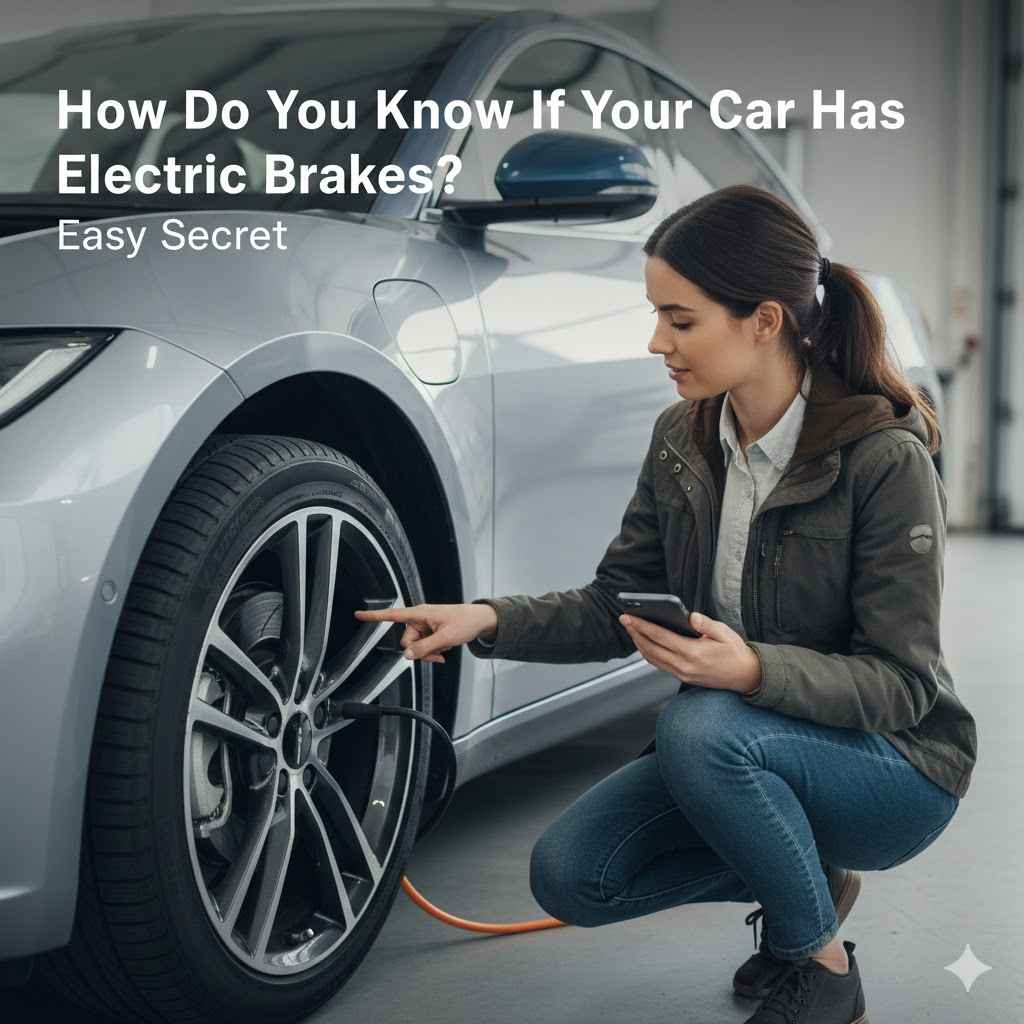
To know if your car has electric brakes, look for a small button on your center console, often marked with a “(P)” symbol, instead of a traditional hand lever or foot pedal. This button controls the Electric Parking Brake (EPB). Checking your owner’s manual for “Electric Parking Brake” or “EPB” will also confirm it.
Have you ever sat in a newer car and wondered where the parking brake lever went? It can be confusing! Many modern cars have switched to a different kind of system. You might feel unsure about how it works or what it means for you as a driver.
Don’t worry, it’s a very common question. You are not alone in wondering about this new technology. The good news is that figuring it out is simple. I’m here to walk you through it, step by step. We’ll uncover the easy secret together, and you’ll feel more confident about your car in no time.
What Are Electric Brakes, Anyway? A Simple Explanation
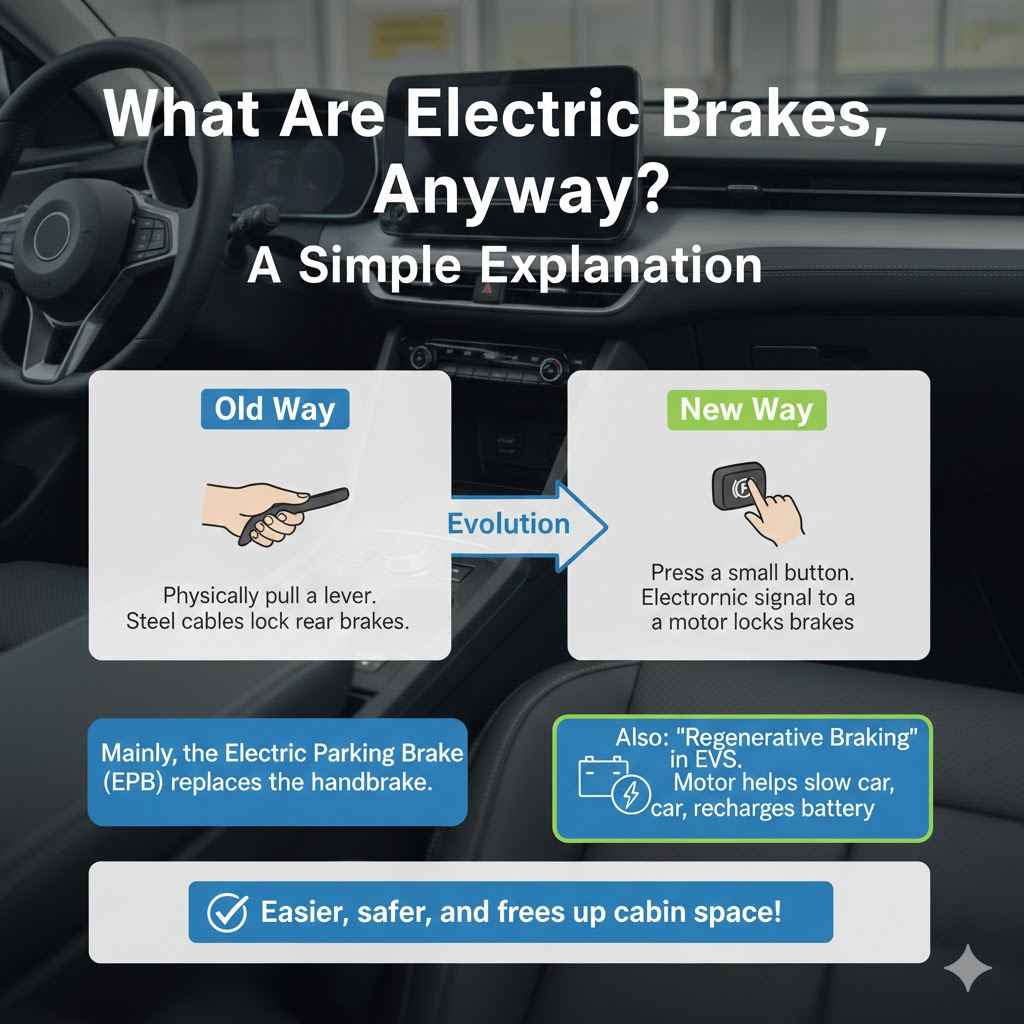
When people talk about “electric brakes” on a regular car, they are almost always talking about the Electric Parking Brake, or EPB for short. This isn’t about the brakes you use to stop at a red light—those are still your trusty hydraulic brakes. The EPB is a modern replacement for the old-school handbrake lever or the foot-operated parking brake pedal.
Think of it like this:
- Old Way: You physically pull a lever or push a pedal. This pulls on steel cables connected to your rear brakes, locking them in place.
- New Way: You press a small button. This sends an electronic signal to a small motor at the rear wheels, which then locks the brakes for you. It’s like magic!
This simple change from a mechanical lever to an electronic button makes things easier and safer. It also frees up space in your car’s cabin. You might also hear about “regenerative braking” in electric or hybrid cars. This is a different system where the electric motor helps slow the car down and recharges the battery, but your car still has a regular braking system for full stopping power.
The “Easy Secret”: 3 Simple Steps to Check Your Car
Ready to solve the mystery? You don’t need any special tools or technical skills. Just follow these three easy steps, and you’ll have your answer in under a minute.
Step 1: The Interior Check – Look for the Magic Button
This is the fastest and most obvious clue. Take a look around your car’s interior, specifically the center console area between the driver and passenger seats.
- Look for a button, not a lever. Instead of a long handle you pull up, search for a small switch or button.
- Check the symbol. The button will almost always have a symbol on it: the letter “P” inside a circle, sometimes with parentheses like this: (P).
- Note the action. To use it, you usually pull the button up to engage the parking brake and push it down to release it. You might also see a red warning light on your dashboard that says “BRAKE” or shows the same (P) symbol when it’s active.
If you see that button, congratulations! Your car has an Electric Parking Brake.
Here’s a simple table to help you spot the difference:
| Feature | Traditional Parking Brake | Electric Parking Brake (EPB) |
|---|---|---|
| What to Look For | A long lever to pull up or a small pedal to push with your foot. | A small button or switch on the center console. |
| Common Symbol | Often no symbol on the lever itself, just a “BRAKE” light on the dash. | A “(P)” symbol on the button. |
| Location | Between the front seats or on the floor to the left of the brake pedal. | Near the gear shifter or on the center console. |
Step 2: The Owner’s Manual – Your Car’s Cheat Sheet
If you’re still not sure, or if your car’s design is a bit unusual, your owner’s manual is your best friend. It holds all the official information about your specific vehicle. You don’t have to read the whole thing! Just use the index at the back.
- Grab your car’s manual from the glove compartment.
- Flip to the index in the back of the book.
- Look for terms like “Parking Brake,” “Electric Parking Brake,” or “EPB.
- Go to the page number listed. The manual will show you a picture of your parking brake and explain exactly how to use it.
No physical manual? No problem! Most car manufacturers offer digital copies of their owner’s manuals for free on their official websites. Just search online for your car’s make, model, year, and “owner’s manual.”
Step 3: The Sound Test – Listen for the Clues
Your ears can also help you figure this out. The two types of parking brakes make very different sounds when they are used.
Try this little experiment (make sure your car is safely parked on a flat surface):
- Engage the parking brake. Whether it’s a lever or a button, apply it.
- Listen carefully.
A traditional handbrake will make a mechanical click-click-click sound as you pull the lever up. It’s the sound of a ratchet locking into place.
An Electric Parking Brake will make a quiet, electronic whirring or buzzing sound. This sound comes from the rear of the car and lasts for just a second or two. It’s the sound of the small electric motors doing their job.
- Disengage the brake and listen again. You’ll hear a similar whirring sound when you release an EPB.
The distinct whirring noise is a surefire sign that your car is using an electric system to park.
Understanding Different Types of “Electric” Brakes in Cars
The term “electric brakes” can be a little confusing because it can refer to a few different technologies. Let’s break them down in simple terms so you know exactly what’s going on with your car.
Electric Parking Brakes (EPB) – The Most Common Type
As we’ve discussed, this is the most common system in modern passenger cars. It replaces the mechanical handbrake with a button and electric motors. It’s simple, reliable, and adds some great convenience features that make driving easier and safer.
Regenerative Braking – The Hybrid and EV Feature
If you drive a hybrid or a fully electric vehicle (EV), you have regenerative braking. But this is not your primary braking system!
- How it works: When you lift your foot off the accelerator, the electric motor that powers the car essentially runs in reverse. This creates resistance that slows the car down.
- The bonus: While slowing the car, the motor acts as a generator, creating electricity to help recharge the battery. It’s a smart way to recapture energy that would otherwise be lost.
Your car still has a powerful hydraulic braking system for when you need to stop quickly or come to a complete halt. Regenerative braking just helps out and improves your car’s efficiency.
Brake-by-Wire Systems – The High-Tech Version
This is a more advanced system found in many modern cars, especially hybrids and luxury models. In a traditional car, when you press the brake pedal, you are pushing fluid directly through hoses to the brakes. In a brake-by-wire system:
- You press the brake pedal.
- A sensor measures how hard and fast you pressed it.
- A computer receives this signal and then tells the hydraulic brake system exactly how much stopping power to apply.
It feels the same to you as a driver, but it allows the car’s computer to make braking smoother and integrate it with other safety systems like anti-lock brakes (ABS) and stability control. For safety, there are always backup systems in place. To learn more about general brake safety, you can visit the National Highway Traffic Safety Administration (NHTSA) website.
Why Does It Matter If My Car Has an Electric Parking Brake?
Knowing you have an EPB isn’t just a fun fact. It affects both your daily driving experience and how you handle maintenance. Here’s why it’s good to know.
For Everyday Driving
Electric Parking Brakes often come with some fantastic features that make driving more pleasant and secure.
- Auto-Hold: Many cars with an EPB have an “Auto-Hold” or “Brake Hold” button. When you turn this on, your car will automatically hold the brakes for you whenever you come to a complete stop, like at a traffic light. You can take your foot off the brake pedal, and the car won’t move. When the light turns green, just touch the accelerator, and the car releases the brakes smoothly. It’s amazing in stop-and-go traffic!
- Hill Start Assist: This feature prevents your car from rolling backward when you’re starting on a steep hill. The EPB holds the car in place for a few seconds after you move your foot from the brake to the accelerator, giving you plenty of time to get going without any stress.
- Automatic Engagement: Some cars are smart enough to automatically apply the parking brake when you shift into Park and turn off the engine, and then release it when you shift into Drive. It’s one less thing for you to remember.
For DIY Maintenance (A Word of Caution)
This is the most important part for anyone who likes to work on their own car. If you have an EPB, changing your rear brake pads is different from a car with a traditional handbrake.
- The Challenge: On an old-style system, you could use a simple tool (like a C-clamp) to push the brake caliper piston back into its housing to make room for new pads. You absolutely cannot do this with an EPB. Trying to force the piston back can permanently damage the expensive electric motor attached to it.
- The Solution: To change the rear brake pads, you must first put the EPB into “service mode” or “maintenance mode.” This electronically retracts the piston for you. This is usually done either through a specific sequence of actions (like pressing the accelerator and holding the EPB button) found in your owner’s manual or by using a specialized electronic scan tool that plugs into your car.
If you’re a beginner DIYer, it might be best to leave rear brake jobs on cars with an EPB to a trusted mechanic to avoid a costly mistake.
Common Myths vs. Facts About Electric Brakes
New technology often comes with confusion and myths. Let’s clear up a few things about Electric Parking Brakes.
| Myth | Fact |
|---|---|
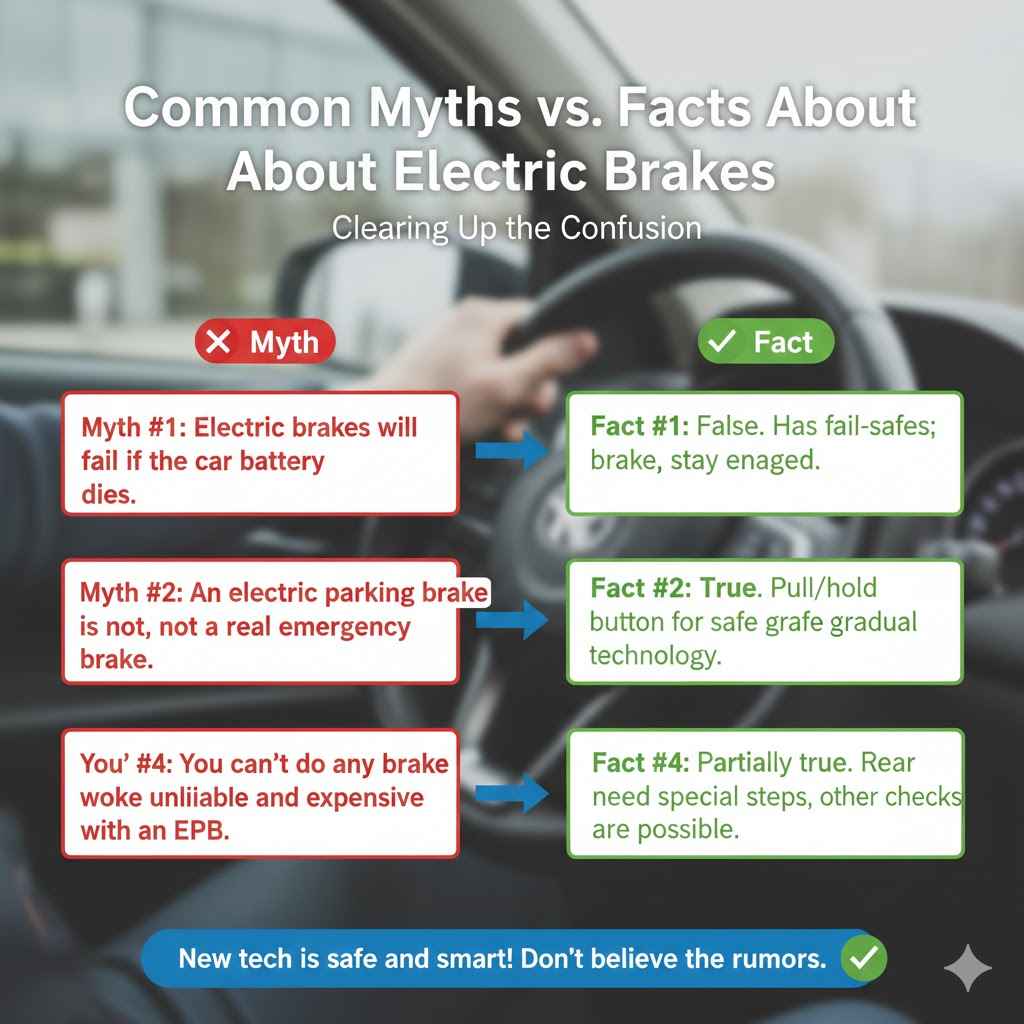
| “Electric brakes will fail if the car battery dies.” | This is false. An EPB has fail-safes. If the brake is engaged and the battery dies, the brake will stay securely engaged. You won’t be able to release it until you get a jump start, but your car won’t roll away. |
| “An electric parking brake is not a real emergency brake.” | It actually works as an emergency brake! If your main brakes fail while driving, you can pull and hold the EPB button. The car’s computer will safely and gradually bring the car to a stop by applying the rear brakes without locking them up. |
| “Electric parking brakes are unreliable and expensive to fix.” | They are very reliable. EPB systems have been used in cars for over two decades and are built to last the life of the vehicle. While any part can fail, EPB failures are not common. If a repair is needed, it can be more complex than a simple cable, but it’s not a frequent issue for most drivers. |
| “You can’t do any brake work yourself with an EPB.” | This is only partially true. While rear brake pad replacement requires special steps, you can still perform other tasks like checking your brake fluid and inspecting your front brakes just like you would on any other car. |
Frequently Asked Questions (FAQ)
1. Can I change my own brake pads if I have an electric parking brake?
You can, but it requires an extra step. You must put the rear brakes into “service mode” before you start. This retracts the electronic brake piston. You can find instructions in your car’s service manual or by using an automotive scan tool. If you are not comfortable with this, it’s best to let a professional handle the rear brakes.
2. What happens if my car battery dies with the electric parking brake on?
The parking brake will remain safely engaged. Your car will not roll away. To release it, you will need to get a jump start or replace the battery to provide power to the EPB system.
3. Is an electric parking brake the same as an emergency brake?
Yes, it serves the same emergency function. In most cars, if you pull and hold the EPB button while the car is moving, the system will apply the brakes to bring you to a controlled stop. It is designed to be used in an emergency if your main hydraulic brakes fail.
4. Do all new cars have electric brakes?
Not all, but a vast majority of them do. EPB systems save space, weigh less, and enable advanced safety features like Auto-Hold. They are now standard on most new models, except for some sports cars or base-model economy cars that may still use a traditional hand lever for a more mechanical feel.
5. My car has a ‘B’ on the gear shifter. Is that an electric brake?
That ‘B’ mode is related to regenerative braking, not the parking brake. It usually stands for “Brake” mode and increases the amount of regenerative braking when you lift your foot off the accelerator. This is common in hybrid and electric cars to help recapture more energy and is great for controlling speed when going down long hills.
6. How much does it cost to fix an electric parking brake?
Repair costs can vary widely. Sometimes, the issue is a simple fix like a faulty button or a wiring problem. In rare cases, the caliper motor might fail, which can be more expensive. It’s always best to get a diagnosis from a trusted mechanic to understand the specific problem and cost.
7. Can I convert my old handbrake to an electric one?
While aftermarket kits exist, this is a very complex and expensive conversion that is not recommended for most people. It involves changing major brake components and integrating new electronics into your car. It’s much more practical to stick with the system your car was designed with.
You’ve Got This!
See? That wasn’t so hard! Now you know the easy secret to telling if your car has an Electric Parking Brake. By simply looking for the (P) button, checking your owner’s manual, or listening for that telltale whirring sound, you can identify your car’s system with confidence.
Understanding this small piece of technology empowers you. It helps you use convenient features like Auto-Hold, keeps you safe on hills, and makes you smarter about what to expect when it’s time for maintenance. Every little thing you learn about your car builds your confidence and helps you become a more capable and informed driver. Keep learning, stay curious, and enjoy the ride!