

If your automatic transmission control module (TCM) is failing, expect erratic shifting, gear slips, strange warning lights (like Check Engine or Transmission light), or the car refusing to go into gear. Learning these key signs helps you catch the problem early before it causes a breakdown.
Have you noticed your automatic car acting strangely lately? Maybe it shifts hard, hesitates when you accelerate, or the warning lights on your dashboard have started glowing? If you drive an automatic vehicle, these strange behaviors might point to an issue with the Transmission Control Module, or TCM. This little computer is vital because it tells your transmission exactly when to shift gears for smooth driving. When it malfunctions, your ride gets bumpy and unreliable. Don’t worry; diagnosing a bad TCM is easier than you think. We will walk through the simplest, clearest signs so you can know exactly what’s happening under the hood and feel good about your next steps.
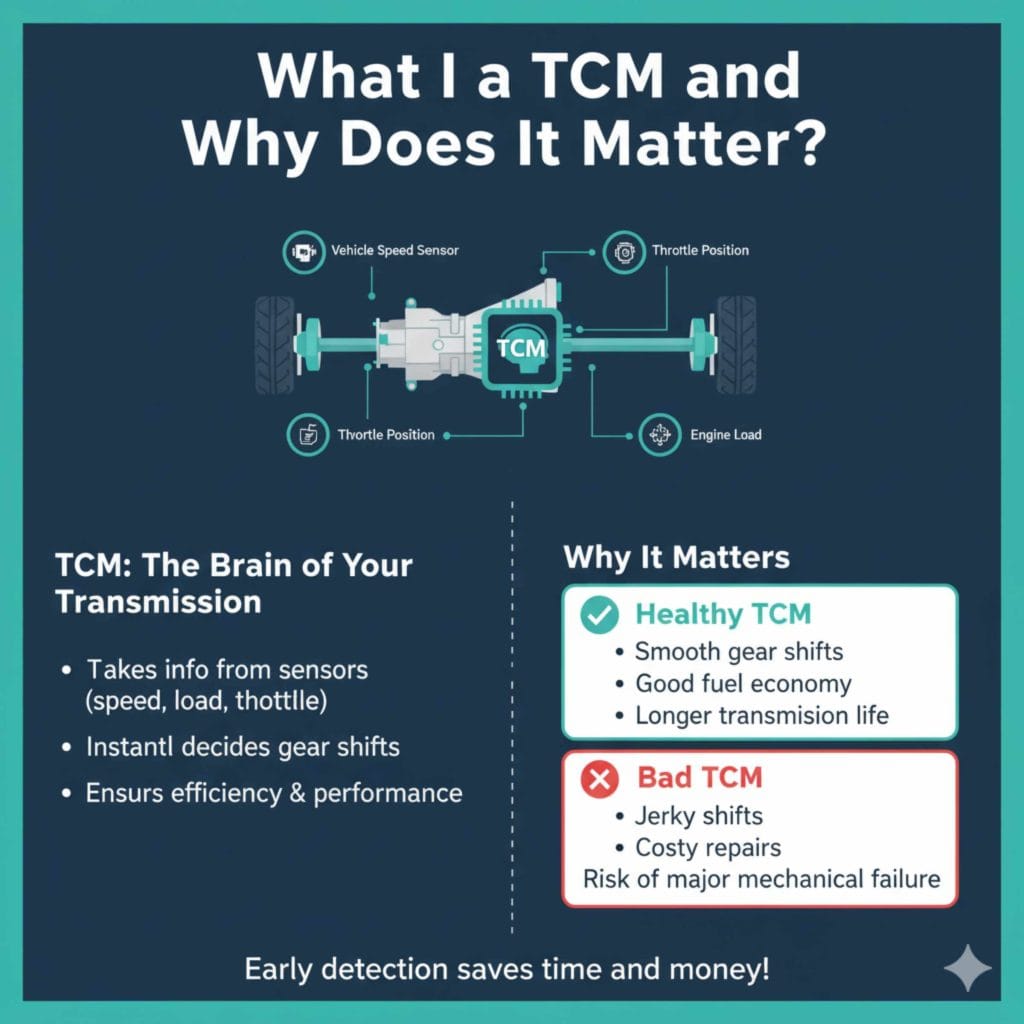
What is a TCM and Why Does It Matter?
The Transmission Control Module (TCM) sounds complicated, but think of it as the brain for your automatic transmission. It takes information from various sensors—like vehicle speed, engine load, and throttle position—and instantly decides the perfect time to shift gears.
In older cars, this was done purely mechanically. Now, modern cars rely on this electronic control to ensure efficiency, performance, and longevity. A healthy TCM keeps your gears smooth and your fuel economy good. A bad one? Well, that’s when things get jerky and costly.
Since the TCM talks directly to the most important part of your drivetrain, recognizing its failure signs early is crucial. Addressing it quickly can prevent minor electronic glitches from turning into major mechanical failures.
The Essential Warning Signs of a Bad TCM
Spotting a failing TCM isn’t always obvious, as some symptoms overlap with other transmission problems. However, when you see a cluster of these specific issues, the TCM should be high on your list of suspects. Here is how to tell if your transmission control module is bad automatically.
Sign 1: Erratic or Harsh Gear Shifting
This is often the first and most noticeable complaint drivers have. The TCM’s main job is smooth transitions. When it fails, it sends the wrong signals, or no signals at all, resulting in poor timing.
- Slamming Shifts: Instead of a gentle change, the car might lurch or slam into the next gear, especially when accelerating mildly.
- Delayed Engagement: You might shift the lever from Park to Drive, but the car takes several seconds to actually engage, or it might slip briefly before catching.
- Wrong Gear Selection: The car might stay in a low gear too long (revving high unnecessarily) or shift too early (making the car feel sluggish).
Sign 2: Dashboard Warning Lights Appear
The TCM is deeply connected to your car’s main computer system (the ECU). When it malfunctions, it often flags an error code that illuminates certain lights on your dashboard.
The two most common culprits are:
- Check Engine Light (CEL): A TCM fault is often stored as a diagnostic trouble code (DTC) that triggers the CEL. You will need an OBD-II scanner to read this code specifically.
- Dedicated Transmission Light: Some vehicles have a separate warning light specifically for transmission health, which will light up brightly when the TCM is struggling.
Pro Tip: If the Check Engine Light is actively flashing, this often means a severe misfire is occurring, which can cause transmission stress. Get it checked immediately. You can look up common OBD-II codes related to the transmission on websites like the AutoZone repair information library to get a better hint about the issue.
Sign 3: Vehicle Stuck in Limp Mode
“Limp mode,” or failsafe mode, is when the car’s main computer deliberately limits the transmission’s performance to protect it from further damage. If your TCM is bad, it might incorrectly trigger this protective mode.
When in limp mode:
- The car usually locks itself into one gear—often second or third gear.
- Top speed is significantly reduced (usually under 40 mph).
- The engine may feel powerless, preventing highway driving entirely.
This mode usually stays active until the ignition is turned off and sometimes requires clearing the codes before normal operation resumes, only for the issue to return soon after if the TCM is the culprit.
Sign 4: Inconsistent or No Gear Engagement at All
This represents a more severe failure. If the TCM is completely dead or has a major communication fault, the transmission might not know which gear you selected on the shifter.
You might experience:
- Putting the car in Reverse, but it stays in Neutral.
- The car refuses to shift out of Park, even with the brake pressed.
- Severe slipping where the engine revs but the wheels don’t turn properly, regardless of speed.
Sign 5: Slipping Gears
When the TCM sends an incorrect signal, the clutch packs inside the transmission might not engage fully or at the right time. This results in the transmission slipping out of gear while driving, especially under load (like going up a hill or accelerating onto a freeway).
It feels like the transmission is confused about what gear it should be in, causing momentary power loss before it tries to re-engage. Frequent slippage wears down internal transmission parts rapidly, so this is a serious sign that needs immediate attention.
Sign 6: Odometer and Speedometer Inaccuracies
The TCM often works closely with the Powertrain Control Module (PCM) or ECU to determine vehicle speed, which affects the speedometer reading and how the odometer tracks mileage.
If the TCM starts sending erratic speed data, you might notice:
- Your speedometer needle jumping around randomly.
- The needle sticking at a certain speed.
- The odometer not tracking mileage correctly (though this is less common than shifting issues).
How the TCM Differs from Other Components
When you have transmission trouble, many drivers jump to conclusions. It’s helpful to know how a bad TCM symptom differs from a bad solenoid or low fluid.
Here is a quick comparison that can help you narrow down the issue:
| Symptom Aspect | Typical Bad TCM Sign | Typical Low Fluid Sign | Typical Solenoid Sign |
|---|---|---|---|
| Shifting Feel | Erratic, random hard shifts, or staying in one gear. | Slipping across all gears; delayed engagement sometimes. | Inconsistent shifting—one gear fine, the next struggles. |
| Check Light | Often specific transmission codes (P0700 range). | Usually no specific light unless severe slippage occurs. | Usually specific solenoid circuit codes. |
| Engine Behavior | May seem unresponsive, stuck in limp mode. | Engine often revs high due to slippage. | May affect engine performance slightly due to mismatched RPM signals. |
Step-by-Step: How to Diagnose a Potential TCM Failure
If you are noticing a few of the signs above, taking these practical steps will help confirm if the TCM is the problem or if something simpler is at fault. Remember, always prioritize safety when working around vehicles—set the parking brake and ensure the car is secured.
Step 1: Check the Basics—Fluid and Connections
Before pointing fingers at an expensive computer, check the simplest things first.
- Check Transmission Fluid Level and Condition: Locate your transmission dipstick (sometimes hidden or labeled differently than engine oil) and check the fluid level while the engine is warm and running (refer to your owner’s manual for the exact procedure). The fluid should be pink or red, not brown or black, and should not smell burnt. Low fluid almost always causes slipping and erratic shifting.
- Inspect Wiring Harnesses: The TCM connects to the transmission via a complex wiring harness. Look for any visible damage, corrosion on the connectors, or wires that look chewed or frayed. A loose connection can easily mimic a bad TCM.
Step 2: Scan for Trouble Codes
This is the most definitive beginner step. You need to know what error codes are being stored.
You have a couple of options here:
- Visit an Auto Parts Store: Many major auto parts retailers will scan your vehicle’s computer system for free. They will provide you with the P-Codes (like P0740, P0753, etc.).
- Use Your Own Scanner: If you own an OBD-II scanner (which you should for modern cars!), plug it into the port, usually located under the dash near the steering column.
Codes in the P0700 to P0799 range specifically relate to transmission control issues. Codes pointing directly toward solenoids or circuit faults often implicate the module that controls them—the TCM.
Step 3: Check the TCM Location and Condition
The TCM is an electronic component, and electronics hate two things: heat and moisture.
Locate your TCM. In many vehicles, it is housed inside the engine bay or sometimes mounted directly onto the transmission casing. Consult your vehicle’s repair manual for the exact location, as it varies greatly by make and model.
Once located, look for:
- Signs of Water Intrusion: Is there any moisture, dampness, or corrosion around the module casing or connectors? Water damage can fry electronics instantly.
- Heat Damage: Do you see any melted plastic or signs that the module has been exposed to extreme, direct engine heat over a long period?
If you suspect water damage or visible corrosion, cleaning the contacts might temporarily fix the issue, but replacement is usually necessary.
Step 4: Professional Testing and Replacement
If fluid levels are good, codes point to module communication errors, and there is no obvious physical damage, the TCM likely needs replacement.
While some mechanics can test the module itself, it often requires specialized factory tools. Here is what you can expect:
- Get a Diagnostic Confirmation: A transmission specialist or dealer can use advanced tools to confirm that the TCM is failing to communicate with other modules rather than a wiring short. This prevents you from replacing an expensive part unnecessarily.
- Replacement Needs Programming: Critically, unlike replacing a basic sensor, most modern TCMs are often “flashed” or programmed to match your vehicle’s VIN and transmission calibration settings. A simple swap might not work right out of the box. Always ensure your replacement unit is programmed correctly for your specific car.
Preventing Future TCM Failures: Keeping Your Electronics Happy
The TCM is susceptible to failure primarily through environmental stress. By keeping the conditions around the module stable, you can significantly increase its lifespan.
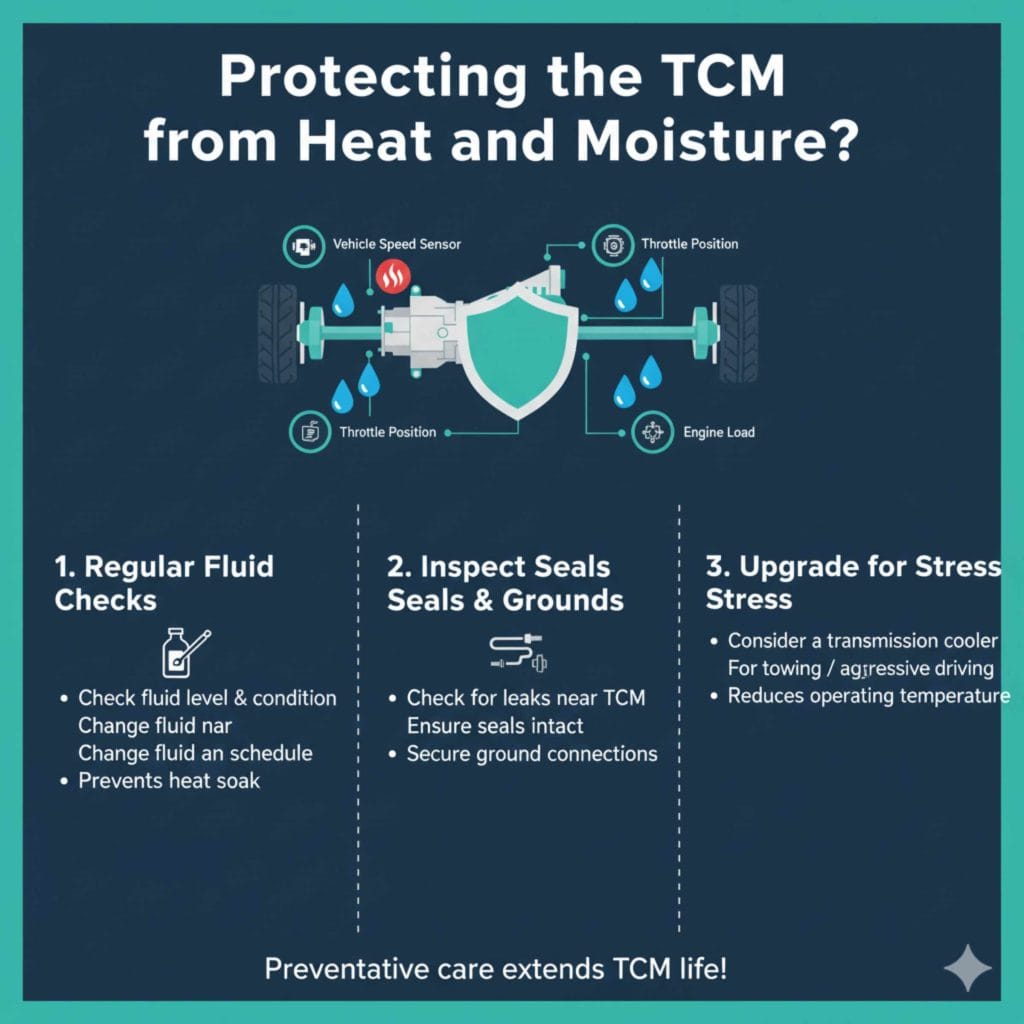
Protecting the TCM from Heat and Moisture
Since extreme conditions are the enemy of electronics, your preventative maintenance should focus here.
To protect your TCM:
- Regular Fluid Checks: Ensure your transmission fluid is always at the correct level and changed according to the manufacturer’s schedule. Overheating transmission fluid causes heat soak that travels up to the module.
- Check Seals: If your TCM is external or mounted near the transmission, ensure all seals and grommets where wiring enters the transmission case are intact and not leaking fluid.
- Ensure Proper Grounding: A poor ground connection can lead to erratic voltage spikes that can damage sensitive electronics. When working on electrical components, always ensure ground straps are clean and tightly secured.
If you plan on towing heavy loads or driving aggressively, consider upgrading your transmission cooler, as reducing overall transmission operating temperature directly reduces stress on the TCM.
Frequently Asked Questions About TCM Issues
Q1. Can I fix a bad TCM myself?
A: For most drivers, replacing a TCM is not a DIY job, especially because many require specialized programming (flashing) to match your car’s unique software. You can certainly check the wires and connections, but the replacement itself is best left to a shop with the right diagnostic tools.
Q2. How much does it cost to replace a TCM?
A: Costs vary widely by vehicle, but expect the parts and labor for a new, programmed TCM to range anywhere from $500 to $1,500 or more. This price includes the module itself and the necessary programming labor.
Q3. Is it safe to drive with a bad TCM?
A: It is generally not recommended. While you might be able to limp along in limp mode, intermittent shifting or erratic gear engagement puts tremendous stress on the transmission’s internal clutches and bands. This will quickly turn an electronic problem into a costly mechanical failure.
Q4. How long does a TCM typically last?
A: A TCM should generally last the lifetime of the vehicle, similar to the engine control unit (ECU). Failures are usually caused by exposure to excessive heat, vibration, or, most commonly, water intrusion or voltage spikes, rather than simple wear and tear.
Q5. How can I tell if it is the TCM or just a sensor?
A: Sensors usually cause very specific trouble codes (e.g., “Input/Output Speed Sensor A Circuit”). The TCM failure often shows up as generic communication errors (e.g., “CAN Bus Malfunction”) or multiple unrelated solenoid codes appearing simultaneously, indicating the control unit itself is confused.
Q6. Will clearing the codes fix the problem?
A: Clearing codes will temporarily erase the warning light, but if the TCM hardware is failing, the codes will return quickly, often within a short drive. Clearing codes is only a temporary measure to reset the system, not a solution to hardware failure.
Conclusion: Regaining Control of Your Ride
Dealing with transmission issues can be stressful, but remember that the Transmission Control Module is just one part of a complex system. By recognizing the key symptoms—erratic shifting, warning lights, or getting stuck in limp mode—you put yourself in a much better position to ask the right questions and seek correct solutions. Never ignore strange transmission behavior. A quick check of your fluid and a scan for diagnostic trouble codes can often save you time and money. By understanding what your car is trying to tell you through these warning signs, you take back control, ensuring your automatic transmission performs reliably for many miles to come. You’ve got this!