
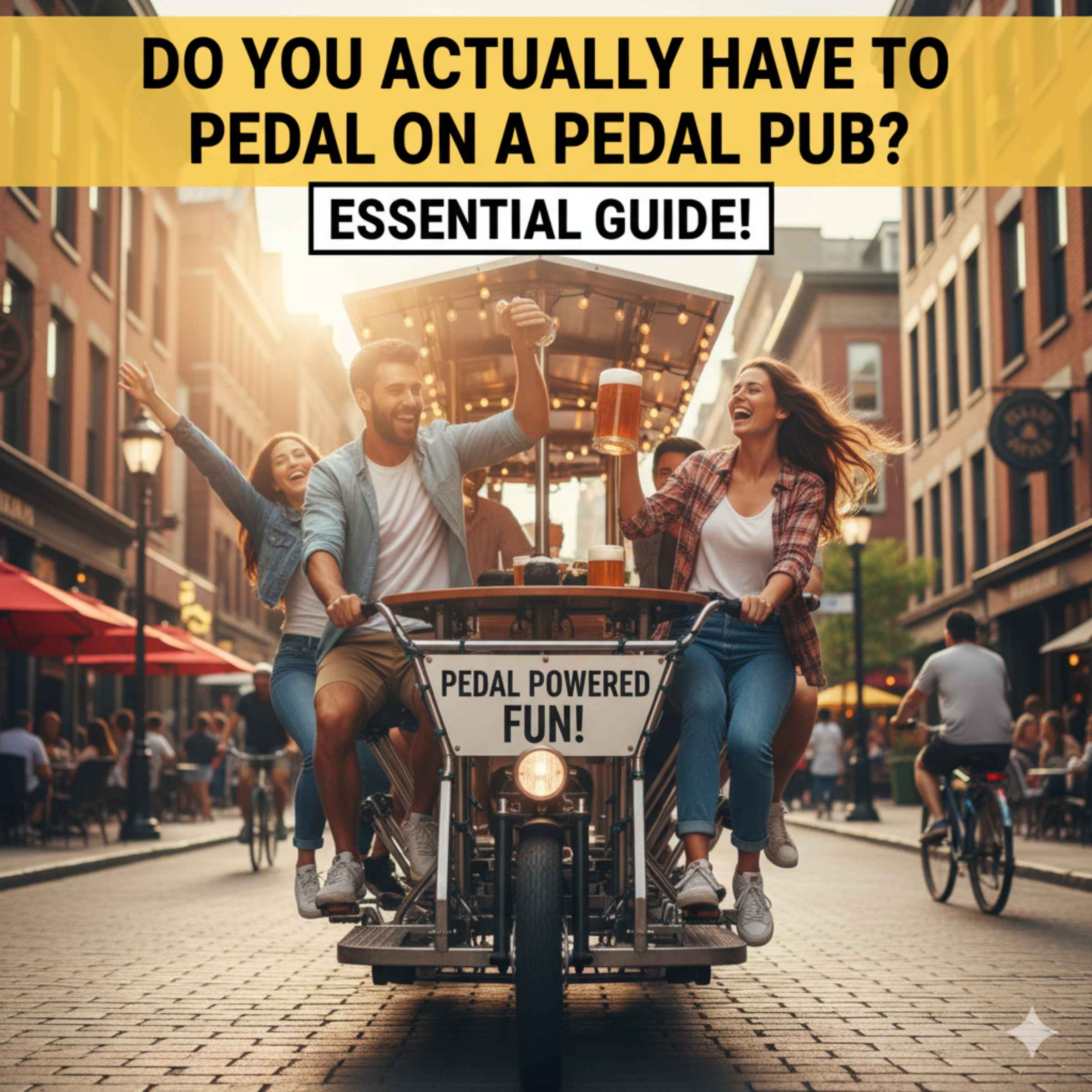
The short answer is yes, you absolutely do have to pedal on a pedal pub! These unique vehicles rely on human power from the riders to move forward. While some may offer limited assistance, the core function requires active pedaling from the group to make the party roll.
Have you ever seen those giant, bar-on-wheels cruising down the street and wondered how they actually move? If you picture a pedal pub (sometimes called a party bike or beer bike), you might think it’s like a normal ride where you just sit back and enjoy the scenery with a cold drink. That’s where the confusion starts! The idea of a motorized party vehicle is tempting, but the reality is slightly different, and knowing this upfront is key to having the best, safest time. Don’t worry; we’re going to clear up exactly how much work you actually need to put in. We’ll break down the mechanics, the expectations, and how to ensure everyone on board contributes to keeping the good times rolling.
Understanding the Pedal Pub Concept
A pedal pub is a fantastic way to combine sightseeing, socializing, and light exercise. Think of it as a long, customized bicycle designed to hold 10 to 16 people around a central bar or table.
What Exactly is a Pedal Pub?
At its heart, a pedal pub is a concept born from a desire to make group touring more interactive. Instead of being passive passengers—like on a standard tour bus—everyone participates in powering the vehicle.
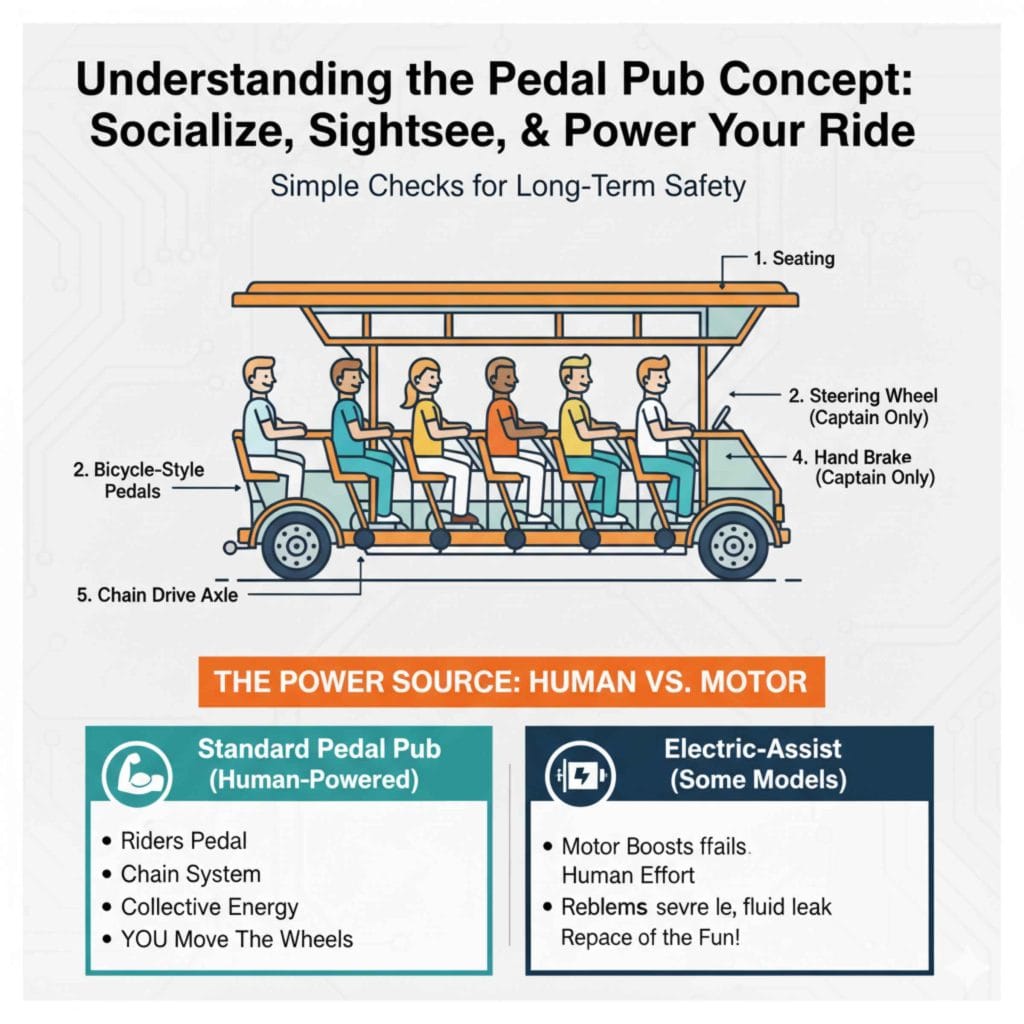
Here are the core components you’ll find on most standard, human-powered pedal pubs:
- Seating: Comfortable spots arranged around a central counter.
- Bicycle-Style Pedals: One set of pedals assigned to almost every seat facing forward.
- Steering Mechanism: Usually, only one or two designated riders—the “Captain” or “Driver”—get control of the steering wheel.
- Braking System: A hand brake system, controlled by the Captain, similar to a large bicycle or golf cart.
The Power Source: Human vs. Motor
This is the crucial part that answers your main question. In the vast majority of cases, the primary and intended power source for a pedal pub is the riders themselves.
When you look at the mechanics, it functions like a very large, synchronized tricycle.
- Riders pedal their assigned stations.
- These pedals connect via a complex chain system to the main drive axle.
- The collective energy from everyone pedaling moves the wheels forward.
- This collective effort ensures the vehicle travels efficiently (and isn’t too exhausting!).
So, to be perfectly clear: Yes, you must pedal on a standard pedal pub.
The Captain: The Only One Not Pedaling (Usually)
Every successful pedal pub operation requires a designated leader. This person is often excluded from the pedaling requirement, but they carry the most responsibility.
Roles and Responsibilities
The person steering the vehicle (the Captain) is responsible for traffic laws and safe navigation. They focus entirely on steering and braking, while the passengers power the motion.
The Captain’s job description often includes:
- Obeying all local traffic laws (motor vehicle rules still apply!).
- Controlling the speed by communicating demands to the pedaling group.
- Ensuring the group follows safety guidelines provided by the rental company.
- Managing the brake system, especially when approaching intersections or stopping for photos.
Electric-Assist Pedal Pubs: A Growing Trend
Due to varying local regulations and the need to manage hills or long routes, some newer or specialized rental companies are introducing electric assist features. This is where things can get slightly confusing for newcomers.
If a pedal pub has an electric assist motor, it usually works in one of two ways:
- Throttle Start:
- A small electric boost is used to get the heavy vehicle moving from a dead stop, after which the riders take over.
- Pedal Assist (The Most Common):
- The motor only engages while riders are actively pedaling. If everyone stops, the motor stops too. This reduces strain significantly on hills but still requires rider input.
Important Tip: Always confirm with the rental company beforehand if their specific pedal pub utilizes electric assistance. If they do, ask exactly how much assistance is provided. For example, in some areas, regulations might limit the electric power output significantly to ensure rider participation remains the primary function, adhering to local definitions of bicycling regulations. You can often find local transportation guidelines through your state’s Department of Transportation website.
Pedaling Expectations: How Much Work Is It, Really?
If you are worried this is going to turn into a marathon session, take a breath. Pedal pubs are designed for fun, not extreme fitness.
Speed and Effort Levels
Since you are traveling in a group and often on city streets where speed limits are low anyway, you won’t be trying to set any land speed records.
Most pedal pubs cruise comfortably between 5 to 10 miles per hour (about 8 to 16 km/h). This pace is perfect for enjoying the view and carrying on a conversation.
Think about pedaling a standard bike downhill or on flat ground while chatting with friends—that’s the general effort level required.
The Group Dynamic: The Key to Success
Since the system is linked, if one person stops pedaling, the entire mechanism slows down until others compensate. The success of the ride depends on group participation.
Here is a quick breakdown of what happens when pedaling effort changes:
| Rider Engagement Level | Effect on Speed | Captain Action Needed |
|---|---|---|
| Everyone Pedaling Steadily | Smooth, consistent cruising speed (5–10 mph). | Maintain steering focus. |
| A Few Riders Stop Briefly | Slight, noticeable dip in speed; the vehicle coasts. | May need to slightly ease off the brake. |
| Everyone Pedals Harder (e.g., going uphill) | Speed increases slightly, requiring more coordination. | Requires vocal encouragement from the Captain. |
| Too Many People Stop (Rare) | Vehicle slows down significantly or stops completely. | Captain must call for everyone to start pedaling again. |
What If I Can’t Pedal or Need a Break?
This is a common concern, especially if someone in the group has mobility issues or is just having an off day.
If you genuinely cannot pedal, you still have options:
- Sit Out and Enjoy: Most rental agreements allow one or two non-pedaling seats. You still get the social experience, though you must sit safely and avoid interfering with the working mechanisms.
- Partner Up: If you can put some weight down but not sustain pedaling, ask a friend nearby to focus extra hard when you need a break.
- The Captain’s Assistance: If the vehicle stops due to low participation, the Captain might be able to utilize the brake/throttle helper (if equipped) momentarily to get things rolling again, but this stresses the system.
Safety and Etiquette: Making Sure the Ride is Fun
Since pedal pubs operate on public streets alongside cars, following established rules is mandatory. Safety gear and proper behavior ensure your tour company—and local authorities—are happy.
Essential Safety Checks Before You Start
Before the first pedal is pushed, you and the Captain should confirm a few things. Safety is non-negotiable, especially when enjoying adult beverages, if permitted by law.
Checklist for Rider Safety:
- Footwear: Wear closed-toe shoes with good grip. Flip-flops or high heels are dangerous and can slip off the pedals. Athletic shoes are ideal.
- Seat Adjustment: Ensure your seat is adjusted properly—too high or too low makes pedaling inefficient and tiring.
- Clear Paths: Confirm that your legs and the legs of the person next to you will not interfere with the chain guards or the steering column.
- Knowing the Brakes: Pay attention when the Captain explains how the hand brake works.
Remember, local bike safety guidelines often apply. For more official guidance across the States, resources from organizations like the National Highway Traffic Safety Administration (NHTSA) provide excellent baseline information on safe cycling practices you should adhere to, even on a group vehicle.
Etiquette for the Non-Motorist Rider
Your job as a passenger is to provide smooth, consistent power and be a good ambassador for the activity.
Do’s and Don’ts of Pedal Pub Group Riding:
- DO Maintain a steady rhythm—try to avoid sudden starts and stops in your pedaling cadence.
- DO Make eye contact with the Captain to see if they need more power or if they are preparing to stop.
- DON’T Stand up while the vehicle is in motion, unless explicitly told it’s okay for stretching (which is rare).
- DON’T Lean excessively on the steering mechanism or dashboard area.
- DON’T Over-consume alcohol to the point where you can no longer safely contribute steady pedaling power.
Troubleshooting Common Pedaling Problems
Even the best-planned rides hit a snag sometimes. Here are quick fixes for the most common issues that happen when people realize they actually have to work!
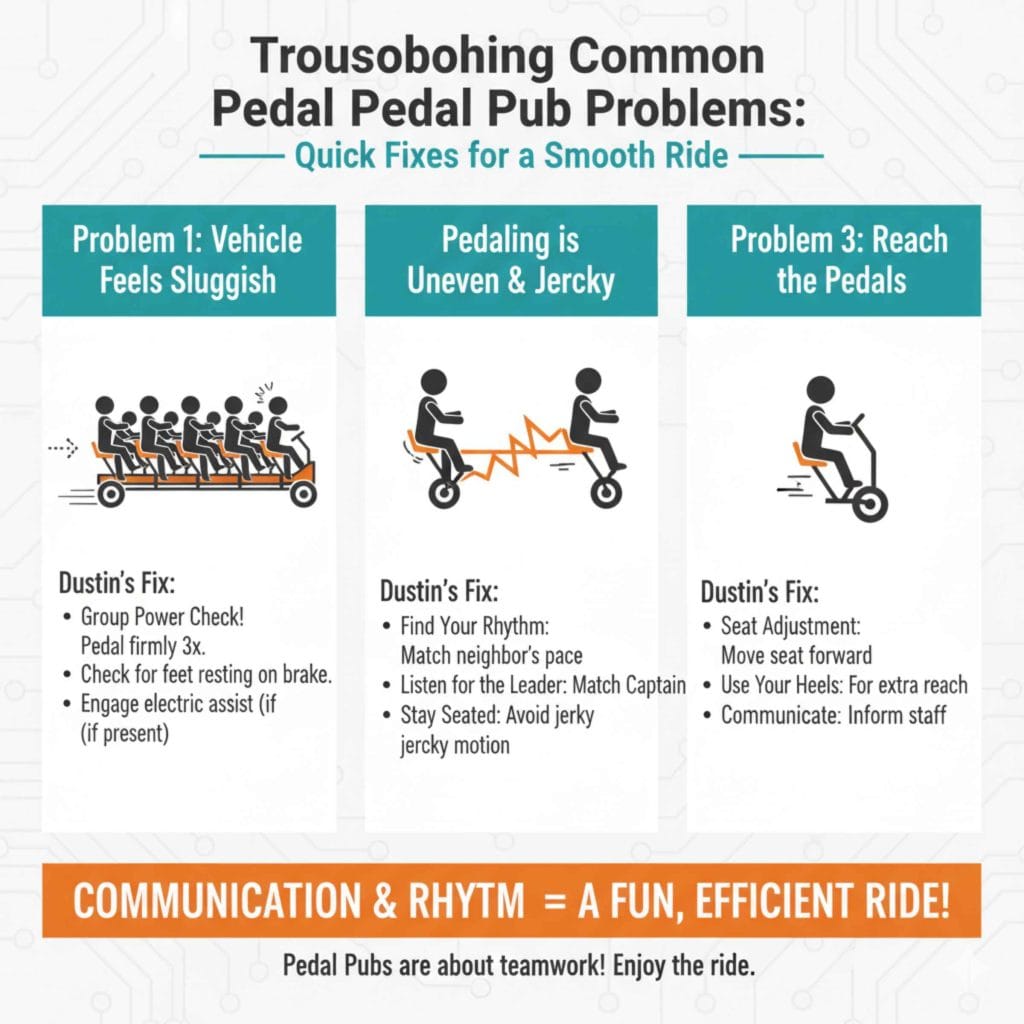
Problem 1: The Vehicle Feels Sluggish
This almost always means your collective power output has dropped.
Dustin’s Fix:
- The Captain should call out, “Group Power Check! Let’s pick up the pace for three rotations!”
- Everyone should pedal firmly (but not wildly) three times in a row.
- If the sluggishness persists, check that no one is accidentally resting their feet on their brake pedal (if they have personal resistance pedals, which is rare but possible).
- If an electric assist is present, ensure the Captain confirms it is engaged.
Problem 2: Pedaling is Uneven and Jerky
This happens when people pedaling near each other have very different styles or strengths. One person might push hard while the other coasts lightly.
Dustin’s Fix:
- Find Your Rhythm: Focus on connecting your pushing stroke with your neighbor’s. Aim for a smooth, circular motion rather than a hard push-and-pull.
- Listen for the Leader: Often, the person directly next to the Captain sets the pace. Try to match their rhythm.
- Stay Seated: When you stand, your weight shifts your balance, often causing a jerky motion through the drivetrain. Stay seated!
Problem 3: I Can’t Reach the Pedals Properly
This is common on larger vehicles for shorter riders.
Dustin’s Fix:
- Seat Adjustment: First, try moving the seat base forward or backward if your specific station allows for adjustment.
- Use Your Heels Slightly: While you should aim to pedal with the ball of your foot, if you are slightly too short, using the middle of your foot near the arch can give you the necessary extension without fully locking your knee.
- Communicate: Inform the rental staff at the beginning of your tour. They may be able to provide improvised cushions or reassign you to a better spot.
FAQ: Beginner Questions About Pedal Pubs
Q1: If I don’t pedal, will the pub stop immediately?
Not immediately. The vehicle has momentum, and other riders are still contributing power. However, if too many people stop pedaling, the speed will drop quickly until momentum is lost, and the bike will slow to a stop.
Q2: Do I need to be athletic to ride a pedal pub?
No. The effort is spread across many people, so you just need the ability to pedal a bicycle gently on flat ground for short periods. It’s more social exercise than a workout.
Q3: Can I make the pedal pub go faster by pedaling really hard?
You can try, but controlling high speeds is dangerous and impractical on public roads. The Captain often dictates the reasonable pace, and excessive speed from one rider can cause jerky movement for everyone else.
Q4: Are there age restrictions for pedaling?
Yes, most companies require riders to meet a minimum age (often 18 or 21, depending on local alcohol laws) to participate in the pedaling, as they are operating a chain-driven vehicle. Always check the tour operator’s specific rules.
Q5: What does the Captain do if we are going uphill?
The Captain will usually warn the group beforehand. They will ask everyone to pedal slightly harder and maintain a steady pace. If the hill is very steep and assisted features aren’t available, the vehicle might slow down significantly, but everyone must continue to pedal to conquer the incline.
Q6: Is it possible to be a passenger without pedaling at all?
In most cases, yes, but you must confirm this when booking. Sometimes, there are designated non-pedaling seats, especially for the person steering. If all seats have pedals, you are expected to pedal unless you have a documented medical reason not to.
Conclusion: It’s Your Power, Your Party
So, let’s wrap this up simply. When you climb aboard a pedal pub, understand that you are signing up for an active, albeit very fun, group activity. Do you actually have to pedal on a pedal pub? Absolutely, because you are the engine! The joy of the pedal pub experience comes from that shared effort—watching your whole group move this massive, quirky vehicle down the street together creates fantastic memories.
By understanding the mechanics, respecting the Captain’s role, and contributing your energy when you can, you ensure a smooth, safe, and successful outing. Now that you know the drill, book your tour with confidence, know your role, lace up those sturdy shoes, and get ready to pedal your way to a memorable time!