
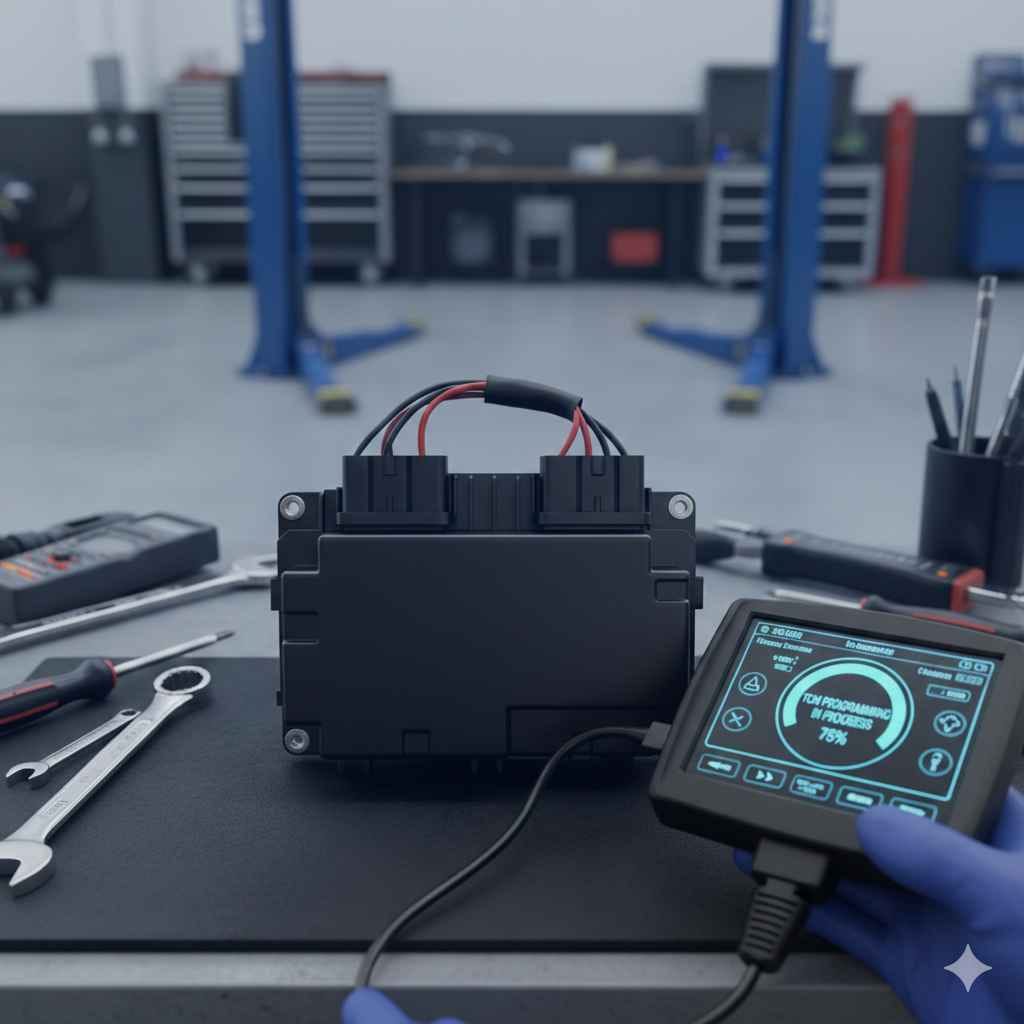
If you’re wondering, Do Transmission Control Modules Need to Be Programmed?, you’re not alone! It’s a common question for anyone who’s new to car repairs. Figuring out whether a new or
What is a Transmission Control Module (TCM)?
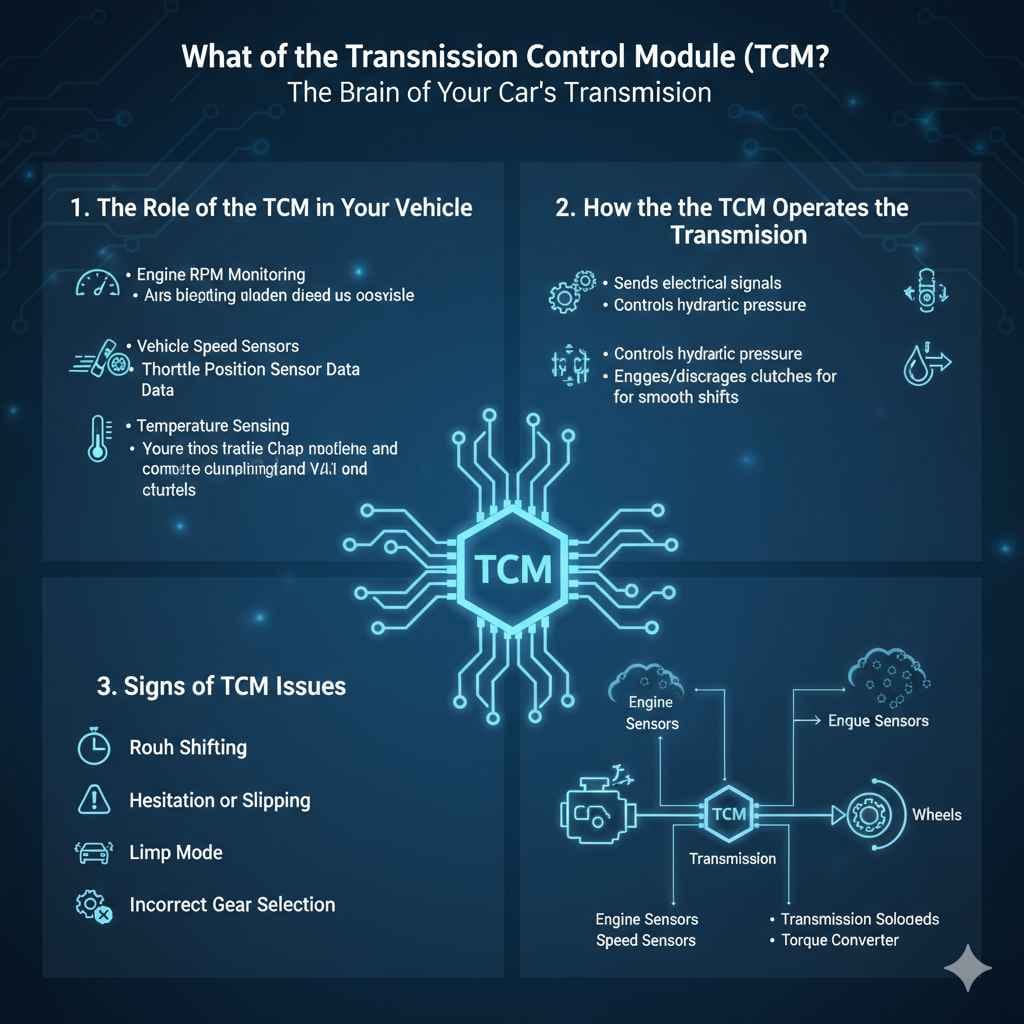
A Transmission Control Module (TCM) is like the brain of your car’s transmission. It’s a small computer that makes sure your gears shift smoothly. Think of it as the conductor of an orchestra, timing everything perfectly. The TCM gets information from sensors all over your car, such as how fast your engine is spinning, how quickly you’re accelerating, and the position of the gear selector. Based on this information, the TCM decides when and how to shift gears. This ensures your car runs efficiently and prevents damage to the transmission.
The TCM is essential because it constantly adjusts the gear changes based on your driving. Without it, your car would shift gears at the wrong times, leading to poor fuel economy, rough shifting, and possibly even transmission failure. Modern cars use TCMs extensively, making them crucial for the performance and lifespan of the vehicle. When replacing or repairing the TCM, it’s vital to ensure it is correctly matched and, in many cases, programmed to the specific car.
The Role of the TCM in Your Vehicle
The TCM monitors numerous factors to ensure optimal gear changes. It receives data from various sensors throughout the car. These sensors provide critical data such as engine speed (RPM), vehicle speed, throttle position, and temperature. This data is processed in real time by the TCM. The TCM uses this information, plus pre-programmed data, to calculate the exact moments to shift gears. It controls the hydraulic pressure within the transmission to move gears smoothly.
- Engine RPM Monitoring: The TCM monitors the engine’s speed to determine the best time to shift gears. For instance, when accelerating, the TCM delays the upshift to allow for more power.
- Vehicle Speed Sensors: These sensors inform the TCM about how fast the car is moving. This data helps the TCM select the appropriate gear for the current speed.
- Throttle Position Sensor Data: The TCM uses throttle position data to understand how hard the driver is accelerating. This helps determine if the car needs to downshift for more power.
- Temperature Sensing: Temperature sensors tell the TCM about the transmission fluid temperature. This ensures the transmission is operating within safe limits.
How the TCM Operates the Transmission
The TCM operates the transmission through a network of solenoids and valves. The TCM sends electrical signals to these components based on the data it receives. These signals control the flow of hydraulic fluid within the transmission. The hydraulic fluid then engages or disengages clutches and bands, which control the gears. The TCM constantly adjusts the hydraulic pressure to ensure smooth and efficient gear changes.
When the TCM decides to shift gears, it sends signals to specific solenoids. The solenoids open and close valves to direct the hydraulic fluid. This precise control ensures that gears shift at the right moment. The process is a seamless, automatic operation that the driver usually isn’t even aware of. The TCM also performs self-diagnostics. If it detects a problem, it might illuminate the check engine light to alert the driver.
Signs of TCM Issues
Several indicators can signal problems with your TCM. Recognizing these signs early can prevent more serious damage. One common symptom is rough or erratic shifting. The transmission may jerk or hesitate when changing gears. You might also see the check engine light illuminate on your dashboard. This light often indicates a problem with the transmission or its control systems. The car might go into “limp mode,” where it restricts the gears for protection.
- Rough Shifting: If the transmission shifts abruptly or with a noticeable jerk, it might suggest a faulty TCM.
- Hesitation or Slipping: The transmission might hesitate to shift gears, or it may seem to slip.
- Check Engine Light: A lit check engine light, especially with codes related to the transmission, is a clear sign.
- Limp Mode: The car might limit its gears and speeds.
- Incorrect Gear Selection: The transmission might select the wrong gear for your speed or the driving conditions.
Does a Replacement TCM Always Need Programming?
Whether a
Older vehicles with simpler systems might not need programming. However, even these cars could benefit from it. Programming can help the new TCM learn the vehicle’s unique characteristics. It’s best to check with the car’s manufacturer or a professional mechanic to find out what’s needed. They can advise you on the specific requirements for your vehicle.
Vehicles That Usually Require TCM Programming
Programming is most often needed for modern vehicles. These cars have sophisticated electronics. The TCM must be calibrated to match the car’s specific engine, transmission, and other systems. Almost all cars produced in the last two decades fit into this category. They use CAN bus communication, which enables the different control modules to share information.
- Vehicles with Electronic Control Systems: These cars have extensive computer control of engine and transmission functions.
- Cars with CAN Bus Systems: Modern vehicles use CAN bus, a communication network. Programming ensures the TCM can communicate correctly with other modules.
- Vehicles with Adaptive Learning: These systems learn the driving habits of the driver.
- High-Performance Vehicles: Performance cars often require specific programming to optimize transmission performance.
Vehicles That May Not Always Need TCM Programming
Some older vehicles with simpler designs may not necessarily require programming. These cars often have mechanical or less complex electronic transmissions. This type of vehicle might not have an extensive computer system. However, even in these instances, a newer TCM might benefit from some type of setup. It’s always best to check the vehicle’s manual or ask a mechanic.
- Older Cars with Mechanical Transmissions: These vehicles often have simpler transmissions controlled primarily by mechanical components.
- Vehicles with Basic Electronic Controls: Cars that do not have extensive electronic control systems might be less dependent on programming.
Understanding Programming Methods
The programming process involves connecting a special device or software to your car’s diagnostic port. The mechanic uploads the correct software to the new TCM. This tells the TCM about the car’s specific setup. This will include the engine type and the car’s options. They can also use this software to update the TCM’s software.
- Using Diagnostic Tools: Mechanics use specialized tools that connect to the car’s OBD-II port.
- Software Updates: The programming process often includes loading the latest software to ensure optimal performance.
- Vehicle Identification Number (VIN) Verification: Most programming processes use the VIN to confirm the correct software for your car.
The Importance of Programming a New TCM
Programming is key because it ensures the new TCM functions correctly within your vehicle. Without it, the TCM might not communicate effectively with other computer modules. This can cause various problems. Programming optimizes the TCM’s performance, allowing it to adapt to your driving habits. It also improves fuel efficiency, and can extend the life of your transmission.
A properly programmed TCM ensures that the transmission shifts smoothly and efficiently. This can reduce wear and tear on the transmission components. If you don’t program the new TCM, it might not know the exact specifications of your car. This can lead to issues like incorrect gear changes, reduced engine performance, or, in severe cases, transmission damage. Therefore, proper programming is important for ensuring your vehicle’s long-term performance.
Ensuring Compatibility
When replacing a TCM, ensure the new unit is compatible with your car’s make and model. This means that the TCM must match the transmission type, engine size, and any special features of your vehicle. You can find this information in your car’s owner’s manual. A mechanic can also determine the right TCM for your vehicle by using your VIN. They use this information to ensure the replacement is the correct fit and properly calibrated.
- Matching the Correct Part Number: The part number on the new TCM must match the original.
- Vehicle Information: Provide your car’s make, model, year, and engine size.
- Consulting the Owner’s Manual: This can provide details about your vehicle’s specific requirements.
- Professional Advice: A mechanic can often help you identify the right parts and confirm their compatibility.
Performance and Efficiency Benefits
A properly programmed TCM enhances your car’s performance and fuel efficiency. It optimizes the shift points to match your driving style. This will improve acceleration and overall drivability. Programming also ensures that the transmission operates at its most efficient settings. This is key for good fuel economy. Modern TCMs can often “learn” your driving habits. This allows them to adapt and improve performance over time.
- Optimized Shift Points: Programming customizes the shift points to suit your driving style.
- Improved Fuel Economy: A well-programmed TCM makes the transmission function more efficiently, saving fuel.
- Smoother Shifting: Programming reduces harsh shifts, making the driving experience more pleasant.
- Engine Performance: A well-programmed TCM works with the engine to ensure optimal power and performance.
Long-Term Health of Your Transmission
Programming a new TCM contributes to the long-term health of your transmission. It prevents the incorrect gear changes that cause damage to transmission components. When programmed correctly, the TCM ensures that the transmission operates within safe parameters. This can extend the life of your transmission. A programmed TCM often incorporates safety measures to protect the transmission from extreme conditions.
- Reduced Wear and Tear: Smooth shifts put less stress on transmission components.
- Preventative Measures: Correct programming avoids issues like overheating.
- Early Detection: A TCM programmed to function correctly can flag problems early.
- Extended Lifespan: Proper programming prolongs the overall life of the transmission.
How to Program a Transmission Control Module
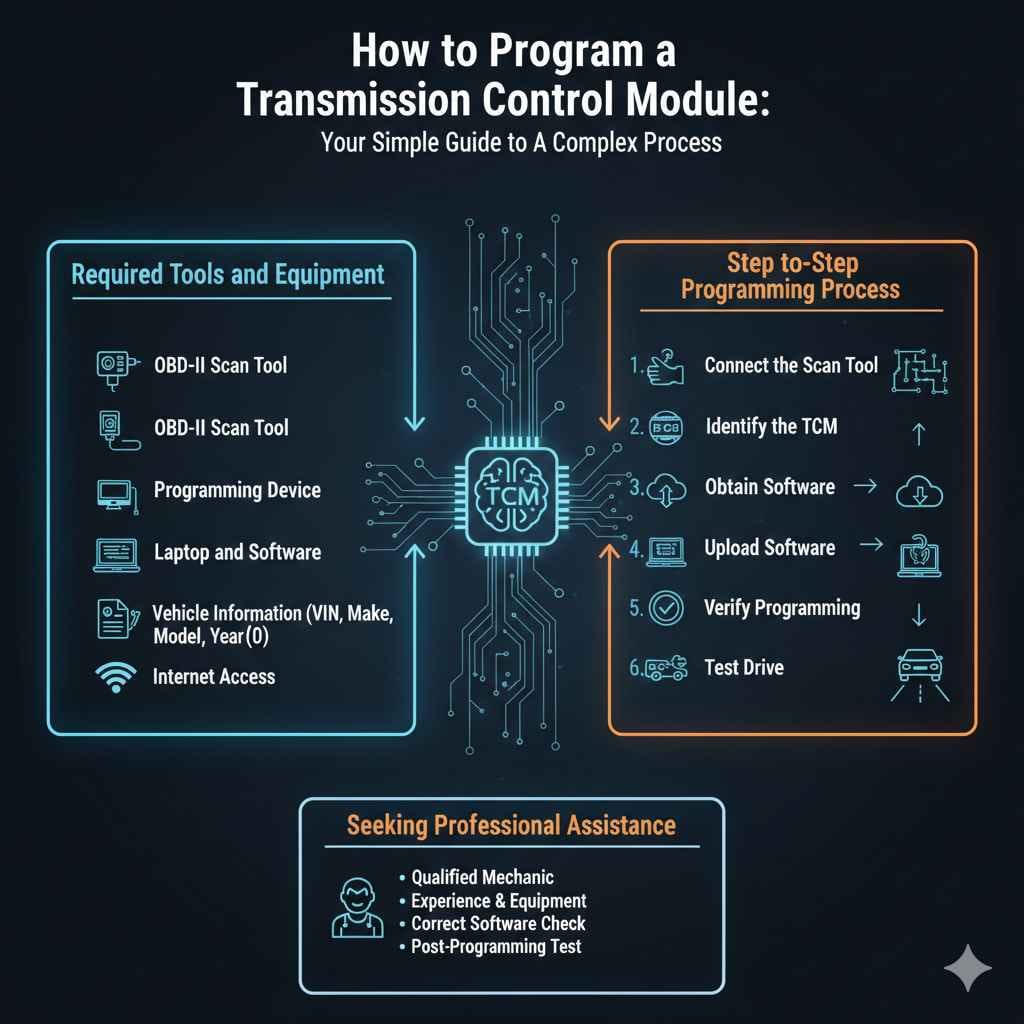
Programming a TCM isn’t something most people can do at home. It requires special equipment and software. If you’re not experienced with auto repairs, it’s best to take your car to a professional. A mechanic can handle the process correctly, ensuring your new TCM functions properly. They will have the right tools and knowledge to do the job right.
The programming process often starts with connecting a scan tool or a programming device to your car’s OBD-II port. Next, they will need the correct software for your car. This is often obtained from the car manufacturer or through a professional repair system. Then, the mechanic will upload the correct software to the new TCM. They will also configure the new TCM to match your car’s specific details. After the programming is complete, the mechanic will usually perform a test drive to make sure the transmission operates smoothly.
Required Tools and Equipment
Special tools are needed to program a TCM. These tools include a scan tool. Scan tools are devices that can communicate with your car’s computer systems. Programming devices are able to upload new software. A laptop with the correct software will also be required. The mechanic will also need information about your car, such as the VIN, make, model, and year. Diagnostic software is needed to access and update the TCM’s settings.
- OBD-II Scan Tool: This tool connects to your car’s diagnostic port for reading and clearing codes.
- Programming Device: This specialized device uploads new software to the TCM.
- Laptop and Software: You’ll need a laptop with the manufacturer’s software installed.
- Vehicle Information: Make sure you have your car’s VIN, make, model, and year.
- Internet Access: It is necessary for software downloads and updates.
Step-by-Step Programming Process
The exact programming steps may vary. It depends on the car’s make and model. The general process includes connecting the scan tool to the OBD-II port. After that, you must identify the TCM in the car’s computer system. Then, the correct software for the car has to be selected. The software is uploaded to the TCM through the scan tool or programming device. The mechanic will verify that the programming is complete. They will also test the car by driving it to make sure everything functions properly.
- Connect the Scan Tool: Plug the scan tool into the OBD-II port.
- Identify the TCM: Use the scan tool to find and select the TCM.
- Obtain Software: Download the correct software for your car.
- Upload Software: Use the scan tool to upload the new software.
- Verify Programming: Make sure the programming is done correctly.
- Test Drive: Drive the car to test the TCM’s functionality.
Seeking Professional Assistance
Getting help from a qualified mechanic is always the best solution. They have the experience and equipment to perform this process correctly. Mechanics will have the diagnostic tools and software necessary to program your TCM. They can also ensure that the new TCM is compatible with your car’s other systems. Furthermore, a professional can test the vehicle after the programming. They can then check for any errors or problems. A mechanic can ensure the job gets done right.
When you take your car to a mechanic, they will likely use a scan tool to read the car’s trouble codes. If the check engine light is on, the mechanic will identify the code. The mechanic then determines if the TCM needs programming or replacement. They will verify compatibility between the new TCM and your car. They can obtain the correct software and program the new unit. Finally, the mechanic can perform a post-programming check. This will help them find any issues.
Frequently Asked Questions
Question: Can I program a TCM myself at home?
Answer: It’s generally not possible. TCM programming requires specialized tools and knowledge. It’s best to have a qualified mechanic do it.
Question: What happens if I don’t program a new TCM?
Answer: Without programming, the TCM might not work correctly. This can cause poor shifting, reduced engine performance, or damage to your transmission.
Question: Where can I get my TCM programmed?
Answer: You can get your TCM programmed at a qualified auto repair shop or a dealership.
Question: How long does TCM programming take?
Answer: The programming process usually takes between 30 minutes to an hour. It depends on the vehicle and the complexity of the systems.
Question: How much does TCM programming cost?
Answer: The cost varies depending on the shop and your car. It usually ranges from $100 to $300.
Final Thoughts
So, Do Transmission Control Modules Need to Be Programmed? The answer depends on your car, but for most newer vehicles, the answer is yes. Programming is important to ensure your car’s transmission works right. It is also key to preventing issues down the road. While it might seem like a complicated process, it’s easier when left to experts. You can be confident that you understand the basics of TCM programming. If you’re replacing your TCM, remember to consult a professional to ensure the job is done correctly. This way, you can keep your car running smoothly and efficiently for years to come. Your car will thank you!