
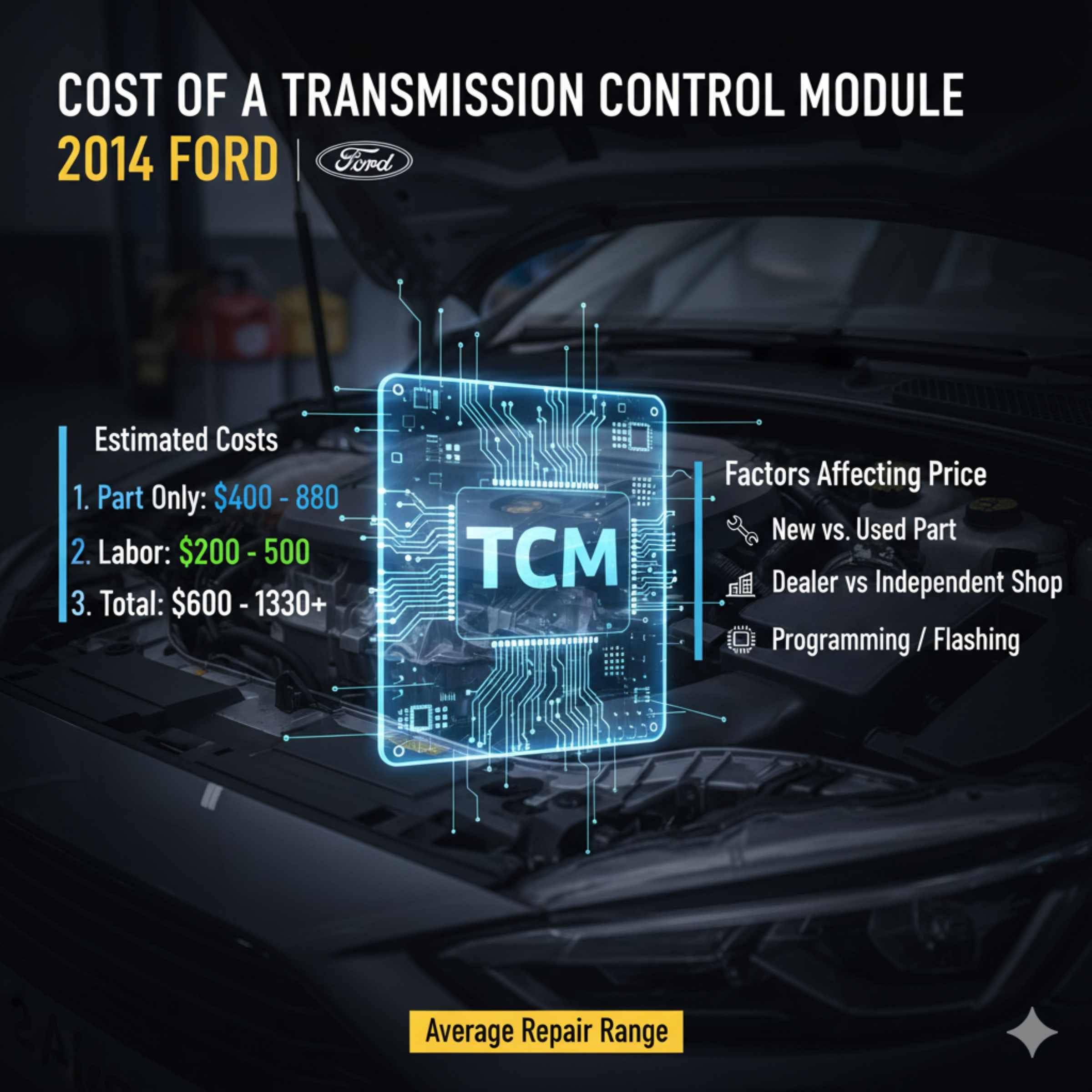
The typical cost of a Transmission Control Module (TCM) for a 2014 Ford Focus ranges from $150 to $450 for the part alone, depending on whether you choose OEM or aftermarket. Professional installation usually adds another $300 to $600 to the total repair bill.
Is your 2014 Ford Focus acting strangely? Maybe the shifting feels jerky, or perhaps the “Check Engine” light is on, flashing a code related to transmission problems. You might be hearing scary terms like “PCM” or “TCM.” Don’t worry! These issues are common, and understanding them is the first step to fixing them without emptying your wallet.
The Transmission Control Module (TCM) is like the brain for your car’s automatic transmission. When this little computer fails, your car definitely lets you know. It can feel overwhelming, but I’m here to break down exactly what a TCM is, why it costs what it does, and how you can budget for this repair. We’ll go through the costs for parts, labor, and even look at some DIY options. Let’s get your Focus shifting smoothly again!
What Exactly is a Transmission Control Module (TCM)?
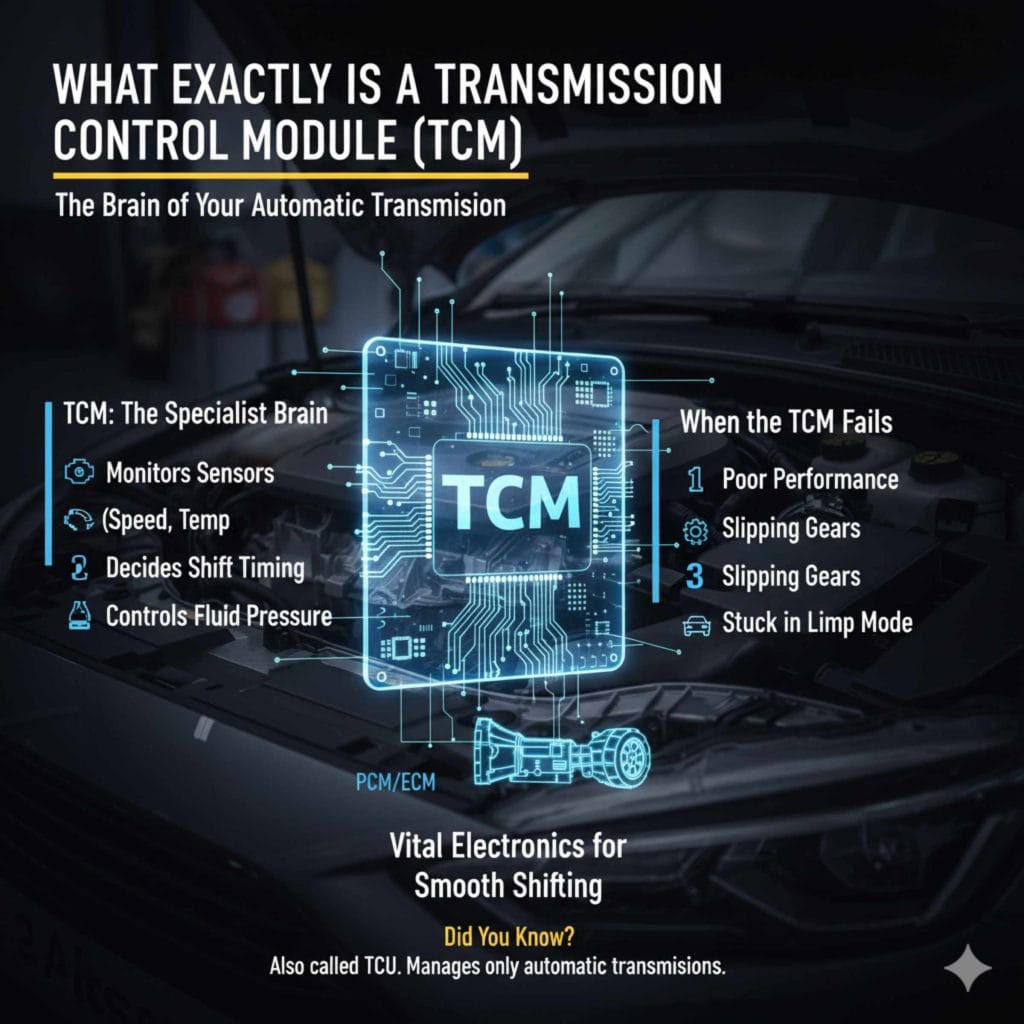
Before we talk money, let’s quickly get familiar with the part itself. The Transmission Control Module, sometimes called the Transmission Control Unit (TCU), is a vital piece of electronics in your Ford Focus. It is a small computer dedicated solely to managing your automatic transmission.
Think of it this way: Your engine has a computer (the PCM or ECM), and your transmission has its own specialist brain—the TCM.
The TCM does several important jobs:
- It monitors sensors throughout the transmission (like speed sensors and temperature sensors).
- It decides the best time to shift gears based on how fast you are driving and how hard you are pressing the gas pedal.
- It controls the flow of hydraulic fluid pressure to make the shifts smooth.
When the TCM fails, these functions break down, leading to poor performance, slipping gears, or the transmission getting stuck in one gear (limp mode).
Identifying TCM Failure Symptoms in Your 2014 Ford Focus
Knowing the symptoms is key because it helps you confirm if the TCM is truly the culprit before spending money on diagnosis or replacement parts. Your 2014 Focus might give you several clear warnings.
Here are the most common signs that your TCM needs attention:
- Harsh or Erratic Shifting: The shifts between gears feel rough, delayed, or sometimes skip gears entirely.
- Transmission Warning Light: This light might come on, or the standard Check Engine Light might illuminate with specific codes (like P07xx series codes).
- Vehicle Stuck in One Gear: Often called “limp mode,” the TCM locks the transmission into a single gear (usually second or third) to prevent further damage.
- Fluid Leaks or Burning Smell: While not always the TCM itself, transmission overheating due to a faulty module can cause fluid breakdown.
- No Movement: In severe cases, the vehicle may not move at all, even when in gear.
Pro Tip: Always get a diagnostic scan first! A $100 scan at a local shop can confirm if the problem is electrical (like the TCM) or mechanical (like a broken solenoid).
Breaking Down the Cost: TCM Parts Analysis
The primary factor in your repair budget is the cost of the TCM itself. Prices vary significantly based on the brand, quality, and where you purchase it.
For the 2014 Ford Focus, which often utilized different versions of the PowerShift automatic transmission (depending on the engine size), sourcing the right part is crucial.
Parts Price Comparison Table (Estimated Retail Averages)
| Part Type | Estimated Cost Range (USD) | Best For |
|---|---|---|
| Genuine OEM (Ford Dealer) | $400 – $650+ | Guaranteed fit and factory performance. |
| High-Quality Aftermarket/Remanufactured | $180 – $400 | Best balance of price and reliability. |
| Budget/Used Unit (Online Marketplace) | $100 – $200 | Risky; often requires extensive programming. |
Original Equipment Manufacturer (OEM) vs. Aftermarket
When buying an electronic control unit like the TCM, you have a choice between Original Equipment Manufacturer (OEM) and Aftermarket parts.
OEM Parts: These come directly from Ford or their authorized suppliers. They are guaranteed to be the exact specifications your car needs. While they offer peace of mind, they always carry the highest price tag.
Aftermarket Parts: Companies other than Ford manufacture these. They can save you significant money. For critical electronic components, look for reputable brands specializing in automotive electronics. Often, the best value is a remanufactured unit, which is an original core that has been professionally repaired and tested.
The Hidden Cost: Programming and Compatibility
This is where many DIYers run into trouble—and extra costs. Modern TCMs are not “plug and play.” They are linked (or “married”) to your specific vehicle’s Powertrain Control Module (PCM) and anti-theft systems.
If you simply swap an old TCM for a new or used one, your car likely won’t start or the transmission won’t operate correctly because the new module doesn’t have the right security codes or the latest software updates.
The Importance of Programming and Flashing
Why Programming is Required
The vehicle’s existing computer system needs to recognize and communicate with the new TCM. This process is often called flashing or programming.
- VIN Matching: The new module must be loaded with your car’s Vehicle Identification Number (VIN).
- Software Updates: Ford regularly releases software updates to fix bugs or improve shift quality. A new module should receive the latest updates specific to your transmission type.
- Security Synchronization: The module must sync with the immobilizer system so the car recognizes it as authorized.
Where to Get Programming Done
This service generally requires dealership-level diagnostic tools.
- Dealership: They have the tools and software (like Ford’s IDS system) necessary. This is the most reliable but typically the most expensive option.
- Independent Specialty Shop: Many reputable independent shops specializing in transmissions or electronics have the required scan tools to flash modules. They are often significantly cheaper than the dealer.
- Mail-In Service: If you purchase a remanufactured TCM, some sellers offer a service where you send them your old module, they program the new one to match it, and mail it back. This requires you to leave your car undrivable for a few days.
Labor Costs: Professional Installation
If you decide not to replace the TCM yourself, you will need to pay a professional technician. Labor rates vary widely based on your geographic location (urban vs. rural) and whether you use a dealership or an independent shop.
Average Labor Cost Estimates
Replacing a TCM is usually not a very long job in terms of actual wrench time, but the diagnostic and programming time adds up.
| Service Provider | Estimated Labor Time (Hours) | Estimated Total Labor Cost (USD) |
|---|---|---|
| Ford Dealership | 1.5 – 3.0 hours | $200 – $450+ |
| Independent Repair Shop | 1.5 – 2.5 hours | $150 – $350 |
Why Does Labor Take So Long?
Most of the time isn’t spent removing the old module; it’s spent on diagnostics and programming. A qualified technician needs to:
- Verify that the TCM is truly the issue (ruling out wiring harness problems, which are common).
- Safely disconnect the battery.
- Locate and remove the old module (often located inside or directly attached to the transmission housing).
- Install the new module.
- Connect high-level diagnostic equipment to flash the module with the correct software and VIN codes.
- Perform required transmission relearn procedures so the car learns how to operate with the new computer.
Putting It All Together: Total Repair Cost Scenarios
To give you a clear picture of your total financial commitment, here are three common scenarios when replacing the TCM on your 2014 Ford Focus. (These figures assume you are using a mid-range, quality aftermarket or rebuilt TCM.)
Scenario 1: The Full Dealership Repair
This option relies on Ford parts and certified Ford technicians. It offers the most certainty but the highest price.
- OEM TCM Part: $550
- Labor & Programming (Dealership Rate): $400
- Estimated Total: $950
Scenario 2: Independent Shop Smart Repair
This is often the sweet spot for many owners—finding an experienced local shop using good quality aftermarket parts.
- Remanufactured TCM: $280
- Labor & Programming (Independent Shop Rate): $280
- Estimated Total: $560
Scenario 3: The Savvy DIY Approach (Parts Only)
This involves purchasing the part and programming it yourself, which requires specialized, expensive tools or finding a low-cost programming service.
- Aftermarket TCM: $200
- Programming Fee (Mail-in or Freelancer): $100
- Estimated Total (Part Only): $300
Can I Avoid Replacing the TCM? Alternative Checks
Sometimes a failing TCM symptom is caused by something much simpler and cheaper to fix. Before authorizing a $500+ replacement, make sure the technician has checked these common related issues, especially on Focus models equipped with the notorious DPS6 (Dual Clutch PowerShift automatic) transmission:
- Wiring Harness Damage: Rodents or simple wear and tear can fray wires leading to the TCM, causing erratic readings. Fixing a wire is much cheaper than replacing the module.
- Transmission Fluid Level/Quality: Low or old, dirty fluid can cause sensor readings to spike, making the TCM think it’s failing. A simple fluid flush might help.
- Other Sensors: Sometimes, a faulty output speed sensor (OSS) or input speed sensor (ISS) sends bad data to the TCM, causing the module to react incorrectly. Replacing a $50 sensor is better than replacing a $300 module!
For more reading on maintaining your vehicle’s complex electronic systems, you can refer to resources from organizations like the National Highway Traffic Safety Administration (NHTSA) regarding vehicle maintenance and diagnostics here.
DIY Replacement: Things to Consider for the Cost-Conscious Driver
Replacing an electronic module yourself can save hundreds in labor, but it’s not without risk. The main appeal for the DIYer is avoiding the $150–$350 labor charge.
Tools You Will Likely Need (If Replacing Under the Car)
The specific tools depend heavily on where the module is mounted on your Focus transmission—it can be internal or external.
- Metric Socket Set (10mm, 13mm, often required).
- Torque Wrench (essential for securing the module correctly).
- Safety Glasses and Gloves.
- Transmission Jack or reliable jack stands (Safety first!).
- OBD-II Scanner capable of reprogramming functions (This tool alone can cost $300–$800+ if you want advanced features, often negating the savings).
The Cold Hard Truth About DIY TCM Replacement: If you buy a used or new TCM, you will almost certainly still need to pay a professional shop or dealership $100 to $200 to program the module to your vehicle’s VIN. Unless you are already an experienced DIYer with advanced diagnostic equipment, the savings might only be minimal after factoring in the programming cost.
Warranty Considerations and Peace of Mind
A critical component of repair cost is the warranty you get with the part and the labor. When budgeting, think about how long you want peace of mind.
Part Warranty Comparison
- OEM (Dealer): Usually comes with a 12-month, unlimited-mile warranty, often covering both parts and labor if installed at the dealership.
- Aftermarket/Remanufactured: Most reputable sellers offer a 1-year warranty, sometimes extending to 3 years/unlimited miles. Always check the fine print, especially concerning programming requirements.
- Used Parts: Usually only covered for 30 or 90 days, if at all, and often voided if removed from the original vehicle.
Paying slightly more for a quality remanufactured unit with a strong warranty is often the smartest financial move to avoid paying for the repair twice.

Frequently Asked Questions (FAQ) about Ford Focus TCM Replacement
Q1: Can I drive my Ford Focus if the TCM is failing?
A: You can drive it very carefully, but it is not recommended for long periods. A failing TCM can cause hard shifting, which puts immense stress on the rest of the transmission components, leading to catastrophic and much more expensive mechanical failure. If it’s in “limp mode,” you should arrange a tow to the repair shop.
Q2: How long should a new TCM last in my 2014 Ford Focus?
A: A properly installed and programmed OEM or high-quality remanufactured TCM should last the remaining life of the vehicle, often 8 to 15 years or more. The failure rate of TCMs is often related to heat or moisture exposure within the transmission housing.
Q3: Can a mechanic just “reset” the TCM instead of replacing it?
A: A simple battery disconnect or code clear is like taking a painkiller—it only treats the symptom temporarily. If the module itself has a hardware failure, resetting it will not fix the problem; the symptoms will return quickly. Only a software flash or replacement fixes hardware failure.
Q4: Is the TCM the same as the PCM in my Ford Focus?
A: No. The Powertrain Control Module (PCM) controls the engine management (fuel, spark timing). The Transmission Control Module (TCM) only controls the transmission functions. However, in some very early Focus models or certain setups, they might be integrated into one unit, but for the highly computerized 2014 models, they are typically separate control units.
Q5: Where is the TCM physically located on a 2014 Ford Focus?
A: This placement can sometimes require looking up the exact engine/transmission combination, but generally, the control module housing is bolted directly to the side or top of the transmission casing itself, often requiring the vehicle to be lifted for access. It is usually accessible by removing the battery.
Final Thoughts: Is Replacing the TCM on a 2014 Ford Focus Worth It?
Dealing with transmission problems on a 2014 Ford Focus can feel intimidating—especially when words like TCM, PCM, and programming start flying around. But once you break it down, the situation becomes much more manageable. The Transmission Control Module is a critical component, and when it fails, the symptoms are hard to ignore. Fortunately, understanding the costs, options, and risks puts you back in control.
In most cases, expect to spend between $500 and $900 total for a proper TCM replacement, depending on whether you choose dealership service or a reputable independent shop. While DIY replacement can reduce costs, programming requirements often limit the savings unless you already have advanced tools and experience. For many owners, a quality remanufactured TCM installed and programmed by an independent shop offers the best balance of affordability, reliability, and warranty protection.
Before committing to replacement, always confirm the diagnosis. Issues like wiring damage, faulty sensors, or fluid problems can mimic TCM failure and cost far less to repair. A proper diagnostic scan is one of the smartest investments you can make.
Ultimately, replacing a failing TCM isn’t just about fixing jerky shifts or warning lights—it’s about preventing further transmission damage and restoring confidence in your vehicle. With the right approach, you can get your Ford Focus shifting smoothly again without overspending or guessing your way through the repair.
If you budget carefully, choose quality parts, and work with a knowledgeable technician, a TCM repair doesn’t have to be a nightmare—it can be a smart, long-term fix that keeps your Focus on the road for years to come!