
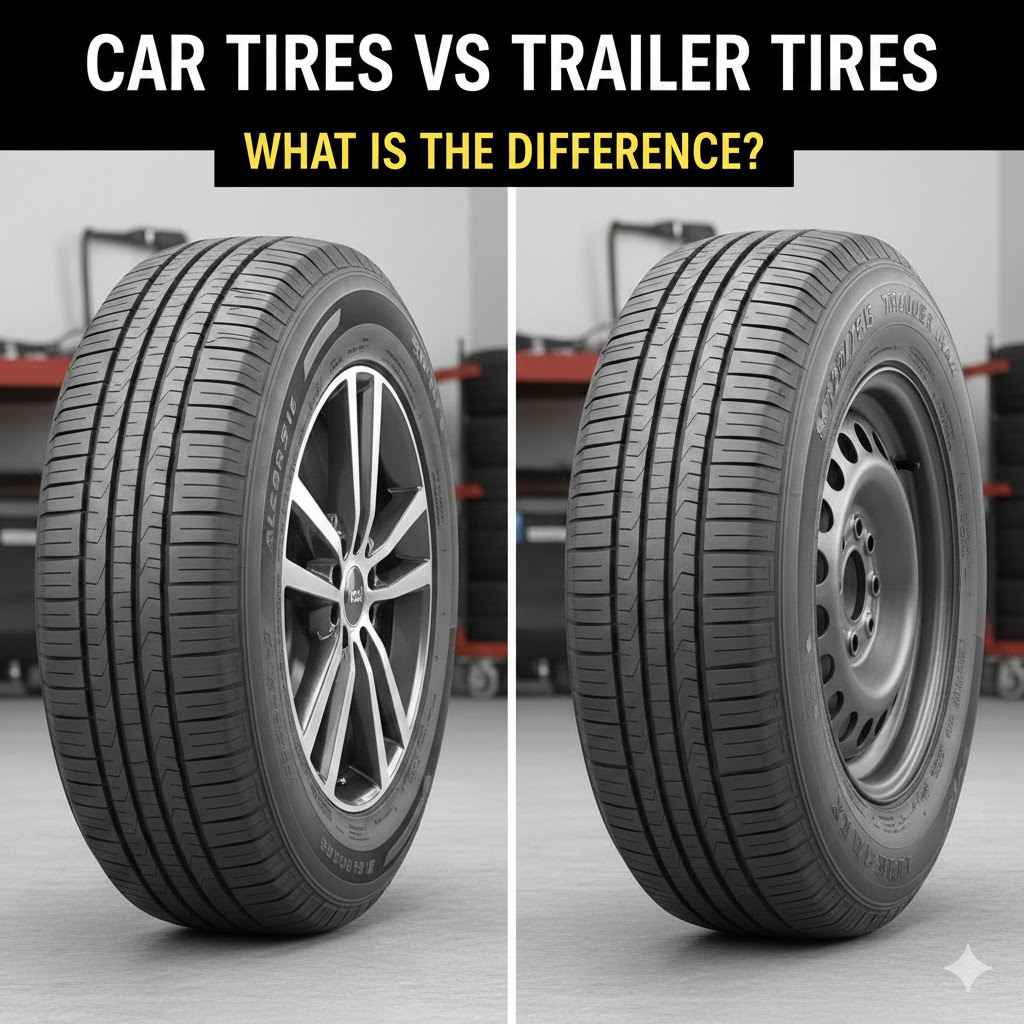
It is easy to get confused about tires. Many people wonder what is the difference between car tires and trailer tires. This is a common question for those new to towing or vehicle maintenance.
You might see similar-looking tires, but they have important differences. We will break down these differences simply so you can easily understand them. You will know exactly what you need for your car and your trailer.
Understanding Car Tires
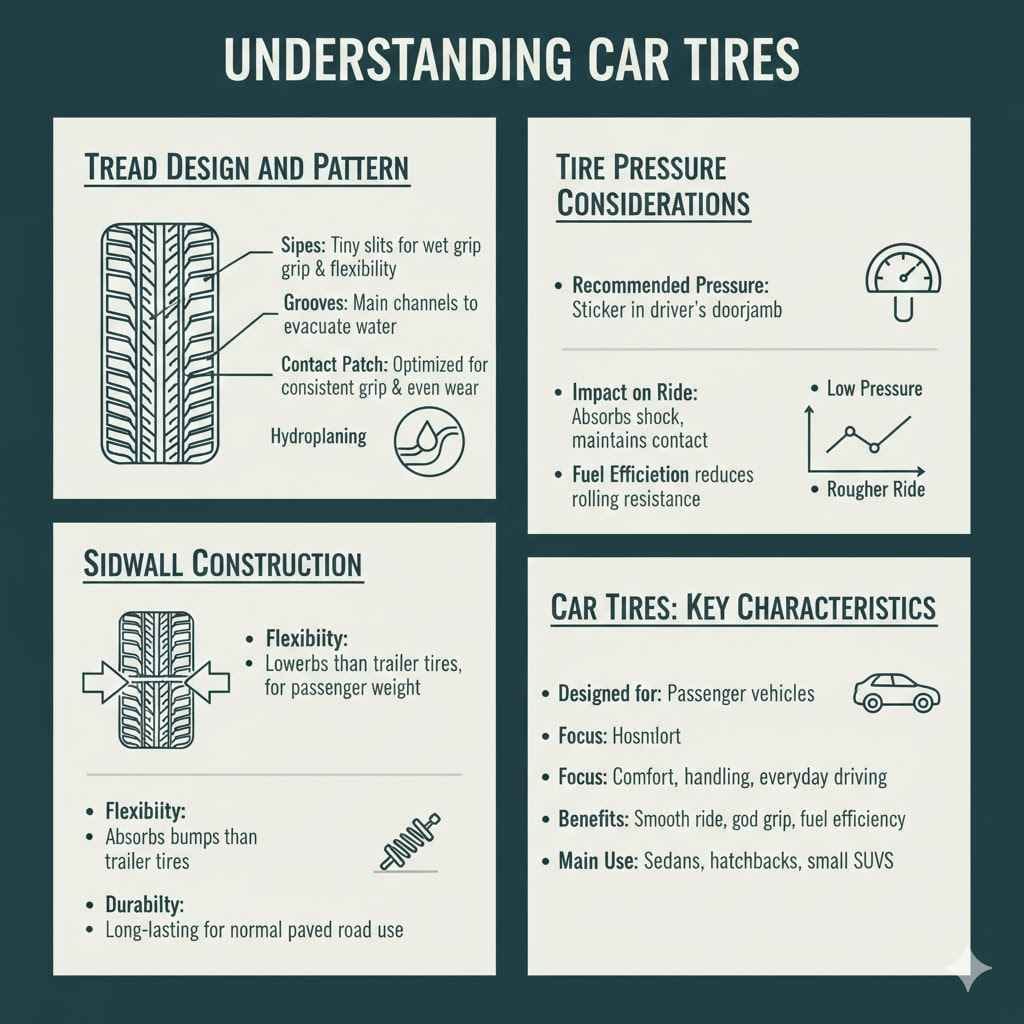
Car tires are made for passenger vehicles. They are designed to carry the weight of a car and its passengers. These tires provide a smooth ride and good grip on the road for everyday driving.
They focus on comfort and handling. Think about how a car needs to turn sharply or brake quickly. Car tires are built to handle these kinds of actions safely.
Tread Design and Pattern
The tread on a car tire is made to offer good traction in various weather conditions. You see different patterns like sipes and grooves. These help water channel away from the tire, reducing the risk of hydroplaning.
The blocks and sipes also work together to make the ride quieter.
- Sipes: These are small slits in the tire tread. They help the tire grip better on wet or icy surfaces. They also help the tire flex and conform to the road. This means more contact with the ground for better traction.
- Grooves: The main channels in the tread move water and debris away from the tire. This keeps the contact patch of the tire on the road surface clear. Wider grooves can help with water evacuation in heavy rain.
- Contact Patch: This is the part of the tire that touches the road. Car tire tread patterns are optimized to keep a consistent and even contact patch. This ensures good grip and even wear.
Sidewall Construction
Car tire sidewalls are designed for flexibility. This flexibility allows them to absorb bumps and road imperfections. This is what makes your car ride feel comfortable.
They are also designed to handle the lateral forces when you turn the steering wheel.
- Flexibility: The sidewalls flex when the tire rolls and encounters bumps. This flexing action helps to cushion the ride. It absorbs shocks, preventing them from being felt as much inside the car.
- Load Capacity: While car tires have load ratings, they are generally lower than trailer tires. This is because they are designed for the specific weight of a passenger vehicle, not sustained heavy loads.
- Durability: Car tires are made to last for many miles under normal driving conditions. They are built to withstand regular use on paved roads.
Tire Pressure Considerations
The correct tire pressure for car tires is important for safety and fuel economy. It affects how the tire grips the road and how it wears. Lower pressure can lead to poor handling and excessive tire wear.
Higher pressure can cause a rougher ride and make the tire more prone to damage from impacts.
- Recommended Pressure: This is usually found on a sticker inside the driver’s side doorjamb. It’s crucial to check this information for your specific car model.
- Impact on Ride: Proper inflation ensures the tire can do its job of absorbing road shock. It also helps the tire maintain its shape for optimal contact with the road surface.
- Fuel Efficiency: Underinflated tires create more rolling resistance. This means your engine has to work harder to move the car, using more fuel.
What Is The Difference Between Car Tires and Trailer Tires
Now, let’s focus on the key differences. Trailer tires are built for a very different purpose. They carry heavy loads and do not steer.
This means they are constructed with different priorities in mind. The goal is stability and load-carrying strength, not a comfortable ride. Understanding what is the difference between car tires and trailer tires is vital for safe towing.
Stiffer Sidewalls for Load Bearing
Trailer tires have much stiffer sidewalls than car tires. This is one of the most significant distinctions. This stiffness is necessary to support the heavy, constant weight of a trailer, especially when loaded.
Stiff sidewalls prevent the tire from deforming too much under load, which could lead to instability or blowouts.
- Load Capacity: Trailer tires are rated to carry much more weight than typical car tires. They are designed for radial load, meaning the weight pushing straight down on them. This higher capacity is achieved through stronger internal construction.
- Reduced Flex: The stiff sidewalls mean less flexing. This can result in a rougher ride for anything on the trailer, but it ensures the tire can handle the weight.
- Stability: The reduced flex contributes to trailer stability. A swaying trailer is dangerous, and strong, stiff tires help prevent this by maintaining their shape under pressure.
Tread Design for Rolling Resistance and Durability
The tread on trailer tires is typically simpler than on car tires. The focus is on durability and reducing rolling resistance, not necessarily all-weather grip. Since trailers don’t steer, the tread doesn’t need complex patterns for cornering or braking.
- Minimal Grooves: Trailer tires often have fewer and shallower grooves. This helps them maintain a more consistent shape and resist wear.
- Rolling Resistance: A flatter tread profile and fewer sipes help reduce the energy lost as the tire rolls. Lower rolling resistance means better fuel economy for the towing vehicle.
- Durability: Trailer tires are built to last many miles, often on rougher surfaces like construction sites or unpaved roads. The tread compound is usually harder.
Load Range and Speed Ratings
Trailer tires have specific load ranges and speed ratings that are critical. They are often categorized by ply rating, like C, D, or E, which indicates their strength. The speed rating on trailer tires is usually lower than on car tires because they are not meant for high-speed maneuvering.
- Load Range: This refers to the maximum weight the tire can safely carry. Trailer tires come in higher load ranges (e.g., Load Range D or E) than most passenger car tires. Always match the load range to your trailer’s requirements.
- Speed Rating: Trailer tires typically have speed ratings of 65 mph or 70 mph. Exceeding this speed can cause the tire to overheat and fail. Car tires often have much higher speed ratings for performance driving.
- Ply Rating: This is a measure of a tire’s strength and load-carrying capacity. Higher ply ratings (like E) mean more internal reinforcing cords, making the tire stronger and more capable of handling heavy loads.
Example Scenario
Imagine a car with standard P-metric tires. These are designed for comfort and handling on paved roads. Now, think of a fully loaded 30-foot travel trailer weighing 8,000 pounds.
The tires on this trailer must be specifically rated for that weight. Using car tires on a heavy trailer would be incredibly dangerous. The car tires would likely overheat, deform, and fail under the strain, leading to a catastrophic blowout.
Key Differences Summarized
To clearly see what is the difference between car tires and trailer tires, let’s look at their primary roles and how they are built. Car tires prioritize ride comfort, handling, and all-weather grip. Trailer tires prioritize strength, load-carrying capacity, and durability.
They are engineered for different forces and conditions.
Tire Construction and Materials
The internal structure of trailer tires is more robust. They have more steel belts and thicker sidewall construction. This makes them heavier but much stronger.
Car tires use lighter materials and more flexible construction to enhance ride quality.
- Internal Belts: Trailer tires often have more layers of strong materials like steel in their construction. These belts provide rigidity and strength to handle heavy loads without the tire distorting.
- Rubber Compound: The rubber used in trailer tires is often harder and more resistant to wear and heat buildup. This is important for long trips and supporting heavy loads.
- Weight: Due to their stronger construction, trailer tires are generally heavier than comparable-sized car tires. This added weight is a sign of their reinforced build.
Purpose and Application
A car tire’s purpose is to interact with the road for driving dynamics. This includes steering, braking, and acceleration. A trailer tire’s purpose is simpler: to support weight and roll along.
It does not steer or contribute to the vehicle’s braking system directly.
- Steering: Car tires are designed to be steered. Their tread and sidewall construction allow for changes in direction. Trailer tires do not steer and are designed to roll in a straight line.
- Braking: While a trailer has its own braking system, the tires primarily support the load. Car tires play a direct role in the braking performance of the towing vehicle.
- Load vs. Performance: The trade-off is clear. Car tires offer performance and comfort. Trailer tires offer brute strength and stability for hauling.
Visual Cues
Visually, trailer tires often look flatter and more “squarish” in profile compared to the more rounded profile of car tires. They might also have fewer tread blocks and deeper, wider grooves to help dissipate heat. The sidewalls will appear thicker and less flexible.
- Sidewall Stance: Trailer tires sit more rigidly on the wheel rim. Their sidewalls do not bulge outward as much as car tires when inflated to their proper pressure.
- Tread Surface: The tread surface of a trailer tire often appears more solid with fewer intricate patterns. This simple design prioritizes contact with the road for stability and wear.
- Markings: Look for “ST” (Special Trailer) markings on the sidewall. This is a clear indicator that the tire is designed for trailer use.
Why These Differences Matter
Understanding what is the difference between car tires and trailer tires is not just about trivia; it’s about safety. Using the wrong type of tire can lead to serious accidents. It can cause blowouts, loss of control, and damage to your vehicle and trailer.
Safety Implications of Mismatched Tires
Putting car tires on a trailer is a major safety hazard. The tires are not designed for the continuous load and heat generated. They can fail suddenly, causing the trailer to swerve or flip.
This can lead to loss of control of the towing vehicle.
- Overheating: Car tires are not built to handle the constant, heavy load of a trailer. This leads to excessive heat buildup. Overheating can cause the tire rubber to degrade and fail.
- Blowouts: The flexible sidewalls of car tires can flex too much under a heavy trailer load. This repeated flexing generates heat and can lead to a sudden, dangerous blowout.
- Trailer Sway: Improper tires can contribute to dangerous trailer sway. This is when the trailer begins to oscillate back and forth behind the towing vehicle, which can be very difficult to control.
Performance Differences in Towing
When you tow, your trailer tires are working harder than your car tires normally do. They are carrying a significant portion of your total load. Trailer tires are designed to handle this continuous stress without failing.
- Load Stability: Trailer tires provide a stable platform for your cargo. Their stiff construction ensures the trailer remains stable and predictable on the road.
- Fuel Efficiency: By using trailer-specific tires with lower rolling resistance, you can improve your towing vehicle’s fuel economy. This is because the trailer’s tires are easier to roll along the road.
- Tire Longevity: Trailer tires, when properly maintained and used, are built for long-term service. They are designed to withstand the rigors of towing.
Real-World Case Study: The RV Traveler
An RV owner, let’s call him Mark, was planning a cross-country trip. He decided to save some money by replacing his aging trailer tires with a set of used car tires he had lying around. Within 500 miles, one of the tires blew out spectacularly.
This not only damaged his trailer rim but also caused him to swerve violently. He was lucky to avoid a serious accident. After this incident, Mark invested in proper ST (Special Trailer) tires and has towed safely ever since.
This experience taught him the critical importance of using the correct tires for the job.
Sample Towing Scenario
Imagine you are towing a car on a trailer. The trailer itself might weigh 2,000 pounds, and the car on it weighs another 3,000 pounds, for a total of 5,000 pounds that the trailer tires must support. If your trailer has four tires, each tire is responsible for at least 1,250 pounds, plus the weight of the trailer structure itself.
This constant, heavy load demands tires specifically engineered for this task. Car tires, designed for lighter, dynamic loads, would quickly fail under this sustained pressure.
Statistics on Tire Failures
According to the National Highway Traffic Safety Administration (NHTSA), tire failures are a significant factor in vehicle accidents. While specific statistics for trailer tire failures versus car tire failures are harder to isolate, it is widely understood that using the wrong tires for the application is a major contributor to such failures. A study by the Recreational Vehicle Industry Association (RVIA) highlights that tire blowouts are a leading cause of RV accidents.
While not exclusively about car tires on trailers, this points to the general danger of tire misuse.
Choosing the Right Tires
Selecting the correct tires is straightforward once you know what to look for. Always refer to your trailer’s manual or manufacturer’s specifications for recommendations. This will guide you to the appropriate size, load rating, and type of tire.
Identifying Trailer Tires
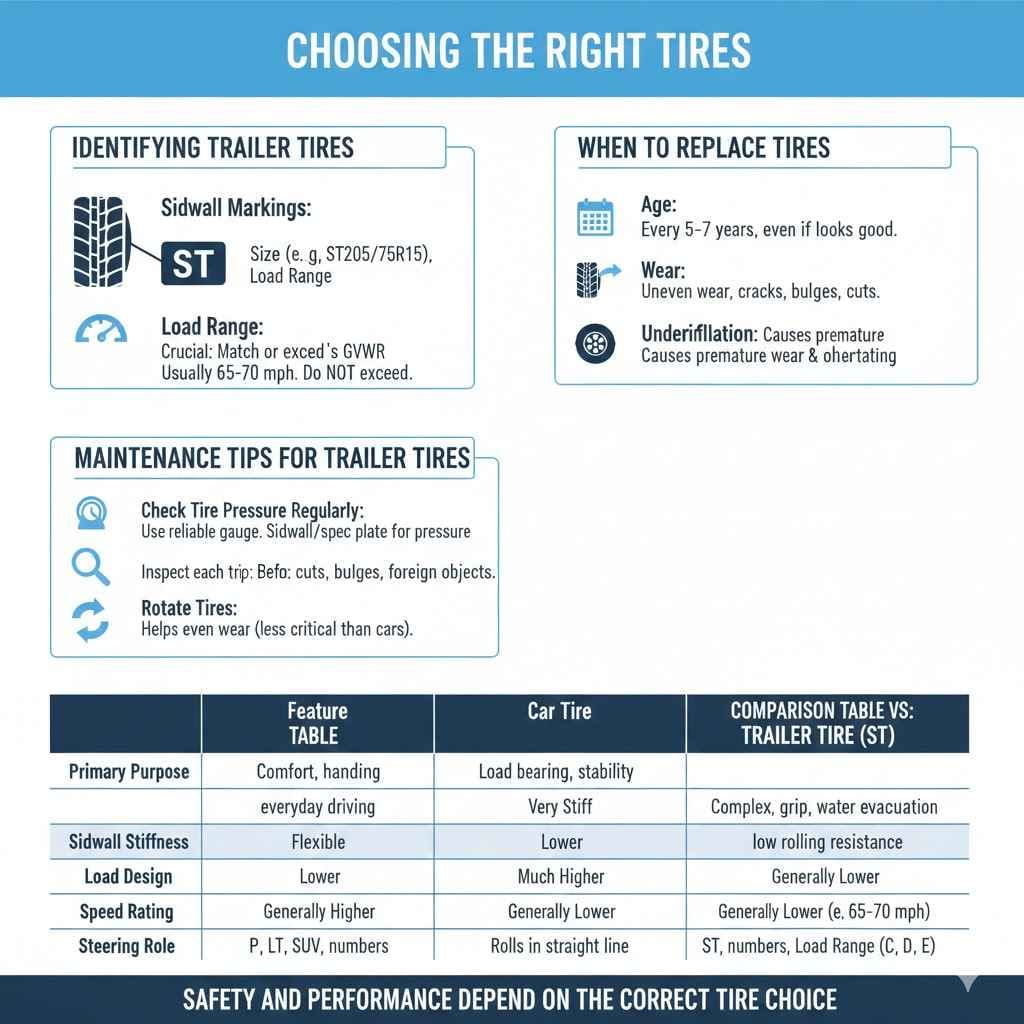
Look for the “ST” designation on the tire’s sidewall. This stands for Special Trailer. Tires marked “ST” are built with the stiffer sidewalls and stronger construction needed for trailers.
They will also have specific load range indicators like C, D, or E.
- Sidewall Markings: The “ST” marking is the clearest indicator. You will also see the tire size (e.g., ST205/75R15) and load range.
- Load Range: This is crucial. A Load Range C tire is different from a Load Range D tire. Make sure the load range meets or exceeds your trailer’s Gross Vehicle Weight Rating (GVWR).
- Speed Rating: Pay attention to the speed rating, usually a letter. Most ST tires are rated for 65 mph or 70 mph. Do not exceed this speed.
When to Replace Tires
Tires don’t last forever, even trailer tires. You should replace them based on age and wear. Many manufacturers recommend replacing trailer tires every 5 to 7 years, even if they look good.
- Age: Tires degrade over time due to UV exposure and oxidation, even if not used. Check the manufacturing date code on the sidewall.
- Wear: Look for uneven wear patterns, cracks, bulges, or cuts on the tread and sidewalls. These are all signs that a tire needs replacement.
- Underinflation: Consistently running trailer tires underinflated will cause them to wear out prematurely and can lead to overheating.
Maintenance Tips for Trailer Tires
Proper maintenance is key to getting the most life out of your trailer tires and ensuring safety. This includes regular checks of tire pressure and visually inspecting them.
- Check Tire Pressure Regularly: This is paramount. Use a reliable tire pressure gauge. The recommended pressure is usually found on the tire’s sidewall or your trailer’s specification plate.
- Inspect for Damage: Before each trip, walk around your trailer and visually inspect the tires for any signs of damage, such as cuts, bulges, or foreign objects embedded in the tread.
- Rotate Tires: If your trailer has multiple tires on the same side, consider rotating them periodically. This can help ensure more even wear, though it is less critical for trailer tires than for car tires.
Comparison Table
| Feature | Car Tire | Trailer Tire (ST) |
|---|---|---|
| Primary Purpose | Ride comfort, handling, everyday driving | Load bearing, stability, durability |
| Sidewall Stiffness | Flexible | Very Stiff |
| Load Capacity | Lower | Much Higher |
| Tread Design | Complex, for grip and water evacuation | Simpler, for durability and low rolling resistance |
| Speed Rating | Generally Higher | Generally Lower (e.g., 65-70 mph) |
| Steering Role | Steers the vehicle | Rolls in a straight line |
| Common Sidewall Markings | P, LT, SUV, numbers (e.g., 225/60R17) | ST, numbers (e.g., ST205/75R15) |
Frequently Asked Questions
Question: Can I use car tires on my trailer?
Answer: No, it is not safe to use car tires on a trailer. Trailer tires (ST tires) are specifically designed with stiffer sidewalls and higher load capacities to handle the constant weight of a trailer, which car tires cannot support. Using car tires can lead to dangerous tire blowouts.
Question: What does “ST” mean on a tire?
Answer: ST stands for Special Trailer. Tires marked with ST are engineered for trailer use, featuring construction that prioritizes load-carrying strength and stability over ride comfort and handling dynamics.
Question: How often should trailer tires be replaced?
Answer: Trailer tires should generally be replaced every 5 to 7 years, regardless of tread wear. This is because the rubber degrades over time due to exposure to elements, which can lead to failure.
Question: Why are trailer tires stiffer than car tires?
Answer: Trailer tires are stiffer to prevent excessive deformation under heavy, constant loads. This stiffness provides the necessary stability for the trailer and prevents overheating, which can happen with the flexible sidewalls of car tires.
Question: What is the main difference in their construction?
Answer: The main difference is their internal construction. Trailer tires use more robust materials like steel in their belts and have thicker, stiffer sidewalls to support heavy loads and resist heat buildup. Car tires prioritize lighter weight and flexibility for a comfortable ride and responsive handling.
Conclusion
The difference between car tires and trailer tires is significant. Car tires offer comfort and handling for everyday driving. Trailer tires provide the strength and stability needed for towing heavy loads.
Always use ST-rated tires on your trailer, ensuring they meet your trailer’s load requirements. Checking tire pressure and inspecting tires regularly keeps you and your cargo safe on the road.