
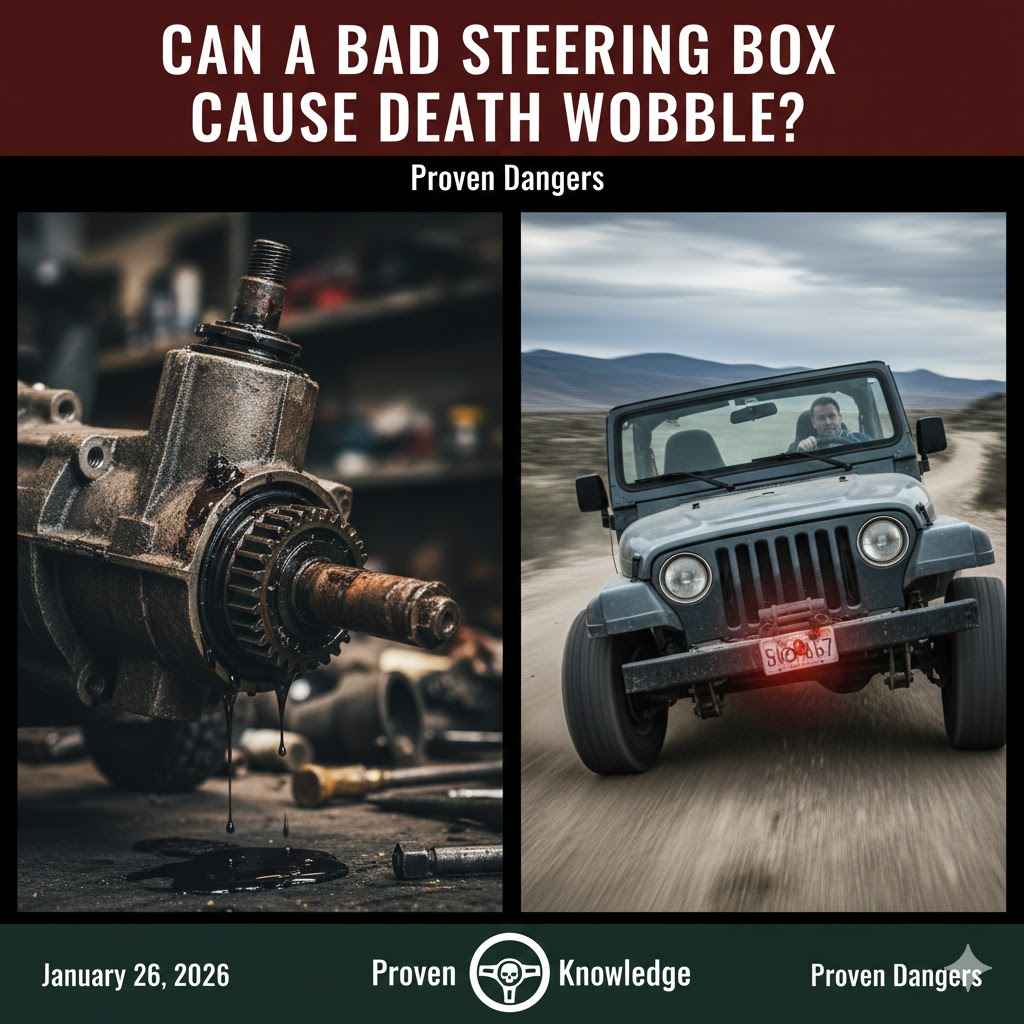
Yes, a bad steering box is a common and significant cause of death wobble. When the internal gears of the steering box wear out, it creates excessive “play” or looseness. This slop allows the front wheels to oscillate violently back and forth, triggering the terrifying shaking known as death wobble and creating a serious safety hazard.
If you’ve ever felt your steering wheel suddenly start shaking uncontrollably, you know the pure panic of death wobble. It feels like your entire vehicle is about to fall apart right on the highway. It’s one of the most frightening experiences a driver can have, and it leaves you feeling helpless and confused.
But don’t worry. You’re in the right place to understand what’s happening and how to fix it. We’re going to break down this scary issue into simple, easy-to-understand pieces. Together, we’ll look at the steering box, figure out if it’s your problem, and learn how to get your vehicle back on the road safely.
What Exactly is Death Wobble?
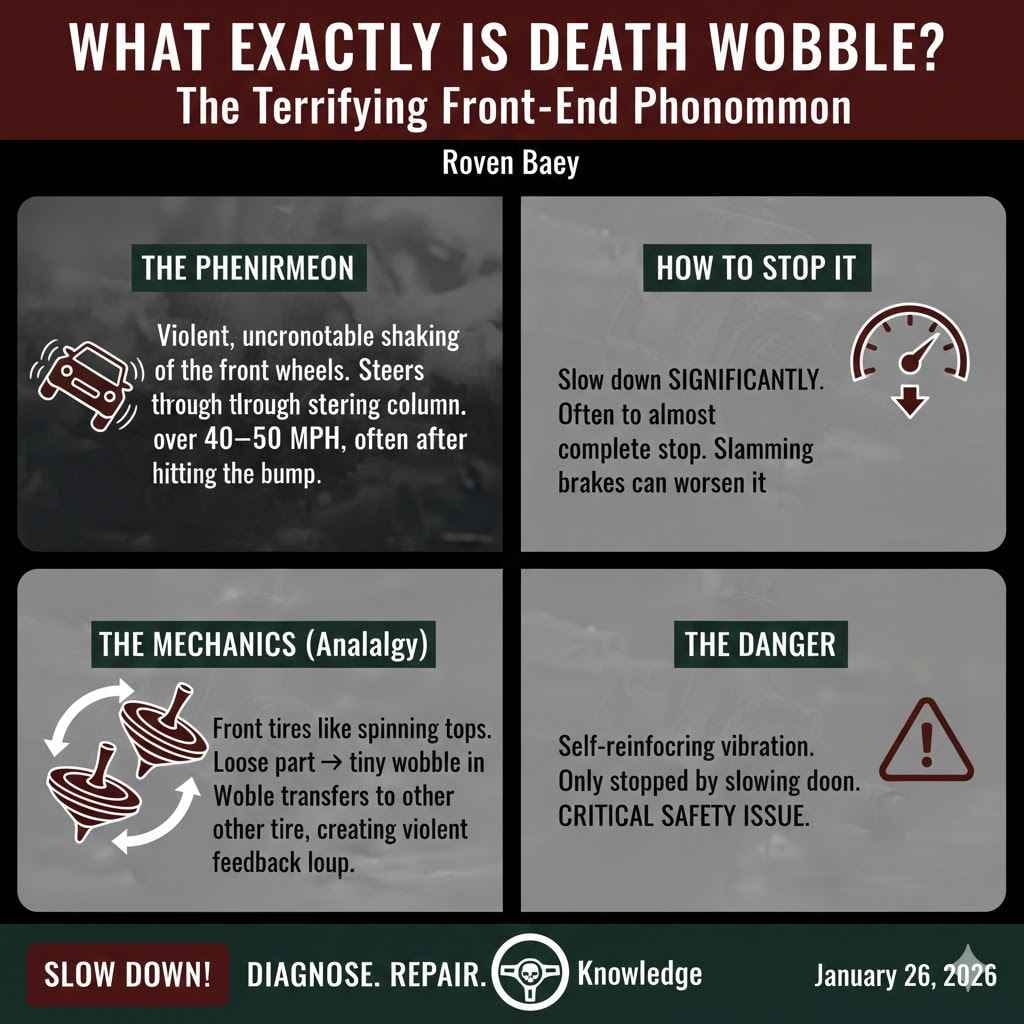
Before we dive into the parts, let’s get on the same page about the problem itself. “Death wobble” isn’t just a little vibration. It’s a violent, uncontrollable shaking of your front wheels that travels up through your steering column, making the steering wheel jerk back and forth in your hands. It typically happens at speeds over 40-50 MPH, often after hitting a bump or pothole in the road.
When it strikes, your first instinct might be to slam on the brakes, but that can sometimes make it worse. The only way to stop it is to slow down significantly, often to almost a complete stop, until the shaking subsides.
Imagine your front tires are like spinning tops. When everything is tight and balanced, they spin smoothly. But if a part becomes loose, one tire can get a tiny wobble. This wobble then transfers to the other tire, which sends a wobble back, creating a violent feedback loop. That’s death wobble in a nutshell—a self-reinforcing vibration that can only be stopped by slowing way down.
Your Steering System’s Brain: The Steering Box
So, where does the steering box fit into all this? Think of the steering box as the powerful translator between you and your wheels. When you turn the steering wheel, a shaft connects to the steering box. Inside the box, a set of gears (often a “worm” and “sector” gear) convert the gentle rotational motion of your steering wheel into the forceful side-to-side motion needed to turn your heavy front tires.
It’s a tough job, and over tens of thousands of miles, these internal gears can start to wear down. This wear and tear is what creates the problem.
How a Worn Steering Box Triggers Death Wobble
A brand-new steering box is tight. The moment you turn your wheel, the gears engage and the tires respond instantly. There is no “slop” or “play.”
However, as a steering box ages, a small gap develops between the gear teeth. This gap is what mechanics call “steering play.” It means you can wiggle your steering wheel slightly back and forth without the tires moving at all. A tiny bit of play is normal, but a bad steering box will have a lot of it.
This excess play is a perfect ingredient for death wobble. Here’s why:
- It Allows Oscillation to Start: The looseness in the steering box gives the wheels room to start shaking without any resistance. A bump in the road can easily kickstart this vibration because the box isn’t holding the wheels steady.
- It Can’t Dampen Vibrations: A tight steering system helps absorb and control small vibrations from the road. A worn-out, loose steering box does the opposite—it amplifies them, allowing a small shimmy to escalate into a full-blown wobble.
- It Creates a Domino Effect: The constant shaking caused by a bad steering box puts immense stress on other steering components like tie rods and ball joints, causing them to wear out faster and making the death wobble even worse.
In short, a bad steering box doesn’t just contribute to death wobble; it can be the root cause that sets the entire terrifying event in motion.
Top Signs Your Steering Box is Failing
Not sure if your steering box is the culprit? Your vehicle will give you clues. If you notice any of the following symptoms, it’s a strong sign that your steering box needs immediate attention.
- Excessive Steering Wheel “Play”: This is the most common sign. If you can move your steering wheel more than an inch or two in either direction before the wheels start to turn, your steering box is likely worn. The steering feels vague, sloppy, and unresponsive.
- Clunking or Popping Noises: Listen for strange noises when you turn the steering wheel, especially when the vehicle is stationary or moving slowly. A clunk or pop can indicate loose or broken gear teeth inside the box.
- Wandering on the Road: Do you feel like you constantly have to make small corrections to the steering wheel just to keep your car driving in a straight line? This is known as wandering, and it’s a classic symptom of a loose steering box.
- Leaking Power Steering Fluid: Check under your vehicle, directly below the steering box area. Reddish or brownish fluid is a sign that the seals on the steering box have failed. A loss of fluid will make steering difficult and can damage the box’s internal parts.
- Uneven Tire Wear: While many issues can cause this, a bad steering box can contribute to it. The constant shaking and poor alignment from a loose box can cause the edges of your front tires to wear down prematurely.
It’s Not Always the Steering Box: Other Common Death Wobble Culprits
It is crucial to understand that death wobble is rarely caused by a single failed part. It’s usually a combination of several worn components. While a bad steering box can be a primary trigger, any of the following parts can also be to blame. A proper diagnosis involves checking everything.
Here is a table comparing the symptoms of a bad steering box with other common causes of death wobble. This can help you or your mechanic narrow down the source of the problem.
| Component | Primary Symptom | How It Contributes to Death Wobble |
|---|---|---|
| Bad Steering Box | Loose, wandering steering with a large “dead spot” in the center. | Creates excessive play, allowing the harmonic oscillation to begin and amplify. |
| Worn Track Bar (Panhard Bar) | A “clunk” when turning, or the front axle shifts side-to-side over bumps. | Fails to hold the front axle centered under the vehicle, allowing it to shift and trigger the wobble. |
| Bad Ball Joints | Clunking noises over bumps and uneven, “scalloped” tire wear. | Allows for too much movement in the steering knuckle, creating a major point of looseness. |
| Worn Tie Rod Ends | Sloppy steering feel and a shaky or vibrating steering wheel. | Creates play in the linkage that connects the wheels, preventing them from staying aligned with each other. |
| Out-of-Balance Tires | Vibration that gets worse with speed, even without hitting a bump. | An unbalanced tire is already vibrating. Hitting a bump can push this vibration into the uncontrollable wobble. |
| Worn Control Arm Bushings | Clunking sounds during acceleration/braking and poor alignment. | Allows the entire axle assembly to move forward and backward slightly, contributing to instability. |
A Beginner’s Guide to Diagnosing the Problem
You can perform a few simple, safe checks at home to see if your steering box or other components are loose. All you need is a friend to help you out.
Step 1: Safety First
Before you get near or under your vehicle, safety is your number one priority.
- Park your vehicle on a flat, level surface like a garage floor or level driveway.
- Put the vehicle in Park (for automatics) or in gear (for manuals).
- Engage the parking brake firmly.
- Place wheel chocks behind the rear tires for extra security.
Step 2: The Dry Park Steering Test
This is the best way for a beginner to spot looseness in the steering system. The engine should be OFF for this test.
- Ask your friend to sit in the driver’s seat.
- Lie down safely so you can see the steering components connected to the driver’s side front wheel. You’re looking for the steering box and the “Pitman arm” that connects to it.
- Have your friend slowly and repeatedly turn the steering wheel back and forth, just enough to take up the slack—about 3-4 inches each way. They should not turn it so far that the tires move.
- What to Watch For: Watch the Pitman arm where it connects to the steering box. If you see the shaft coming out of the steering box turning back and forth without the Pitman arm moving instantly with it, you have play inside the steering box itself. You should also watch every other connection point, like the tie rod ends and track bar. Any visible clunking or movement in a joint is a sign of a worn part.
Step 3: Check for Leaks
While you’re underneath, use a flashlight to inspect the steering box thoroughly. Look for any signs of wetness or fresh drips of power steering fluid. A leaking steering box is a failing steering box.
Step 4: Know When to Call a Professional
These checks can give you a good idea of what’s wrong, but death wobble is a complex issue. If you spot any looseness but aren’t sure which part is the culprit, or if you’re not comfortable performing these checks, that’s perfectly okay. Your safety is what matters most. Take your vehicle to a trusted, certified mechanic who has experience with steering and suspension work. They have the tools and expertise to pinpoint the exact cause and fix it correctly.
The Proven Dangers of Ignoring Death Wobble
Putting off a repair for death wobble is not just risky—it’s incredibly dangerous. This isn’t a minor annoyance; it’s a critical failure of your vehicle’s control system. Here are the proven dangers you face by continuing to drive with this condition.
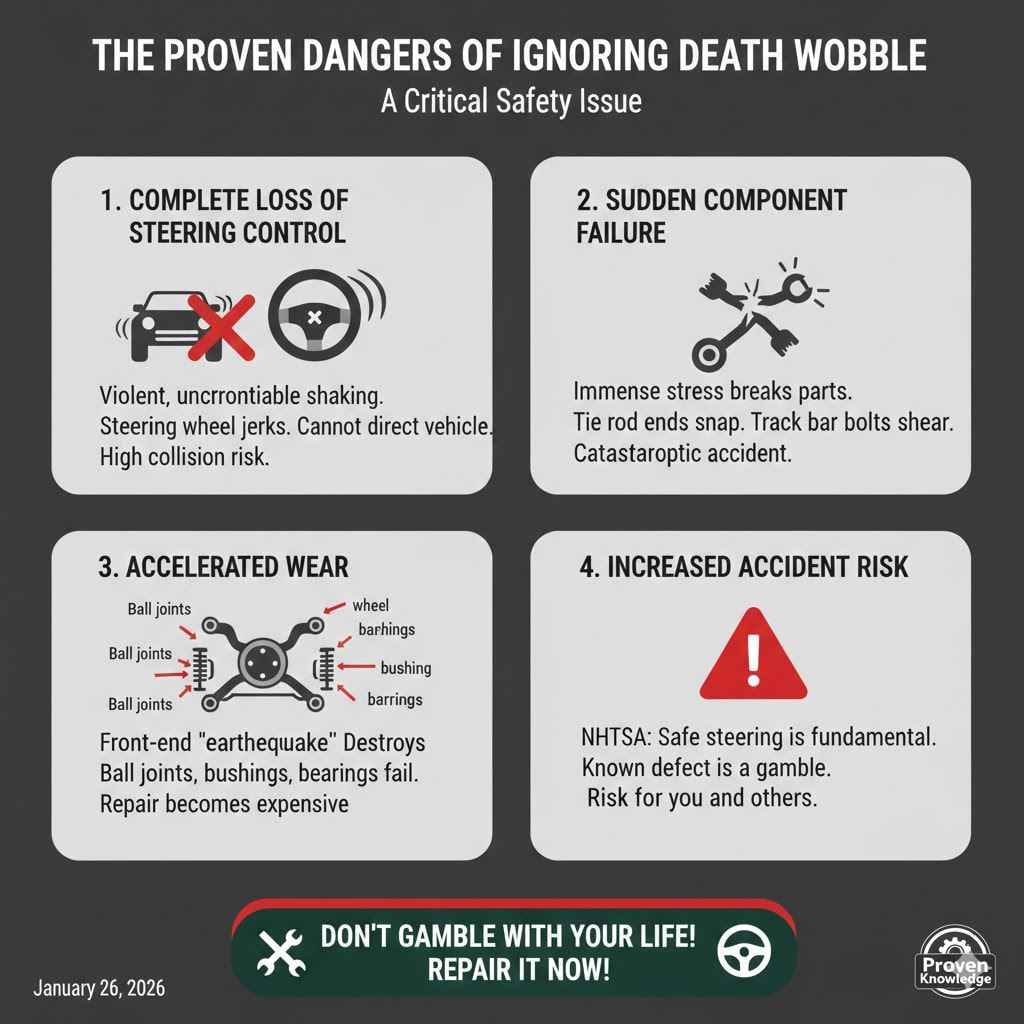
- Complete Loss of Steering Control: During a severe death wobble event, you have virtually no control over your steering. The wheel is jerking so violently that you can’t direct the vehicle, making a collision with other cars or obstacles a very real possibility.
- Sudden Component Failure: The immense stress from the vibration can cause other steering or suspension parts to break suddenly. A tie rod end snapping or a track bar bolt shearing off at 60 MPH could lead to a catastrophic accident.
- Accelerated Wear on Other Parts: Every time death wobble occurs, it’s like a small earthquake for your front end. It destroys ball joints, bushings, and wheel bearings, turning one bad part into five or six. This makes the eventual repair far more expensive.
- Increased Risk of an Accident: According to the National Highway Traffic Safety Administration (NHTSA), maintaining a safe and responsive steering system is fundamental to avoiding crashes. Driving a vehicle with a known steering defect like death wobble puts you, your passengers, and everyone else on the road at risk.
Ignoring death wobble is a gamble you can’t afford to take. The issue will not fix itself; it will only get worse and more dangerous over time.
Frequently Asked Questions (FAQ)
What does a bad steering box feel like?
A bad steering box feels loose, sloppy, or vague. You’ll notice a “dead spot” in the center of the steering wheel where you can move it slightly without the wheels responding. It can also cause the vehicle to wander on the highway, requiring constant small corrections to keep it driving straight.
How much does it cost to replace a steering box?
The cost can vary widely depending on your vehicle’s make and model. Generally, you can expect the part itself to cost between $300 and $800. Labor can add another $200 to $500, as it can be a time-consuming job. A full alignment is also required after replacement, so budget for that as well.
Can I drive with a bad steering box?
It is not recommended and is extremely dangerous. A failing steering box compromises your ability to control the vehicle, especially in an emergency. If it’s bad enough to be a potential cause of death wobble, the vehicle should be considered unsafe to drive at highway speeds and should be repaired immediately.
What is the first thing to check for death wobble?
The first things to check are usually the easiest and most common culprits: tire balance/pressure and the track bar. An out-of-balance tire can initiate the wobble, and a worn track bar is one of the most frequent causes on vehicles with solid front axles (like many trucks and Jeeps).
Does a new steering stabilizer fix death wobble?
No. A steering stabilizer is like a shock absorber for your steering system. A new, heavy-duty stabilizer can mask or hide the symptoms of death wobble for a short time, but it does not fix the underlying cause. The worn-out parts are still loose, and the wobble will eventually return, often with more force.
How can I prevent death wobble?
The best prevention is regular maintenance. Routinely inspect your steering and suspension components for wear, keep your tires properly balanced and rotated, and get a professional alignment done periodically, especially after installing larger tires or a lift kit. Addressing small issues (like a slightly worn tie rod end) early can prevent them from cascading into a death wobble event.
Is death wobble common in all cars?
No, death wobble is most common in vehicles with a solid front axle suspension design, such as many models of Ford, Dodge, and Ram heavy-duty trucks, as well as Jeep Wranglers. While cars with independent front suspension can experience severe vibrations, the classic, violent “death wobble” is a phenomenon primarily associated with the solid axle design.
Take Back Control of Your Ride
Experiencing death wobble can shake your confidence as a driver, but understanding its causes is the first step toward regaining control. We’ve learned that a bad steering box is more than capable of causing this dangerous problem by creating the looseness needed for vibrations to run wild.
However, it’s also clear that the steering box is just one piece of a complex puzzle. The track bar, ball joints, tire balance, and other components all play a critical role in keeping your front end stable and secure.
Your safety is the most important thing. Use the simple diagnostic tips to look for obvious issues, but never hesitate to visit a professional mechanic for a thorough inspection. Fixing the root cause of death wobble isn’t just about making your ride smoother; it’s about ensuring you, your family, and others on the road are safe. By tackling this problem head-on, you’re not just fixing a vehicle—you’re investing in peace of mind for every mile ahead.