
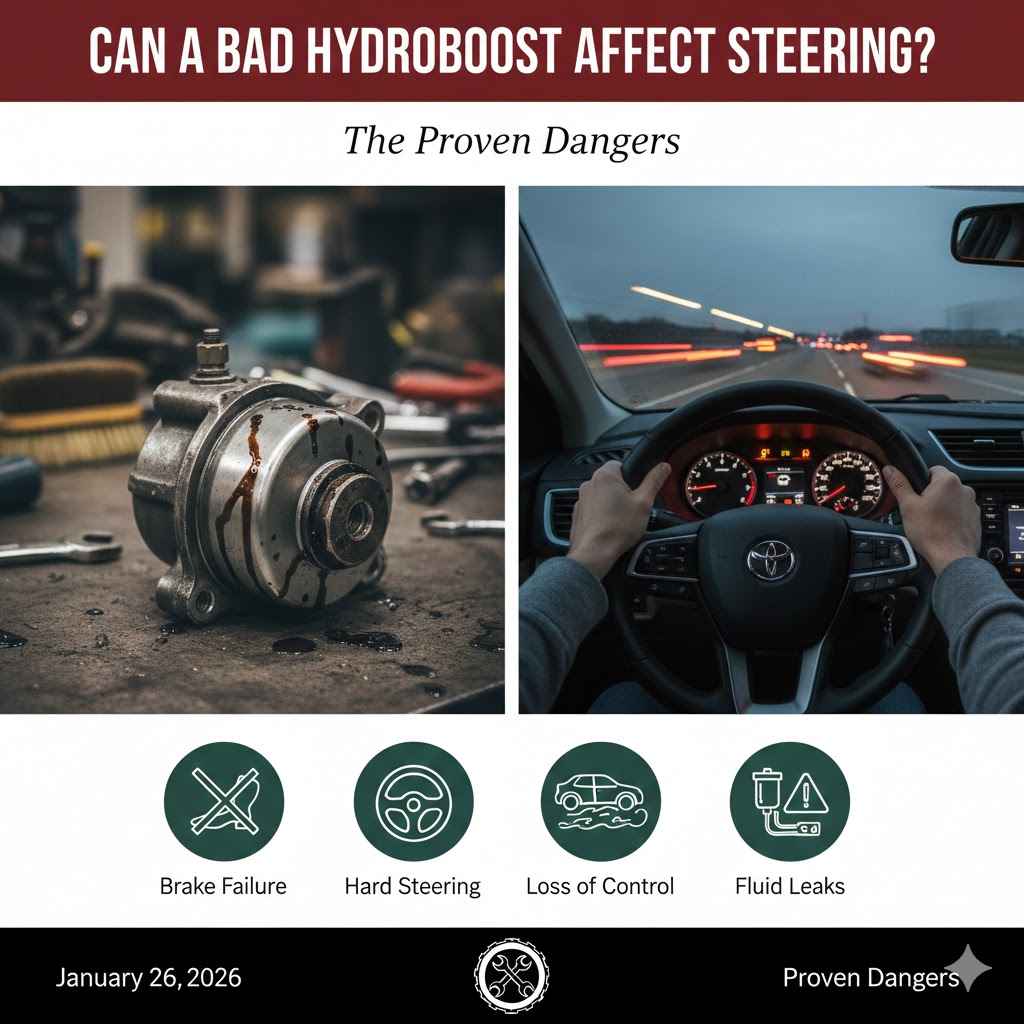
Yes, a bad hydroboost can definitely affect your steering. Because the hydroboost system uses pressure from your power steering pump to assist both your brakes and steering, a failure in the unit can cause stiff, heavy, or jerky steering. This is a serious safety hazard that reduces your control over the vehicle.
Have you ever turned your steering wheel and felt it fight back? Or maybe you’ve noticed a strange whining noise when you apply the brakes and turn at the same time. These little quirks can be unsettling, making you feel like you’re not fully in control of your car. It’s a frustrating feeling, but don’t worry—you’re in the right place to figure it out. Many drivers assume these are two separate problems, but they are often linked by one hardworking component: the hydroboost system. In this guide, I’ll walk you through exactly what that is and how its health is directly tied to both your stopping power and your ability to steer smoothly. Let’s get you back to driving with confidence!
What Exactly Is a Hydroboost System?
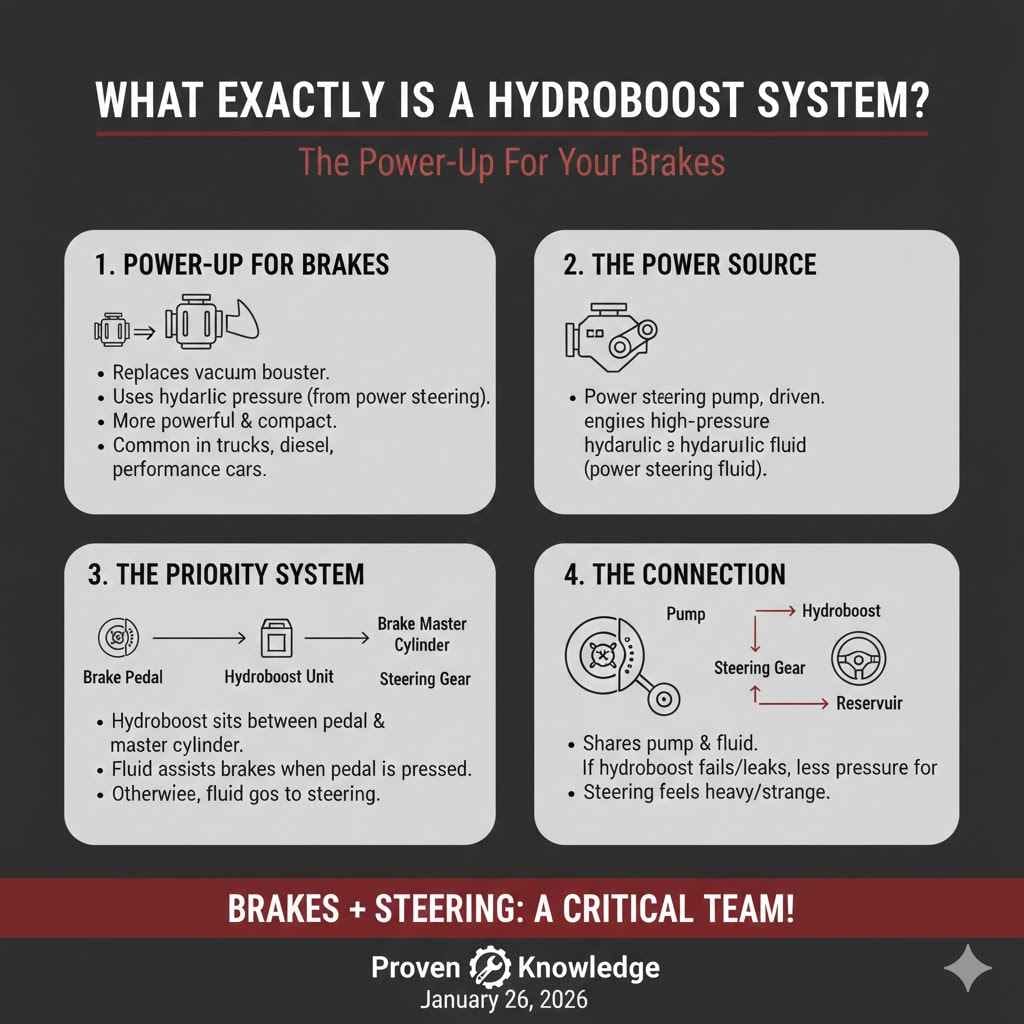
Think of the hydroboost system as a power-up for your brakes. In older cars or smaller vehicles, you might find a vacuum brake booster. It’s that big, round, black canister attached to the firewall on the driver’s side. It uses engine vacuum to make it easier for you to press the brake pedal.
However, many trucks, diesel vehicles, and some high-performance cars need more stopping power than a vacuum booster can provide. That’s where the hydroboost comes in. Instead of using engine vacuum, a hydroboost system uses hydraulic pressure generated by your power steering pump. It’s a more powerful and compact way to get the job done.
In simple terms, it “borrows” a little power from your steering system to give your brakes a massive boost. This smart design is efficient, but it also means that your braking and steering systems are directly connected. When one has a problem, the other often feels it, too.
How Your Steering and Brakes Are Connected by the Hydroboost
To understand why a bad hydroboost affects steering, let’s look at how the system is set up. It’s simpler than it sounds!
- The Power Source: It all starts with the power steering pump. This pump is driven by your engine and its job is to create high-pressure hydraulic fluid (power steering fluid).
- The Fluid’s Journey: From the pump, a high-pressure hose carries this fluid to the hydroboost unit. The hydroboost is located between your brake pedal and the master cylinder.
- Priority System: The hydroboost is designed to prioritize braking. When you’re just driving and steering, the fluid flows through the hydroboost and on to the steering gear, giving you power steering. But the moment you press the brake pedal, the hydroboost directs that high-pressure fluid to help you push the master cylinder, giving you powerful brakes.
- The Return Trip: After doing its job in either the hydroboost or the steering gear, the low-pressure fluid flows back to the power steering reservoir to start the cycle all over again.
Because they share the same pump and the same fluid, they are a team. If the hydroboost unit starts to leak, fail, or demand too much pressure, there isn’t enough left for the steering gear. This is the root cause of why your steering can feel heavy or strange when the hydroboost goes bad.
So, Can a Bad Hydroboost ACTUALLY Affect Steering?
The answer is an absolute, undeniable yes. A failing hydroboost unit is one of the most common causes of simultaneous braking and steering problems. It’s not a coincidence if both systems start acting up at the same time. The shared hydraulic power source means a problem with the hydroboost will directly impact steering performance.
Here’s how a faulty hydroboost unit can specifically create steering issues:
- Internal Leaks: The hydroboost unit has a complex set of internal seals and valves. If one of these seals fails, high-pressure fluid can leak internally. This “leaked” pressure is then unavailable to the steering gear, resulting in stiff or unresponsive steering. The leak might not even be visible on the outside.
- Fluid Starvation: If the hydroboost unit develops a major leak and loses power steering fluid, the entire system suffers. The power steering pump can’t create pressure without enough fluid, leading to a loss of assistance for both braking and steering.
- Pressure “Stealing”: A malfunctioning hydroboost might constantly demand hydraulic pressure, even when you aren’t braking. It effectively “steals” the pressure that should be going to the steering gear. This can cause the steering to feel heavy all the time, not just when you brake.
- Erratic Pressure Delivery: Sometimes, a failing unit will deliver pressure erratically. This can cause your steering to feel fine one moment and then suddenly become stiff or jerky the next, which is incredibly dangerous.
Top 5 Symptoms of a Hydroboost Problem Affecting Your Steering
Your car is great at giving you warning signs when something is wrong. You just need to know what to look (and listen) for. If you experience any of these symptoms, your hydroboost system should be the first place you check.
- Heavy or Stiff Steering, Especially While Braking: This is the most classic symptom. You go to brake for a turn, and suddenly the steering wheel feels like it’s stuck in wet cement. This happens because applying the brakes demands all the available hydraulic pressure, leaving none for the steering.
- Whining or Groaning Noises: You may hear a loud whine or groan that gets louder when you turn the steering wheel or press the brake pedal. This is often the sound of the power steering pump struggling to supply fluid and pressure to a failing hydroboost unit.
- Slow or Delayed Steering Response: Does it feel like there’s a delay between when you turn the wheel and when the car actually responds? This lag can be caused by a hydroboost unit that is interfering with the smooth flow of hydraulic pressure to the steering gear.
- Jerky or “Notchy” Steering: Instead of a smooth turn, the steering wheel might feel like it’s catching or jumping. This indicates inconsistent pressure delivery, a common sign of internal failure within the hydroboost.
- Power Steering Fluid Leaks: Check the area where the hydroboost unit meets the firewall and where it connects to the master cylinder. Any signs of weeping or dripping power steering fluid are a clear indication of failing seals.
The Proven Dangers of Driving with a Faulty Hydroboost
Ignoring symptoms from your hydroboost system isn’t just inconvenient; it’s a serious safety risk. This isn’t a problem you can put off until your next oil change. The connection between your brakes and steering is fundamental to vehicle control, and when it’s compromised, the consequences can be severe.
Here are the real-world dangers you face:
- Increased Stopping Distances: The primary job of the hydroboost is to assist your brakes. When it fails, you lose that power assist. Your brake pedal will become extremely hard to press, and your vehicle will take much longer to stop. In a panic-stop situation, those extra feet can be the difference between a close call and a serious collision.
- Loss of Steering Control in Emergencies: Imagine needing to brake hard and swerve to avoid an obstacle in the road. A failing hydroboost can cause your steering to become incredibly heavy right when you need it most. Your ability to make a quick, evasive maneuver will be drastically reduced.
- Sudden and Unpredictable Failure: Hydroboost problems often start small—a little noise here, a bit of stiffness there. However, a failing component can let go completely without warning. You could be driving normally one minute and have virtually no power steering or power brakes the next.
- Difficulty with Low-Speed Maneuvering: Simple tasks like parking or navigating a tight driveway can become a physical workout. The lack of power assist at low speeds makes the vehicle cumbersome and hard to control, increasing the risk of bumps and scrapes.
Vehicle safety agencies have long recognized the importance of reliable braking and steering systems. According to the National Highway Traffic Safety Administration (NHTSA), maintaining these systems is critical for preventing crashes. A compromised hydroboost system directly undermines the safety standards built into your vehicle.
How to Diagnose a Potential Hydroboost Issue at Home
You don’t have to be a master mechanic to do some basic checks. If you suspect a hydroboost problem, follow these simple diagnostic steps. All you need is a few minutes and your eyes and ears.
Step 1: The Visual Inspection
Pop your hood and locate the master cylinder on the driver’s side, up against the firewall. The hydroboost unit is the component situated right between the master cylinder and the firewall. Grab a flashlight and look for:
- Obvious Fluid Leaks: Check the hoses going into and out of the hydroboost. Look closely at the point where the hydroboost bolts to the firewall. Is there any wetness or accumulated grime? Power steering fluid is typically reddish or light brown and has a slightly sweet smell.
- Cracked or Worn Hoses: Inspect the hydraulic lines for any signs of cracking, bulging, or fraying. A damaged hose can leak pressure.
Step 2: Check Your Power Steering Fluid
Your hydroboost system lives on power steering fluid. If the level is low, nothing will work correctly.
- Find the power steering fluid reservoir. It’s usually a plastic container with a black cap, often marked with a steering wheel symbol.
- Wipe the cap clean before opening it to prevent dirt from falling in.
- Check the fluid level using the dipstick attached to the cap or the markings on the side of the reservoir. Make sure it’s between the “FULL” and “ADD” lines.
- Look at the fluid’s condition. It should be relatively clear. If it’s dark brown, black, or has shiny metal flakes in it, the system needs to be flushed and inspected for damage.
Step 3: The Engine-Off Brake Test
This simple test checks the hydroboost’s accumulator, which is a small reserve of pressurized fluid for emergency braking.
- With the engine turned OFF, pump the brake pedal 5-6 times. It should become firm and hard to press. This gets rid of any leftover pressure.
- Now, with your foot still pressing firmly on the brake pedal, start the engine.
- When the engine starts, you should feel the brake pedal “give way” or drop slightly. This is the hydroboost kicking in and assisting you. If the pedal doesn’t move or remains hard, the hydroboost is likely not working.
Step 4: The Listening Test
Noises can tell you a lot about your car’s health.
- Start the car and let it idle.
- Turn the steering wheel from one side to the other. Listen for any loud groaning, whining, or squealing noises from the engine bay.
- Now, hold the brake pedal down and turn the steering wheel again. Does the noise get louder or change in pitch? If it does, that’s a strong sign the problem is related to the hydroboost or power steering pump.
Table: Understanding the Symptoms
Here’s a quick-reference table to help you connect what you’re seeing and hearing to a potential cause.
| Symptom You Experience | What It Likely Means | Impact on Your Steering |
|---|---|---|
| Steering is heavy ONLY when you brake | The hydroboost is demanding all available pressure, leaving none for steering. Likely an internal hydroboost fault. | Temporary but dangerous loss of steering assist during braking. |
| Constant whining noise that gets worse when turning | The power steering pump is struggling due to low fluid or a blockage caused by the hydroboost. | Steering will feel heavy and may become jerky as the pump fails to keep up. |
| Hissing sound from under the dash when you press the brake | An internal seal in the hydroboost is leaking high-pressure fluid. | This pressure leak reduces the force available for the steering gear, causing stiffness. |
| Brake pedal is hard and steering is heavy at all times | A major system failure. Could be a dead power steering pump or a complete hydroboost failure. | You have lost almost all power assist for both systems. The vehicle is unsafe to drive. |
DIY Repair vs. Calling a Professional: Making the Right Choice
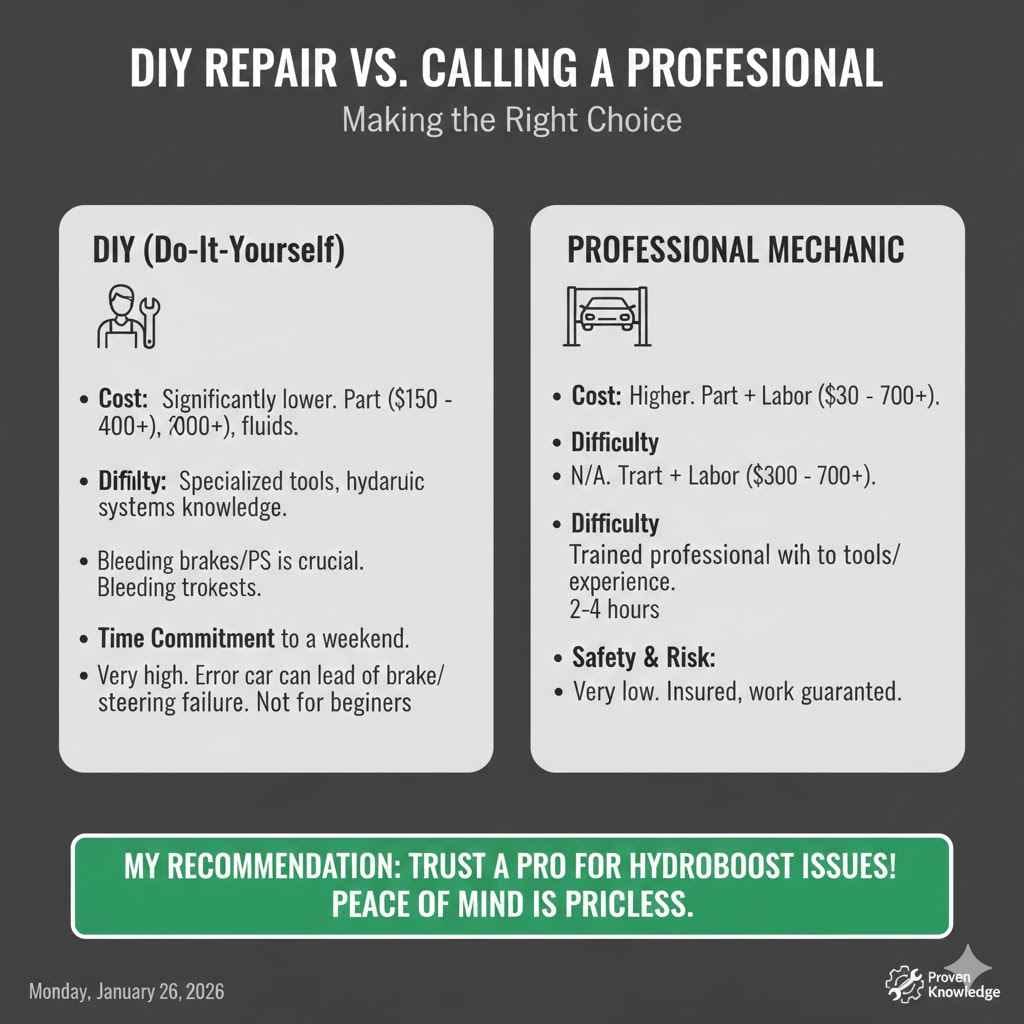
After your diagnosis, you might be wondering if this is something you can fix yourself. Replacing a hydroboost unit is considered an advanced repair. It involves working with both the braking and steering systems, which are critical for your safety. A single mistake, like allowing air into the brake lines or not tightening a hydraulic hose correctly, can lead to complete system failure.
Let’s break down the decision.
| Factor | DIY (Do-It-Yourself) | Professional Mechanic |
|---|---|---|
| Cost | Significantly lower. You only pay for the part ($150 – $400+) and fluids. | Higher. You pay for the part plus labor, which can range from $300 to $700 or more. |
| Difficulty | High. Requires specialized tools like flare nut wrenches and a good understanding of hydraulic systems. Bleeding the brakes and power steering systems correctly is crucial. | N/A. Handled by a trained professional with the right tools and experience. |
| Time Commitment | Can take a full afternoon or even a whole weekend for a first-timer. | Typically completed in 2-4 hours. |
| Safety & Risk | Very high. An error can lead to brake failure or loss of steering. If you are not 100% confident, this is not the job to learn on. | Very low. A professional mechanic is insured, and their work is typically guaranteed. |
My Recommendation: For most drivers, especially those new to auto repair, I strongly recommend taking your vehicle to a trusted mechanic for hydroboost issues. The peace of mind that comes from knowing your brakes and steering were repaired correctly is worth every penny.
Frequently Asked Questions (FAQ)
1. What is the main difference between a hydroboost and a vacuum brake booster?
A vacuum booster uses engine vacuum to help you press the brake pedal. It’s the large, round black can you see on the firewall of many cars. A hydroboost system uses hydraulic pressure from the power steering pump to do the same job. Hydroboost is more powerful and is typically used on heavier vehicles like trucks and diesel cars.
2. How much does it cost to replace a hydroboost unit?
The cost can vary widely depending on your vehicle. The part itself can range from $150 to over $400. Professional labor will add another $300 to $700. In total, you can expect a hydroboost replacement to cost anywhere from $500 to $1,100 or more at a repair shop.
3. Can I still drive my car if the hydroboost is bad?
It is strongly advised not to. While you might technically be able to drive, you will have significantly reduced braking power and very heavy steering. The vehicle will be difficult to control and unsafe, especially in an emergency. It’s best to have it towed to a repair shop.
4. What kind of fluid does a hydroboost system use?
The hydroboost system uses regular power steering fluid. It shares the same fluid reservoir as your power steering system. Always check your owner’s manual to ensure you use the correct type of power steering fluid for your specific vehicle, as using the wrong kind can damage the system.
5. How long should a hydroboost unit last?
A hydroboost unit is a durable component and can often last for 100,000 to 150,000 miles or more. However, its lifespan can be shortened by contaminated fluid, failing seals, or a struggling power steering pump.
6. Will a bad hydroboost trigger a check engine light?
Generally, no. The hydroboost system is a hydraulic and mechanical system, not an electronic one. A failure won’t typically be detected by the car’s main computer, so it won’t trigger the Check Engine Light. You might, however, see a warning light for the brake system if the failure is related to the master cylinder or fluid levels.
Your Next Steps to a Safer Drive
We’ve covered a lot of ground, but the main takeaway is simple: your steering and braking systems are a team, and the hydroboost unit is their most important connection. If you’re experiencing stiff steering, strange noises, or a hard brake pedal, don’t ignore these warning signs. The problem isn’t just an annoyance; it’s a direct threat to your control over the vehicle and your safety on the road.
By using the diagnostic tips above, you can get a good idea of what’s going on with your car. You now understand that a bad hydroboost absolutely can, and will, affect your steering. Armed with this knowledge, you can have a more confident conversation with a mechanic and make an informed decision about your repair.
Taking care of your car is about more than just keeping it running—it’s about keeping yourself and your passengers safe. Addressing a hydroboost issue promptly is one of the most important steps you can take to ensure every trip you take is a safe one. Drive safely, and listen to what your car is trying to tell you!