
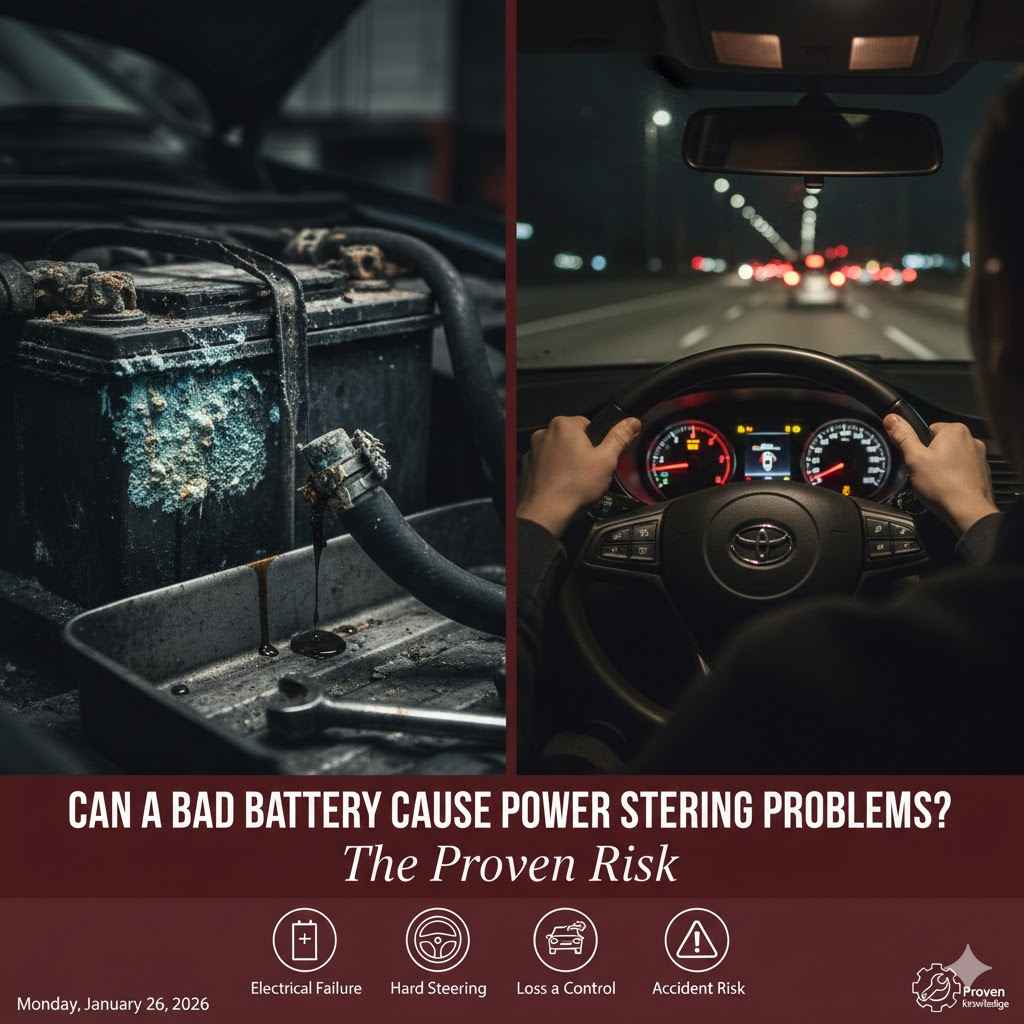
Yes, a bad or failing battery can definitely cause power steering problems, especially in modern cars with Electric Power Steering (EPS). The EPS system relies on consistent electrical power to function. A weak battery can cause a stiff steering wheel, warning lights, and intermittent power steering failure as the car’s computer cuts power to non-essential systems.
You hop in your car, ready to go. You turn the key, the engine starts, but when you try to turn the steering wheel, it feels incredibly stiff and heavy. It’s like trying to steer a tank! A warning light might even pop up on your dashboard. Your first thought is probably, “Oh no, this is going to be an expensive power steering repair.”
But hold on. Before you panic, what if I told you the problem might be much simpler and cheaper to fix? The real culprit could be hiding in plain sight: your car’s battery.
It sounds strange, I know. But in today’s cars, the battery does so much more than just start the engine. In this guide, I’ll walk you through exactly how a weak battery can cause steering problems, how to spot the signs, and what simple steps you can take to fix it. Let’s get you back on the road with confidence.
Understanding the Link: Your Battery and Your Steering
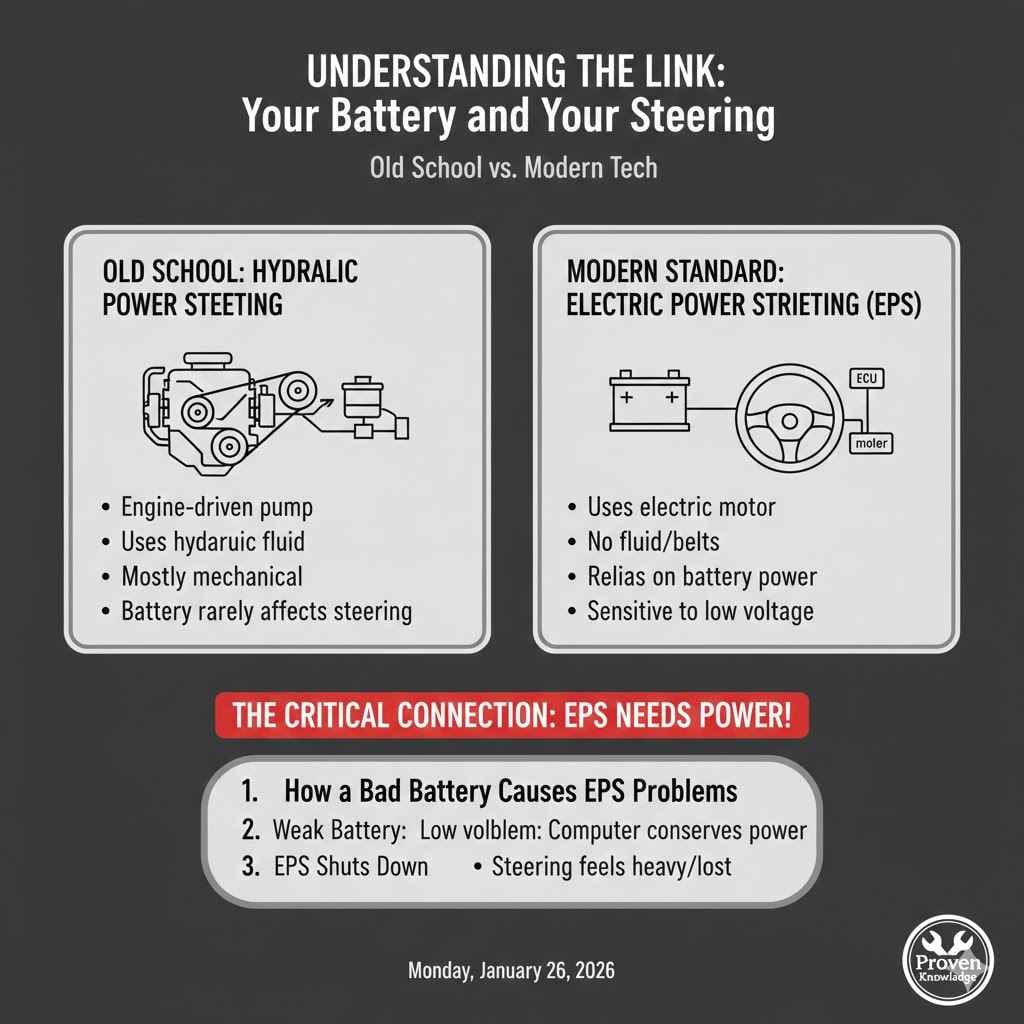
To understand why your battery can affect your steering, we first need to look at how power steering works. Cars generally use one of two types of systems, and one is far more sensitive to electrical problems than the other.
The Old School Way: Hydraulic Power Steering
For decades, cars used a hydraulic power steering system. This system uses a pump, driven by a belt connected to the engine, to push a special fluid that helps you turn the wheels. It’s a mechanical system that relies on engine power and fluid pressure.
With this older system, a bad battery is very unlikely to be the direct cause of a stiff steering wheel. The system doesn’t rely heavily on the car’s electrical grid to function. However, an electrical issue isn’t totally out of the question. A bad battery can put a huge strain on the alternator, which could indirectly affect the serpentine belt that drives the power steering pump. But for the most part, if you have a hydraulic system, your stiff steering is likely due to low fluid, a bad pump, or a worn-out belt.
The Modern Standard: Electric Power Steering (EPS)
Almost every new car today uses Electric Power Steering, or EPS. Instead of a hydraulic pump and fluid, an EPS system uses an electric motor to give you that steering assistance. This makes cars more fuel-efficient and the steering more responsive. But it also introduces a critical dependency: electricity.
The EPS motor needs a strong, steady supply of electrical current to work properly. And where does that electricity come from? Your car’s battery and charging system.
This is where the problem starts. If your battery is old, weak, or failing, it can’t provide the consistent voltage the EPS motor demands. Your car’s main computer, the Engine Control Unit (ECU), is smart. It constantly monitors the electrical system. If it detects that the battery voltage is too low, it will start shutting down non-essential systems to conserve power for the critical ones, like keeping the engine running. Unfortunately, the EPS system is often considered “non-essential” in these situations. The result? The electric motor shuts off, and your power steering vanishes, leaving you with a very heavy steering wheel.
Why a Weak Battery Starves Your Power Steering
Think of your car’s electrical system like the plumbing in your house. The battery is the water reservoir, and the alternator is the pump that keeps it full while the engine is running. All your car’s electronics, from the radio to the headlights, are like faucets drawing from that reservoir.
The Electric Power Steering motor is like a giant showerhead—it needs a huge amount of pressure (voltage) to work, especially when you’re turning the wheel at low speeds or when stopped. A healthy battery can provide this surge of power without a problem.
A weak or dying battery, however, is like a reservoir with a leak. It can’t maintain enough pressure. When the EPS motor demands a big gulp of power, the battery’s voltage can drop dramatically. This voltage drop signals an error to the car’s computer, which then disables the EPS system to protect other electronics from damage. This often happens intermittently, which can be very confusing.
- At Startup: The battery is at its weakest right after starting the car, as the starter motor uses a massive amount of energy. This is a common time for the power steering to feel stiff.
- During a Drive: After driving for a while, the alternator recharges the battery, and the voltage might stabilize. This is why you might notice your power steering starts working again after a few minutes on the road.
Key Symptoms to Watch For: Is It the Battery or Something Else?
It can be tricky to tell if your steering problem is from the battery or a genuine fault in the steering system itself. The key is to look for other clues. A failing battery rarely causes just one single problem. It usually creates a cluster of strange electrical symptoms.
Here are signs that point strongly toward a bad battery causing your power steering issues:
- Intermittent Failure: The steering is heavy one moment and fine the next. This is a classic sign of fluctuating voltage from a weak battery.
- Worse on Cold Starts: The problem is most noticeable when you first start the car, especially on a cold morning when the battery is struggling the most.
- Other Electrical Gremlins: You notice other weird issues, like headlights that dim when you turn the wheel, a radio that cuts out, or slow-moving power windows.
- Battery Warning Light: If the battery light on your dashboard is on, that’s a huge clue. Sometimes, both the battery light and the EPS warning light will come on together.
- Slow Engine Crank: When you turn the key, the engine sounds sluggish and slow to start. This is the most common symptom of a dying battery.
To make it easier, here’s a table comparing the symptoms:
| Symptom | Likely a Bad Battery Issue If… | Likely a Power Steering Component Issue If… |
|---|---|---|
| Stiff Steering | It’s intermittent, often worse at startup, and may improve after driving. | It’s constant, happens at all times, and does not get better. |
| Warning Lights | You see a battery light, or the EPS light comes on along with other electrical glitches. | Only the EPS or steering wheel warning light is on, with no other electrical symptoms. |
| Strange Noises | There are no unusual sounds coming from the steering column. | You hear grinding, whining, or clunking noises when you turn the wheel. |
| Other Issues | Headlights dim, the radio resets, or the engine cranks slowly. | The car starts and runs perfectly fine, with the only issue being the steering. |
Your Step-by-Step Guide to Diagnosing the Problem
Ready to play detective? You don’t need to be a mechanic to perform these simple checks. All you need are your eyes and a few minutes. Remember to always work safely and make sure the car is turned off for any inspections.
Step 1: Check for Obvious Electrical Clues
Before you even pop the hood, run a quick electrical system check from the driver’s seat. With the engine off, turn the key to the “On” position (without starting the car).
Test the Headlights: Are they bright and clear, or are they dim and yellowish? A dim light is a sign of a weak battery.
Try the Horn: Does it sound strong and loud, or weak and pathetic?
Look at the Dashboard: Are any warning lights on? Pay close attention to the battery symbol.
Step 2: Inspect the Battery Terminals
Now, pop the hood and take a look at the battery itself. The battery terminals are the metal posts where the cables connect. Over time, these can get covered in a fuzzy, crusty substance.
What to Look For: Check for any white, blue, or greenish powder caked around the terminals. This is corrosion, and it acts like an insulator, preventing electricity from flowing properly.
How to Clean Them (Safely): If you see corrosion, cleaning it might solve your problem. You can do this with a simple mixture of baking soda and water. Make sure you disconnect the negative (-) terminal first, then the positive (+). Use a wire brush to scrub the terminals and cable clamps clean. Rinse with a little water and dry thoroughly before reconnecting the positive (+) terminal first, then the negative (-). Always wear gloves and safety glasses!
Step 3: Get a Simple Battery Test
This is the most definitive way to know if your battery is the culprit, and the best part is, it’s usually free! Most major auto parts stores will test your battery, alternator, and starter for free. They have a special handheld device that can tell you the battery’s health, its voltage, and its cranking amps.
If you have a simple tool called a multimeter, you can do a basic check yourself. A healthy, fully charged car battery should read around 12.6 volts when the car is off. When the car is running, the multimeter should read around 14.0 to 14.7 volts, which shows the alternator is working to recharge it. If the voltage is below 12.4 volts with the car off, your battery is weak. For more on how these systems work, the U.S. Department of Energy provides a great explanation of battery function.
Step 4: Check the Alternator (The Battery’s Partner)
Sometimes, a bad alternator can make a good battery look bad. The alternator is what generates electricity to power the car and recharge the battery while the engine is running. If the alternator is failing, it can’t keep the battery charged, leading to the same low-voltage problems. The free test at the auto parts store will check this for you, so you can be sure you’re replacing the right part.
What Happens When the EPS System Loses Power?
It’s important to understand that when your electric power steering fails, the steering wheel does not lock up. This is a crucial safety feature. You can still steer the car. The system simply reverts to manual steering.
However, it will feel extremely heavy and difficult to turn, especially at low speeds like when you’re parking or making a sharp turn. This can be startling and potentially dangerous if it happens unexpectedly while driving. This is the “proven risk” we’re talking about—a sudden increase in steering effort can catch a driver off guard.
Your dashboard will likely show a warning light to alert you. Here’s what those lights typically mean:
| Warning Light | What It Typically Means | What You Should Do |
|---|---|---|
| Red Steering Wheel + Exclamation Mark (!) | A serious fault has been detected in the EPS system. Steering assistance is likely completely disabled. | Pull over safely as soon as it is possible to do so. It is not safe to continue driving. Have the vehicle towed. |
| Yellow/Amber Steering Wheel + Exclamation Mark (!) | The EPS system has a less critical fault. Steering assistance may be reduced or completely off. | The vehicle is drivable, but with caution. The steering will be heavy. Get it inspected by a mechanic as soon as possible. |
| Battery Light | There is a problem with the vehicle’s charging system (either the battery or the alternator). | Do not ignore this light. Your car could lose all electrical power and shut down while driving. Head directly to a mechanic or parts store. |
Fixing the Problem: It Might Be Easier Than You Think
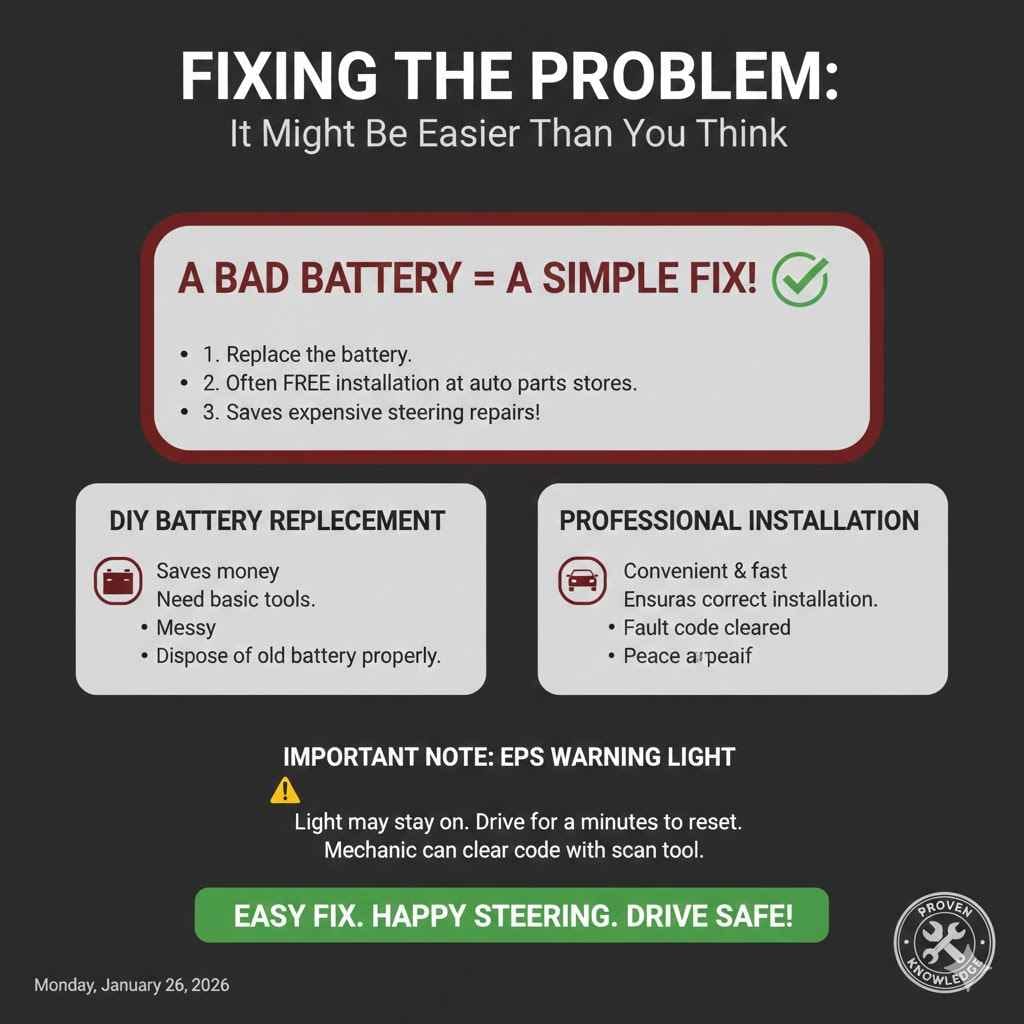
If your diagnosis points to a bad battery, congratulations! You’ve likely avoided a very expensive and unnecessary power steering repair. The fix is as simple as replacing the battery.
While you can replace a car battery yourself, it’s one of the easiest jobs to have someone else do. Many auto parts stores will install a new battery for free if you purchase it from them. This saves you the hassle and ensures it’s done correctly.
One important note: after installing a new battery, the EPS warning light might stay on. This is because the fault code is still stored in the car’s computer. Often, simply driving the car for a few minutes will allow the system to reset itself, and the light will turn off. In some cases, a mechanic may need to use a scan tool to clear the code manually.
Frequently Asked Questions (FAQ)
Can a low battery cause the power steering light to come on?
Yes, absolutely. A low voltage can trigger a fault code in the Electric Power Steering (EPS) module, causing the warning light to illuminate even if the steering components themselves are perfectly fine.
Will jump-starting my car fix the power steering problem?
It might temporarily. If you jump-start the car and the power steering returns to normal, it’s a very strong sign that your battery is the problem. However, a jump-start is not a permanent solution. The battery is likely too weak to hold a charge and needs to be replaced.
How do I know if it’s the battery or the alternator?
A simple way to tell is by observing when the problem happens. If the car struggles to start and the steering is stiff right away, the battery is the most likely suspect. If the car starts fine but the lights and steering fail while you’re driving, it’s more likely the alternator is failing and isn’t recharging the battery.
Is it safe to drive with the power steering light on?
It’s not recommended for long distances. While you can still steer the vehicle, it requires significantly more physical effort. This can be very dangerous in an emergency situation where you need to react quickly. According to the National Highway Traffic Safety Administration (NHTSA), proper steering function is critical for vehicle control. You should get it inspected as soon as possible.
Can a bad battery cause other weird electrical problems?
Yes. A failing battery can cause a whole host of strange issues because modern cars are packed with sensitive computers. You might experience things like the radio resetting, the alarm going off randomly, or even incorrect shifting from the transmission. The car’s electronics need stable voltage to work correctly.
How much does a new car battery cost?
The cost can vary depending on your vehicle and the type of battery it requires. Generally, you can expect to pay between $150 and $350 for a new battery. Many places include installation in that price.
My car has hydraulic power steering. Can a bad battery still affect it?
It’s much less direct, but it is possible. A very weak battery puts a heavy load on the alternator. The alternator is driven by the engine’s serpentine belt, which often also powers the hydraulic steering pump. A problem in the charging system could potentially affect belt tension or performance, but it’s not a common cause of hydraulic steering failure.
Your Next Steps for a Smooth Ride
So, can a bad battery cause power steering problems? The answer is a resounding yes. In the age of Electric Power Steering, the health of your car’s battery is more important than ever. It’s not just for starting the engine anymore; it’s the heart of your vehicle’s complex electrical system.
The next time your steering feels heavy or a warning light appears, don’t immediately assume the worst. Take a deep breath and remember the simple checks we’ve covered. Look for other electrical clues, inspect your battery terminals, and get a free battery test. It’s a smart, simple, and money-saving first step that can save you from a major headache and an unnecessary repair bill.
By understanding how these systems work together, you’re now better equipped to diagnose issues, talk confidently with a mechanic, and keep your car running safely and smoothly. You’ve got this!