
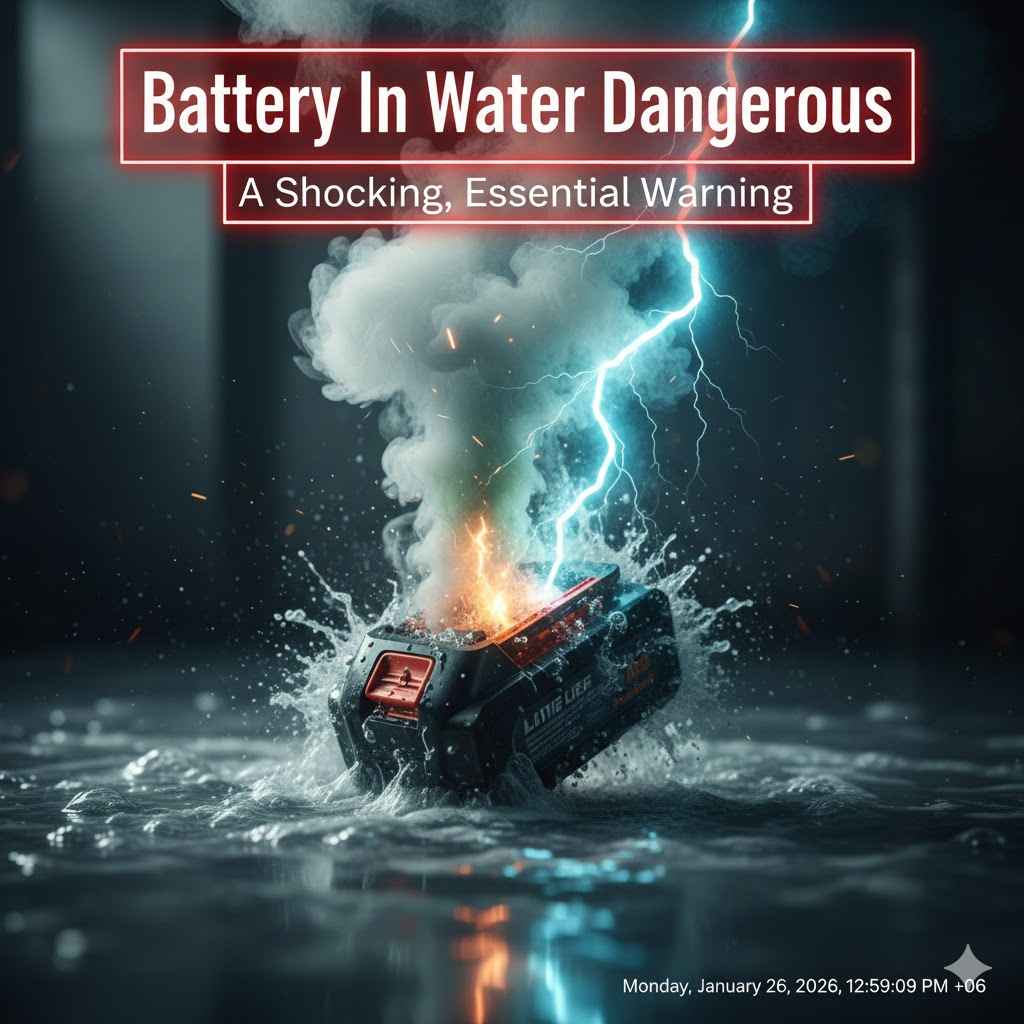
Yes, putting a battery in water is extremely dangerous. Water conducts electricity, creating a serious risk of electric shock, especially with powerful car batteries. It can also cause chemical leaks, corrosion, and short circuits that may lead to fires or even explosions from the hydrogen gas released by car batteries.
Hey there, it’s Dustin. Have you ever wondered what happens when a battery gets wet? Maybe your car went through a deep puddle, you found yourself in a flood situation, or you simply dropped a TV remote in a sink full of water. It might seem like a small issue, but water and batteries are a dangerous mix. It’s one of those things that can go from “oops” to a major hazard very quickly.
Don’t worry, though. Understanding the risks is the first step to staying safe, and it’s not as complicated as it sounds. I’m here to walk you through exactly why a battery in water is dangerous, what to do in different situations, and how to handle it all safely. We’ll break it down into simple, easy steps so you can feel confident and prepared.
Why Is a Battery in Water So Dangerous?
You’ve probably heard since you were a kid that electricity and water don’t mix. Well, that’s the core of the problem here. A battery is a portable container of electrical energy. Water, especially tap water or floodwater with minerals and dirt in it, is a great conductor of electricity. When they meet, things can get hazardous fast.
Think of it like this: a battery has two connection points, a positive (+) and a negative (-). Normally, electricity only flows when you connect something to both points, like when you start your car. But when you submerge a battery in water, the water itself can create a bridge between those two points. This is called a short circuit, and it’s where the trouble begins.
The Triple Threat: Shock, Chemicals, and Explosions
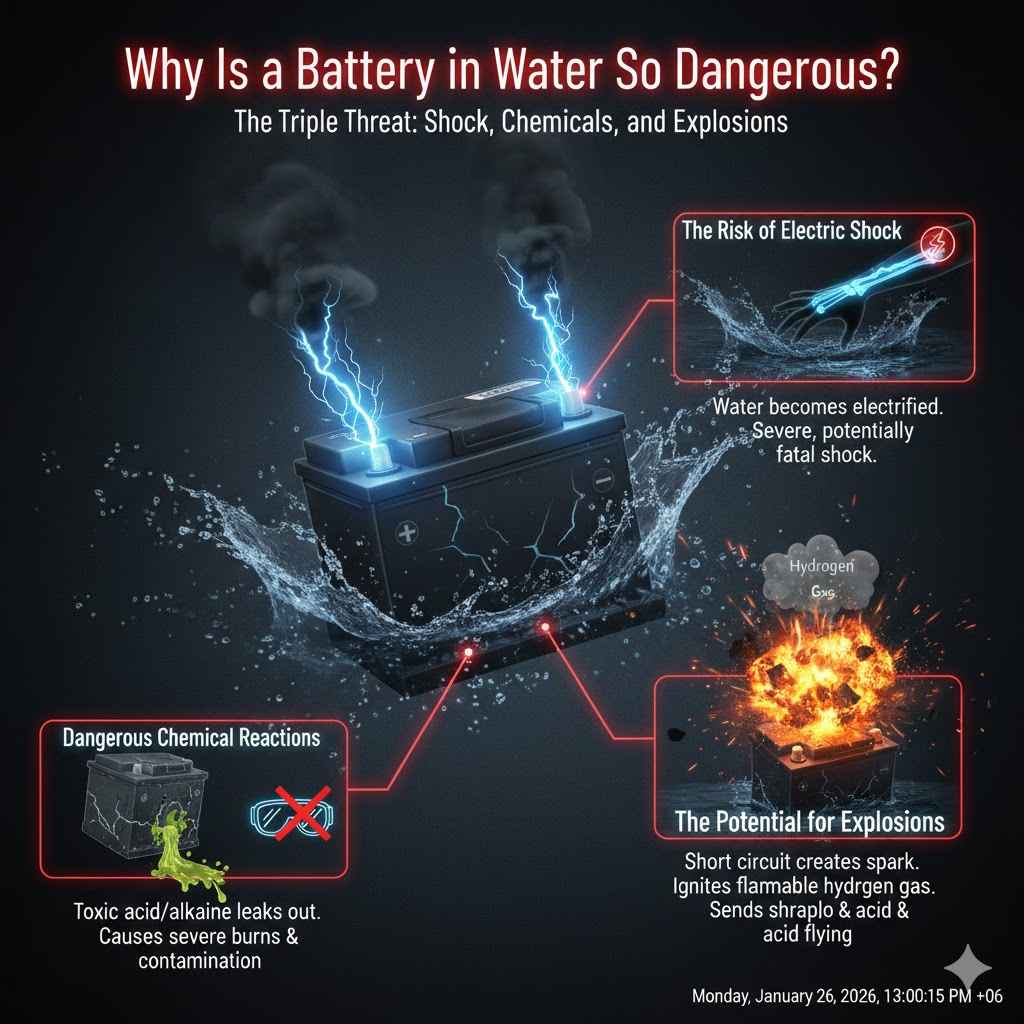
The danger isn’t just from one thing; it’s a combination of risks that make wet batteries a serious concern. Let’s look at the three biggest threats.
1. The Risk of Electric Shock
This is the most immediate danger, especially with a car battery. A car battery holds enough power to start an entire engine. When it’s in water, that water can become electrified. If you touch the water, you can become part of the electrical circuit, leading to a severe and potentially fatal electric shock. The current wants to find the easiest path to the ground, and your body can become that path.
2. Dangerous Chemical Reactions
Batteries are filled with powerful chemicals. Car batteries contain corrosive sulfuric acid, while household batteries contain alkaline or lithium compounds. Water can damage the battery’s casing, causing these toxic chemicals to leak out. This acid or alkaline solution can cause severe chemical burns to your skin and eyes. It also contaminates the water, making the entire area a hazardous mess.
3. The Potential for Explosions
This is a particularly serious risk with lead-acid car batteries. During their normal operation (and especially when short-circuiting), these batteries release hydrogen gas. Hydrogen is extremely flammable. If a spark is created by the short circuit—which is very likely—it can ignite the trapped hydrogen gas, causing the battery to explode. This can send plastic shrapnel and corrosive acid flying everywhere.
Different Batteries, Different Dangers
Not all batteries pose the same level of threat when they get wet. A tiny AA battery dropped in a glass of water is very different from a car battery submerged in a flood. Knowing the difference helps you assess the risk correctly.
Here’s a simple table to break down the dangers associated with common battery types:
| Battery Type | Primary Danger in Water | What to Watch For |
|---|---|---|
| Car Battery (Lead-Acid) | High risk of electric shock, chemical leaks (sulfuric acid), and explosion from hydrogen gas. | Bubbling or hissing sounds, a rotten egg smell (hydrogen sulfide), swelling of the battery case. |
| Household Batteries (AA, AAA, 9V Alkaline) | Low risk of shock, but high risk of leaking corrosive potassium hydroxide. | White, crusty buildup (corrosion), leaking fluid, battery getting hot. |
| Lithium-Ion (Phones, Laptops, Power Tools) | Moderate risk of shock, but very high risk of violent short-circuiting, fire, and releasing toxic fumes. | Swelling or puffing up of the battery, getting extremely hot, smoke or a chemical smell. |
What to Do if Your Car Battery is Submerged in Water (Like in a Flood)
Finding your car in floodwater is a stressful and frightening experience. The most important thing to remember is to prioritize your safety above all else. A submerged car is not just a water-damaged vehicle; it’s an electrical and chemical hazard.
Safety First: Do NOT Touch Anything!
Before you do anything else, stop and assess the situation from a safe distance. Never rush into floodwater to check on your car. The water could be hiding dangers you can’t see.
- Do NOT attempt to start the car.
- Do NOT try to disconnect the battery while it is in water.
- Do NOT stand in water near the vehicle.
- Do NOT use any electronic devices, like a key fob, to open the doors.
Step-by-Step Safety Guide
Handling a flooded car battery is a job for professionals. Your role is to secure the area and make the right call for help. Here’s what you should do:
- Assess the Scene from a Distance: Look for signs of danger like bubbling water around the car, a strange smell, or downed power lines nearby. If you see any of these, stay far away and alert emergency services.
- Wait for the Water to Recede: There is nothing you can safely do while the car is still submerged. Patience is your best tool. Wait until the water level has dropped completely and the ground around the car is no longer flooded.
- Assume It’s Still Dangerous: Even after the water is gone, the battery and electrical system are compromised. The battery could still hold a charge and be leaking chemicals.
- Wear Protective Gear (If You Must Approach): If you absolutely must get near the vehicle (for instance, to open a door after the water recedes), wear thick, waterproof rubber gloves and safety goggles. This is for minimal interaction only.
- Call a Professional: This is the most critical step. Contact your insurance company and a professional towing service that has experience with flood-damaged vehicles. They have the training and equipment to handle the car and its hazardous battery safely. For more on electrical safety, resources like the National Fire Protection Association (NFPA) provide excellent guidelines.
What About Smaller Household Batteries in Water?
Okay, let’s shift gears to a much more common scenario: dropping a small battery or a device with batteries into water. Maybe a child’s toy falls into the bathtub or you spill a drink on a remote control. While the danger of a massive explosion is gone, you still need to be careful.
Is it Safe to Touch a Wet Household Battery?
The low voltage of AA, AAA, or even 9-volt batteries means you are very unlikely to get an electric shock, even when they’re wet. The primary concern here is chemical leakage. The water can speed up corrosion and cause the battery casing to fail, releasing a caustic alkaline substance that can irritate or burn your skin.
How to Safely Handle and Dispose of Wet Household Batteries
If you find a wet household battery, you can usually handle it yourself with a few simple precautions.
- Put on Gloves: Use rubber or latex gloves to protect your hands from any potential chemical leaks.
- Carefully Remove the Battery: Take the battery out of the water or the wet device.
- Inspect for Damage: Look closely at the battery. Do you see any white, flaky crystals? Is the casing bulging or leaking fluid? If so, the battery is damaged and should not be used again.
- Dry the Battery Compartment: Use a paper towel or a cotton swab to thoroughly dry the inside of the device’s battery compartment. Check the metal contacts for any signs of corrosion (the white or greenish crust). You can often clean minor corrosion with a cotton swab dipped in a little vinegar or lemon juice, then dry it completely.
- Properly Dispose of the Damaged Battery: Do not just throw leaking batteries in the trash! They are considered hazardous waste. Place the damaged battery in a plastic bag to prevent further leaks. You can find local disposal guidelines on the Environmental Protection Agency (EPA) website, which often directs you to recycling centers or special drop-off locations in your community.
Warning Signs That a Wet Battery is Unsafe
Your senses are your best safety tools. If you see, hear, or smell any of these warning signs from a battery that has been exposed to water, treat it as a serious hazard and keep your distance.
| Warning Sign | What It Means | What to Do |
|---|---|---|
| Hissing or Bubbling Sound | A chemical reaction or rapid gas release is happening inside. This is common with a short circuit. | Do not touch! Move away immediately. If it’s a car battery, call for professional help. |
| Swelling or Bulging Case | Gases are building up inside the battery, creating pressure. This is a major risk for rupture or explosion. | Isolate the battery in a safe place away from flammable materials (if it’s a small battery) and call for disposal advice. For car batteries, stay clear. |
| Leaking Fluid or Crusty Buildup | The battery’s internal seal has failed, and corrosive chemicals are leaking out. | Wear gloves and goggles. Neutralize acid spills (car battery) with baking soda and alkaline spills (household) with vinegar, then clean and dispose of the battery properly. |
| Strange Smell (Rotten Eggs or Sharp Chemical Odor) | This often indicates the release of dangerous gases like hydrogen sulfide (from car batteries) or fumes from a failing lithium-ion cell. | Leave the area and allow it to ventilate. These gases can be toxic and flammable. |
Preventative Tips: Keeping Batteries Safe and Dry
The best way to deal with a dangerous situation is to avoid it in the first place. A little care goes a long way in preventing battery-related accidents.
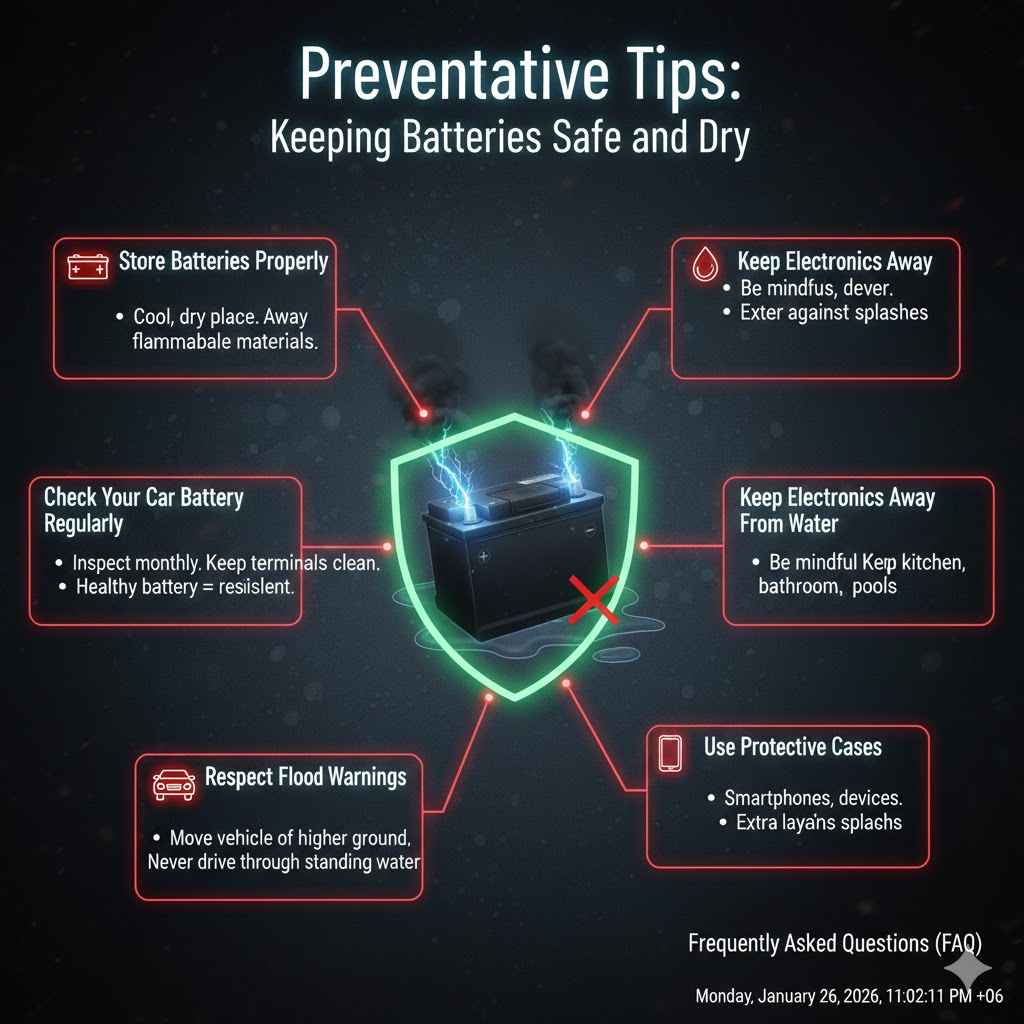
- Store Batteries Properly: Keep all spare batteries, both for your car and home, in a cool, dry place away from flammable materials.
- Check Your Car Battery Regularly: Pop the hood once a month and look at your car battery. Make sure the terminals are clean and free of corrosion. A healthy battery is more resilient.
- Respect Flood Warnings: If there are flood warnings in your area, move your vehicle to higher ground if you can do so safely. Never drive through standing water—it’s dangerous for you and your car.
- Keep Electronics Away From Water: This sounds obvious, but be mindful of where you place battery-powered devices in the kitchen, bathroom, or near pools.
- Use Protective Cases: For devices like smartphones, a waterproof or water-resistant case can provide an extra layer of protection against accidental splashes.
Frequently Asked Questions (FAQ)
Can a 12-volt car battery shock you in water?
Yes, absolutely. While a 12-volt battery might not shock you much if you touch both terminals with dry hands, water changes everything. It lowers your body’s electrical resistance and creates a wide conductive path. Standing in water that is energized by a car battery can easily lead to a severe or fatal electric shock.
What happens if you put a regular AA battery in water?
A regular AA alkaline battery in water will start to corrode. The water will create a slow short circuit, causing the battery to drain and leak potassium hydroxide, a corrosive substance. You won’t get a shock, but the chemical leak can irritate your skin and damage the device it’s in.
Is it safe to recharge a battery that has been wet?
No, it is never safe to recharge a battery that has been submerged in water, especially a lithium-ion battery. Water can damage the internal components and safety circuits, creating a high risk of overheating, fire, or explosion when you try to charge it. Always replace a water-damaged rechargeable battery.
Can saltwater make a battery more dangerous?
Yes, saltwater is an even better conductor of electricity than freshwater because of the dissolved salts. It will cause a much faster and more aggressive short circuit. Corrosion will also happen much more quickly, leading to faster leaks and a higher risk of fire, especially in lithium-ion batteries.
How do I clean up a battery leak?
For a common alkaline battery leak (white, crusty stuff), put on gloves and use a cotton swab with a bit of vinegar or lemon juice to dissolve the corrosion. For a lead-acid car battery leak, use a paste of baking soda and water to neutralize the acid. Always wear gloves and eye protection.
Can a dead car battery still be dangerous in water?
Yes. A “dead” car battery often isn’t completely out of power; it just doesn’t have enough to start a car. It can still hold a residual charge capable of causing a shock in water. Furthermore, it is still full of corrosive sulfuric acid, which remains a significant chemical hazard.
A Final, Friendly Word on Battery Safety
There you have it. The bottom line is simple: water and batteries are a hazardous combination that should always be treated with respect and caution. Whether it’s a huge car battery in a flood or a tiny battery in a puddle, the core dangers of electrical shock, chemical leaks, and fire are always present to some degree.
Remember to always put your safety first. When in doubt, especially with something as powerful as a car battery, stepping back and calling a professional is the smartest and bravest thing you can do. By following these simple guidelines, you can confidently handle these situations, keep yourself and your family safe, and make sure a small problem with water doesn’t turn into a shocking disaster.