
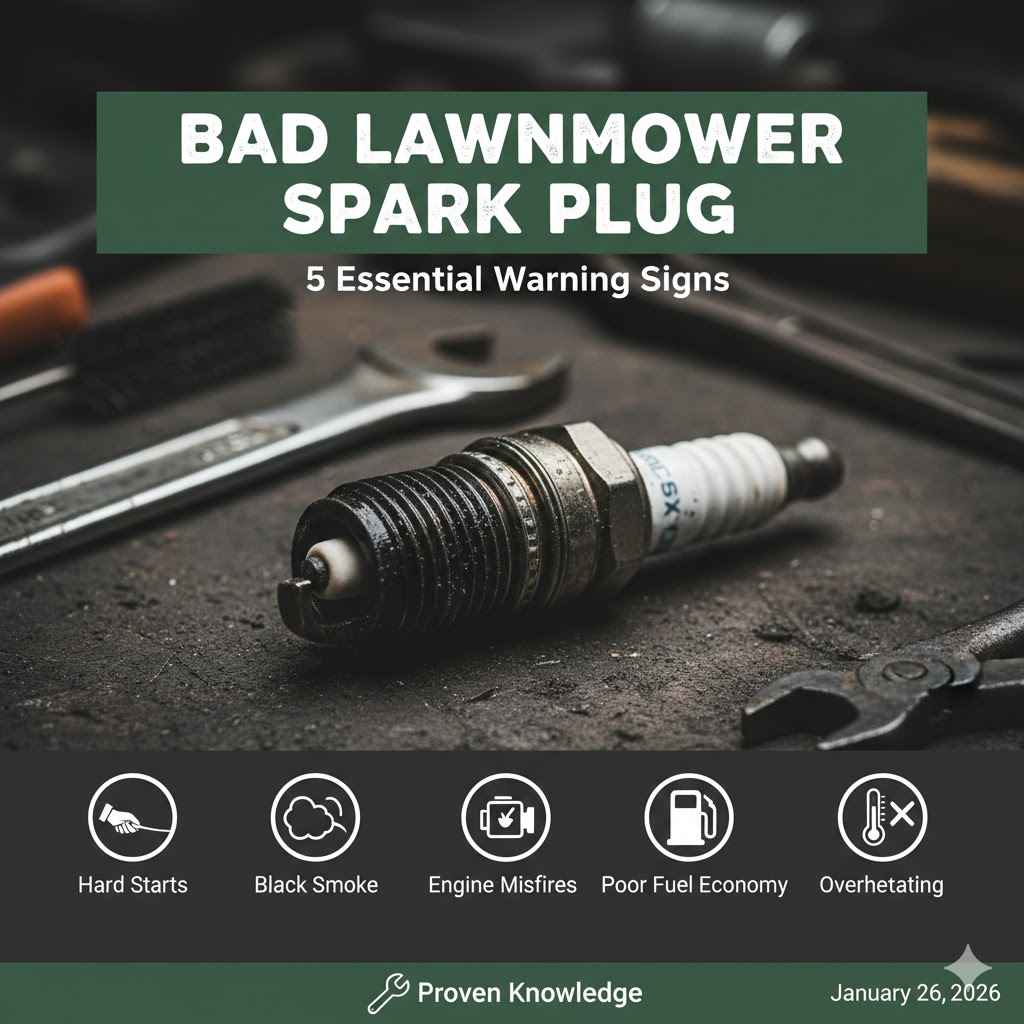
A bad lawnmower spark plug often causes starting problems, a rough-running engine, increased fuel consumption, and noticeable misfiring or power loss. Visually, you might see heavy carbon buildup, oil fouling, or a damaged electrode. Replacing a worn spark plug is a simple, affordable fix that can dramatically improve your mower’s performance.
There’s nothing more frustrating than pulling the starter cord on your lawnmower, only to be met with silence or a sputtering engine. You’ve got a lawn to mow, and your equipment just isn’t cooperating. Often, the culprit is a tiny, inexpensive part that many people overlook: the spark plug. It might seem small, but it plays a huge role in getting your mower running smoothly.
Don’t worry, you don’t need to be a professional mechanic to figure this out. I’m here to walk you through the simple signs of a bad lawnmower spark plug. We’ll look at the clues your mower gives you, how to check the plug yourself, and how to get it fixed. Let’s get that engine humming again!
What Does a Lawnmower Spark Plug Do, Anyway?
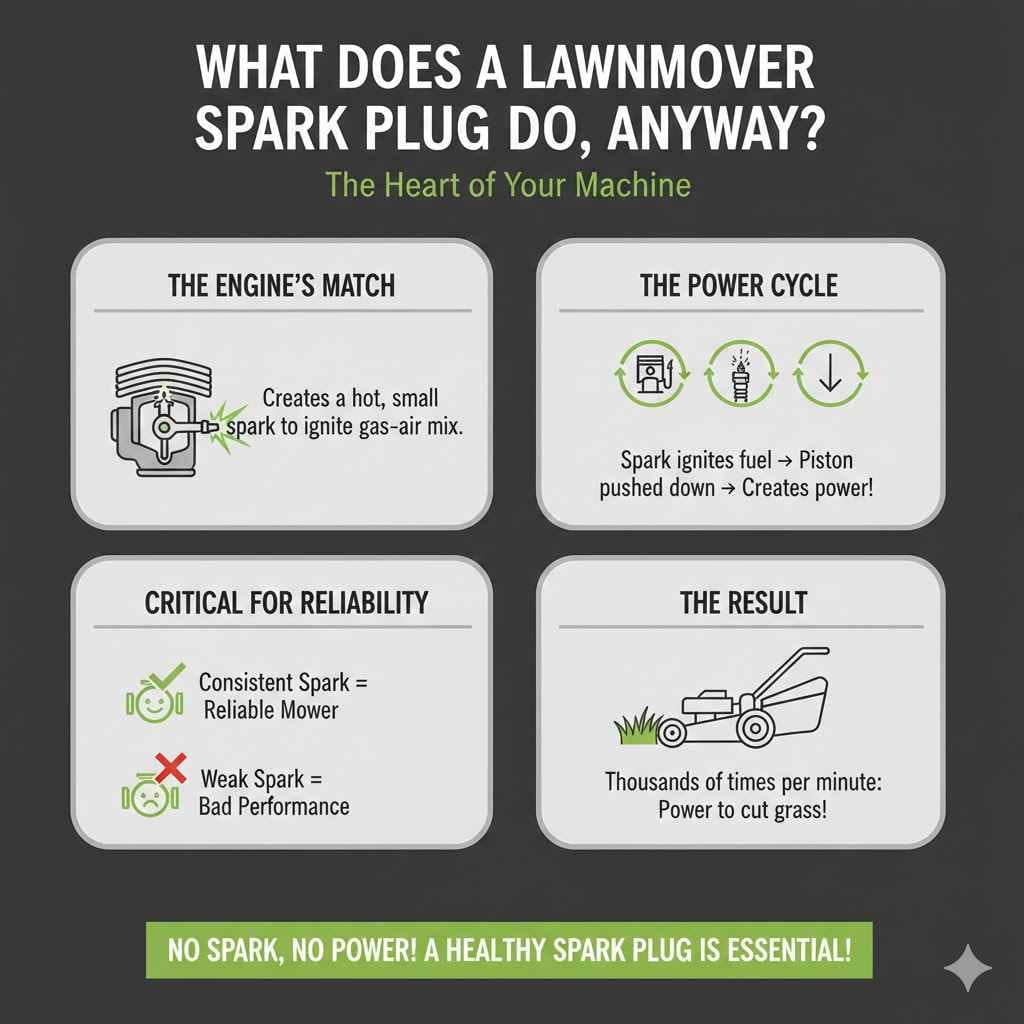
Before we dive into the warning signs, let’s quickly cover what this little part actually does. Think of the spark plug as the match that starts the fire in your engine. Your mower’s engine mixes a tiny bit of gasoline with air inside a small space called the cylinder. When the time is just right, the spark plug creates a very hot, very small spark of electricity.
This spark ignites the air-fuel mixture, creating a small explosion that pushes a piston down. This process happens thousands of times per minute, and it’s what gives your lawnmower the power to spin its blades and cut the grass. If that spark is weak, inconsistent, or doesn’t happen at all, the engine can’t run properly. That’s why a healthy spark plug is so essential for a reliable mower.
The 5 Telltale Signs of a Bad Lawnmower Spark Plug
Your lawnmower is pretty good at telling you when something is wrong; you just have to know what to listen for and look for. Here are the five most common signs that your spark plug is failing and needs your attention.
1. Your Mower is Hard to Start (or Won’t Start at All)
This is by far the most common symptom of a bad spark plug. You pull the cord again and again, but the engine just won’t roar to life. It might sputter for a moment and then die, or it might not make any attempt to start at all.
Why it happens: A spark plug that’s coated in carbon, oil, or grime can’t create a strong, hot spark. The gunk acts like an insulator, weakening the electrical arc. Without a powerful spark to ignite the fuel, the engine simply can’t start the combustion process. An old, worn-out plug with a wide gap between its electrodes will also produce a weak spark, leading to the same frustrating result.
2. The Engine Runs Rough or Stalls
Does your mower sound like it’s coughing or sputtering while it runs? Maybe it starts up, but then it shakes, vibrates excessively, or stalls out completely after a few minutes, especially when you try to engage the blades to cut thick grass.
Why it happens: A faulty spark plug delivers an inconsistent spark. Instead of a steady, reliable rhythm of “spark-bang-spark-bang,” you get something more like “spark…bang…spark…sputter…bang.” This uneven firing causes the engine to run erratically. When the engine is under load (like when cutting grass), the weak spark isn’t strong enough to keep the combustion cycle going, causing it to stall.
3. You’re Using More Gas Than Usual
If you feel like you’re filling up the gas tank on your mower more often than you used to, a bad spark plug could be the reason. While it might seem like a small issue, poor fuel efficiency is a clear sign that your engine isn’t working as it should.
Why it happens: A strong spark ensures that nearly all the fuel in the cylinder gets burned up in each explosion, creating maximum power. A weak spark from a fouled plug, however, leads to incomplete combustion. This means some of the fuel doesn’t get burned properly and is wasted, pushed out with the exhaust. Your engine has to work harder and use more fuel to produce the same amount of power, leading to poor gas mileage.
4. The Engine is Misfiring or Surging
An engine misfire sounds like a “pop” or “hiccup” while the mower is running. You might also notice the engine speed revving up and down on its own, which is called surging. It feels like the mower can’t decide how fast it wants to go.
Why it happens: A misfire occurs when the spark plug fails to ignite the fuel in the cylinder at the correct time. This could be due to a carbon buildup that briefly “shorts out” the plug or a crack in the porcelain insulator. The unburned fuel then gets dumped into the hot exhaust, where it can sometimes ignite with a pop. Surging is also caused by inconsistent sparks, which confuse the engine’s governing system that tries to maintain a steady speed.
5. The Spark Plug Looks Dirty or Damaged
Sometimes, the best clue is one you can see with your own eyes. Taking a few minutes to remove and inspect the spark plug can tell you everything you need to know about its health and the health of your engine.
Why it happens: A brand new spark plug is clean and metallic. Over time, it’s normal for it to get a little dirty. However, if you see a thick, black, sooty coating (carbon fouling), a wet, oily residue (oil fouling), or if the metal tip (the electrode) looks rounded or burned away, these are clear signs the plug is bad. A cracked white porcelain insulator is another dead giveaway that the plug needs to be replaced immediately.
How to Safely Inspect Your Lawnmower Spark Plug
Feeling ready to take a look for yourself? Great! This is a simple task that anyone can do. Following these steps will ensure you do it safely and correctly. Safety first—always perform maintenance on a cool engine and on a level surface.
Tools You’ll Need
You don’t need a full mechanic’s toolkit for this job. You’ll likely just need a few basic items:
- Socket Wrench or Ratchet: This is the main handle you’ll use.
- Spark Plug Socket: This is a special deep socket that fits over the spark plug. They usually come in 5/8″ or 13/16″ sizes, which are common for lawnmowers. Many have a rubber insert inside to grip the plug safely.
- Gloves: Good for grip and keeping your hands clean.
- A Rag or Compressed Air: For cleaning the area around the spark plug before you remove it.
Step-by-Step Inspection Guide
- Ensure Safety: Make sure the lawnmower engine is completely cool. This is important for your safety and prevents damage to the engine’s threads. For extra precaution, you can consult safety guidelines from the Consumer Product Safety Commission on outdoor power equipment.
- Locate the Spark Plug: The spark plug is usually easy to find. Look for a thick black rubber wire (the spark plug wire or “boot”) connected to the side or top of the engine.
- Disconnect the Wire: Firmly grip the rubber boot—not the wire itself—and pull it straight off the tip of the spark plug. It might feel snug, so a gentle twisting motion can help.
- Clean the Area: Before you remove the plug, use a rag or a blast of compressed air to clean away any grass, dirt, or debris from around its base. You don’t want anything falling into the engine cylinder when you take the plug out.
- Unscrew the Spark Plug: Place the spark plug socket over the plug. Attach your socket wrench and turn it counter-clockwise (lefty-loosey) to unscrew it. It might be a little tight at first, but it should loosen up. Once it’s loose, you can often finish unscrewing it by hand.
- Inspect the Plug: Now that it’s out, take a close look at the “business end” of the plug—the part that was inside the engine. Compare what you see to the guide below.
What to Look For: A Visual Guide to Spark Plug Health
What a spark plug looks like tells a story about how your engine is running. Use this table as a reference to diagnose what you see.
| Condition | Appearance | What It Means |
|---|---|---|
| Healthy | Light brown or grayish-tan color. The electrode is intact with sharp edges. Minimal deposits. | Your engine is running well! The air-fuel mixture and temperature are correct. |
| Carbon Fouled | Covered in a dry, black, sooty powder. | The engine is running “rich” (too much fuel, not enough air). This could be from a clogged air filter. |
| Oil Fouled | Coated in a wet, black, oily substance. | There may be oil leaking into the combustion chamber. This can indicate a more serious engine issue, like worn piston rings. |
| Worn Electrode | The center and/or side electrode is rounded, worn down, or looks melted. The gap is visibly larger. | The spark plug is old and has reached the end of its life. It’s time for a replacement. |
| Cracked Insulator | The white ceramic part has a visible crack or chip. | The plug is damaged and cannot function properly. It must be replaced immediately. This can be caused by dropping the plug or improper installation. |
To Clean or To Replace? Making the Right Call
So, you’ve inspected your plug. What’s next? Sometimes you can get a little more life out of a plug by cleaning it, but most of the time, replacement is the best option. Lawnmower spark plugs are very affordable (usually just a few dollars), and a new one guarantees perfect performance.
When You Can Clean It
You can try cleaning a spark plug if it only has light carbon fouling (that dry, black soot). To do this, gently use a wire brush and a clean rag to scrub the soot off the electrode and threads. Be careful not to damage the delicate center electrode or the porcelain. After cleaning, make sure the gap is set correctly (your mower’s manual will tell you the spec).
When You MUST Replace It
Replacement is non-negotiable in these situations:
- The plug is oil fouled. Cleaning won’t fix the underlying problem causing the oil leak.
- The electrode is visibly worn, rounded, or burned.
- The porcelain insulator is cracked or chipped.
- The deposits are heavy and caked on.
- You have no idea how old it is. For the low cost, it’s better to start fresh.
My professional advice? Unless the plug is nearly new and just lightly fouled, just replace it. It’s the easiest, most reliable solution.
Step-by-Step: How to Replace Your Lawnmower Spark Plug
Ready to install a fresh plug? It’s just as easy as taking the old one out. Here’s how to do it right.
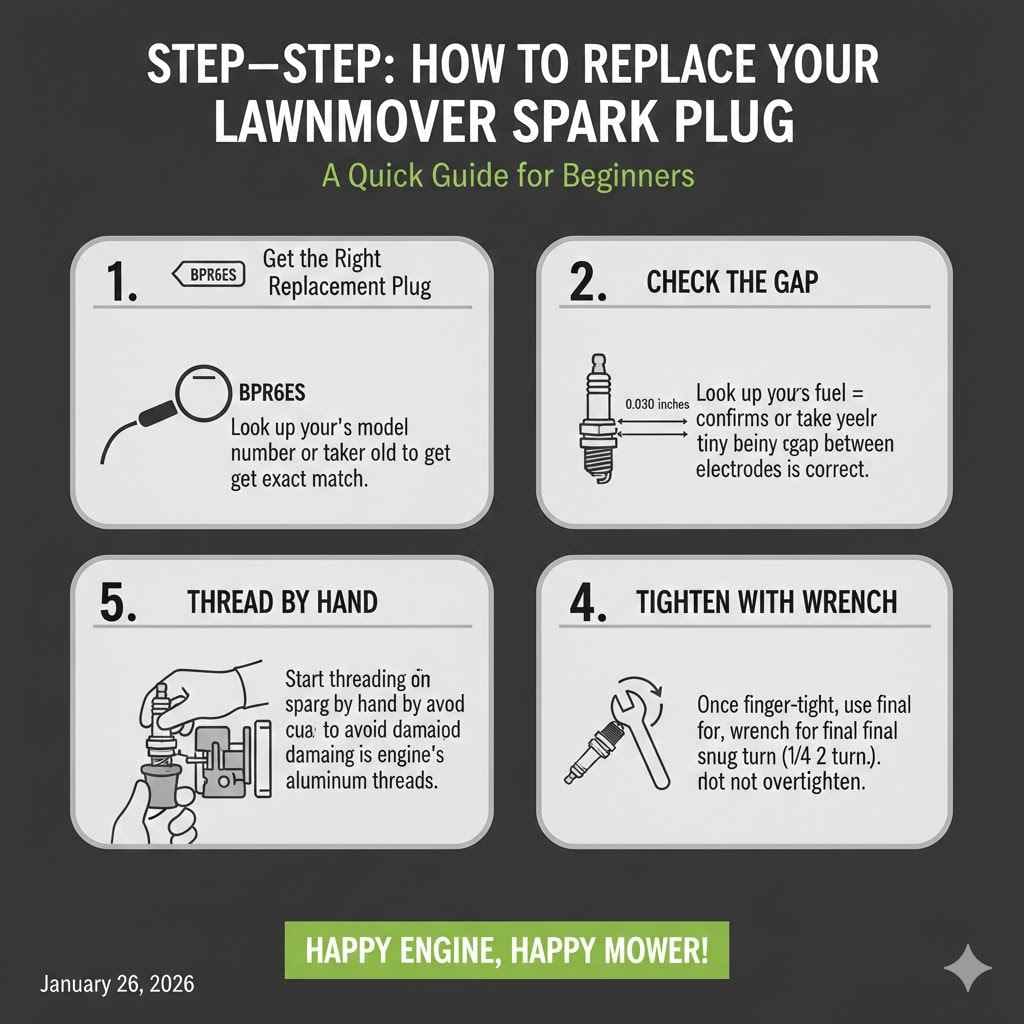
- Get the Right Replacement Plug: This is the most important step! Look at the numbers and letters stamped on the metal or porcelain part of your old spark plug (e.g., “BPR6ES”). Take this number to an auto parts or hardware store to get an exact match. Using the wrong plug can damage your engine. Reputable brands like NGK or Champion have online part finders to help you.
- Check the Gap: A spark plug “gap” is the tiny distance between the center and side electrodes. A new plug should be pre-gapped correctly, but it’s always a good idea to double-check with a feeler gauge or gapping tool. Your mower’s manual will list the correct gap (e.g., 0.030 inches).
- Thread the New Plug by Hand: To avoid damaging the threads in the engine (which are often made of softer aluminum), always start threading the new spark plug by hand. It should screw in smoothly for several turns. If you feel any resistance, stop, back it out, and try again to make sure it’s not cross-threaded.
- Tighten with the Wrench: Once the plug is “finger-tight,” use your socket wrench to give it a final snug turn. Don’t overtighten it! A good rule of thumb is to tighten it about 1/4 to 1/2 of a turn after it makes contact with the engine head. Overtightening can crack the plug or damage the engine.
- Reconnect the Wire: Push the spark plug boot firmly back onto the top of the new plug. You should feel or hear a satisfying “click” as it snaps into place. This ensures a solid electrical connection.
That’s it! You’ve successfully replaced your lawnmower’s spark plug. Now, give that starter cord a pull and enjoy the sound of a healthy, smooth-running engine.
Frequently Asked Questions (FAQ)
1. How often should I change my lawnmower spark plug?
It’s a good practice to replace your lawnmower spark plug once a year, typically at the beginning of the mowing season. At a minimum, you should inspect it annually and replace it if it shows any of the signs of wear or damage we discussed.
2. Can I use a car spark plug in my lawnmower?
No, you should never use a car spark plug in a lawnmower unless it is the exact part number specified by the mower’s manufacturer. Spark plugs are designed with specific heat ranges and thread lengths for different engines. Using the wrong one can lead to poor performance and serious engine damage.
3. What happens if the spark plug gap is wrong?
If the gap is too small, the spark might be weak and lead to incomplete fuel combustion. If the gap is too wide, the spark might struggle to jump across, especially under pressure, causing misfires or hard starting. Always use the gap recommended in your owner’s manual.
4. Does a new spark plug make a lawnmower run better?
Absolutely! If your old plug was worn or fouled, a new spark plug can make a huge difference. You can expect easier starting, a smoother-running engine, more power, and better fuel efficiency.
5. Why is my new spark plug already black?
If a brand new spark plug quickly becomes covered in black soot, it’s a sign of an underlying issue. The most common cause is a dirty air filter that is restricting airflow and causing the engine to run rich (too much fuel). Check and replace your air filter.
6. Is it safe to touch the spark plug wire while the engine is running?
No, never do this. The spark plug wire carries a very high voltage (thousands of volts) to create the spark. Touching it while the engine is running can give you a nasty electrical shock.
Your Lawn Will Thank You
See? That wasn’t so bad! Understanding the signs of a bad lawnmower spark plug is a simple skill that can save you a lot of time, money, and frustration. Instead of wrestling with a stubborn engine or paying for a costly tune-up, you now have the knowledge to diagnose the problem yourself.
Changing a spark plug is one of the easiest and most rewarding DIY maintenance tasks you can perform on your lawn equipment. By investing just a few minutes and a few dollars, you ensure your mower starts easily, runs efficiently, and is ready to tackle the lawn whenever you are. You’ve got this!