
Buying 16 spark plugs means you need the exact type recommended for your vehicle, usually a V8 engine with two plugs per cylinder. Check your owner’s manual or use an online parts finder with your car’s year, make, and model. Match the material (copper, platinum, or iridium) and heat range to the manufacturer’s specification for optimal engine performance.
Hi, I’m Dustin Hall. If you just discovered your engine needs 16 spark plugs, you might feel a little surprised. It sounds like a lot, right? Most cars only have four, six, or eight. But don’t worry, it’s more common than you think, especially in certain trucks and muscle cars. This unique design is there for a good reason—to help your engine run stronger and cleaner.
Buying the right set can feel confusing, but it doesn’t have to be. I’m here to walk you through every step in simple terms. We’ll figure out exactly what your engine needs, decode the jargon, and make sure you get the best plugs for your money. Let’s get you ready to buy with confidence.
Why on Earth Does My Engine Need 16 Spark Plugs?
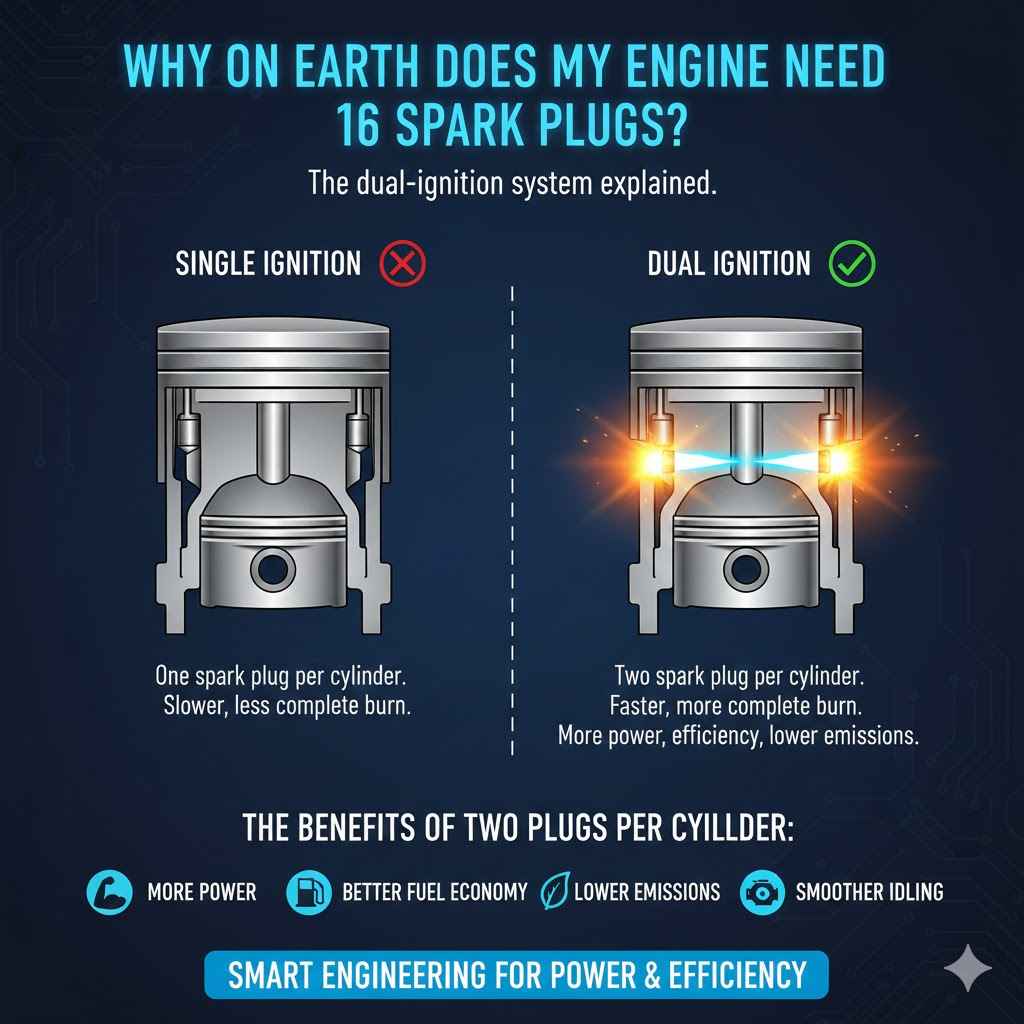
Finding out you need 16 spark plugs can be a shock, but there’s a smart engineering reason behind it. Certain engines, most famously some Chrysler HEMI V8s and Ford Triton V8s, use a dual-ignition system. This means there are two spark plugs for every one cylinder.
So, why the extra effort? It’s all about a better burn. Having two spark plugs ignite the fuel and air mixture from different points creates a faster, more complete combustion. Think of it like lighting a campfire from two sides at once—it burns quicker and more evenly.
The Benefits of Two Plugs Per Cylinder:
- More Power: A more complete fuel burn squeezes every bit of energy out of the gasoline, leading to better horsepower and torque.
- Better Fuel Economy: When fuel is burned efficiently, less is wasted. This can lead to slight improvements in your miles per gallon (MPG).
- Lower Emissions: A cleaner burn means fewer unburned hydrocarbons go out the tailpipe, which is better for the environment. The U.S. Department of Energy confirms that replacing bad spark plugs can improve fuel economy.
- Smoother Idling: The engine runs more smoothly and is less prone to rough idling when combustion is stable and consistent.
So, while it means buying more plugs, this design is working hard to make your engine powerful and efficient. Your job is simply to feed it the right parts to keep it happy.
Step 1: Find Your Exact Spark Plug Part Number (The Most Critical Step)
Before you even think about brands or prices, you need to know the exact part number for the spark plugs your vehicle requires. Using the wrong plug is not an option—it can cause poor performance, misfires, and even serious engine damage. Here are three foolproof ways to find the right information.
Method 1: Check Your Owner’s Manual
Your vehicle’s owner’s manual is the ultimate source of truth. It was written by the people who designed your engine. Look in the index for “spark plugs” or the “specifications” section. The manual will list the precise OEM (Original Equipment Manufacturer) part number you need. It might also list approved alternatives. Keep this number handy; it’s your golden ticket.
Method 2: Use an Online Parts Look-Up Tool
Reputable online auto parts stores have fantastic look-up tools. You simply enter your vehicle’s year, make, model, and engine size, and the website will show you a list of compatible spark plugs.
Great places to check include:
- AutoZone
- Advance Auto Parts
- O’Reilly Auto Parts
- RockAuto
- NAPA Auto Parts
When you use these tools, cross-reference the part number with the one in your owner’s manual if you have it. This ensures you’re getting the perfect match.
Method 3: Call Your Local Dealership’s Parts Department
This is a quick and easy way to get the right information directly from the source. Call the parts department of a dealership for your car’s brand (e.g., Ford, Dodge, Ram). Give them your Vehicle Identification Number (VIN), and they can tell you the exact OEM spark plug part number in seconds. You don’t have to buy from them, but they are an excellent resource for accurate information.
Step 2: Understand the Different Types of Spark Plugs
Spark plugs are made from different materials, which affects their performance, lifespan, and price. For an engine needing 16 plugs, choosing the right material is key to balancing cost and longevity. Your owner’s manual will specify the type you need, but it’s good to know what makes them different.
Here’s a simple breakdown of the three main types:
| Spark Plug Type | Typical Lifespan | Performance | Cost |
|---|---|---|---|
| Copper | 10,000–20,000 miles | Good conductor, but wears quickly. Best for older, pre-1990s vehicles without high-energy ignition systems. | $ (Lowest) |
| Platinum (Single/Double) | 50,000–60,000 miles | A great middle-ground option. Harder than copper, so it lasts much longer. “Double platinum” is best for “waste-spark” systems. | $$ (Moderate) |
| Iridium | 80,000–120,000 miles | The best of the best. Extremely hard and durable, offering the longest life and most consistent spark. Often the required OEM plug for modern engines. | $$$ (Highest) |
Which Type Should You Choose?
The answer is simple: use the type of plug your vehicle’s manufacturer recommends.
If your truck came from the factory with iridium plugs, you should replace them with new iridium plugs. Downgrading to platinum or copper to save a few dollars can lead to poor performance, reduced fuel economy, and a much shorter replacement interval. The engineers chose that specific plug material for a reason—your engine’s ignition system is designed to work with it.
Step 3: Decode Spark Plug Lingo (What Really Matters)
When you look at a spark plug’s part number, it seems like a secret code. While you don’t need to memorize it, understanding a few key terms will help you feel more confident in your purchase.
Heat Range
This is one of the most important specifications. The “heat range” doesn’t refer to the spark’s energy but to how quickly the plug transfers heat away from its firing tip.
- A “hot” plug has a longer insulator nose, keeping it hotter to burn off carbon deposits. It’s used in lower-horsepower, everyday driving engines.
- A “cold” plug has a shorter insulator nose, transferring heat away faster to prevent overheating in high-performance or heavy-towing engines.
Your job: Stick to the manufacturer’s recommended heat range. Using a plug that’s too hot can lead to pre-ignition (detonation), which can severely damage your engine. A plug that’s too cold can foul with carbon deposits, causing misfires.
Spark Plug Gap
The gap is the tiny space between the center and ground electrodes at the tip of the plug. The spark has to jump this gap to ignite the fuel. The size of this gap is critical and is measured in thousandths of an inch. A gap that is too small creates a weak spark, while a gap that is too large can cause misfires. Most modern iridium and platinum plugs come “pre-gapped” from the factory. However, it’s always a smart idea to double-check the gap with a feeler gauge before installation, as they can be knocked out of spec during shipping.
Thread Size and Reach
This is simply the physical size of the spark plug and how it fits into your engine’s cylinder head.
- Thread Diameter: The width of the threaded part of the plug.
- Reach: The length of the threaded part.
Using a plug with the wrong reach is dangerous. Too short, and the spark will be shrouded and ineffective. Too long, and the plug could hit the piston, causing catastrophic engine failure. This is another reason why using the exact part number is not negotiable.
Step 4: Choose a Reputable Brand
When it comes to spark plugs, brand names matter because they indicate quality control and reliability. You want a plug that will perform consistently for tens of thousands of miles. Sticking with well-known, trusted manufacturers is your safest bet.
Top-Tier Spark Plug Brands:
- NGK: A Japanese company that is an OEM supplier for many car brands worldwide, especially Honda, Toyota, and Subaru. Known for exceptional quality.
- Denso: Another top-tier Japanese brand and a major OEM supplier. Their iridium plugs are considered some of the best in the industry.
- Bosch: A German engineering powerhouse. They are an OEM supplier for many European vehicles like BMW, Mercedes, and Volkswagen, and they make excellent plugs for domestic vehicles too.
- Champion: A classic American brand that has been around for over a century. They are the OEM supplier for many Chrysler, Dodge, and Jeep vehicles.
- Motorcraft: This is Ford’s official parts brand. If you drive a Ford, Lincoln, or Mercury, Motorcraft is almost always the best choice to maintain factory performance.
For a vehicle with 16 spark plugs, it’s often best to stick with the OEM brand. If your Ford Triton V8 came with Motorcraft plugs, replacing them with new Motorcraft plugs is the surest way to guarantee compatibility and performance.
Step 5: Where to Buy Your Plugs and How to Avoid Fakes
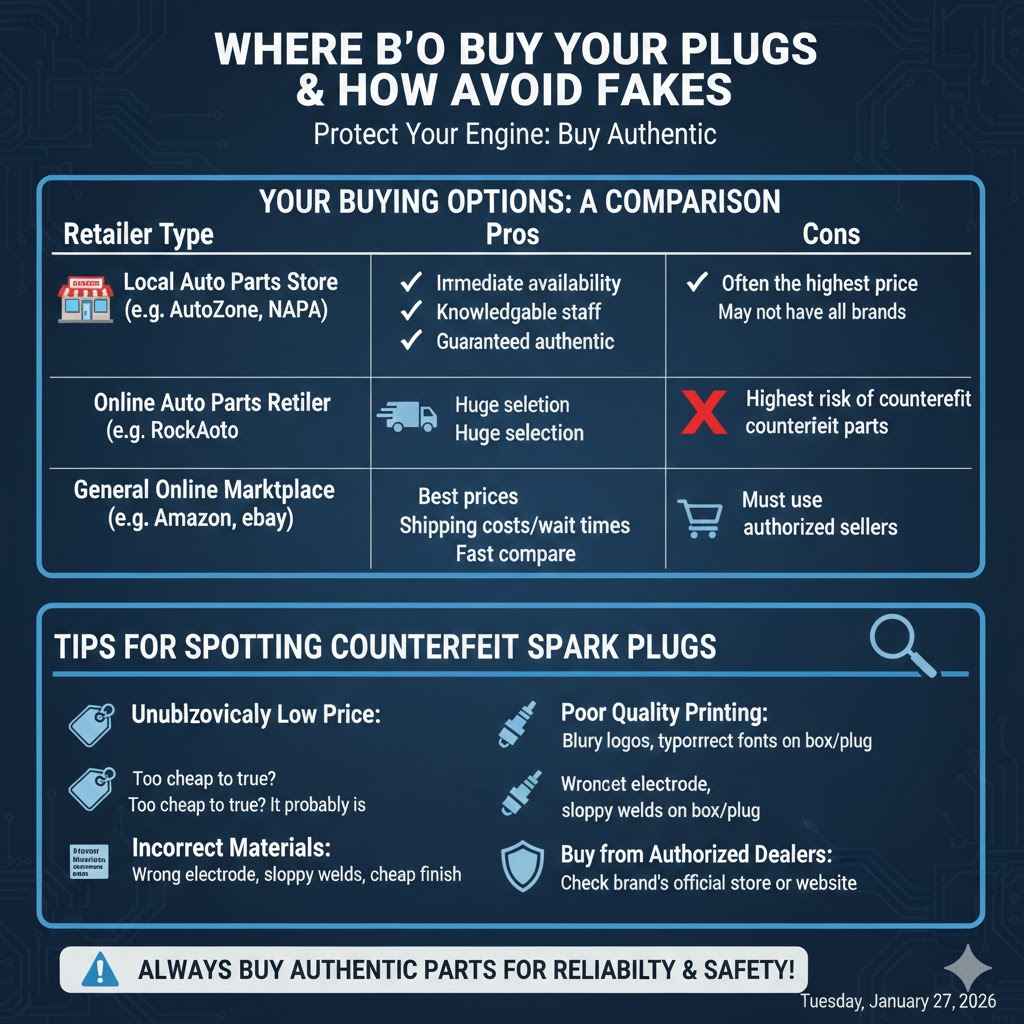
Now that you know what you need, it’s time to buy. But be careful—the market is flooded with counterfeit auto parts, and spark plugs are a common target. A fake plug can fail quickly and even damage your engine.
Your Buying Options: A Comparison
| Retailer Type | Pros | Cons |
|---|---|---|
| Local Auto Parts Store (e.g., AutoZone, NAPA) | – Immediate availability – Knowledgeable staff can help – Easy returns and exchanges – Guaranteed authentic parts | – Often the highest price – May not have all brands in stock |
| Online Auto Parts Retailer (e.g., RockAuto) | – Usually the best prices – Huge selection of brands – Easy to compare options | – Shipping costs and wait times – Returns can be more complex |
| General Online Marketplace (e.g., Amazon, eBay) | – Competitive prices – Fast shipping options | – Highest risk of counterfeit parts – Must buy from authorized, reputable sellers |
Tips for Spotting Counterfeit Spark Plugs:
- Unbelievably Low Price: If a set of 16 premium iridium plugs is priced far below what reputable stores are charging, be very suspicious.
- Poor Quality Printing: Fakes often have blurry logos, typos, or incorrect fonts on the plug and the box.
- Incorrect Materials: A fake plug might have a center electrode that looks wrong, a sloppy weld on the ground electrode, or a cheap-feeling finish.
- Buy from Authorized Dealers: To be safe, buy from the official brand store on Amazon or from sellers listed as authorized dealers on the manufacturer’s website. Automotive authorities like the National Institute for Automotive Service Excellence (ASE) often stress the importance of using high-quality, authentic parts for repairs.
Frequently Asked Questions (FAQ)
1. Why do I have to replace all 16 spark plugs at once?
You should always replace spark plugs as a complete set. This ensures that every cylinder is operating with the same efficiency and performance. If you only replace a few, the new plugs will perform differently than the old ones, which can cause an unbalanced engine, rough idling, and potential misfires.
2. How often should I change 16 spark plugs?
Follow the service interval in your owner’s manual. It varies based on the type of plug. For example, iridium plugs in a modern HEMI engine might have a service interval of 100,000 miles, while platinum plugs in an older Ford Triton might be closer to 60,000 miles. Don’t guess—check the book!
3. Can I use a cheaper spark plug material than what my car came with?
It’s strongly advised not to. If your engine was designed for long-life iridium plugs, its ignition system is calibrated for them. Downgrading to platinum or copper can result in a weaker spark, poor fuel economy, and a drastically shorter lifespan, forcing you to do the job all over again much sooner.
4. What does “pre-gapped” mean, and should I trust it?
“Pre-gapped” means the manufacturer has set the spark plug gap at the factory to the most common specification for that part number. While this is usually reliable, plugs can get bumped around during shipping. It’s best practice for you or your mechanic to check the gap on each plug with a feeler gauge before installation to ensure it’s perfect.
5. Is it hard to change 16 spark plugs myself?
It depends on your engine and your skill level. On some V8 trucks, the front plugs are easy to reach, but the rear ones can be buried deep in the engine bay, sometimes under other components. It’s a time-consuming job but definitely achievable for a patient DIYer with the right tools, like a good socket set with extensions and a torque wrench.
6. Why are some spark plugs so expensive?
The price is directly related to the materials used in the electrodes. Iridium and platinum are precious metals, making them much more expensive than standard copper. However, you get what you pay for in terms of longevity and consistent performance over a long period.
7. Do I need special tools to change my spark plugs?
Yes, you’ll need a few specific tools. At a minimum, you will need a ratchet, a set of extensions, a dedicated spark plug socket (which has a rubber insert to protect the plug), a torque wrench to tighten them correctly, and a gap gauge to check the gap. Anti-seize and dielectric grease are also highly recommended.
Your Game Plan for a Confident Purchase
Buying 16 spark plugs doesn’t have to be a headache. Now you have a clear, simple roadmap to get it done right the first time. Let’s quickly recap the key steps to success.
First, grab your owner’s manual or use a trusted online tool to find the exact OEM part number for your vehicle. This is your non-negotiable starting point. Next, understand the difference between copper, platinum, and iridium, and stick with the material your manufacturer recommends—they picked it for a reason.
Finally, buy from a reputable source to avoid the headache of counterfeit parts. Whether you go to your local auto parts store or a trusted online retailer, choosing quality will always pay off in the long run. By following these steps, you’re not just buying parts; you’re making a smart investment in your engine’s health and performance. You’ve got this!